

For high-vacuum electronics and semiconductor manufacturing, C10100 (Oxygen-Free Electronic) copper is the only safe specification. While C11000 copper offers nearly identical conductivity, its oxygen content of 0.02 to 0.04 percent leads to "outgassing" under vacuum and catastrophic hydrogen embrittlement during high-temperature brazing. If your assembly involves vacuum-tight seals or hydrogen-atmosphere joining, the ultra-high purity of C11000 copper is insufficient, and you must upgrade to C10100. For standard atmospheric power distribution, however, c11000 material remains the most cost-effective choice. You can evaluate our inventory of industrial flat products on the C11000 plate.
Why does the oxygen in C11000 cause vacuum leaks?
The trace amount of cuprous oxide in electrolytic tough pitch copper is stable under normal conditions but becomes a liability in a vacuum. Under the heat of operation or brazing, these oxides can release trapped gases, contaminating the vacuum environment and degrading the performance of sensitive components like vacuum interrupters or X-ray tubes.
As explained in our technical report on whether C110 copper is oxygen free, C10100 is produced in a vacuum-melting process that removes almost all oxygen (less than 5 ppm). This ensures a "gas-free" material that maintains its structural integrity and seal quality. For engineers, reviewing the chemical composition of C11000 alloy is the first step in determining if the material's oxide content will interfere with your specific manufacturing process.
C11000 (ETP) vs. C10100 (OFE) Chemical Purity
| Element | C11000 (ETP) | C10100 (OFE) | Technical Impact |
| Copper (incl. Ag) | 99.90 percent min | 99.99 percent min | Base Purity |
| Oxygen (O) | 0.02 - 0.04 percent | 0.0005 percent max | Vacuum Seal Integrity |
| Lead (Pb) | 0.005 percent max | 0.0005 percent max | Trace Contamination |
| Sulfur (S) | 0.015 percent max | 0.0015 percent max | Machinability / Purity |
| Classification | Tough Pitch | Oxygen-Free | C11000 vs C10100 |
Request a Batch-Specific Mill Test Certificate
Is the 1% conductivity gain of C10100 worth the price premium?
From a purely electrical standpoint, the difference is negligible. Both grades meet the 101 percent IACS conductivity standard required for power transmission. While C10100 might reach 102 percent IACS, this 1 percent improvement rarely justifies the significant C11000 copper price gap for standard busbars or switchgear.
B2B procurement should only specify C10100 when the application involves high-frequency signals or vacuum sealing. For 95 percent of current-carrying C11000 electrical copper busbar systems, the electrolytic grade provides identical performance at a 20 to 30 percent lower cost.
Physical and Electrical Property Comparison
| Property | C11000 Copper | C10100 Copper | Engineering Outcome |
| Electrical Conductivity | 101 percent IACS min | 101 - 102 percent IACS | Negligible difference |
| Thermal Conductivity | 388 W/m·K | 391 W/m·K | Heat dissipation |
| Resistivity | 0.01707 Ohm·mm²/m | 0.01690 Ohm·mm²/m | Joule heating |
| Hardness (H02) | 75 - 95 HV | 75 - 90 HV | Similar forming limits |
Get a Real-Time Inventory Quote
When is C11000 a failure risk?
The most common "field failure" for C11000 occurs during brazing in a hydrogen-rich atmosphere. The hydrogen diffuses into the copper, reacts with the internal oxygen, and forms high-pressure steam that creates microscopic cracks. This makes the metal brittle and prone to leaking or snapping under mechanical load.
For projects requiring high-strength brazed joints or welds, C10100 is the only safe choice. It allows for safe joining in any atmosphere without the risk of internal void formation.
High-Purity Copper
| Application | Recommended Grade | Critical Requirement |
| Electrical Busbar | C11000 (ETP) | Cost Efficiency / 101 percent IACS |
| Vacuum Interrupter | C10100 (OFE) | Low Outgassing / Seal Quality |
| Hydrogen Brazing | C10100 (OFE) | Embrittlement Resistance |
| Semiconductor Targets | C10100 (OFE) | 99.99 percent Purity |
| Grounding Plates | C11000 (ETP) | Corrosion Resistance / Economy |
FAQ
1. Why is C10100 so much more expensive than C11000?
C10100 requires specialized vacuum induction melting (VIM) to remove oxygen and impurities. C11000 is produced via standard electrolytic refining in much higher volumes, making its fabrication premium lower.
2. Is C11000 considered "pure copper"?
Yes. Both are commercially pure coppers. C11000 is 99.90 percent pure, while C10100 is 99.99 percent pure. The difference is in the trace impurities and oxygen status, not the base copper content.
3. Does C10100 machine differently than C11000?
Both are "gummy" and difficult to machine (rated at 20 percent machinability). C10100 is slightly softer due to its extreme purity, which can lead to slightly more burring if the cutting tools are not exceptionally sharp.
4. How can I distinguish between C11000 and C10100 in the warehouse?
Visually, they are identical. You must rely on the Mill Test Certificate (MTC) or an eddy-current conductivity test. C10100 will consistently show oxygen levels below 10 ppm.
5. Can C11000 be used for high-end audio cables?
While many audiophiles prefer "Oxygen-Free" (OFC) copper, C11000 is functionally identical for electrical signal transmission. The preference for C10100 in audio is usually based on purity standards rather than measurable signal loss.
6. Do you supply custom-cut C10100 plates?
Yes. Our factory provides precision CNC and water-jet cutting for both C11000 and high-purity C10100. We maintain dedicated stock for vacuum and electronic applications to ensure 0 percent cross-contamination.
Product Specifications & Range
| Product Category | Common Grades (Alloys) | Size Range (Dimensions) | Standards |
| Copper Rods | C11000, C12200, C10200, C14500 | Diameter: 3mm – 400mm<br>Shape: Round, Hexagonal, Square | ASTM B187, EN 12163 |
| Copper Tubes | C11000, C12200 (DHP), C10200 (OF), C27200 | OD: 2mm – 219mm<br>Wall Thickness: 0.2mm – 20mm | ASTM B280, EN 12735 |
| Copper Plates | C11000 (ETP), C10200, C12200 | Thickness: 0.1mm – 150mm<br>Width: Up to 2500mm | ASTM B152, DIN 1751 |
| Copper Wires | C11000, C10200, Brass Wire | Diameter: 0.05mm – 10.0mm<br>Form: Spool or Coil | ASTM B3, EN 13602 |
| Copper Strips | C11000, C12200, C26800 (Brass) | Thickness: 0.05mm – 3.0mm<br>Width: 5mm – 610mm | ASTM B19, EN 1652 |
Customization Note:
Custom Dimensions: We provide precision cutting and slitting services to meet your specific project requirements.
Tempers Available: Soft (O), Half-Hard (H02), Full Hard (H04), and Spring Hard (H08).
Surface Finish: Bright annealing, Polished, or Plated (Tin, Silver, Nickel) upon request.
Industrial-Grade Export Packaging
Maximum protection against oxidation, moisture, and transit damage.
1. Anti-Oxidation Protection
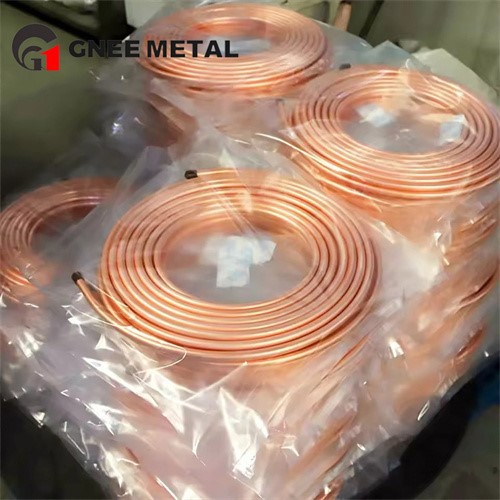
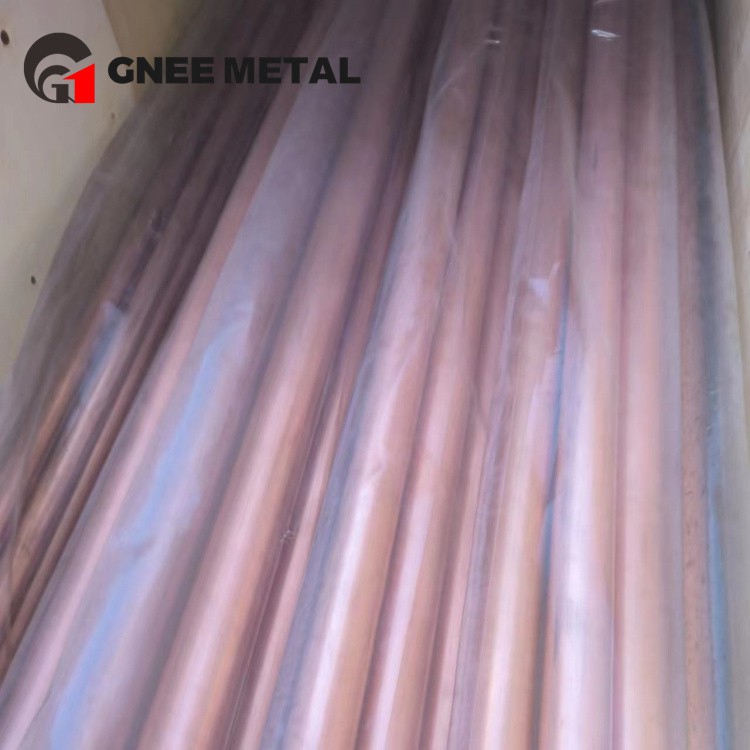
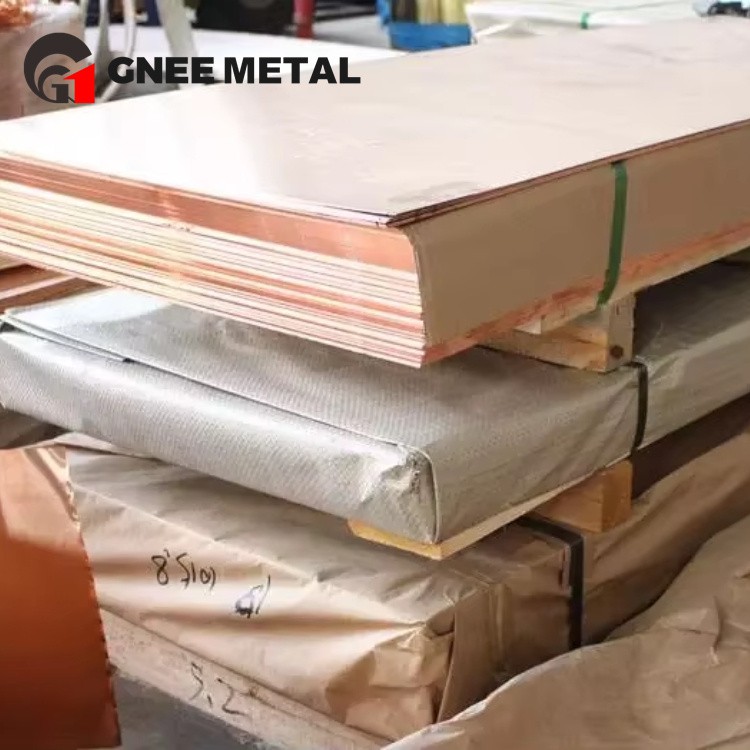
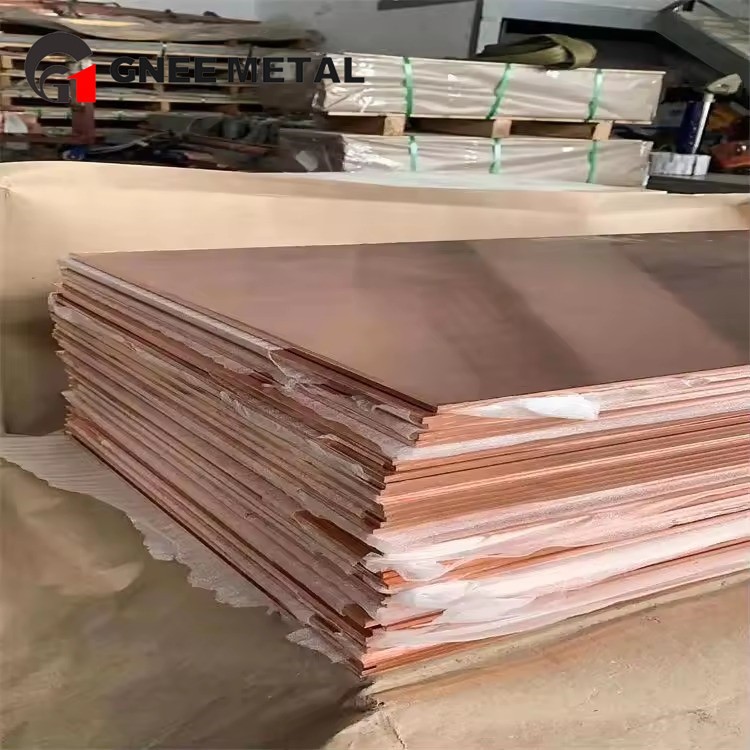
VCI Paper & Moisture-Proof Film: Every order is vacuum-sealed or wrapped in anti-corrosion materials to ensure the copper remains bright and tarnish-free during sea freight.
2. Reinforced Structural Support
Seaworthy Wooden Crates: We use reinforced, fumigation-free wooden cases (ISPM-15) and steel strapping for rods, tubes, and heavy plates to prevent bending or surface scratches.
3. Secure Handling & Loading
Forklift-Ready Pallets: All materials are secured on standardized export pallets for easy unloading and maximum stability in containers.
4. Clear Identification
Professional Labeling: Each package includes detailed labels with heat numbers, specifications, and net weight for efficient inventory management.

Advanced Manufacturing & Quality Control
1. Core Production Equipment
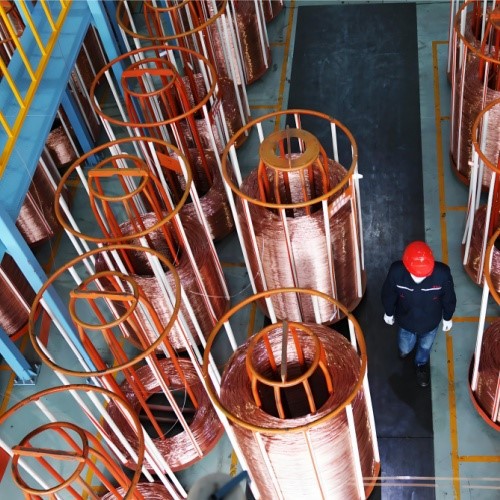
Up-casting & Continuous Casting Lines: Ensures high-purity oxygen-free copper rods and wires with uniform grain structure.
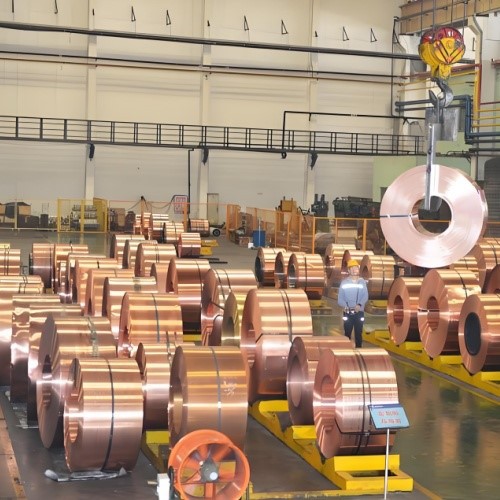
High-Precision Cold/Hot Rolling Mills: Automated thickness control for copper plates and strips with tolerances within ±0.01mm.
Large-Scale Extrusion & Drawing Machines: Capable of producing seamless copper tubes and rods in diverse diameters and shapes.
Atmospheric Controlled Annealing Furnaces: Bright annealing process to achieve specific tempers (Soft, Half-hard, Hard) without surface oxidation.
2. In-House Testing Center
Direct-Reading Spectrometers: Instant chemical composition analysis to guarantee Cu purity and precise alloying (Brass, Bronze, etc.).
Universal Tensile Testers: Verifying mechanical properties including tensile strength, elongation, and yield strength.
Eddy Current & Ultrasonic Testing: 100% non-destructive inspection for tubes and rods to detect internal cracks or flaws.
Conductivity & Hardness Testers: Ensuring electrical conductivity (IACS) and Vickers/Rockwell hardness meet international standards (ASTM, EN, DIN).



Get Fast Quote & Logistics Plan


