

Copper

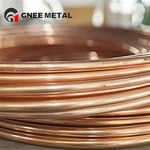
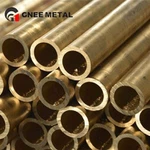
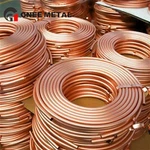
Our copper materials are available in a wide range of grades and product forms for electrical, thermal, and industrial applications. Manufactured to ASTM, EN, and JIS standards, they are supplied with reliable quality, flexible customization, and global export support.
Products: Tubes • Bars • Plates • Strips • Wires • Busbars
Copper Grades: C10100 • C10200 • C11000 • C12000 • C12200
Standards: ASTM • EN • JIS
Processing: Cutting • CNC Machining • Bending
Certification: EN10204 3.1 MTC
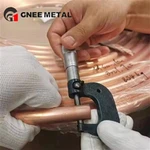
Available Inspection: 100% Material & Dimensional Inspection
MOQ: Standard & Custom Orders
Lead Time: Stock Items from 3–7 Days




Copper Applications by Industry

Heat Exchangers
Components
Heat Exchanger Tubes • Condenser Tubes • Evaporator Tubes
Product Forms
Tube • Pipe • U-Bend Tube
Common Grades
C12200 • C68700 • C70600 • C71500

HVAC & Refrigeration
Components
Air Conditioner Coils • Refrigeration Lines • Condensers
Product Forms
Tube • Pancake Coil • LWC Coil
Common Grades
C12200 • C12000 • C11000

Electrical & Power
Components
Busbars • Switchgear • Transformers • Grounding Systems
Product Forms
Busbar • Bar • Strip • Wire
Common Grades
C11000 • C10100 • C10200 • C18150

Marine & Shipbuilding
Components
Seawater Piping • Condensers • Offshore Cooling Systems
Product Forms
Tube • Pipe • Bar
Common Grades
C70600 • C71500 • C68700 • C44300

Automotive & EV
Components
Battery Connectors • Motor Windings • Charging Systems
Product Forms
Strip • Busbar • Wire • Tube
Common Grades
C11000 • C10100 • C18150 • C14500

Industrial Manufacturing
Components
Machined Parts • Connectors • Valves • Precision Components
Product Forms
Bar • Plate • Rod • Tube
Common Grades
C36000 • C14500 • C11000 • C17200
Copper Products

Copper Tubes
Forms: Straight • Coil • LWC • U-Bend
Grades: C12200 • C68700 • C70600 • C71500
Applications: HVAC • Heat Exchangers • Plumbing

Copper Plates
Forms: Plate • Sheet • Cut-to-Size
Grades: C11000 • C12200 • C17200 • C26000
Applications: Electrical • Industrial • Marine

Copper Bars
Forms: Round • Flat • Square • Hexagonal
Grades: C11000 • C14500 • C18150 • C36000
Applications: Machining • Electrical • Components

Copper Strips
Forms: Coil • Strip • Slit Strip
Grades: C11000 • C12000 • C12200 • C26000
Applications: Connectors • Terminals • Transformers

Copper Wires
Forms: Round • Flat • Tinned • Bare
Grades: C10100 • C10200 • C11000 • C12200
Applications: Cables • Motors • Windings

Copper Fittings
Forms: Elbows • Tees • Couplings • Reducers
Grades: C12200 • C37700 • C36000
Applications: Plumbing • HVAC • Gas Systems
Copper Grades & Material Selection
Common Copper Grades
| Grade | Typical Forms | Typical Applications |
|---|---|---|
| C10100 | Wire • Busbar • Strip | High-Conductivity Electrical Components |
| C10200 | Wire • Strip • Bar | Electronics • Vacuum Equipment |
| C11000 | Bar • Plate • Strip • Busbar • Wire | Electrical • Power Distribution |
| C12000 | Tube • Coil • Strip | HVAC • Refrigeration |
| C12200 | Tube • Pipe • Plate | Plumbing • Heat Exchangers |
| C14500 | Bar • Rod | CNC Machined Components |
| C17200 | Bar • Plate • Strip | Springs • Connectors • Molds |
| C18150 | Bar • Rod • Plate | Resistance Welding • Electrical Parts |
| C26000 | Strip • Sheet • Tube | Terminals • Decorative Parts |
| C36000 | Bar • Rod | Precision Machining • Fittings |
| C68700 | Tube • Pipe | Condensers • Seawater Heat Exchangers |
| C70600 | Tube • Pipe | Marine Piping • Condensers |
| C71500 | Tube • Pipe | Offshore • Desalination Systems |
Equivalent Grades
| UNS | ASTM | EN | JIS | GB |
|---|---|---|---|---|
| C10100 | C10100 | Cu-OF | C1011 | TU1 |
| C10200 | C10200 | Cu-OFE | C1020 | TU2 |
| C11000 | C11000 | Cu-ETP | C1100 | T2 |
| C12200 | C12200 | Cu-DHP | C1220 | TP2 |
| C26000 | C26000 | CuZn30 | C2600 | H70 |
| C68700 | C68700 | CuZn20Al2As | — | HAl77-2 |
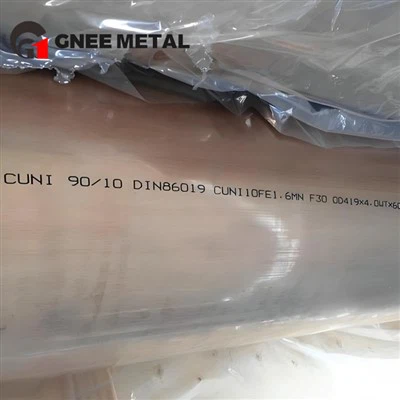
| C70600 | C70600 | CuNi10Fe1Mn | C7060 | B10 |
| C71500 | C71500 | CuNi30Mn1Fe | C7150 | B30 |
Common Standards
ASTM B111 – Heat Exchanger & Condenser Tubes
ASTM B280 – ACR Copper Tubes
ASTM B88 – Water Service Copper Tubes
ASTM B152 – Copper Sheet, Plate & Strip
ASTM B187 – Copper Bars, Rods & Shapes
ASTM B75 – Seamless Copper Tubes
ASTM B42 – Seamless Copper Pipe
EN 12735 – Copper Tubes for Refrigeration
JIS H3300 – Copper & Copper Alloy Tubes
How to Choose the Right Grade
| If You Need... | Recommended Grades |
|---|---|
| Highest Electrical Conductivity | C10100 • C10200 • C11000 |
| Heat Exchangers | C12200 • C68700 • C70600 • C71500 |
| HVAC & Refrigeration | C12200 • C12000 |
| Marine Applications | C70600 • C71500 • C68700 |
| CNC Machining | C14500 • C36000 |
| High Strength | C17200 • C18150 |
| General Industrial Use | C11000 • C12200 • C26000 |
Product Specifications
| Product | Typical Size | Standards |
|---|---|---|
| Copper Tubes | OD 3–300 mm | ASTM B75 • ASTM B111 • ASTM B280 |
| Copper Bars | Dia. 3–300 mm | ASTM B187 |
| Copper Plates | Thickness 0.5–100 mm | ASTM B152 |
| Copper Strips | Thickness 0.05–5 mm | ASTM B152 |
| Copper Wires | Dia. 0.05–20 mm | ASTM B3 • ASTM B33 |
| Copper Fittings | DN15–DN100 | ASME • ASTM |
Surface Finish Options

| Surface Finish | Features | Typical Applications |
|---|---|---|
| Mill Finish | Standard factory finish | General Industrial Use |
| Bright Annealed (BA) | Smooth, bright surface | HVAC • Refrigeration • Heat Exchangers |
| Polished Finish | Improved appearance | Decorative • Precision Components |
| Tin Plated | Better solderability & corrosion resistance | Busbars • Connectors • Electrical Parts |
| Silver Plated | Maximum electrical conductivity | High-Current Electrical Equipment |
| Nickel Plated | Enhanced wear & oxidation resistance | Industrial • Marine Components |
| Protective Film | Prevents scratches during transport | Sheets • Plates • Strips |
Heat Treatment Options
| Heat Treatment | Features | Typical Products |
|---|---|---|
| Annealed (O) | Soft, excellent ductility | Tubes • Wires • Strips |
| Half Hard (1/2H) | Balanced strength & formability | Strips • Plates • Bars |
| Hard (H) | Higher strength & hardness | Strips • Wires • Bars |
| Stress Relieved | Reduced residual stress | Precision Machined Parts |
| Solution Heat Treated | Improved mechanical properties | Beryllium Copper Alloys |
| Age Hardened | Maximum strength & wear resistance | C17200 • C18150 Components |
Inspection & Quality Control


| Inspection Item | Purpose |
|---|---|
| Chemical Composition Analysis | Verify alloy composition |
| Dimensional Inspection | Check OD, ID, thickness & tolerance |
| Mechanical Property Testing | Tensile strength, yield strength & elongation |
| Electrical Conductivity Testing | Verify conductivity performance |
| Hardness Testing | Confirm material hardness |
| Surface Quality Inspection | Check scratches, dents & defects |
| Coating Thickness Inspection | Measure plating thickness (if applicable) |
| Hydrostatic / Air Pressure Testing | Leak testing for tubes & fittings |
| Eddy Current Testing (ECT) | Detect surface and internal defects |
| Packaging Inspection | Verify labels, quantity & export packaging |
Production Equipment


Extrusion Line
High-precision copper profile production.
Rolling Mill
Uniform thickness and surface quality.
Cold Drawing Machine
Improved dimensional accuracy and strength.
Annealing Furnace
Stable mechanical properties and ductility.
CNC Machining Center
Precision machining for custom components.
Automatic Cutting Machine
Accurate cutting with consistent lengths.
Polishing Line
Smooth surface finish for industrial applications.
Packaging Line
Safe and secure export packaging.
Export Packaging


| Packaging Method | Suitable Products | Features |
|---|---|---|
| Plastic Film Wrapping | Tubes • Bars • Plates • Strips | Protects against moisture, dust, and scratches |
| Paper & Protective Sleeve | Tubes • Bars • Wires | Prevents surface damage during handling |
| Bundle Packing | Tubes • Bars • Profiles | Easy loading, storage, and transportation |
| Wooden Pallets | Plates • Bars • Strips | Stable support for forklift handling |
| Fumigation-Free Plywood Cases | Precision Parts • Fittings | Suitable for international sea and air freight |
| Steel Strapping | Heavy Products | Secures cargo during transportation |
| Container Loading | All Copper Products | Optimized loading for safe global shipping |
| Custom Packaging | All Products | Customer labels, markings, and special packaging available |
Inventory & Lead Time
Inventory Availability
| Product | Stock Status | Supply Capability |
|---|---|---|
| Copper Tubes | Regular Stock | Standard & Custom Sizes |
| Copper Bars | Regular Stock | Multiple Grades Available |
| Copper Plates | Regular Stock | Cut-to-Size Service |
| Copper Strips | Regular Stock | Coil & Slit Strip |
| Copper Wires | Regular Stock | Various Diameters |
| Copper Fittings | Available | Standard Specifications |
Typical Lead Time
| Order Type | Lead Time |
|---|---|
| Stock Materials | 3–7 Days |
| Standard Production | 10–20 Days |
| Custom Specifications | 15–30 Days |
| Large Volume Orders | To Be Confirmed |
FAQ
1. What copper products do you supply?
We supply copper tubes, bars, plates, strips, wires, busbars, fittings, and custom-machined copper components.
2. Which copper grades are available?
Common grades include C10100, C10200, C11000, C12000, C12200, C14500, C17200, C18150, C26000, C36000, C68700, C70600, and C71500.
3. Which international standards do you follow?
Our products are manufactured according to ASTM, EN, JIS, and GB standards.
4. Can you manufacture custom sizes?
Yes. We provide custom dimensions, machining, drilling, bending, and other processing services based on drawings or specifications.
5. Can you provide material certificates?
Yes. EN10204 3.1 Mill Test Certificates are available for all standard products.
6. Do you support third-party inspection?
Yes. SGS, BV, TÜV, Intertek, or customer-designated inspections are available before shipment.
7. What is your typical lead time?
Stock items are usually shipped within 3–7 days, while custom orders typically require 15–30 days.
8. How are the products packaged?
Products are packed with protective materials, wooden pallets, or fumigation-free plywood cases for international transportation.
9. Which countries do you export to?
We supply copper materials to customers across Europe, North America, Southeast Asia, the Middle East, Australia, and other global markets.
10. How can I request a quotation?
Simply send us the required grade, dimensions, quantity, standard, or drawings, and we'll provide a quotation as quickly as possible.