

Yes, ASTM C11000 and EN CW004A are functionally identical and can be used interchangeably in 99 percent of industrial applications. Both refer to Electrolytic Tough Pitch (ETP) copper with a minimum purity of 99.90 percent and an electrical conductivity of at least 101 percent IACS. For procurement managers handling international projects, the main difference is the naming convention: C11000 is the American Unified Numbering System (UNS) designation, while CW004A (also known as Cu-ETP) is the European standard. You can view our global inventory of these equivalent grades on the C11000 plate.
Do C11000 and CW004A have the same conductivity standards?
Both standards are designed to meet the same electrical performance threshold. In the US, the requirement is governed by 101 percent IACS standard, which ensures the material is suitable for high-current power transmission. In Europe, the EN 13601 standard for copper rod and bar specifies the exact same resistivity limits.
This technical consistency is critical for engineers who must move designs from a US headquarters to an EU-based production facility. If your blueprint specifies a copper 110 or C11000 designation, you can safely supply CW004A provided the Mill Test Certificate confirms the conductivity and purity.
Global Specification Cross-Reference
USA (UNS): C11000
Europe (EN): CW004A / Cu-ETP
UK (BS): C101 (See our C101 and C110 copper comparison for details)
Japan (JIS): C1100
China (GB): T2
Are the mechanical tolerances different between US and European copper?
While the material chemistry is the same, the "Dimensional Tolerances" can vary slightly between ASTM and EN standards. For example, ASTM B152 for copper sheet may have different thickness allowances than EN 1652. For most global copper equivalents, these differences are in the hundredths of a millimeter and do not impact fitment in electrical cabinets.
However, if you are performing precision c11000 copper cnc machining, you should specify which tolerance standard your fixtures are designed for. Pure copper is "gummy" and difficult to machine regardless of whether it was made to US or EU specs, so maintaining consistent dimensions is vital for high-speed production runs.
Comparative Chemical and Electrical Limits
| Element / Property | ASTM C11000 Requirement | EN CW004A Requirement |
| Copper Purity | 99.90 percent min | 99.90 percent min |
| Oxygen Content | 0.02 to 0.04 percent | 0.005 to 0.040 percent |
| Conductivity | 101 percent IACS min | 101 percent IACS min |
| Lead (Pb) | 0.005 percent max | 0.005 percent max |
| Hardness (H02) | 75 to 95 HV | 75 to 95 HV |
Which standard is more cost-effective for international projects?
From a raw material perspective, the price of copper is set globally by the London Metal Exchange (LME). Whether you buy C11000 or CW004A, the base metal cost remains the same. The variation in total project cost comes from local availability and fabrication fees.
Because JIS C1100 and ASTM C11000 are so common, choosing the standard that is most prevalent in your manufacturing region will reduce lead times and shipping costs. If your project is in North America, stick with C11000; for projects in the Eurozone, CW004A is the logical choice to ensure local traceability and certification compliance.
FAQ
1. Can I use C11000 if my drawing specifically calls for CW004A?
In almost all cases, yes. They are chemically and physically interchangeable. However, you must provide the Mill Test Certificate (MTC) to your quality department to prove that the C11000 meets the EN purity and conductivity requirements.
2. Are C11000 and CW004A both RoHS compliant?
Yes. Both are commercially pure coppers with lead levels below 0.005 percent, making them fully compliant with RoHS and REACH regulations for the electronics industry.
3. Does the oxygen content vary between these two standards?
ASTM C11000 typically targets a slightly narrower oxygen range (0.02 to 0.04 percent) compared to the broader EN spec, but both are "Tough Pitch" coppers and should not be used for high-temperature hydrogen brazing.
4. Is there a difference in surface finish between the US and EU grades?
Both are usually supplied with a "Mill Finish." For decorative or high-precision electronic use, we can supply both grades with bright-pickled or polished surfaces regardless of the standard chosen.
5. How do I verify the electrical conductivity?
Always request an eddy-current conductivity test. A high-quality batch will consistently show results between 101 percent and 102 percent IACS, confirming the high purity of the refined metal.
6. Do you stock both ASTM and EN designated copper?
We stock premium electrolytic tough pitch copper that is dual-certified to meet both ASTM C11000 and EN CW004A standards. This simplifies procurement for our global clients who require a single material source for multiple international locations.
Product Specifications & Range
| Product Category | Common Grades (Alloys) | Size Range (Dimensions) | Standards |
| Copper Rods | C11000, C12200, C10200, C14500 | Diameter: 3mm – 400mm<br>Shape: Round, Hexagonal, Square | ASTM B187, EN 12163 |
| Copper Tubes | C11000, C12200 (DHP), C10200 (OF), C27200 | OD: 2mm – 219mm<br>Wall Thickness: 0.2mm – 20mm | ASTM B280, EN 12735 |
| Copper Plates | C11000 (ETP), C10200, C12200 | Thickness: 0.1mm – 150mm<br>Width: Up to 2500mm | ASTM B152, DIN 1751 |
| Copper Wires | C11000, C10200, Brass Wire | Diameter: 0.05mm – 10.0mm<br>Form: Spool or Coil | ASTM B3, EN 13602 |
| Copper Strips | C11000, C12200, C26800 (Brass) | Thickness: 0.05mm – 3.0mm<br>Width: 5mm – 610mm | ASTM B19, EN 1652 |
Customization Note:
Custom Dimensions: We provide precision cutting and slitting services to meet your specific project requirements.
Tempers Available: Soft (O), Half-Hard (H02), Full Hard (H04), and Spring Hard (H08).
Surface Finish: Bright annealing, Polished, or Plated (Tin, Silver, Nickel) upon request.
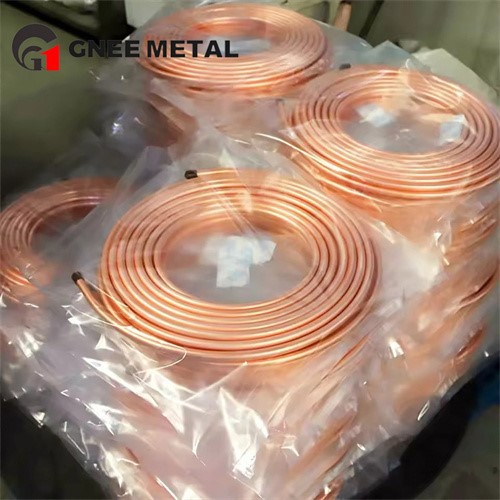
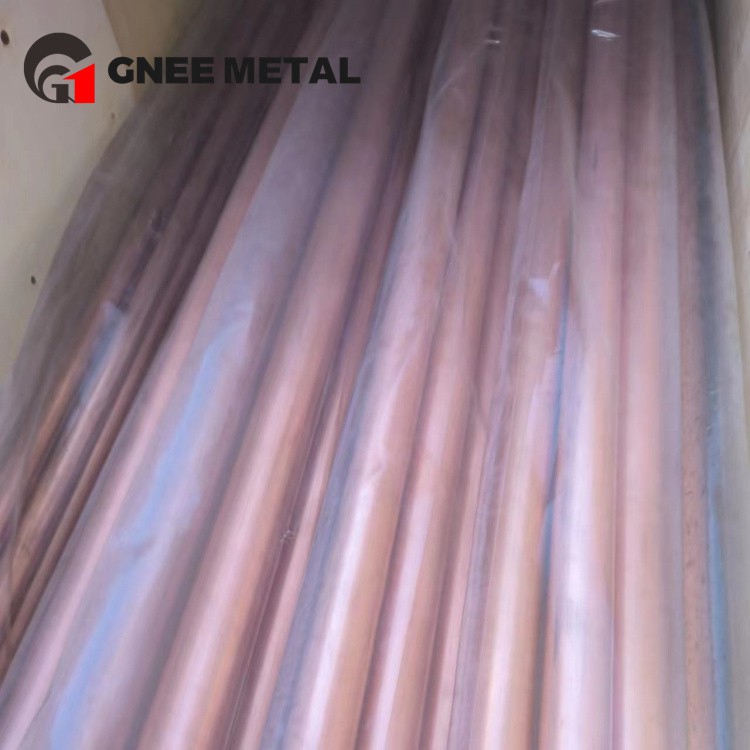
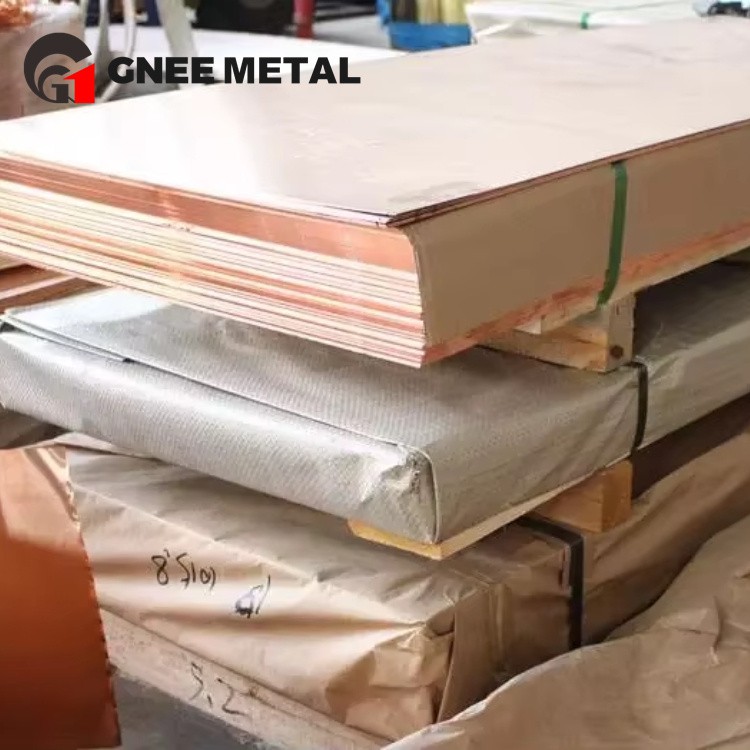
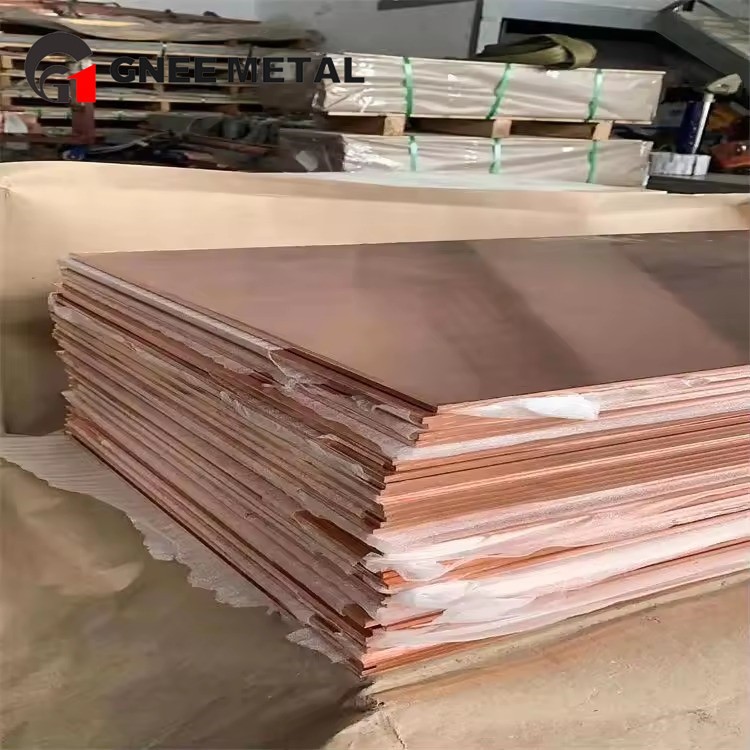
Industrial-Grade Export Packaging
Maximum protection against oxidation, moisture, and transit damage.
1. Anti-Oxidation Protection
VCI Paper & Moisture-Proof Film: Every order is vacuum-sealed or wrapped in anti-corrosion materials to ensure the copper remains bright and tarnish-free during sea freight.
2. Reinforced Structural Support
Seaworthy Wooden Crates: We use reinforced, fumigation-free wooden cases (ISPM-15) and steel strapping for rods, tubes, and heavy plates to prevent bending or surface scratches.
3. Secure Handling & Loading
Forklift-Ready Pallets: All materials are secured on standardized export pallets for easy unloading and maximum stability in containers.
4. Clear Identification
Professional Labeling: Each package includes detailed labels with heat numbers, specifications, and net weight for efficient inventory management.

Advanced Manufacturing & Quality Control
1. Core Production Equipment
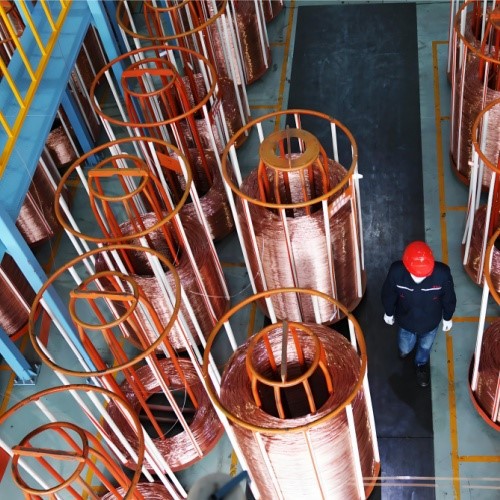
Up-casting & Continuous Casting Lines: Ensures high-purity oxygen-free copper rods and wires with uniform grain structure.
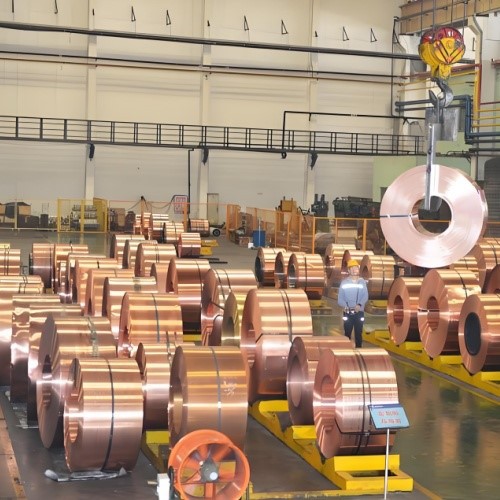
High-Precision Cold/Hot Rolling Mills: Automated thickness control for copper plates and strips with tolerances within ±0.01mm.
Large-Scale Extrusion & Drawing Machines: Capable of producing seamless copper tubes and rods in diverse diameters and shapes.
Atmospheric Controlled Annealing Furnaces: Bright annealing process to achieve specific tempers (Soft, Half-hard, Hard) without surface oxidation.
2. In-House Testing Center
Direct-Reading Spectrometers: Instant chemical composition analysis to guarantee Cu purity and precise alloying (Brass, Bronze, etc.).
Universal Tensile Testers: Verifying mechanical properties including tensile strength, elongation, and yield strength.
Eddy Current & Ultrasonic Testing: 100% non-destructive inspection for tubes and rods to detect internal cracks or flaws.
Conductivity & Hardness Testers: Ensuring electrical conductivity (IACS) and Vickers/Rockwell hardness meet international standards (ASTM, EN, DIN).



Get Fast Quote & Logistics Plan


