

The standard purity of C11000 copper (also known as Electrolytic Tough Pitch or ETP copper) is a minimum of 99.90%. This percentage includes copper and a small amount of silver (Ag), which is naturally present and counted as copper because it enhances rather than hinders electrical conductivity.
In technical specifications like ASTM B152 or UNS C11000, this purity level is the baseline that ensures the material can achieve an electrical conductivity rating of 101% IACS (International Annealed Copper Standard).
Need high-purity copper for your project? View our full range of [C11000 electrolytic tough pitch copper] materials and technical specifications.
Why is 99.90% the Industrial Benchmark for C11000?
The "purity" of C11000 is achieved through an electrolytic refining process. While it isn't "oxygen-free" (that would be C10100 or C10200), the controlled presence of oxygen (0.02% to 0.04%) in C11000 helps to remove impurities from the molten copper, ensuring that the remaining material has extremely low resistance.
If the purity drops even slightly below 99.90%, the electrical resistance increases sharply, making it unsuitable for high-performance C11000 electrical copper busbar applications.
Chemical Composition & Purity Limits (ASTM B152 / C11000)
| Element | Content (%) | Procurement Impact |
| Copper (Cu + Ag) | 99.90% Min | Core purity for conductivity |
| Oxygen (O) | 0.005% - 0.04% | Ensures the "Tough Pitch" characteristic |
| Iron (Fe) | 0.005% Max | Excessive iron increases hardness and resistivity |
| Lead (Pb) | 0.005% Max | Controlled for RoHS compliant C11000 copper |
C11000 vs. T2 Copper: Is the Purity Identical?
A common question for procurement officers sourcing from Asia is whether T2 copper has the same purity as C11000. In the Chinese standard GB/T 5231, T2 copper is also defined with a minimum purity of 99.90%.
Therefore, whether you are buying from a china t2 copper plate factory or a US-based distributor, the chemical purity remains the same. The difference lies in the certification and the precision of the manufacturing process (such as the tolerances on a C11000 copper sheet).
Verify Batch Purity & Traceability
Does Silver (Ag) Content Affect the Purity Rating?
Yes. In the world of C11000, silver is considered a "good" impurity. Most C11000 material contains trace amounts of silver, which increases the softening temperature of the copper without reducing its conductivity. For this reason, standard ASTM and EN specifications allow silver to be counted as part of the 99.90% copper content.
If your application requires extremely high thermal stability-such as in a transformer C11000 copper coil-the presence of silver in the 99.90% purity profile is actually a technical advantage.
For power distribution, purity is everything. Explore our [C11000 copper bar] and [C11000 copper plate] stock, certified for 101% IACS conductivity.
How Does Purity Impact C11000 CNC Machining?
While 99.90% purity is excellent for electricity, "pure" copper is notoriously difficult to machine. It is soft and "sticky," which can lead to tool gumming.
However, because the purity is strictly controlled, the C11000 copper mechanical properties are consistent. This allows shops specializing in C11000 copper cnc machining to use specific speeds and feeds to achieve a polished t2 copper sheet finish or complex geometries in custom cut C11000 copper plate without risking internal defects.
Table 2: Purity vs. Conductivity (Typical Values)
| Material Grade | Purity (Cu%) | Conductivity (IACS) | Common Use Case |
| C11000 (ETP) | 99.90% | 101% | Electrical Busbars, Connectors |
| C10200 (OF) | 99.95% | 100% | Vacuum seals, Electronics |
| C10100 (OFE) | 99.99% | 101% - 102% | High-end Audio, Superconductors |
FAQ
1. Does 99.90% purity guarantee the copper is RoHS compliant?
Not automatically, but C11000 is naturally compliant because its impurities (like Lead or Cadmium) are kept well below the RoHS thresholds to maintain conductivity. Always ask for a RoHS compliant C11000 copper certificate to be sure.
2. Why isn't C11000 called "99.99% pure"?
C11000 is ETP copper, which contains oxygen. To get to 99.99% purity (4N), you would need to remove the oxygen and other trace elements through more expensive vacuum melting, resulting in C10100. For 95% of industrial uses, C11000's 99.90% is the most cost-effective "high purity" choice.
3. How can I verify purity upon delivery?
You should check the C11000 mill test certificate (MTC) provided by the manufacturer. It should list the exact percentages of Copper, Oxygen, and trace impurities. For critical projects, many buyers perform an Eddy Current conductivity test to verify purity indirectly.
4. Can purity drop during the manufacturing of C11000 copper tube?
The chemical purity doesn't change during the drawing of a C11000 copper tube, but the mechanical temper (hardness) does. The high purity ensures that even after multiple drawing stages, the copper remains highly conductive and resistant to corrosion.
5. Does surface oxidation mean the copper is no longer pure?
No. Surface oxidation (tarnish) is a natural chemical reaction on the surface of C11000 material. The internal purity of the C11000 copper sheet remains 99.90%. Oxidation can be removed by pickling or polishing without affecting the material's grade.
6. Is C11000 purity affected by recycling?
High-quality china t2 copper plate factory operations use refined scrap, but they must undergo electrolytic refining to return to the 99.90% UNS C11000 standard. Never accept "re-melted" copper without a full spectrographic analysis.
Product Specifications & Range
| Product Category | Common Grades (Alloys) | Size Range (Dimensions) | Standards |
| Copper Rods | C11000, C12200, C10200, C14500 | Diameter: 3mm – 400mm<br>Shape: Round, Hexagonal, Square | ASTM B187, EN 12163 |
| Copper Tubes | C11000, C12200 (DHP), C10200 (OF), C27200 | OD: 2mm – 219mm<br>Wall Thickness: 0.2mm – 20mm | ASTM B280, EN 12735 |
| Copper Plates | C11000 (ETP), C10200, C12200 | Thickness: 0.1mm – 150mm<br>Width: Up to 2500mm | ASTM B152, DIN 1751 |
| Copper Wires | C11000, C10200, Brass Wire | Diameter: 0.05mm – 10.0mm<br>Form: Spool or Coil | ASTM B3, EN 13602 |
| Copper Strips | C11000, C12200, C26800 (Brass) | Thickness: 0.05mm – 3.0mm<br>Width: 5mm – 610mm | ASTM B19, EN 1652 |
Customization Note:
Custom Dimensions: We provide precision cutting and slitting services to meet your specific project requirements.
Tempers Available: Soft (O), Half-Hard (H02), Full Hard (H04), and Spring Hard (H08).
Surface Finish: Bright annealing, Polished, or Plated (Tin, Silver, Nickel) upon request.
Industrial-Grade Export Packaging
Maximum protection against oxidation, moisture, and transit damage.
1. Anti-Oxidation Protection
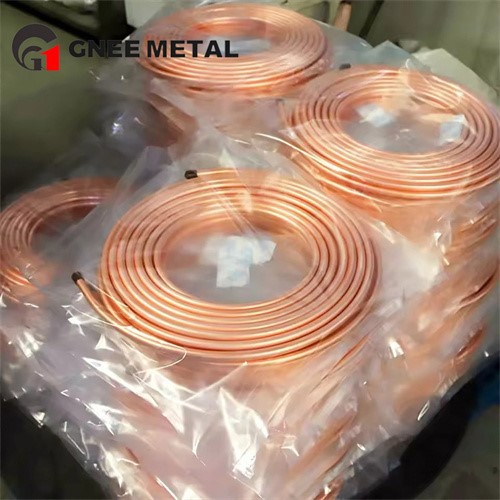
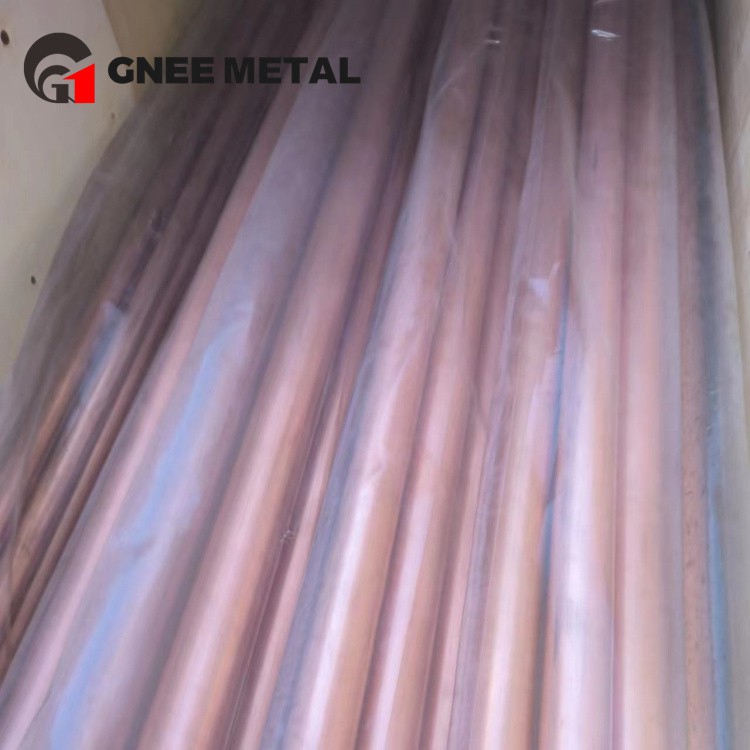
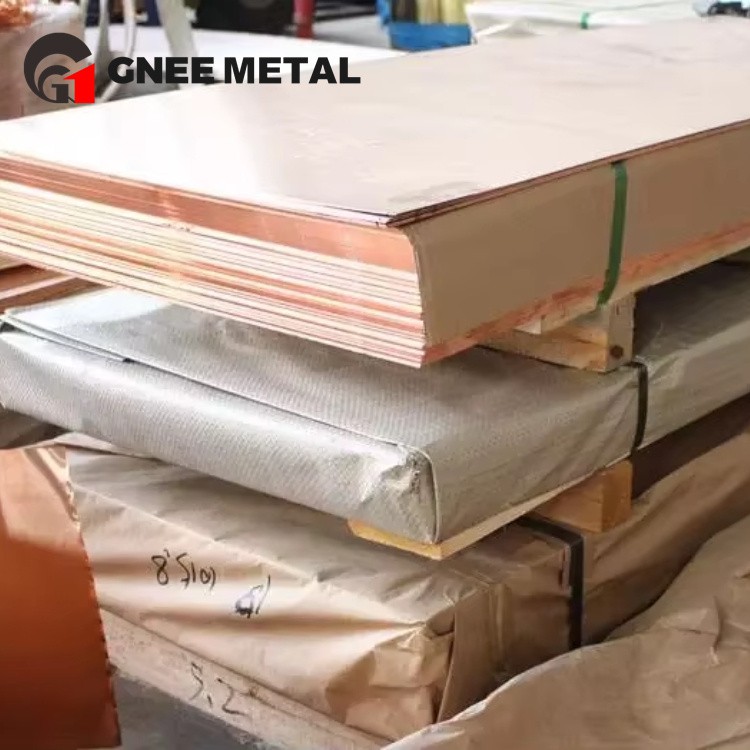
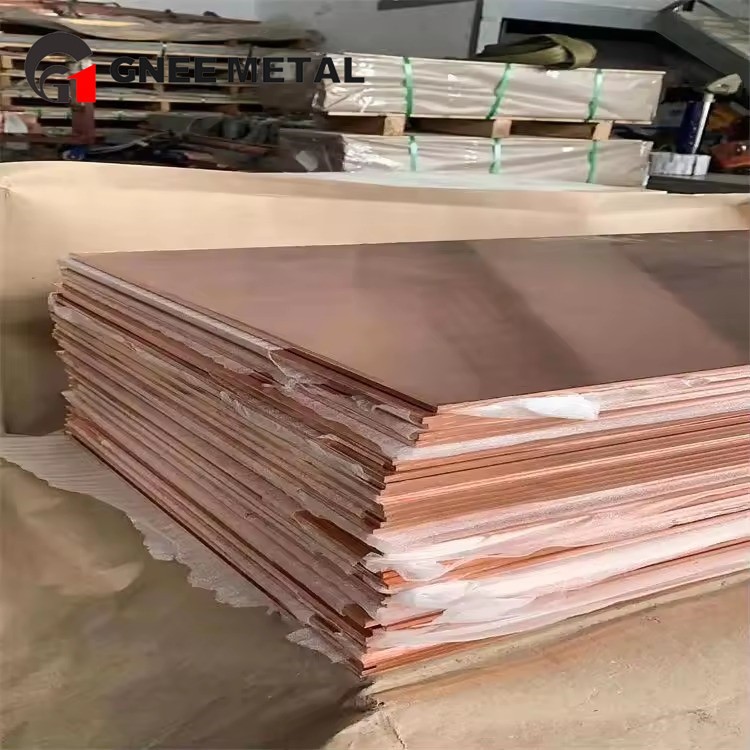
VCI Paper & Moisture-Proof Film: Every order is vacuum-sealed or wrapped in anti-corrosion materials to ensure the copper remains bright and tarnish-free during sea freight.
2. Reinforced Structural Support
Seaworthy Wooden Crates: We use reinforced, fumigation-free wooden cases (ISPM-15) and steel strapping for rods, tubes, and heavy plates to prevent bending or surface scratches.
3. Secure Handling & Loading
Forklift-Ready Pallets: All materials are secured on standardized export pallets for easy unloading and maximum stability in containers.
4. Clear Identification
Professional Labeling: Each package includes detailed labels with heat numbers, specifications, and net weight for efficient inventory management.

Advanced Manufacturing & Quality Control
1. Core Production Equipment
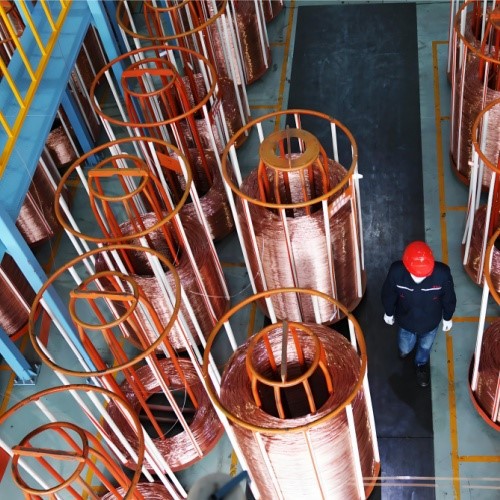
Up-casting & Continuous Casting Lines: Ensures high-purity oxygen-free copper rods and wires with uniform grain structure.
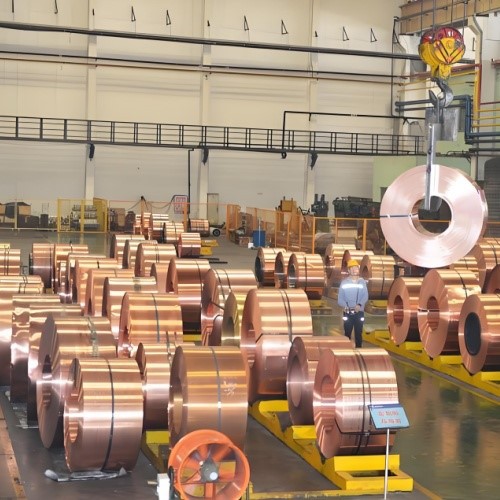
High-Precision Cold/Hot Rolling Mills: Automated thickness control for copper plates and strips with tolerances within ±0.01mm.
Large-Scale Extrusion & Drawing Machines: Capable of producing seamless copper tubes and rods in diverse diameters and shapes.
Atmospheric Controlled Annealing Furnaces: Bright annealing process to achieve specific tempers (Soft, Half-hard, Hard) without surface oxidation.
2. In-House Testing Center
Direct-Reading Spectrometers: Instant chemical composition analysis to guarantee Cu purity and precise alloying (Brass, Bronze, etc.).
Universal Tensile Testers: Verifying mechanical properties including tensile strength, elongation, and yield strength.
Eddy Current & Ultrasonic Testing: 100% non-destructive inspection for tubes and rods to detect internal cracks or flaws.
Conductivity & Hardness Testers: Ensuring electrical conductivity (IACS) and Vickers/Rockwell hardness meet international standards (ASTM, EN, DIN).



Get Fast Quote & Logistics Plan


