

C11000 copper, also known as T2 in international markets or Cu-ETP in Europe, is the undisputed global standard for high-current electrical applications. Its defining characteristic is a minimum electrical conductivity of 101% IACS, a level achieved through meticulous electrolytic refining that guarantees a copper purity of 99.90% minimum. This unparalleled conductivity minimizes energy loss, making it the superior choice for busbars, heavy-duty terminals, and power distribution systems. Explore our extensive inventory of C11000 profiles on the C11000 product overview.
How does C11000 achieve 101% IACS conductivity?
The "Electrolytic Tough Pitch" (ETP) designation in c11000 material is key to its superior electrical performance. During the refining process, oxygen is deliberately introduced to oxidize and remove impurities like sulfur and iron that would otherwise impede electron flow. This controlled oxygen content, typically between 0.02% and 0.04%, ensures the remaining copper matrix is exceptionally pure. For a detailed breakdown of these trace elements, consult our technical guide on the chemical composition of C11000 alloy.
While this oxygen content does preclude C11000 from high-temperature vacuum or hydrogen brazing applications (as it can lead to hydrogen embrittlement), it has no negative impact on conductivity or thermal performance in standard electrical environments.
C11000's Electrical and Thermal Performance Metrics
| Property | Metric | Value | Significance |
| Electrical Conductivity | % IACS | 101% min | Industry standard for low loss |
| Electrical Resistivity | ohm·mm²/m | 0.01707 max | Low resistance heating |
| Copper Purity | % Cu + Ag | 99.90% min | High signal integrity |
| Thermal Conductivity | W/m·K | 388 | Efficient heat dissipation |
| Oxygen Content | % | 0.02% - 0.04% | Enhances purity |
Mechanical integrity of C11000 H02 temper for structural applications
Beyond its electrical prowess, C11000 copper offers robust mechanical properties, particularly in its common H02 (Half-Hard) temper. This state provides a critical balance: sufficient rigidity to maintain structural integrity in busbars and connectors, while retaining enough ductility for forming and bending. With a tensile strength typically ranging from 240 to 300 MPa, it can withstand the mechanical stresses of short-circuit events.
For engineers designing complex busbar assemblies that require precise bends, understanding the material's formability is crucial. Our guide on whether C110 copper is bendable details how to achieve tight radii without compromising the material's integrity.
Key Mechanical Properties of C11000 H02 Temper
| Property | Unit | Value Range |
| Tensile Strength | MPa | 240 - 300 |
| Yield Strength | MPa | 170 - 280 |
| Hardness (Vickers) | HV | 75 - 95 |
| Elongation (50mm gauge) | % | 15% min |
Global Standards: C11000, T2, and Cu-ETP equivalency for procurement
From an international B2B procurement perspective, C11000 (UNS designation), T2 (Chinese GB standard), and Cu-ETP / CW004A (European EN standard) are recognized as equivalent grades. They all specify the same 99.90% minimum copper purity and 101% IACS conductivity. This global standardization simplifies sourcing for multinational projects.
The price of C11000 copper serves as the industry baseline for pure copper products. Its widespread availability and high production volumes contribute to its cost-effectiveness, making it the default choice for most electrical infrastructure unless specific extreme conditions (like vacuum or high-temperature welding) necessitate higher-purity oxygen-free grades.
Global Grade Equivalents and Key Specifications
| Designation | Country/Region | Purity (% Cu Min) | Conductivity (% IACS Min) | Oxygen Status |
| C11000 | USA (UNS) | 99.90 | 101 | Tough Pitch (Oxygen-bearing) |
| T2 | China (GB) | 99.90 | 101 | Tough Pitch (Oxygen-bearing) |
| Cu-ETP / CW004A | Europe (EN) | 99.90 | 101 | Tough Pitch (Oxygen-bearing) |
FAQ
1. Is C11000 suitable for outdoor applications?
Yes, but for prolonged exposure in corrosive environments (e.g., coastal), plating (like tin or silver) is recommended to prevent surface oxidation and maintain optimal contact resistance.
2. What is the maximum current carrying capacity of C11000?
This depends on the cross-sectional area of the conductor and the ambient temperature. However, its 101% IACS conductivity ensures it can handle high currents with minimal resistive heating.
3. Can C11000 be used for transformer windings?
Yes, it's commonly used for primary and secondary leads. For the core windings where extreme heat can build up, some applications might use silver-bearing copper or oxygen-free grades for added thermal stability.
4. How does C11000 compare to brass for electrical terminals?
C11000 offers vastly superior conductivity (101% vs. 26% IACS) and is safer for high-current applications. Brass is primarily chosen for its superior machinability and lower cost in low-power, complex-geometry terminals.
5. Is C11000 considered "lead-free"?
Yes. It contains a maximum of 0.005% lead, complying with RoHS and other environmental regulations.
6. Can your factory supply custom-fabricated C11000 components?
Yes. We provide not only raw material supply of t2 copper but also precision CNC machining and bending services for custom busbars and terminals. Contact us for a fully integrated quote.
Product Specifications & Range
| Product Category | Common Grades (Alloys) | Size Range (Dimensions) | Standards |
| Copper Rods | C11000, C12200, C10200, C14500 | Diameter: 3mm – 400mm<br>Shape: Round, Hexagonal, Square | ASTM B187, EN 12163 |
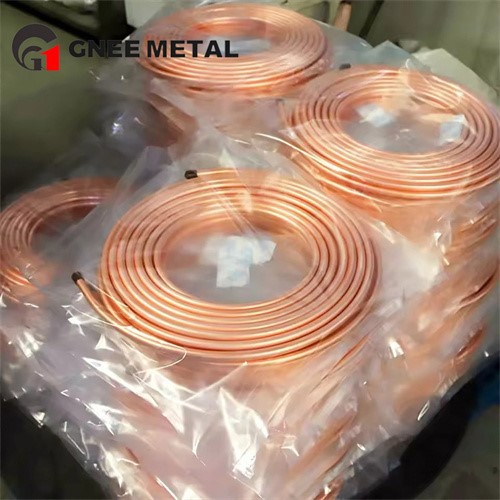
| Copper Tubes | C11000, C12200 (DHP), C10200 (OF), C27200 | OD: 2mm – 219mm<br>Wall Thickness: 0.2mm – 20mm | ASTM B280, EN 12735 |
| Copper Plates | C11000 (ETP), C10200, C12200 | Thickness: 0.1mm – 150mm<br>Width: Up to 2500mm | ASTM B152, DIN 1751 |
| Copper Wires | C11000, C10200, Brass Wire | Diameter: 0.05mm – 10.0mm<br>Form: Spool or Coil | ASTM B3, EN 13602 |
| Copper Strips | C11000, C12200, C26800 (Brass) | Thickness: 0.05mm – 3.0mm<br>Width: 5mm – 610mm | ASTM B19, EN 1652 |
Customization Note:
Custom Dimensions: We provide precision cutting and slitting services to meet your specific project requirements.
Tempers Available: Soft (O), Half-Hard (H02), Full Hard (H04), and Spring Hard (H08).
Surface Finish: Bright annealing, Polished, or Plated (Tin, Silver, Nickel) upon request.
Industrial-Grade Export Packaging
Maximum protection against oxidation, moisture, and transit damage.
1. Anti-Oxidation Protection
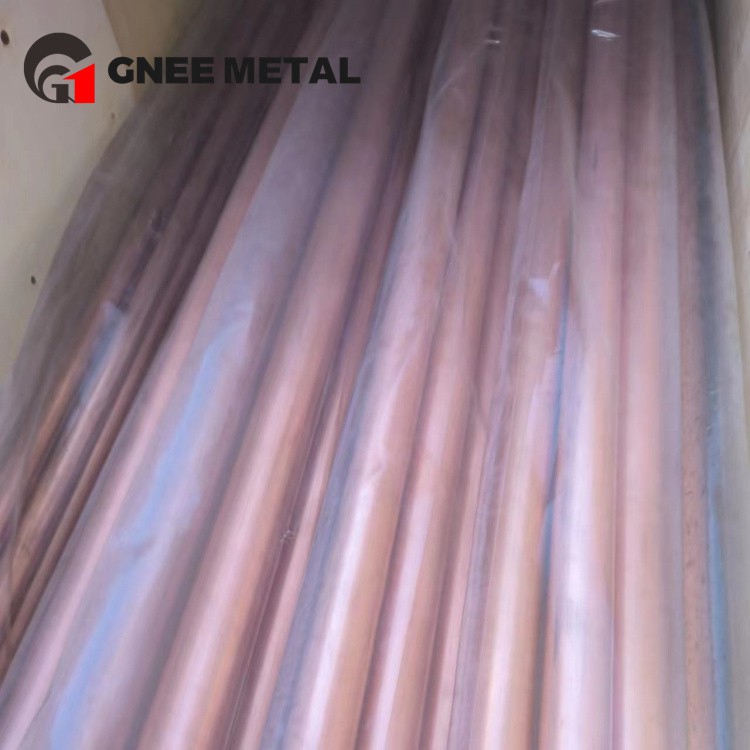
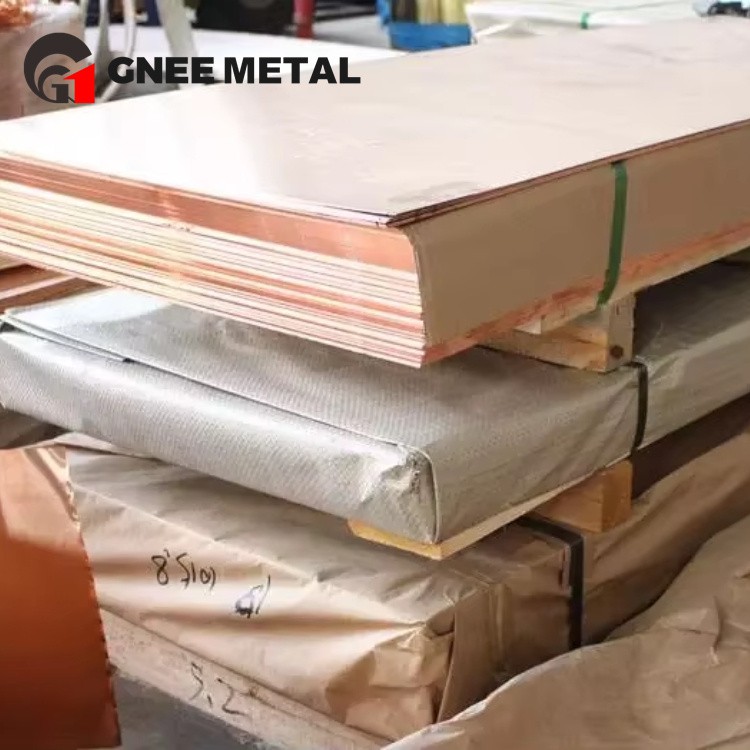
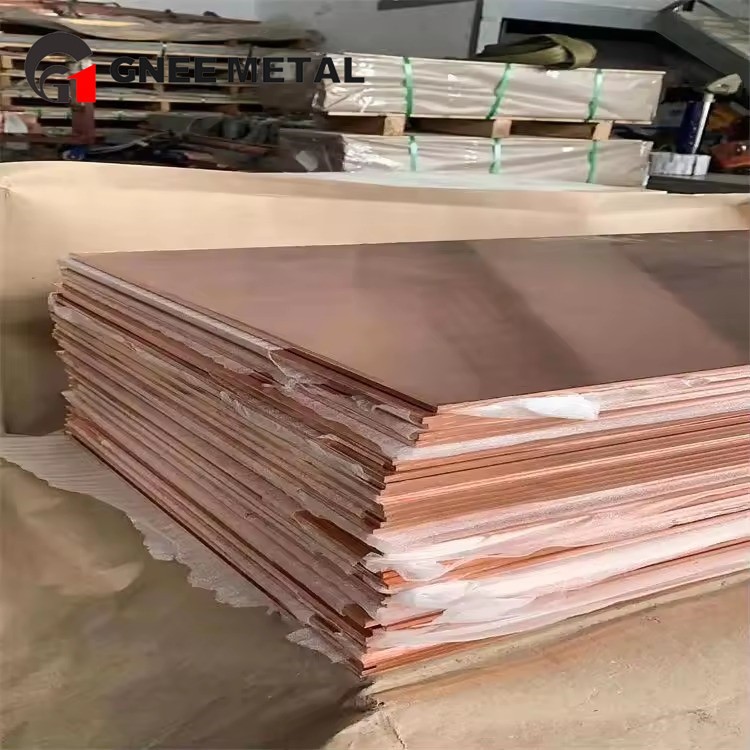
VCI Paper & Moisture-Proof Film: Every order is vacuum-sealed or wrapped in anti-corrosion materials to ensure the copper remains bright and tarnish-free during sea freight.
2. Reinforced Structural Support
Seaworthy Wooden Crates: We use reinforced, fumigation-free wooden cases (ISPM-15) and steel strapping for rods, tubes, and heavy plates to prevent bending or surface scratches.
3. Secure Handling & Loading
Forklift-Ready Pallets: All materials are secured on standardized export pallets for easy unloading and maximum stability in containers.
4. Clear Identification
Professional Labeling: Each package includes detailed labels with heat numbers, specifications, and net weight for efficient inventory management.

Advanced Manufacturing & Quality Control
1. Core Production Equipment
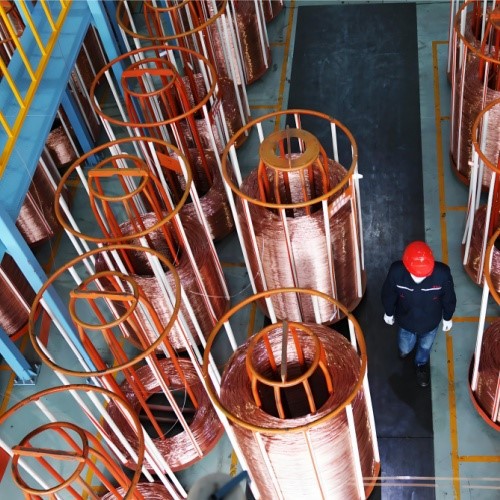
Up-casting & Continuous Casting Lines: Ensures high-purity oxygen-free copper rods and wires with uniform grain structure.
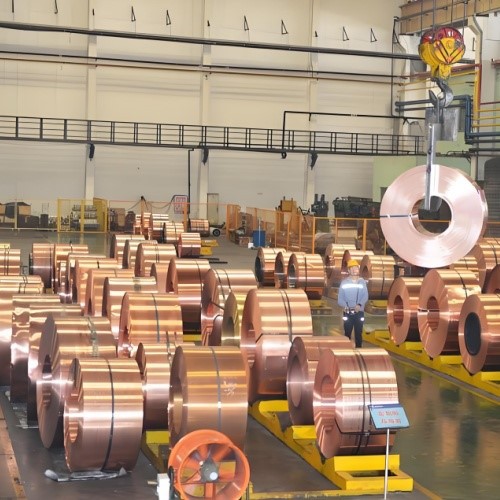
High-Precision Cold/Hot Rolling Mills: Automated thickness control for copper plates and strips with tolerances within ±0.01mm.
Large-Scale Extrusion & Drawing Machines: Capable of producing seamless copper tubes and rods in diverse diameters and shapes.
Atmospheric Controlled Annealing Furnaces: Bright annealing process to achieve specific tempers (Soft, Half-hard, Hard) without surface oxidation.
2. In-House Testing Center
Direct-Reading Spectrometers: Instant chemical composition analysis to guarantee Cu purity and precise alloying (Brass, Bronze, etc.).
Universal Tensile Testers: Verifying mechanical properties including tensile strength, elongation, and yield strength.
Eddy Current & Ultrasonic Testing: 100% non-destructive inspection for tubes and rods to detect internal cracks or flaws.
Conductivity & Hardness Testers: Ensuring electrical conductivity (IACS) and Vickers/Rockwell hardness meet international standards (ASTM, EN, DIN).



Get Fast Quote & Logistics Plan


