

Copper Plate
SGS Certified Copper Sheet – MTC Available for Every Batch
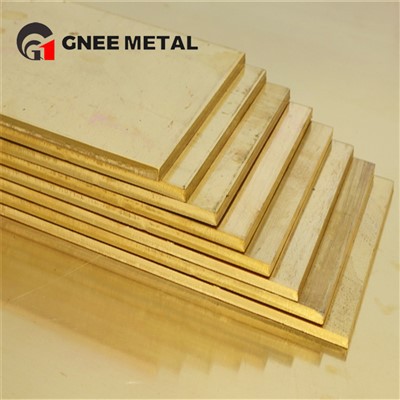
We supply ASTM B152 copper sheet in grades C11000, C10200, and C12200. Every batch is tested by SGS, an internationally recognized third-party inspection body. You receive a verifiable Mill Test Certificate (MTC) with every shipment – no hidden impurities, no grade substitution.
Thickness range: 0.5mm – 50mm | Width: up to 1000mm | Custom lengths available


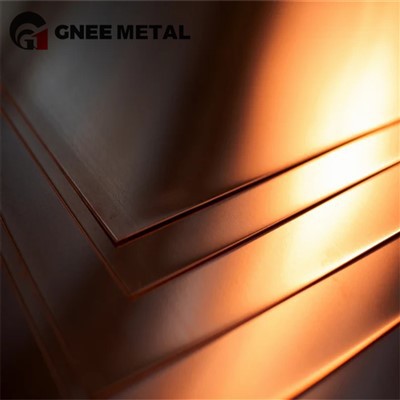


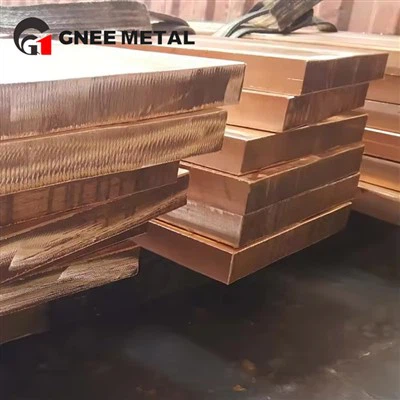
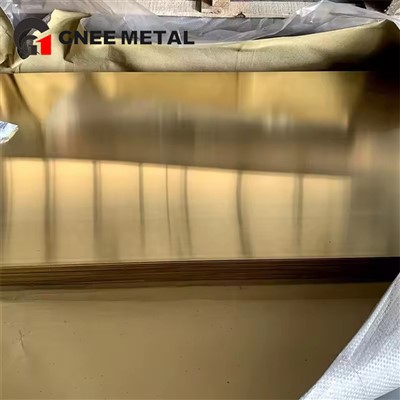
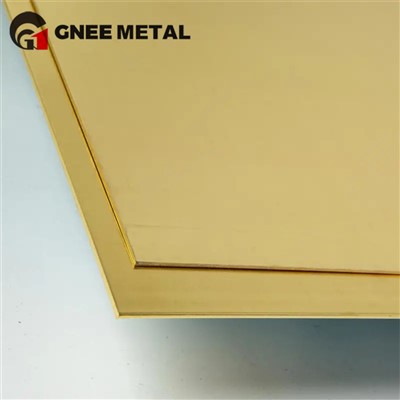
Applications – Choose by Your Use Case

Electronics / Heat Dissipation
For 5G base stations, LED heat sinks, power supply bases, PC cooling
Recommended Grade: C11000 or C10200
Key Property: Thermal conductivity ≥ 390 W/(m·K)

Roofing / Architecture
For curved roofs, eaves, rain screens, church domes, sculptures
Recommended Grade: C11000 or C12200
Key Property: Soft temper (O), elongation ≥ 40%

Decorative / Hardware
For nameplates, door handles, lighting fixtures, awards, jewelry, furniture trim
Recommended Grade: C26800
Key Property: Golden color, multiple surface finishes available

Machinery / Gaskets & Wear Plates
For shims, sealing gaskets, wear plates, guide rails, CNC fixture plates
Recommended Grade: C11000 (Hard Temper) or C36000 (Free-cutting Brass)
Key Property: High hardness, wear-resistant, or free-cutting for CNC

Chemical / Corrosion-Resistant
For heat exchangers, pressure vessels, marine environments, chemical equipment
Recommended Grade: C12200 (Phosphorus Deoxidized Copper)
Key Property: Excellent weldability, corrosion-resistant

Stamping / Deep Drawing
For enclosures, containers, battery cups, complex stamped parts, speaker components
Recommended Grade: C11000 (Soft Temper / Annealed)
Key Property: High elongation (≥ 40%), excellent formability
Materials, Standards & Properties
| Material | ASTM | GB/T | EN | JIS | Purity | Conductivity | Key Application |
|---|---|---|---|---|---|---|---|
| C11000 | C11000 | T2 | CW004A | C1100 | 99.9% | 98% IACS | Electrical, heat sinks, roofing |
| C10200 | C10200 | TU2 | CW008A | C1020 | 99.99% | 101% IACS | Vacuum, semiconductors |
| C12200 | C12200 | TP2 | CW024A | C1220 | 99.9% | 85% IACS | Heat exchangers, chemical |
| C26800 | C26800 | H68 | CW505L | C2680 | Cu 65-68% | — | Decorative, hardware |
Dimensions & Tolerances
Thickness
| Thickness Range | Standard Tolerance | Precision Tolerance (upon request) | ASTM B152 Standard | Our Advantage |
|---|---|---|---|---|
| 0.3mm – 1.0mm | ±0.01mm | ±0.005mm | ±0.025mm | 2-5x tighter |
| 1.0mm – 3.0mm | ±0.02mm | ±0.01mm | ±0.040mm | 2-4x tighter |
| 3.0mm – 10mm | ±0.03mm | ±0.02mm | ±0.060mm | 2-3x tighter |
| 10mm – 30mm | ±0.05mm | ±0.03mm | ±0.090mm | 2x tighter |
| 30mm – 50mm | ±0.10mm | ±0.05mm | ±0.120mm | 1.2-2x tighter |
Tighter tolerance = less scrap, faster setup, consistent results. Our standard tolerance already beats many mills. Precision tolerance available for critical jobs.
Flatness


| Thickness | Flatness (max deviation per 300mm) | Impact on Your Process |
|---|---|---|
| 0.3mm – 3mm | ≤ 0.5mm | Laser cutter vacuum holds tight. No head collisions. |
| 3mm – 10mm | ≤ 1.0mm | CNC bed clamps evenly. No chatter marks. |
| 10mm – 50mm | ≤ 2.0mm | Welding alignment stays true. No forced fits. |
Poor flatness causes laser head collisions, uneven clamping, and rejected parts. We double-straighten every sheet on a roller leveler before shipping.
Width & Length
| Parameter | Range | Tolerance (Sheared) | Tolerance (Laser Cut) |
|---|---|---|---|
| Width | Up to 1000mm | ±0.5mm | ±0.1mm |
| Length | Up to 3000mm | ±1.0mm | ±0.1mm |
| Squareness (diagonal difference) | — | ≤ 1.0mm per meter | ≤ 0.5mm per meter |
A sheet that‘s out of square by 2mm over 1 meter means your punched holes won‘t line up in assembly. We laser-cut to strict squareness standards.
Standard Stock Sizes – Ready to Ship Within 24 Hours
| Thickness | Width x Length | Suitable For |
|---|---|---|
| 0.5mm | 600mm x 1500mm | Stamping, heat sinks, nameplates |
| 1.0mm | 600mm x 1500mm | Enclosures, gaskets, decorative |
| 2.0mm | 600mm x 1500mm | Busbars, brackets, wear plates |
| 3.0mm | 600mm x 1500mm | Machinery parts, flanges |
| 5.0mm | 600mm x 1500mm | Heavy-duty gaskets, tooling plates |
| 10mm | 600mm x 1500mm | Structural parts, CNC blanks |
Not on the list? We cut to your exact size. No minimum quantity for custom cuts.
Unit Conversion & Weight Calculator
Quick Conversion Reference
| Imperial → Metric | Metric → Imperial |
|---|---|
| 1 inch = 25.4 mm | 1 mm = 0.0394 inch |
| 1 foot = 304.8 mm | 1 mm = 0.00328 foot |
| 1 lb = 0.4536 kg | 1 kg = 2.2046 lb |
| 1 lb/ft² = 4.882 kg/m² | 1 kg/m² = 0.2048 lb/ft² |
Common Conversions
| Inches | mm | Feet | mm | lbs | kg |
|---|---|---|---|---|---|
| 1/16″ (0.0625″) | 1.59 mm | 1 ft | 305 mm | 1 lb | 0.45 kg |
| 1/8″ (0.125″) | 3.18 mm | 2 ft | 610 mm | 5 lb | 2.27 kg |
| 1/4″ (0.25″) | 6.35 mm | 3 ft | 914 mm | 10 lb | 4.54 kg |
| 3/8″ (0.375″) | 9.53 mm | 4 ft | 1219 mm | 20 lb | 9.07 kg |
| 1/2″ (0.5″) | 12.7 mm | 5 ft | 1524 mm | 50 lb | 22.68 kg |
| 3/4″ (0.75″) | 19.05 mm | 6 ft | 1829 mm | 100 lb | 45.36 kg |
| 1″ | 25.4 mm | 8 ft | 2438 mm | 500 lb | 226.8 kg |
| 2″ | 50.8 mm | 10 ft | 3048 mm | 1000 lb | 453.6 kg |
Copper Sheet Weight Calculator
Density of copper: 8.93 g/cm³ | 0.323 lb/in³ | 557 lb/ft³
Metric Formula
Weight (kg) = Length (m) × Width (m) × Thickness (mm) × 8.93
Example: A sheet of 1m × 0.5m × 2mm
1 × 0.5 × 2 × 8.93 = 8.93 kg
Imperial Formula
Weight (lbs) = Length (in) × Width (in) × Thickness (in) × 0.323
Example: A sheet of 48″ × 24″ × 0.5″
48 × 24 × 0.5 × 0.323 = 186 lbs
Tempers We Supply – Soft, Half Hard, Hard
| Temper | Code | Hardness (HV) | Tensile Strength (MPa) | Elongation | Best For |
|---|---|---|---|---|---|
| Soft (Annealed) | O | 40 – 65 | 220 – 250 | ≥ 40% | Deep drawing, complex bending, embossing |
| Half Hard | 1/2H | 75 – 110 | 260 – 320 | 20 – 30% | Busbars, brackets, light stamping, general forming |
| Hard | H | 110 – 150 | 310 – 380 | 5 – 15% | Wear plates, guide rails, structural parts, no bending |
Temper Availability by Thickness
| Thickness | Soft (O) | Half Hard (1/2H) | Hard (H) |
|---|---|---|---|
| 0.3mm – 3mm | ✅ Yes | ✅ Yes | ✅ Yes |
| 3mm – 10mm | ✅ Yes | ✅ Yes | ✅ Yes |
| 10mm – 30mm | ✅ Yes | ✅ Yes | ⚠️ Limited |
| 30mm – 50mm | ✅ Yes | ⚠️ Limited | ✅ Yes |
Not seeing your required temper? Contact us – custom tempers available upon request.
How to Choose the Right Temper
| If You Need... | Choose This Temper | Why |
|---|---|---|
| To bend sharply (90° or tighter) | Soft (O) | High elongation prevents cracking |
| To deep draw into a cup or enclosure | Soft (O) | Flows easily into complex shapes |
| A busbar that holds its shape | Half Hard (1/2H) | Good strength, still formable |
| A stamped part with flatness | Half Hard (1/2H) | Resists warping after stamping |
| A wear plate or guide rail | Hard (H) | Maximum strength and abrasion resistance |
| A structural support | Hard (H) | Holds heavy loads without bending |
| To CNC mill a complex part | Half Hard or Hard | Less vibration during cutting |
Why Choose Us


99.99% Purity – Backed by Third-Party Test Reports
We use only virgin electrolytic copper – no recycled scrap, no blended lots. Every batch is tested by an independent third-party laboratory (SGS or equivalent), and you receive a verifiable spectrometric analysis report with your shipment.


Surface Quality – Oxide-Free, Scratch-Free, Oil-Free
| Defect | Our Standard | |
|---|---|---|
| Oxidation | None – bright annealed | No cleaning before soldering or painting |
| Scratches | None – roller leveled with film protection | Cosmetic parts pass inspection |
| Oil / grease | None – degreased before packing | No contamination of your stamping dies |
| Edge burrs | ≤ 0.05mm – fully deburred | No cut gloves, no electrical arcing |
We don‘t just say it. We provide high-resolution photos of your actual sheets before shipping.


One-Stop Customization – Cut, Drill, Chamfer, Bend
Why buy from one supplier and then pay another to process it? We do it all.
| Service | Equipment | Precision |
|---|---|---|
| Laser cutting | German Trumpf | ±0.1mm |
| Waterjet cutting | Waterjet | No heat-affected zone |
| CNC punching | Turret punch | Hole position ±0.2mm |
| Chamfering / Deburring | Automatic line | Smooth R-corners |
| Bending | Press brake | ±0.5° per meter |
You receive parts ready for assembly – not raw sheets that need more work.
our casey
Stamping Plant – Scrap Rate Cut from 5% to 0.7%
The problem: Inconsistent thickness caused parts to fail inspection. 5% scrap rate.
What we did: Switched them to our C11000 sheet with precision thickness control – holding ±0.02mm across the entire batch.
The result: Scrap rate dropped to 0.7%. Customer saved $18,500 per year in rejected parts.

CNC Machine Shop – Tool Life Increased 35%
The problem: Hard spots from recycled scrap broke end mills every 200 parts.
What we did: Replaced their mixed-scrap material with our C10200 oxygen-free copper. 99.99% purity. No hard spots.
The result: Tool life extended to 270 parts per end mill. 35% lower tooling cost.

Busbar Fabricator – Cut Secondary Processing Cost by 50%
The problem: Buying raw sheets, then paying another shop for cutting and drilling.
What we did: Started delivering sheets already laser cut, drilled, and chamfered – ready for assembly.
The result: One supplier instead of two. No shipping between shops. 50% less processing cost.

Electronics Manufacturer – Zero Oxidation Claims in 12 Months
The problem: Previous supplier‘s sheets arrived with oxidation – required cleaning before soldering.
What we did: Switched to bright annealed finish + VCI paper + sealed packaging.
The result: Zero oxidation claims over 12 months. No cleaning step. Saved 15 minutes per batch.

Quality Control


| Inspection Item | Equipment Used | Pass Standard |
|---|---|---|
| Chemical composition | Optical emission spectrometer | Meets ASTM / GB / EN / JIS for specified grade |
| Tensile strength & elongation | Universal testing machine | O: 220-250 MPa / 1/2H: 260-320 MPa / H: 310-380 MPa |
| Hardness (HV) | Digital hardness tester | O: 40-65 / 1/2H: 75-110 / H: 110-150 |
| Electrical conductivity | Digital conductivity meter | C11000 ≥ 98% IACS / C10200 ≥ 101% IACS |
| Thickness | Micrometer | ±0.01mm to ±0.10mm (by thickness range) |
| Width & length | Calipers | Sheared: ±0.5mm / Laser cut: ±0.1mm |
| Squareness | Granite plate + gauge | ≤ 0.5mm per meter |
| Flatness | Granite surface plate + feeler gauge | ≤ 0.5mm per 300mm (thin) / ≤ 2mm per 300mm (thick) |
| Surface defects (oxidation, scratches, oil) | Visual inspection | None visible |
| Edge burrs | Go/no-go gauge | ≤ 0.05mm |
Packaging


Copper sheet is heavy, edges are sharp, and moisture causes oxidation. Our packaging addresses all three problems.
Our 6-Layer Protection System
| Layer | Material | Purpose |
|---|---|---|
| 1 | Interleaving paper | Between each sheet – prevents scratching |
| 2 | VCI (Vapor Corrosion Inhibitor) paper | Blocks moisture – prevents oxidation during transit |
| 3 | Stretch film | Seals out humidity and dust |
| 4 | Steel corner protectors | Protects edges from impact damage |
| 5 | ISPM-15 certified hardwood pallet | Export compliant – no customs holds |
| 6 | Steel strapping | Locks load securely – no shifting |
What You Receive
Pre-shipping photos – We photograph your actual packed sheets before loading. You approve or request changes.
Packing list – Detailed list of sheets, sizes, quantities, and pallet weights.
Custom marking – Your logo, order number, or handling instructions on the pallet (upon request).
Production Equipment


| Equipment | Brand / Type | Purpose |
|---|---|---|
| Walking beam furnace | Custom-built | Uniform heating of copper slabs before hot rolling |
| Hot rolling mill | 2-high reversible | Reduces slab thickness from 150mm to 15mm |
| Precision cold rolling mill | 6-high reversible | Achieves tight tolerances down to ±0.01mm |
| Water-sealed bright annealing furnace | Bell-type | Oxidation-free annealing – soft temper, clean surface |
| Roller leveler | 21-roll | Flattens sheet to ≤ 0.5mm/m flatness |
| CNC laser cutter | German Trumpf | Custom cutting ±0.1mm accuracy |
| CNC turret punch | — | Drilling and hole punching |
| Automatic chamfering line | — | Edge deburring, R-corner finishing |
Factory Tour – See for Yourself
We welcome customer visits. See our equipment in person, inspect our production process, and meet our team.
Lead Time
Standard Lead Times
| Order Type | Processing Time | Shipping Time (est.) | Total Lead Time |
|---|---|---|---|
| Stock sizes (0.5-10mm, 600x1500mm) | 24 – 48 hours | 5 – 35 days | 1 – 5 weeks |
| Custom cut-to-size | 3 – 5 days | 5 – 35 days | 1 – 6 weeks |
| Non-standard thickness | 10 – 15 days | 5 – 35 days | 2 – 6 weeks |
| Precision tolerance (±0.005 – 0.01mm) | 15 – 20 days | 5 – 35 days | 3 – 6 weeks |
Processing time = from order confirmation to ready for shipping.
Estimated Shipping Time by Destination
| Destination | Sea Freight (Time) | Sea Freight (Cost) | Air Freight (Time) | Air Freight (Cost) |
|---|---|---|---|---|
| Southeast Asia | 7 – 12 days | $80 – $120 / CBM | 3 – 5 days | $5 – $8 / kg |
| East Asia (Japan, Korea) | 5 – 10 days | $70 – $110 / CBM | 3 – 5 days | $4 – $7 / kg |
| Middle East | 15 – 25 days | $100 – $150 / CBM | 5 – 7 days | $6 – $9 / kg |
| Europe | 25 – 35 days | $120 – $180 / CBM | 5 – 8 days | $6 – $10 / kg |
| North America | 25 – 35 days | $130 – $200 / CBM | 5 – 8 days | $6 – $10 / kg |
| South America | 30 – 45 days | $150 – $220 / CBM | 6 – 10 days | $7 – $12 / kg |
| Africa | 30 – 45 days | $160 – $250 / CBM | 7 – 12 days | $8 – $14 / kg |
Shipping times are estimates. Actual times may vary by port congestion, customs clearance, and carrier schedules.
Notes:
Sea freight: CBM = Cubic Meter. 1 CBM ≈ 500-700kg of copper sheet depending on packing.
Air freight: Rates vary by season, fuel surcharge, and exact destination.
Contact us with your order details and shipping address. We will confirm:
Exact processing time
Available shipping options
Total freight cost (sea / air / express)
Estimated arrival date
➡️ [Request lead time & freight quote]
FAQ
Q: What sizes can you supply? What‘s the maximum dimension?
A: Standard sheets up to 1000mm (width) × 3000mm (length). Larger sizes? Contact us – we custom roll or join sheets to meet your size requirements.
Q: How flat is your copper sheet? Does it bow or warp?
A: Our sheets are roller leveled to ≤ 0.5mm flatness per 300mm (for thin sheets) and ≤ 2mm per 300mm (for thick plates). No bow, no twist. If flatness is critical for your application, request our precision flatness option.
Q: What‘s your surface quality? Will it arrive oxidized or scratched?
A: No oxidation – bright annealed in a water-sealed furnace. No scratches – interleaving paper between every sheet. No oil – degreased before packing. We also send you pre-shipping photos so you see exactly what you‘re getting.
Q: Can I buy just one sheet? What‘s your minimum order quantity (MOQ)?
A: For cut-to-size pieces: no MOQ. You can order one sheet. For standard stock sheets (600×1500mm): one sheet minimum as well. For non-standard thickness or custom rolling: we may ask for a small quantity – please inquire.
Q: What‘s the difference between C11000, C10200, and C12200?
A:
C11000 – Best value, 98% IACS conductivity, general purpose.
C10200 – Oxygen-free, 101% IACS, for vacuum and semiconductor use.
C12200 – Phosphorus added, weldable, corrosion-resistant for wet environments.
Q: Can you provide a material test certificate?
A: Yes. Every shipment includes an MTC (Mill Test Certificate) with:
Chemical composition (actual test results)
Mechanical properties (tensile, hardness, elongation)
Lot number (fully traceable)
Third-party inspection (SGS, BV) available upon request.
Q: Can you drill holes, chamfer edges, or bend the sheet for me?
A: Yes to all three. We provide:
Drilling / punching (CNC turret punch)
Chamfering / deburring (automatic line)
Bending (press brake)
Send your drawing – we‘ll quote the finished part.
Q: What are your payment terms?
A: Standard terms:
T/T (bank transfer) – 30% deposit, 70% before shipping (for first-time orders). 30% deposit, 70% against copy of BL (for repeat customers).
L/C at sight – For larger orders.
PayPal / Credit card – For sample orders or small amounts (under $1000).
Q: Do you offer samples? Free or paid?
A: Free sample – 100mm × 100mm in your chosen grade and thickness. You pay only the shipping cost (DHL/FedEx/UPS). Sample will be ready within 2-3 days.
Q: What is your typical lead time?
A:
Stock sizes: 24 – 48 hours
Custom cut-to-size: 3 – 5 days
Non-standard thickness: 10 – 15 days
Precision tolerance: 15 – 20 days