

Copper Strip
Copper Strip Manufacturer for Precision Industrial Applications

Whether you need standard copper strip or custom slit coils, we supply reliable solutions for electrical, electronics, automotive, transformer, battery, and industrial manufacturing applications. Available in C11000, C12200, C26000, C26800, C5191, C5210 and other copper alloys, our products are manufactured in accordance with ASTM, EN, JIS, and GB standards to ensure consistent quality and global compatibility.
We offer thicknesses from 0.05 mm to 5.0 mm, widths up to 600 mm, multiple tempers, precision slitting, and custom dimensions to meet your exact production requirements. Every order undergoes strict dimensional inspection, surface quality control, mechanical property testing, and chemical composition analysis, with EN 10204 3.1 Mill Test Certificates and third-party inspection available upon request.


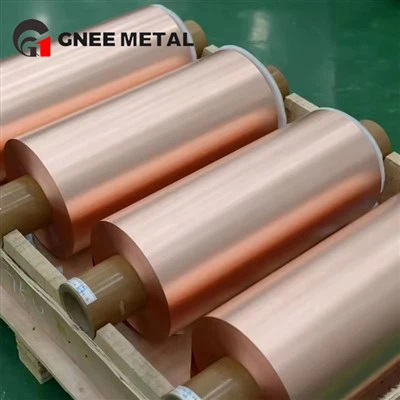


Copper Strip for Industrial Applications

Transformer Windings
Typical Components: Power Transformer Windings, Distribution Transformer Coils, Dry-Type Transformer Windings, LV & HV Windings
Common Grades: C11000, C10200, C12200
Surface Finish: Bright Finish, Clean Annealed, Enameled (Optional)

Electronics & Precision Connectors
Typical Components: Connector Terminals, Precision Stamping Parts, Electronic Contacts, EMI Shielding Components
Common Grades: C11000, C51900, C52100, C17200
Surface Finish: Bright Finish, Tin Plated, Nickel Plated, Gold Plated

EV Battery & Automotive
Typical Components: Battery Busbars, Battery Connectors, Charging Connectors, Motor Electrical Connectors
Common Grades: C11000, C10200, C5191, C5210
Surface Finish: Tin Plated, Nickel Plated, Silver Plated

Grounding & Electrical Connections
Typical Components: Flexible Conductors, Grounding Strips, Distribution Connectors, Electrical Contact Components
Common Grades: C11000, C10200, C12200
Surface Finish: Bright Finish, Tin Plated, Silver Plated

Industrial Equipment
Typical Components: Flexible Connectors, Grounding Components, Precision Metal Parts, Industrial Electrical Contacts
Common Grades: C11000, C26000, C26800, C5210
Surface Finish: Bright Finish, Tin Plated, Protective Film

Flexible Copper Connectors
Typical Components: Laminated Flexible Connectors, Copper Shunts, Expansion Connectors, Flexible Busbar Connectors
Common Grades: C11000, C10200, C12200
Surface Finish: Bright Finish, Tin Plated, Silver Plated
Copper Strip Types

Pure Copper Strip
Main Grades: C10100, C10200, C11000, C12000, C12200
Applications: Transformers, Busbars, Electrical Equipment
Key Advantages: High conductivity, Excellent formability

Brass Strip
Main Grades: C26000, C26800, C27200, C28000
Applications: Connectors, Hardware, Decorative Parts
Key Advantages: Good strength, Easy stamping, Cost-effective

Phosphor Bronze Strip
Main Grades: C51000, C51900, C52100, C52400
Applications: Springs, Electrical Contacts, Connectors
Key Advantages: High strength, Excellent fatigue resistance

Beryllium Copper Strip
Main Grades: C17200, C17510, C17500
Applications: Precision Connectors, Aerospace, Electronics
Key Advantages: Ultra-high strength, Excellent conductivity

Copper Nickel Strip
Main Grades: C70600, C71500
Applications: Marine Equipment, Heat Exchangers, Offshore Systems
Key Advantages: Superior corrosion resistance, Long service life

Tin-Plated Copper Strip
Main Grades: C11000, C10200, C5191
Applications: Battery Systems, Electrical Connectors, EV Components
Key Advantages: Better solderability, Enhanced corrosion resistance
Available Specifications
| Item | Specification |
|---|---|
| Thickness | 0.03–5.00 mm |
| Ultra-Thin Strip | 0.03–0.10 mm |
| Width | 5–600 mm |
| Length | Coil or Cut-to-Length |
| Inner Diameter (ID) | 150 mm, 300 mm, 400 mm, Custom |
| Outer Diameter (OD) | Up to 1,500 mm |
| Coil Weight | Up to 5 Tons |
| Temper | O, 1/4H, 1/2H, 3/4H, H |
| Edge Condition | Slit Edge, Mill Edge, Deburred Edge, Rounded Edge |
| Surface Finish | Bright, Mill Finish, Tin Plated, Nickel Plated, Silver Plated, PVC Film |
| Tolerance | According to ASTM, EN, JIS or Custom Drawing |
| Standards | ASTM, EN, JIS, GB |
Copper Strip Grades & International Equivalents
| UNS | ASTM | EN | JIS | China (GB) | Material |
|---|---|---|---|---|---|
| C10100 | ASTM B152 | Cu-OF | C1011 | TU1 | Oxygen-Free Copper |
| C10200 | ASTM B152 | Cu-OF | C1020 | TU2 | Oxygen-Free Copper |
| C11000 | ASTM B152 | Cu-ETP | C1100 | T2 | Electrolytic Tough Pitch Copper |
| C12000 | ASTM B152 | Cu-DLP | C1201 | TP1 | Low Phosphorus Copper |
| C12200 | ASTM B152 | Cu-DHP | C1220 | TP2 | Phosphorus Deoxidized Copper |
| C26000 | ASTM B36 | CuZn30 | C2600 | H68 | Cartridge Brass |
| C26800 | ASTM B36 | CuZn33 | C2680 | H65 | Brass |
| C27200 | ASTM B36 | CuZn37 | C2720 | H63 | Brass |
| C28000 | ASTM B36 | CuZn40 | C2800 | H62 | Muntz Brass |
| C51000 | ASTM B103 | CuSn5 | C5102 | QSn5-0.1 | Phosphor Bronze |
| C51900 | ASTM B103 | CuSn6 | C5191 | QSn6.5-0.1 | Phosphor Bronze |
| C52100 | ASTM B103 | CuSn8 | C5210 | QSn8-0.3 | Phosphor Bronze |
| C17200 | ASTM B194 | CuBe2 | C1720 | QBe2 | Beryllium Copper |
| C70600 | ASTM B122 | CuNi10Fe1Mn | C7060 | B10 | Copper Nickel |
| C71500 | ASTM B122 | CuNi30Mn1Fe | C7150 | B30 | Copper Nickel |
How to Choose the Right Copper Strip Grade
| If You Need... | Recommended Grade |
|---|---|
| Highest Electrical Conductivity | C10100 / C10200 |
| General Electrical Applications | C11000 |
| Excellent Welding Performance | C12200 |
| Cost-Effective Brass Components | C26000 / C26800 |
| High Strength & Fatigue Resistance | C51900 / C52100 |
| Precision Springs | C52100 |
| Marine Corrosion Resistance | C70600 / C71500 |
| High Strength & High Conductivity | C17200 |
Surface Finish Options

| Surface Finish | Appearance | Typical Applications | Key Advantages |
|---|---|---|---|
| Bright Finish | Smooth, bright surface | Transformer windings, busbars, electrical equipment | Excellent conductivity, clean appearance |
| Mill Finish | Natural rolled surface | General industrial parts, stamping components | Cost-effective, suitable for further processing |
| Tin Plated | Uniform tin coating | Battery busbars, electrical connectors, power distribution | Improved solderability, excellent corrosion resistance |
| Nickel Plated | Bright metallic nickel coating | Precision connectors, automotive, electronics | Enhanced wear resistance and oxidation protection |
| Silver Plated | High-luster silver coating | High-current contacts, switchgear, aerospace | Outstanding electrical conductivity and contact performance |
| Protective Film (PVC) | PVC protective film | Precision stamping, laser cutting, decorative components | Prevents scratches and surface damage during processing |
Copper Strip Edge Types

| Edge Type | Description | Typical Applications | |
|---|---|---|---|
| Slit Edge (SE) | Precision slit edge with sharp, straight profile | Transformer windings, electrical components, general industrial applications | High dimensional accuracy, cost-effective |
| Deburred Edge | Burrs removed after slitting for a smooth edge | Precision stamping, connectors, electronic components | Safer handling, reduced tool wear |
| Rounded Edge (RE) | Smooth rounded corners with no sharp edges | Transformer windings, flexible connectors, high-voltage equipment | Prevents insulation damage, improves winding performance |
| Mill Edge (ME) | Original rolled edge without slitting | Wide copper strips, further processing | Maintains original material width, suitable for secondary machining |
Available Tempers
| Temper | Characteristics | Typical Applications |
|---|---|---|
| O (Soft) | Excellent formability | Transformer Windings |
| 1/4H | Moderate strength | Deep Drawing Parts |
| 1/2H | Balanced strength | Connectors |
| 3/4H | Higher hardness | Precision Stamping |
| H (Hard) | Maximum strength | Springs & Electrical Contacts |
Advanced Manufacturing Equipment


Modern production equipment ensures consistent dimensional accuracy, stable material properties, and reliable product quality from raw material processing to finished copper strip.
| Equipment | Manufacturing Process | Key Capability |
|---|---|---|
| Melting & Casting Line | Copper melting and billet casting | Stable chemical composition |
| Hot Rolling Mill | Initial rolling process | High production efficiency |
| Cold Rolling Mill | Precision thickness reduction | Tight thickness tolerance |
| Precision Slitting Line | Width cutting and edge processing | Accurate width and smooth edges |
| Continuous Annealing Furnace | Heat treatment | Uniform hardness and excellent formability |
| Leveling Machine | Flatness correction | Excellent flatness and dimensional stability |
| Recoiling Line | Coil rewinding and inspection | Neat coil winding and surface protection |
| Automatic Packaging Line | Export packaging | Safe transportation and moisture protection |
Thickness from 0.03–5.00 mm
Width up to 600 mm
Precision Slitting Service
Custom Coil Dimensions
Stable Mechanical Properties
OEM Manufacturing
Production Process

Quality Inspection & Testing


Every copper strip is inspected throughout production to ensure consistent dimensions, mechanical properties, surface quality, and compliance with international standards.
| Inspection Item | Test Purpose | Standards / Equipment |
|---|---|---|
| Chemical Composition Analysis | Verify alloy composition | Optical Emission Spectrometer (OES) |
| Thickness Inspection | Ensure thickness tolerance | Digital Thickness Gauge |
| Width Inspection | Verify strip width accuracy | Precision Measuring System |
| Surface Quality Inspection | Detect scratches, oxidation, dents and defects | Visual Inspection |
| Edge Quality Inspection | Check burr height and edge condition | Optical Measuring Instrument |
| Electrical Conductivity Testing | Verify electrical conductivity | Conductivity Meter |
| Tensile Strength Testing | Measure tensile strength and yield performance | Universal Testing Machine |
| Hardness Testing | Verify material hardness and temper | Hardness Tester |
| Coating Thickness Inspection | Measure plating thickness | Coating Thickness Gauge |
| Coil Weight & Packaging Inspection | Confirm shipment accuracy | Final Inspection |
Request MTC & Inspection Report
Inventory & Lead Time


| Product Type | Availability | Typical Lead Time |
|---|---|---|
| Standard Copper Strip | In Stock | 3–7 Days |
| Ultra-Thin Copper Strip | Available | 7–15 Days |
| Custom Width & Thickness | Made to Order | 10–20 Days |
| Tin-Plated Copper Strip | Available | 10–20 Days |
| Large Volume Orders | Production Scheduled | 20–30 Days |
| Emergency Orders | Priority Production Available | Please Contact Us |
Export Packaging


All copper strips are securely packed to prevent scratches, moisture, deformation, and damage during international transportation. Custom packaging is available based on your shipping and storage requirements.
| Packaging Method | Purpose | |
|---|---|---|
| Moisture-Proof Wrapping | Wrapped with waterproof and anti-moisture materials | Prevents oxidation during transportation |
| Protective Film | PVC film applied upon request | Protects the strip surface from scratches |
| Steel Strap Reinforcement | Coils securely fastened with steel straps | Ensures stability during handling and shipping |
| Wooden Pallets | Export-grade fumigated wooden pallets | Easy forklift handling and container loading |
| Wooden Cases | Heavy-duty export wooden cases available | Extra protection for high-value products |
| Custom Labels | Coil ID, grade, size, heat number, and order information | Easy identification and full traceability |
FAQ
1. What copper strip grades do you supply?
We supply a wide range of copper and copper alloy strips, including C10100, C10200, C11000, C12000, C12200, C26000, C26800, C27200, C28000, C51000, C51900, C52100, C17200, C70600, and C71500.
2. What thickness range can you manufacture?
Our copper strip thickness ranges from 0.03 mm to 5.00 mm, including ultra-thin copper strip for precision electronic and electrical applications.
3. Can you produce custom sizes?
Yes. We provide custom thickness, width, temper, edge condition, surface finish, coil weight, and cut-to-length processing according to customer drawings or specifications.
4. What tempers are available?
Available tempers include O (Soft), 1/4H, 1/2H, 3/4H, and H (Hard) to meet different forming and mechanical property requirements.
5. What surface finishes do you offer?
Available finishes include Bright Finish, Mill Finish, Tin Plated, Nickel Plated, Silver Plated, and PVC Protective Film.
6. Can you provide Mill Test Certificates (MTC)?
Yes. Every shipment can be supplied with an EN 10204 3.1 Mill Test Certificate, including chemical composition, mechanical properties, and inspection results.
7. Is third-party inspection available?
Yes. We support inspections by SGS, BV, TÜV, or any inspection agency specified by the customer before shipment.
8. What is your typical lead time?
Standard sizes are generally shipped within 3–7 days. Custom orders usually require 10–20 days, depending on specifications and order quantity.
9. How are copper strips packaged for export?
Products are packed with moisture-proof wrapping, protective film (optional), steel strap reinforcement, fumigated wooden pallets or wooden cases to ensure safe international transportation.
10. Which industries use your copper strip?
Our copper strips are widely used in transformer windings, electrical power equipment, EV battery systems, precision connectors, industrial equipment, HVAC systems, and other high-performance applications.
11. What is your minimum order quantity (MOQ)?
Our minimum order quantity is just 1 piece for standard products. We also support sample orders, prototype projects, and bulk production to meet different purchasing requirements.
12. Which Incoterms do you support?
We support multiple international trade terms, including EXW, FOB, CFR, CIF, DDP, and DAP, depending on your destination and shipping requirements.
13. What payment terms do you accept?
We accept T/T and L/C for qualified orders.
14. Do you provide free samples?
Yes. Free samples are available for standard copper strip grades and sizes. Customers only need to cover the shipping cost. Custom samples can also be produced according to drawings or technical specifications.
15. Can you manufacture according to our drawings or specifications?
Yes. We provide OEM and custom manufacturing services based on customer drawings, technical specifications, or material requirements, including custom thickness, width, temper, edge condition, and surface finish.