

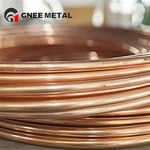
Copper Wire

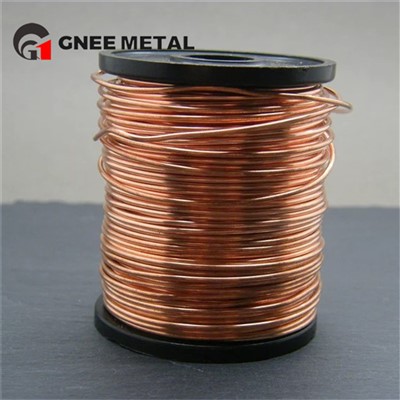
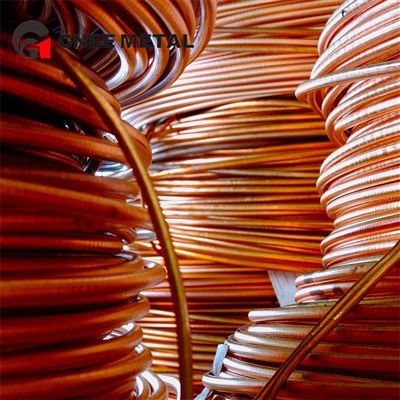
Our copper wire is available in C10100, C10200, C11000, C12000, C12200 and other copper grades, manufactured in accordance with ASTM, EN and JIS standards. We offer diameters from 0.05 mm to 20 mm, with soft, half-hard and hard tempers, along with custom spool sizes, coil weights and surface finishes to meet different manufacturing requirements.
Diameter: 0.05–20 mm
Copper Grades: C10100 • C10200 • C11000 • C12000 • C12200
Standards: ASTM • EN • JIS
Temper: Soft • Half Hard • Hard
Certification: EN 10204 3.1 MTC Available
Inspection: 100% Dimensional & Conductivity Testing
MOQ: Flexible for Standard & Custom Orders
Lead Time: Stock Items from 3–7 Days




Copper Wire Applications

Electrical Wiring
Components:Building,Wiring,Distribution,Panels,Switchgear,Electrical Connectors
Wire Forms:Round Wire,Bare Copper Wire,Soft Annealed Wire
Common Grades:C11000,C10100,C10200
Surface Finish:Bare,Tinned
Temper:Soft (Annealed),Half Hard

Power Cable Manufacturing
Components: Power Cables, Control Cables, Flexible Cables, Industrial Cables
Wire Forms: Multi-Strand Wire, Round Wire, Fine Wire
Common Grades: C11000, C10200
Surface Finish: Bare, Tinned
Temper: Soft (Annealed)

Motor & Generator Windings
Components: Motor Stators, Motor Rotors, Industrial Motors, Generators
Wire Forms: Enameled Wire, Magnet Wire, Flat Wire
Common Grades: C11000, C10100
Surface Finish: Enameled, Bare
Temper: Soft (Annealed)

Transformer Manufacturing
Components: Power Transformers, Distribution Transformers, Dry-Type Transformers, Transformer Coils
Wire Forms: Round Wire, Flat Wire, Rectangular Wire
Common Grades: C11000, C10100
Surface Finish: Bare, Enameled
Temper: Soft (Annealed)

Automotive & EV
Components: Wiring Harnesses, Battery Connections, EV Charging Systems, Automotive Electrical Components
Wire Forms: Round Wire, Multi-Strand Wire, Fine Wire
Common Grades: C11000, C10200
Surface Finish: Bare, Tinned, Silver Plated
Temper: Soft (Annealed)

Electronics & PCB Manufacturing
Components: PCB Connectors, Electronic Terminals, Precision Connectors, Electronic Devices
Wire Forms: Fine Wire, Ultra-Fine Wire, Precision Round Wire
Common Grades: C10100, C10200, C11000
Surface Finish: Bare, Silver Plated, Gold Plated
Temper: Soft (Annealed), Half Hard
Copper Wire Types

Bare Copper Wire

Tinned Copper Wire

Oxygen-Free Copper Wire

Enameled Copper Wire

Silver Plated Copper Wire

Flat Copper Wire
Precision rectangular wire for transformers, motors and high-current electrical equipment.

Multi-Strand Copper Wire

Fine & Ultra-Fine Copper Wire
Available Copper Grades
| Grade | UNS | Copper Purity | Conductivity | Typical Applications |
|---|---|---|---|---|
| C10100 | C10100 | 99.99% | 101% IACS | Electronics, Vacuum Equipment |
| C10200 | C10200 | 99.95% | 100% IACS | Transformers, Busbars, Power Equipment |
| C11000 | C11000 | 99.90% | 100% IACS | Electrical Wiring, Cables, Motors |
| C12000 | C12000 | 99.90% | 98% IACS | Industrial Electrical Components |
| C12200 | C12200 | 99.90% | 85% IACS | Welding, Heat Exchangers |
| C14500 | C14500 | Tellurium Copper | 93% IACS | Precision Machining |
| C17200 | C17200 | Beryllium Copper | 22% IACS | Springs, Connectors |
| C18150 | C18150 | Chromium Zirconium Copper | 80% IACS | Resistance Welding |
Equivalent Copper Wire Grades
| ASTM / UNS | EN | DIN | JIS | GB (China) |
|---|---|---|---|---|
| C10100 | Cu-OF | OF-Cu | C1011 | TU1 |
| C10200 | Cu-OFE | OFE-Cu | C1020 | TU2 |
| C11000 | Cu-ETP | E-Cu58 | C1100 | T2 |
| C12000 | Cu-DLP | SW-Cu | C1201 | TP1 |
| C12200 | Cu-DHP | SF-Cu | C1220 | TP2 |
| C14500 | CuTeP | CuTe | C1450 | QTe0.5 |
| C17200 | CuBe2 | CuBe2 | C1720 | QBe2 |
| C18150 | CuCr1Zr | CuCr1Zr | C1815 | QCr0.8 |
How to Select the Right Copper Wire Grade
| If You Need... | Recommended Grade | Why |
|---|---|---|
| Maximum Electrical Conductivity | C10100 | Ultra-high purity with excellent conductivity |
| General Electrical Wiring | C11000 | Best balance of conductivity and cost |
| Oxygen-Free Applications | C10200 | Low oxygen content and high reliability |
| Better Machinability | C14500 | Excellent machining performance |
| High Strength & Wear Resistance | C17200 | High strength with good conductivity |
| Resistance Welding Electrodes | C18150 | High hardness and thermal resistance |
| Heat Exchanger Applications | C12200 | Good corrosion resistance and weldability |
| Cost-Effective Electrical Components | C12000 | Suitable for general industrial applications |
Copper Wire Specifications
| Specification | Available Range |
|---|---|
| Wire Diameter | 0.05–20.00 mm |
| Cross Section | Round, Flat, Rectangular |
| Temper | Soft (Annealed), Half Hard, Hard |
| Surface Finish | Bare, Tinned, Silver Plated, Enameled |
| Coil Weight | 1–500 kg or Customized |
| Packaging | Coil, Plastic Spool, Wooden Reel, Steel Reel |
| Electrical Conductivity | Up to 101% IACS |
| Copper Purity | Up to 99.99% |
| Standards | ASTM, EN, JIS, GB |
| Production Method | Continuous Casting, Drawing, Annealing |
| Length | Continuous Coil or Cut Length |
| Tolerance | According to ASTM / EN or Customer Requirements |
| Certification | EN 10204 3.1 MTC, SGS, BV, TUV |
| Customization | Diameter, Temper, Surface Finish, Packaging & OEM Marking |
Standard Wire Diameter Range
| Wire Type | Diameter Range |
|---|---|
| Fine Wire | 0.05–0.50 mm |
| Standard Wire | 0.50–6.00 mm |
| Heavy Gauge Wire | 6.00–20.00 mm |
| Flat Wire | Customized |
| Rectangular Wire | Customized |
Surface Finish Options

| Surface Finish | Features | Typical Applications |
|---|---|---|
| Bare Copper | Maximum electrical conductivity and excellent ductility | Electrical Wiring, Grounding, Busbars, Power Cables |
| Bright Annealed | Smooth, oxide-free surface with excellent formability | Precision Wire, Electronics, Industrial Components |
| Tinned Copper | Improved corrosion resistance and excellent solderability | Marine, Automotive, Cable Manufacturing |
| Enameled Copper | Insulated coating for electrical winding applications | Motors, Transformers, Generators |
| Silver Plated Copper | Superior conductivity and high-temperature performance | Aerospace, RF, Military, High-Frequency Equipment |
Available Tempers
| Temper | Typical Applications | |
|---|---|---|
| Soft (Annealed) | Excellent flexibility, ductility and electrical conductivity | Electrical Wiring, Cable Manufacturing, Motors, Transformers |
| Quarter Hard | Good balance of flexibility and mechanical strength | Connectors, Electronic Components, Precision Parts |
| Half Hard | Higher strength with good formability | Terminals, Lead Frames, Electrical Components |
| Hard Drawn | High tensile strength and dimensional stability | Overhead Conductors, Industrial Equipment, Mechanical Applications |
| Extra Hard | Maximum strength and wear resistance | Special Industrial, Mechanical and High-Strength Applications |
Copper wire Manufacturing Process

Manufacturing Equipment


| Equipment | Function |
|---|---|
| Continuous Casting Line | Produces high-quality copper rods with consistent composition and conductivity. |
| Rod Breakdown Machine | Reduces copper rod diameter for subsequent wire drawing processes. |
| Multi-Wire Drawing Machine | Draws copper wire to precise diameters with excellent dimensional accuracy. |
| Intermediate Annealing Furnace | Restores ductility and improves flexibility during multi-stage drawing. |
| Continuous Annealing Line | Delivers uniform mechanical properties and stable electrical conductivity. |
| Tin Plating Line | Applies a uniform tin coating for improved corrosion resistance and solderability. |
| Automatic Spooling Machine | Winds wire evenly onto reels or coils for safe transportation and efficient processing. |
| Precision Diameter Measurement System | Continuously monitors wire diameter to ensure tight tolerances. |
Quality Inspection


| Inspection Item | Purpose |
|---|---|
| Chemical Composition Analysis | Verifies copper purity and alloy composition using a spectrometer. |
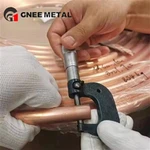
| Wire Diameter Inspection | Ensures precise diameter and tolerance throughout production. |
| Electrical Conductivity Testing | Confirms conductivity meets ASTM and customer requirements. |
| Tensile Strength Testing | Evaluates mechanical strength and wire performance. |
| Elongation Testing | Measures ductility and flexibility after drawing and annealing. |
| Surface Quality Inspection | Checks for scratches, oxidation, cracks and coating defects. |
| Coating Thickness Inspection | Verifies uniform thickness for tinned and silver plated wire. |
| Packaging Inspection | Ensures correct labeling, spool winding and export packaging before shipment. |
Export Packaging


| Packaging Type | Features | Typical Applications |
|---|---|---|
| Plastic Spool | Neatly wound for easy handling and automated production | Fine Wire, Enameled Wire |
| Wooden Reel | Strong and durable for heavy-duty transportation | Power Cables, Industrial Wire |
| Steel Reel | High load capacity for large-volume wire shipments | Heavy Gauge Wire, Cable Manufacturing |
| Coil Packing | Space-saving packaging for flexible wire products | Bare Copper Wire, Tinned Copper Wire |
| Export Wooden Case | Provides maximum protection during international shipping | High-Value and Precision Copper Wire |
Inventory & Lead Time


| Product | Inventory Status | Standard Lead Time |
|---|---|---|
| Bare Copper Wire | In Stock | 3–7 Days |
| Tinned Copper Wire | In Stock | 5–10 Days |
| Oxygen-Free Copper Wire | Limited Stock | 7–15 Days |
| Enameled Copper Wire | Production Order | 10–20 Days |
| Silver Plated Copper Wire | Production Order | 15–25 Days |
| Custom Copper Wire | Made to Order | 15–30 Days |
FAQ
1. What copper wire grades do you supply?
We supply a wide range of copper wire grades, including C10100, C10200, C11000, C12000, C12200, C14500, C17200 and C18150, manufactured according to ASTM, EN, JIS and GB standards.
2. What wire diameters are available?
Our standard diameter range is 0.05 mm to 20.00 mm. Custom diameters and tolerances can also be manufactured according to customer drawings or specifications.
3. What tempers are available?
We supply Soft (Annealed), Quarter Hard, Half Hard, Hard Drawn and Extra Hard tempers to meet different forming and mechanical requirements.
4. Which surface finishes do you offer?
Available surface finishes include Bare Copper, Bright Annealed, Tinned, Enameled and Silver Plated, depending on the application requirements.
5. Can you manufacture custom copper wire?
Yes. We provide custom manufacturing for wire diameter, temper, surface finish, spool size, packaging and OEM marking based on your technical requirements.
6. Do you provide Mill Test Certificates (MTC)?
Yes. Every shipment can be supplied with an EN 10204 3.1 Mill Test Certificate, and additional inspection reports are available upon request.
7. Can third-party inspection be arranged?
Yes. We support third-party inspections by SGS, BV, TÜV and other internationally recognized inspection agencies before shipment.
8. What is your minimum order quantity (MOQ)?
We offer flexible MOQ for both standard products and custom orders. Trial orders are also welcome for project evaluation.
9. What is your typical lead time?
Stock items are typically shipped within 3–7 days, while custom orders usually require 15–30 days, depending on specifications and order quantity.
10. Which industries use your copper wire?
Our copper wire is widely used in electrical wiring, power cable manufacturing, motors, transformers, automotive & EV, electronics, telecommunications and industrial equipment.