

No, C110 copper (also known as C11000) is not oxygen-free. It is officially classified as Electrolytic Tough Pitch (ETP) copper and contains a controlled oxygen content typically ranging from 0.02% to 0.04%. While it maintains a high purity of 99.90%, the oxygen is a residual refining agent used during the electrolytic process to ensure the material achieves its elite electrical and thermal conductivity.
If your project requires high conductivity without the need for specialized vacuum environments, C11000 electrolytic tough pitch copper is the global industry standard for power distribution, offering a guaranteed 101% IACS conductivity rating.
Why is oxygen intentionally left in C11000?
During the smelting and refining of C11000 material, oxygen acts as a "scavenger." It reacts with trace impurities like iron, lead, or phosphorus, forming oxides that float to the surface of the molten metal. This process cleans the copper matrix, which is essential for maximizing electrical performance in an electrical copper busbar.
However, this oxygen content is the primary technical factor that separates ETP copper from more expensive oxygen-free grades. As we detailed in our guide on the difference between C11000 and C10100 copper, the presence of even 0.04% oxygen changes how the material responds to high-temperature welding and brazing.
Oxygen Content and Conductivity by Copper Grade
| UNS Grade | Grade Name | Oxygen Content | Conductivity (IACS) |
| C11000 | ETP Copper | 0.02% - 0.04% | 101% |
| C10200 | OF Copper | 0.001% Max | 100% |
| C10100 | OFE Copper | 0.0005% Max | 101.5% |
| C12200 | DHP Copper | Nil (Deoxidized) | 85% |
Does the oxygen in C11000 cause hydrogen embrittlement?
This is the most critical risk for procurement teams. When C11000 is heated above 400°C in a hydrogen-rich atmosphere (common in furnace brazing or certain welding processes), the internal oxygen reacts with hydrogen to form steam. This creates microscopic internal pressure and cracks, known as "hydrogen embrittlement."
If your fabrication involves high-temperature brazing, you must switch to an oxygen-free grade. For standard mechanical assemblies, bolts, or soldering, the purity of C11000 copper is perfectly safe and far more economical.
Is C11000 suitable for CNC machining and heat sinks?
Yes. Despite containing oxygen, C11000 is the premier choice for thermal management. Its thermal conductivity of 391 W/m·K makes it ideal for a heatsink C11000 copper plate.
When outsourcing C11000 copper cnc machining for electronic cooling components, the oxygen-enriched structure actually helps slightly with chip formation compared to ultra-pure oxygen-free copper, which tends to be even more "gummy" and difficult to mill.
C11000 Mechanical and Physical Properties (H02 Temper)
| Property | Value | Procurement Significance |
| Tensile Strength | 260 - 330 MPa | Prevents deformation in busway systems |
| Hardness (Vickers) | 75 - 95 HV | Influences tool selection for precision parts |
| Electrical Conductivity | 101% IACS | Core requirement for transformers |
FAQ
1. Is T2 copper also non-oxygen-free?
Yes. As we analyzed in our article on the international copper equivalent of C11000, T2 copper (China) and Cu-ETP (Europe) both contain 0.02% to 0.04% oxygen, making them identical to C11000.
2. Can C11000 be used in a vacuum chamber?
Usually, no. For ultra-high vacuum (UHV) environments, the oxygen in C11000 can cause "outgassing," which contaminates the vacuum. C10100 is the required grade for vacuum-sealed electronics.
3. Does the oxygen content affect the price?
Yes. Because C11000 is produced in massive industrial volumes compared to oxygen-free grades, the price of C11000 copper is significantly lower. You aren't paying the "vacuum-refining premium" required for OFE copper.
4. How do I verify the oxygen levels in my shipment?
You must check the C11000 mill test certificate (MTC) provided by your ISO certified C11000 manufacturer. It will list the oxygen content alongside the conductivity and chemical purity results.
5. Why is it called "Tough Pitch" copper?
The name comes from the casting process. The oxygen content ensures the copper solidifies with a level surface (flat pitch) in the mold, making it easier to roll into a C11000 copper sheet or bar.
6. Is C11000 copper tube always oxygen-containing?
Generally, yes. If you require a tube for pressurized HVAC systems, you often use C12200 (deoxidized). However, for a C11000 copper tube used as an electrical terminal, it will follow the standard ETP oxygen specifications.
When to prioritize C11000 over Oxygen-Free grades
If your application involves power transmission (like a transformer C11000 copper coil) or architectural features (like a roofing C11000 copper sheet), C11000 is your best choice. It offers the same conductivity as oxygen-free copper at a much lower cost. Only upgrade to OFE grades if your project requires vacuum stability or hydrogen-safe welding.
Request a Comparative Grade Selection Analysis
Product Specifications & Range
| Product Category | Common Grades (Alloys) | Size Range (Dimensions) | Standards |
| Copper Rods | C11000, C12200, C10200, C14500 | Diameter: 3mm – 400mm<br>Shape: Round, Hexagonal, Square | ASTM B187, EN 12163 |
| Copper Tubes | C11000, C12200 (DHP), C10200 (OF), C27200 | OD: 2mm – 219mm<br>Wall Thickness: 0.2mm – 20mm | ASTM B280, EN 12735 |
| Copper Plates | C11000 (ETP), C10200, C12200 | Thickness: 0.1mm – 150mm<br>Width: Up to 2500mm | ASTM B152, DIN 1751 |
| Copper Wires | C11000, C10200, Brass Wire | Diameter: 0.05mm – 10.0mm<br>Form: Spool or Coil | ASTM B3, EN 13602 |
| Copper Strips | C11000, C12200, C26800 (Brass) | Thickness: 0.05mm – 3.0mm<br>Width: 5mm – 610mm | ASTM B19, EN 1652 |
Customization Note:
Custom Dimensions: We provide precision cutting and slitting services to meet your specific project requirements.
Tempers Available: Soft (O), Half-Hard (H02), Full Hard (H04), and Spring Hard (H08).
Surface Finish: Bright annealing, Polished, or Plated (Tin, Silver, Nickel) upon request.
Industrial-Grade Export Packaging
Maximum protection against oxidation, moisture, and transit damage.
1. Anti-Oxidation Protection
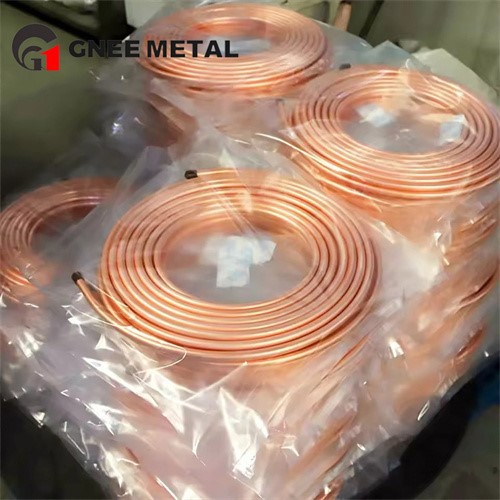
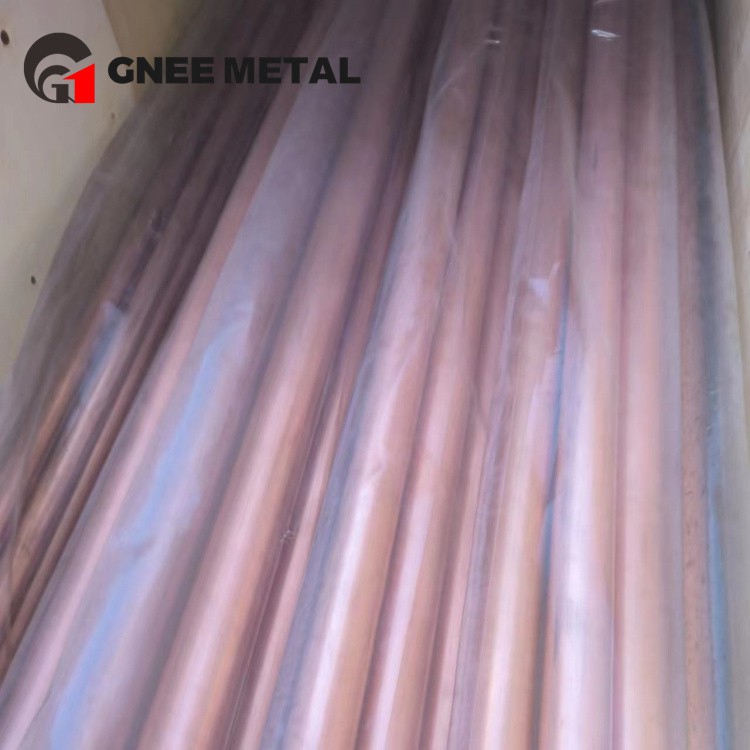
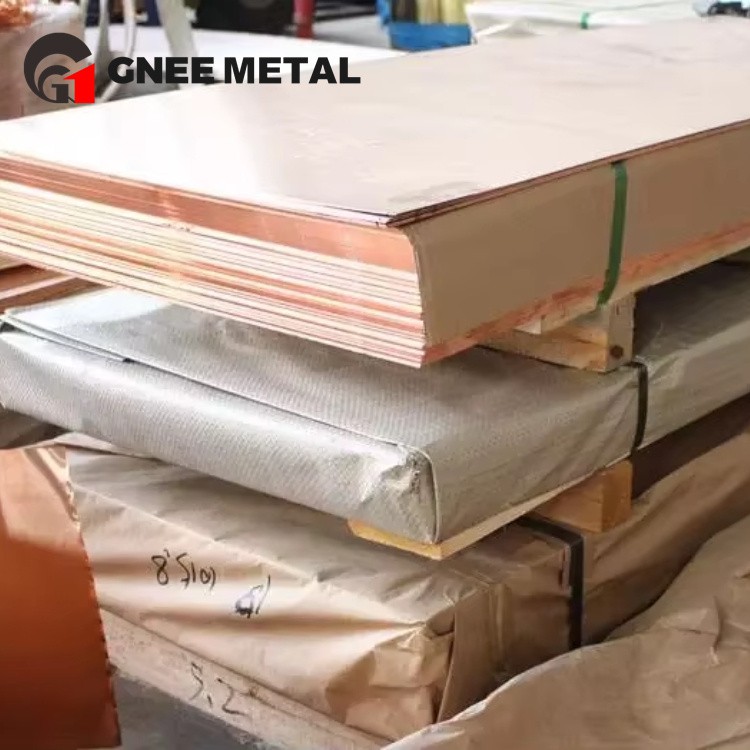
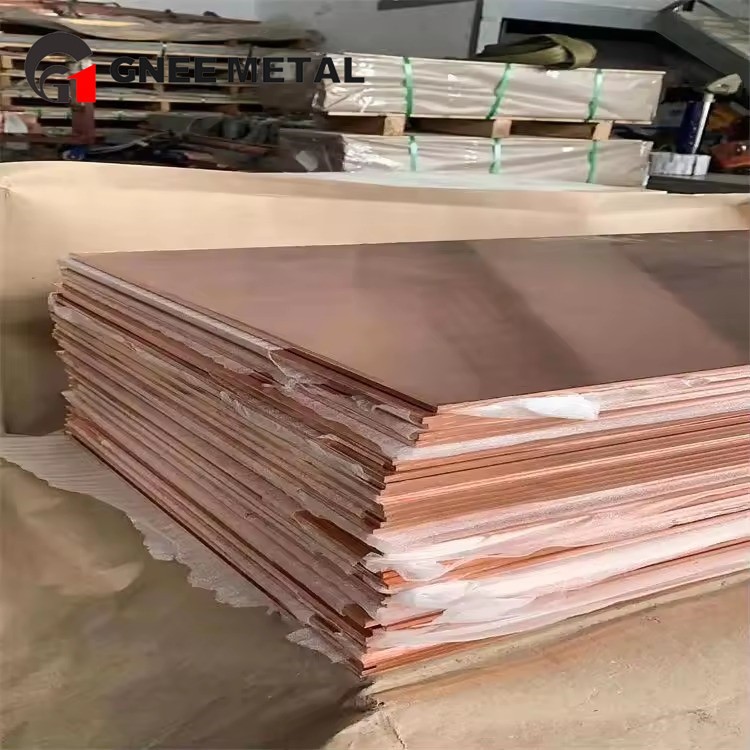
VCI Paper & Moisture-Proof Film: Every order is vacuum-sealed or wrapped in anti-corrosion materials to ensure the copper remains bright and tarnish-free during sea freight.
2. Reinforced Structural Support
Seaworthy Wooden Crates: We use reinforced, fumigation-free wooden cases (ISPM-15) and steel strapping for rods, tubes, and heavy plates to prevent bending or surface scratches.
3. Secure Handling & Loading
Forklift-Ready Pallets: All materials are secured on standardized export pallets for easy unloading and maximum stability in containers.
4. Clear Identification
Professional Labeling: Each package includes detailed labels with heat numbers, specifications, and net weight for efficient inventory management.

Advanced Manufacturing & Quality Control
1. Core Production Equipment
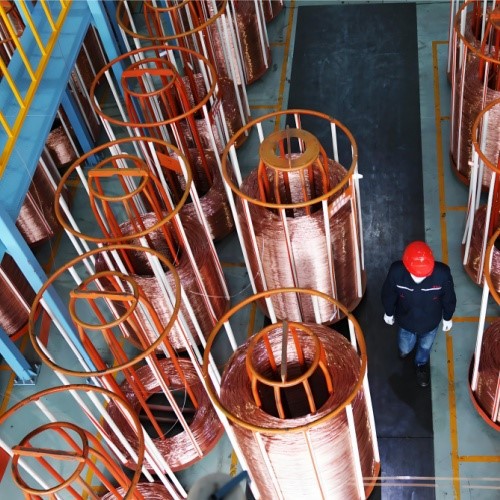
Up-casting & Continuous Casting Lines: Ensures high-purity oxygen-free copper rods and wires with uniform grain structure.
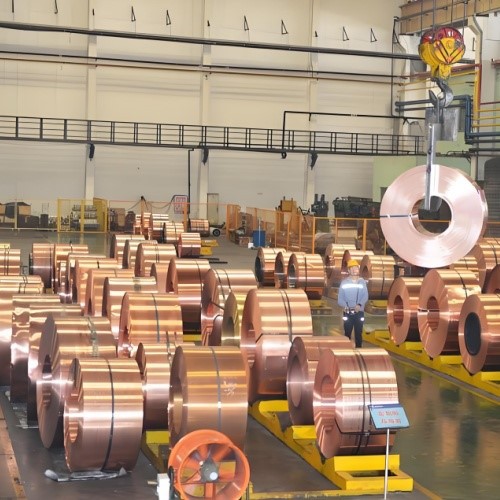
High-Precision Cold/Hot Rolling Mills: Automated thickness control for copper plates and strips with tolerances within ±0.01mm.
Large-Scale Extrusion & Drawing Machines: Capable of producing seamless copper tubes and rods in diverse diameters and shapes.
Atmospheric Controlled Annealing Furnaces: Bright annealing process to achieve specific tempers (Soft, Half-hard, Hard) without surface oxidation.
2. In-House Testing Center
Direct-Reading Spectrometers: Instant chemical composition analysis to guarantee Cu purity and precise alloying (Brass, Bronze, etc.).
Universal Tensile Testers: Verifying mechanical properties including tensile strength, elongation, and yield strength.
Eddy Current & Ultrasonic Testing: 100% non-destructive inspection for tubes and rods to detect internal cracks or flaws.
Conductivity & Hardness Testers: Ensuring electrical conductivity (IACS) and Vickers/Rockwell hardness meet international standards (ASTM, EN, DIN).



Get Fast Quote & Logistics Plan


