

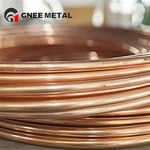
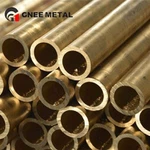
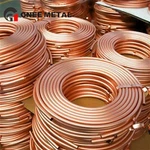
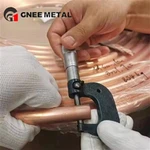
Copper Bar

Our copper bars are manufactured for demanding applications requiring high electrical conductivity, precise dimensions, and reliable mechanical performance. We supply a complete range of round bars, flat bars, square bars, and hexagonal bars in popular grades including C11000, C10100, C12200, and other copper alloys, meeting ASTM, EN, JIS, and DIN standards.
Whether you need standard stock or custom production, we provide custom cutting, CNC machining, drilling, milling, and other value-added processing services to match your drawings and project requirements. Every order undergoes strict dimensional inspection, material verification, and quality testing, with EN 10204 3.1 Mill Test Certificates and third-party inspection available upon request.


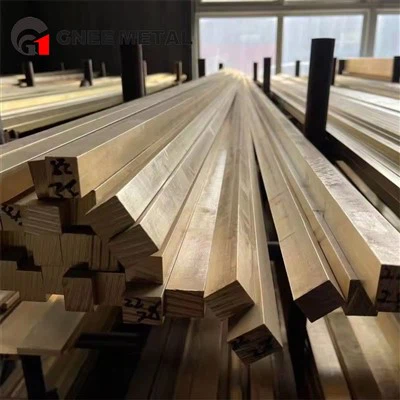
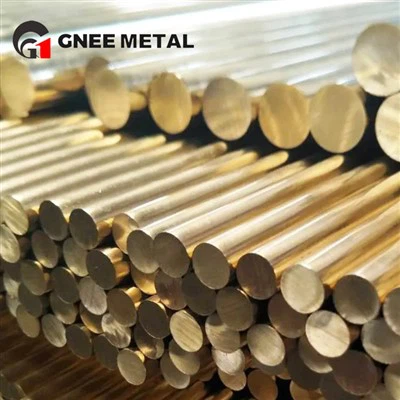

Copper Bar for Different Industries

Electrical & Power Distribution
Components:Busbars,Switchgear,Transformers,Electrical Panels
Common Forms:Flat Bar,Round Bar
Common Grades:C11000,C10100,C10200
Surface Finish:Mill Finish,Tin Plated,Silver Plated
Temper:O (Annealed),1/2H

Grounding & Earthing Systems
Components: Ground Bars, Earth Bars, Grounding Connectors, Lightning Protection Systems
Common Forms: Flat Bar, Round Bar
Common Grades: C11000, C12200
Surface Finish: Mill Finish, Tin Plated
Temper: O (Annealed)

Automotive & EV
Components: Battery Busbars, Power Distribution Units, EV Connectors, Charging Systems
Common Forms: Flat Bar, Round Bar, Custom Profiles
Common Grades: C11000, C10100, C18150
Surface Finish: Tin Plated, Silver Plated, Machined
Temper: 1/2H, H

Industrial Equipment
Components: Valves, Pumps, Bearings, Mechanical Assemblies
Common Forms: Round Bar, Flat Bar, Square Bar
Common Grades: C36000, C14500, C93200, C95400
Surface Finish: Mill Finish, Polished, Machined
Temper: 1/2H, H

CNC Machining Components
Components: Precision Parts, Shafts, Bushings, Connectors
Common Forms: Round Bar, Hexagonal Bar, Square Bar
Common Grades: C36000, C14500, C17200
Surface Finish: Bright Drawn, Machined, Polished
Temper: H, EH

Marine & Shipbuilding
Components: Marine Valves, Pump Components, Propeller Parts, Offshore Equipment
Common Forms: Round Bar, Flat Bar
Common Grades: C95400, C93200, C17200
Surface Finish: Mill Finish, Polished
Temper: H, EH
Copper Bar Grades & Material Selection Guide
| Grade | Standard | Material Type | Electrical Conductivity | Machinability | Corrosion Resistance | Typical Applications |
|---|---|---|---|---|---|---|
| C10100 | ASTM B187 | Oxygen-Free Copper | ★★★★★ | ★★★☆☆ | ★★★★☆ | Vacuum equipment, semiconductor, high-end electrical components |
| C10200 | ASTM B187 | Oxygen-Free Copper | ★★★★★ | ★★★☆☆ | ★★★★☆ | Electrical connectors, welding applications, electronics |
| C11000 | ASTM B187 | Electrolytic Tough Pitch Copper | ★★★★★ | ★★★☆☆ | ★★★★☆ | Busbars, switchgear, transformers, grounding systems |
| C12000 | ASTM B187 | Phosphorus-Deoxidized Copper | ★★★★☆ | ★★★☆☆ | ★★★★★ | Industrial equipment, electrical hardware |
| C12200 | ASTM B187 | Phosphorus-Deoxidized Copper | ★★★★☆ | ★★★☆☆ | ★★★★★ | Heat exchangers, HVAC, plumbing, industrial piping |
| C14500 | ASTM B301 | Tellurium Copper | ★★★★☆ | ★★★★★ | ★★★★☆ | CNC machining, electrical connectors, welding electrodes |
| C17200 | ASTM B196 | Beryllium Copper | ★★★☆☆ | ★★★★☆ | ★★★★★ | Springs, molds, aerospace, precision mechanical parts |
| C18150 | ASTM B441 | Chromium Zirconium Copper | ★★★★☆ | ★★★★☆ | ★★★★☆ | Resistance welding electrodes, EV components |
| C26000 | ASTM B16 | Cartridge Brass | ★★☆☆☆ | ★★★★☆ | ★★★★☆ | Decorative hardware, electrical accessories |
| C36000 | ASTM B16 | Free-Cutting Brass | ★★☆☆☆ | ★★★★★ | ★★★★☆ | CNC parts, valves, fittings, fasteners |
| C93200 | ASTM B505 | Tin Bronze | ★☆☆☆☆ | ★★★★☆ | ★★★★★ | Bearings, bushings, wear-resistant components |
| C95400 | ASTM B505 | Aluminum Bronze | ★★☆☆☆ | ★★★☆☆ | ★★★★★ | Marine equipment, heavy-duty machinery, pumps & valves |
Copper Bar Equivalent Grades
| ASTM / UNS | China (GB/T) | EN (CW) | JIS | DIN | Material Description |
|---|---|---|---|---|---|
| C10100 | TU1 | CW004A | C1011 | OF-Cu | Oxygen-Free Electronic Copper |
| C10200 | TU2 | CW008A | C1020 | OF-Cu | Oxygen-Free Copper |
| C11000 | T2 | CW004A* | C1100 | E-Cu58 | Electrolytic Tough Pitch (ETP) Copper |
| C12000 | TP1 | CW024A | C1201 | SW-Cu | Phosphorus-Deoxidized Copper (Low Residual P) |
| C12200 | TP2 | CW024A | C1220 | SF-Cu | Phosphorus-Deoxidized Copper (High Residual P) |
| C14500 | TTe0.5 | CW118C | — | CuTeP | Tellurium Copper |
| C17200 | QBe2.0 | CW101C | C1720 | CuBe2 | Beryllium Copper |
| C18150 | QCr0.8 | CW106C | — | CuCrZr | Chromium Zirconium Copper |
| C26000 | H68 | CW505L | C2600 | CuZn30 | Cartridge Brass |
| C36000 | HPb59-1 | CW603N | C3604 | CuZn36Pb3 | Free-Cutting Brass |
| C93200 | ZCuSn6Zn6Pb3 | CC483K | BC6 | RG7 | SAE 660 Bearing Bronze |
| C95400 | ZCuAl10Fe3 | CC333G | — | CuAl10Fe5Ni5 | Aluminum Bronze |
Quick Material Selection Guide
| If You Need... | Recommended Grade |
|---|---|
| Maximum electrical conductivity | C10100 / C10200 |
| General electrical power applications | C11000 |
| Excellent welding performance | C12200 |
| High-speed CNC machining | C14500 / C36000 |
| High-strength mechanical components | C17200 |
| Resistance welding electrodes | C18150 |
| Decorative and hardware products | C26000 / C37700 |
| Wear-resistant bearings & bushings | C93200 |
| Marine & heavy industrial equipment | C95400 |
Request Material Recommendation
Standard Copper Bar Sizes Available
| Product Type | Standard Size Range | Standard Length | Manufacturing Method |
|---|---|---|---|
| Round Copper Bar | Ø6–300 mm | 1000–6000 mm | Extruded / Drawn / Machined |
| Flat Copper Bar | Thickness 3–100 mm Width 10–300 mm |
1000–6000 mm | Hot Rolled / Extruded |
| Square Copper Bar | 6 × 6–150 × 150 mm | 1000–6000 mm | Extruded / Machined |
| Hexagonal Copper Bar | AF 8–80 mm | 1000–4000 mm | Drawn / Machined |
| Rectangular Copper Bar | Thickness 5–80 mm Width 20–250 mm |
1000–6000 mm | Extruded |
| Custom Copper Bar | According to Drawing | Custom Length | OEM Manufacturing |
Available Tolerances
| Item | Standard |
|---|---|
| Diameter Tolerance | h9 / h11 / Custom |
| Width & Thickness Tolerance | ±0.05–0.30 mm |
| Straightness | ≤1 mm/m |
| Length Tolerance | ±1–5 mm |
| Surface Finish | Mill Finish / Bright Drawn / Polished |
Copper Bar Specifications
| Specification | Details |
|---|---|
| Available Forms | Round Bar, Flat Bar, Square Bar, Hexagonal Bar, Custom Profiles |
| Material Grades | C10100, C10200, C11000, C12000, C12200, C14500, C17200, C18150, C26000, C36000, C37700, C93200, C95400 & More |
| Standards | ASTM B187, ASTM B301, ASTM B196, ASTM B16, ASTM B124, ASTM B505, EN, JIS, DIN, GB |
| Round Bar Size | Diameter 3–300 mm |
| Flat Bar Size | Thickness 3–100 mm, Width 10–300 mm |
| Square Bar Size | 5 × 5 mm – 150 × 150 mm |
| Hex Bar Size | Across Flats 5–80 mm |
| Standard Length | 1000–6000 mm or Custom Cut Length |
| Temper | Annealed (O), Half Hard (1/2H), Hard (H), Extra Hard (EH) |
| Surface Finish | Mill Finish, Bright Drawn, Polished, Machined, Tin Plated, Silver Plated |
| Dimensional Tolerance | ASTM Standard or Custom Tolerance Available |
| Processing Services | Saw Cutting, CNC Machining, Milling, Drilling, Threading, Chamfering |
| Inspection Documents | EN 10204 3.1 MTC, Material Certificate, Dimensional Report |
| Packaging | Wooden Cases, Export Pallets, Plastic Protection, Customized Packaging |
| Supply Capability | Standard Stock & Custom Manufacturing |
Surface Finish Options

We provide a variety of surface finish options to meet different requirements for electrical conductivity, corrosion resistance, machining, appearance, and subsequent processing.
| Surface Finish | Features | Typical Applications |
|---|---|---|
| Mill Finish | Standard factory finish with a clean metallic surface | General industrial applications, machining, fabrication |
| Bright Drawn | Smooth surface with improved dimensional accuracy | Precision machining, electrical components |
| Polished Finish | High-gloss appearance with reduced surface roughness | Decorative parts, architectural hardware, visible components |
| Machined Finish | Precision CNC machined surface with tight tolerances | Mechanical parts, custom components, engineering assemblies |
| Tin Plated | Improved corrosion resistance and excellent solderability | Busbars, electrical connectors, switchgear |
| Silver Plated | Superior electrical conductivity and low contact resistance | High-current electrical equipment, power distribution systems |
Available Upon Request
Custom Surface Roughness (Ra)
Mirror Polishing
Deburring & Edge Chamfering
Protective Film Coating
Custom Packaging for Surface Protection
Copper Bar Temper Options
Copper bars are available in different tempers to meet various requirements for electrical conductivity, formability, strength, and machining performance.
| Temper | Mechanical Characteristics | Typical Applications |
|---|---|---|
| O (Annealed) | Excellent ductility, easy bending and forming | Busbars, electrical conductors, fabricated components |
| 1/4H (Quarter Hard) | Moderate strength with good formability | General engineering and fabricated parts |
| 1/2H (Half Hard) | Balanced strength and workability | Structural components, electrical hardware |
| H (Hard Drawn) | High strength and dimensional stability | Precision machined parts, industrial equipment |
| EH (Extra Hard) | Highest strength and wear resistance | High-load mechanical components, special industrial applications |
Copper Bar Manufacturing Process

Available Processing Services


In addition to supplying standard copper bars, we offer a wide range of precision processing services to reduce your machining time, improve production efficiency, and meet custom project requirements.
| Processing Service | Description | Typical Applications |
|---|---|---|
| Custom Cut-to-Length | Precision cutting to customer-specified lengths with burr-free edges. | Electrical busbars, industrial components |
| CNC Turning | High-precision turning for tight tolerances and smooth surface finishes. | Shafts, connectors, precision parts |
| CNC Milling | Machining of slots, grooves, faces, and complex geometries. | Electrical components, mechanical assemblies |
| Drilling & Tapping | Custom holes and threaded features according to engineering drawings. | Busbars, mounting components, connectors |
| Chamfering & Deburring | Removes sharp edges and improves assembly safety and appearance. | Precision machined parts |
| Surface Polishing | Produces smooth or decorative finishes with reduced surface roughness. | Architectural hardware, visible components |
| Tin & Silver Plating | Enhances corrosion resistance, solderability, and electrical contact performance. | Busbars, switchgear, electrical terminals |
| Custom Fabrication | OEM manufacturing based on customer drawings, samples, or technical specifications. | Industrial equipment, power distribution, automotive applications |


| Equipment | Manufacturing Capability |
|---|---|
| Continuous Casting Line | Produces high-quality copper billets with uniform composition and stable internal structure. |
| Hot Extrusion Press | Forms copper bars with excellent dimensional consistency and material integrity. |
| Cold Drawing Machine | Improves dimensional accuracy, straightness, and surface finish for precision copper bars. |
| Annealing Furnace | Controls hardness, ductility, and mechanical properties through precise heat treatment. |
| Automatic Straightening Machine | Ensures excellent straightness and minimizes dimensional deviation before cutting. |
| Precision Saw Cutting Machine | Delivers accurate custom lengths with clean, burr-free cutting surfaces. |
| CNC Machining Center | Provides drilling, milling, threading, chamfering, and other custom machining services. |
| Polishing Machine | Produces bright and smooth surface finishes for decorative and precision applications. |
Quality Inspection & Testing


Every copper bar undergoes comprehensive inspection throughout the manufacturing process to ensure compliance with international standards, dimensional accuracy, material consistency, and customer specifications.
| Inspection Item | Purpose |
|---|---|
| Chemical Composition Analysis | Verifies alloy composition using OES. |
| Dimensional Inspection | Ensures OD, width, thickness and length meet tolerance requirements. |
| Straightness Inspection | Checks bar straightness for machining and assembly. |
| Surface Inspection | Detects scratches, oxidation, cracks and surface defects. |
| Mechanical Property Testing | Measures tensile strength, yield strength and elongation. |
| Electrical Conductivity Testing | Verifies conductivity according to ASTM standards. |
| Hardness Testing | Confirms hardness after cold working or heat treatment. |
| Ultrasonic Testing (UT) | Detects internal cracks and defects in large or critical copper bars. |
Inspection Documents Available
EN 10204 3.1 Mill Test Certificate (MTC)
Material Certificate
Dimensional Inspection Report
Chemical Composition Report
Mechanical Test Report
Third-Party Inspection (SGS, BV, TÜV)
Packaging & Shipping


Our copper bars are carefully packaged to prevent surface damage, deformation, and moisture exposure during storage and international transportation. Packaging solutions can also be customized to meet customer requirements.
| Product | Common Stock Grades | Standard Size Range | Availability | Typical Lead Time |
|---|---|---|---|---|
| Round Copper Bar | C11000, C12200 | Ø6–200 mm | Regular Stock | 3–7 Days |
| Flat Copper Bar | C11000, C10200 | Width 10–300 mm | Regular Stock | 3–10 Days |
| Square Copper Bar | C11000 | 8×8–100×100 mm | Partial Stock | 7–15 Days |
| Hexagonal Brass Bar | C36000, C37700 | AF 8–80 mm | Regular Stock | 5–10 Days |
| Tellurium Copper Bar | C14500 | Custom Sizes | Production Upon Order | 15–20 Days |
| Beryllium Copper Bar | C17200 | Custom Sizes | Production Upon Order | 20–30 Days |
| Custom Machined Bars | Various Grades | According to Drawing | Made to Order | 15–30 Days |
Inventory & Lead Time


We maintain inventory of popular copper bar grades and standard sizes to support fast delivery. Custom manufacturing schedules are arranged according to material grade, dimensions, and processing requirements.
| Product | Stock Status | Standard Lead Time |
|---|---|---|
| Round Copper Bar | Standard Sizes in Stock | 3–7 Days |
| Flat Copper Bar | Standard Sizes in Stock | 3–10 Days |
| Square Copper Bar | Partial Stock Available | 7–15 Days |
| Hexagonal Brass Bar | Standard Sizes in Stock | 5–10 Days |
| Tellurium Copper Bar (C14500) | Production Upon Order | 15–20 Days |
| Beryllium Copper Bar (C17200) | Production Upon Order | 20–30 Days |
| Custom Machined Copper Bars | Made to Order | 15–30 Days |
FAQ
1. What copper bar grades do you regularly supply?
We regularly supply C10100, C10200, C11000, C12000, C12200, C14500, C17200, C18150, C26000, C36000 and other copper alloys. Additional grades can also be manufactured according to ASTM, EN, JIS and customer specifications.
2. Can you manufacture copper bars according to our drawings?
Yes. We provide custom manufacturing based on your drawings or technical requirements, including special dimensions, tolerances, machining, drilling, threading, chamfering and other value-added processing services.
3. What standards do your copper bars comply with?
Our copper bars can be manufactured according to ASTM, EN, JIS, DIN, GB and other international standards depending on your project requirements.
4. Do you have standard copper bars in stock?
Yes. Popular grades such as C11000 and C12200 in common sizes are regularly stocked for fast delivery. Special alloys and non-standard dimensions are produced upon order.
5. What inspection documents can you provide?
We can provide EN 10204 3.1 Mill Test Certificates, chemical composition reports, mechanical property reports, dimensional inspection reports and other quality documents. Third-party inspections by SGS, TÜV or BV are also available upon request.
6. Can you supply precision tolerance copper bars?
Yes. Tight dimensional tolerances can be achieved according to ASTM standards or your drawing requirements. Precision machining is available for applications requiring close tolerance components.
7. What surface finishes are available?
We supply mill finish, bright drawn, polished and machined copper bars. Additional surface treatments such as tin plating or silver plating can also be arranged for electrical applications.
8. What is your typical production lead time?
Standard stock items are generally shipped within 3–7 days. Production orders usually require 15–30 days depending on material grade, dimensions and machining requirements.
9. How are copper bars packed for export?
Copper bars are packed with moisture protection, protective wrapping, steel strapping and fumigation-free plywood cases or pallets to ensure safe international transportation.
10. Can you support OEM projects and long-term supply?
Yes. We support OEM manufacturing, scheduled production, blanket orders and long-term supply programs for distributors, manufacturers and industrial projects worldwide.
11. What is your minimum order quantity (MOQ)?
There is no fixed MOQ for standard copper bars in stock. Small trial orders are accepted, while production orders are arranged according to material grade, dimensions and processing requirements.