

Yes, C11000 and JIS C1100 are functionally identical in most industrial applications. C11000 is the American designation (ASTM), while C1100 is the Japanese designation (JIS). Both refer to Electrolytic Tough Pitch (ETP) copper with a minimum purity of 99.90% and an electrical conductivity of at least 101% IACS. For manufacturers sourcing globally, these two grades are considered direct substitutes for C11000 sheet and busbar production.
Do C11000 and JIS C1100 have different chemical limits?
While both standards target the same purity level, the specific "allowable" trace elements can vary slightly in the fine print of the documentation. JIS C1100 is often specified in Asian electronics drawings, where the focus is on achieving a high-quality surface finish for stamping. ASTM C11000 is the broader international standard used for structural and electrical infrastructure.
If you are working with a Japanese blueprint that calls for a JIS C1100 grade, you can safely supply ASTM C11000 provided the Mill Test Certificate (MTC) confirms the 99.90% copper content.
Chemical Composition Comparison (ASTM vs. JIS)
| Element | ASTM C11000 | JIS C1100 |
| Copper (incl. Ag) | 99.90% min | 99.90% min |
| Oxygen (O) | 0.02% to 0.04% | 0.02% to 0.04% |
| Lead (Pb) | 0.005% max | Not specified (typical <0.005%) |
| Purity Classification | commercially pure copper | ETP Copper |
Can C11000 replace C1100 in precision stamping?
In the production of terminals and lead frames, the mechanical "temper" is more important than the name on the standard. Both grades are classified as cu etp copper. If a Japanese drawing specifies C1100-H (Hard), it corresponds directly to C11000-H04. The ductility and work-hardening rates are virtually the same.
Because these materials are used across borders, it is helpful to understand the global copper equivalents used in European and British projects. For instance, a buyer might find that their technical requirements align more closely with the UK standards for C101 and C110 copper depending on the specific conductivity tolerances required.
Equivalent Standards for Global Procurement
| Region | Standard | Designation |
| USA | ASTM B152 / B187 | C11000 |
| Japan | JIS H3100 / H3250 | C1100 |
| Europe | EN 13601 | Cu-ETP / CW004A |
| China | GB/T 5231 | T2 |
Are the mechanical properties (Hardness/Tensile) the same?
Yes. The testing methods for Vickers hardness (HV) and tensile strength (MPa) are standardized globally. A c1100 material in a "Half-Hard" state will exhibit the same resistance to deformation as a c11000 material in the H02 condition. This consistency allows for seamless substitution in automated assembly lines.
Typical Mechanical Property Thresholds
| Property | Metric Unit | C11000 / C1100 (H02) |
| Tensile Strength | MPa | 240 to 300 |
| Yield Strength | MPa | 170 to 280 |
| Hardness | Vickers (HV) | 75 to 95 |
| Electrical Conductivity | % IACS | 101% min |
FAQ: Deciding between C11000 and JIS C1100
1. Why does my drawing specifically ask for JIS C1100?
This is common if the original equipment manufacturer (OEM) is Japanese. Japanese companies prefer their domestic JIS standards to ensure traceability through local supply chains, but ASTM C11000 is a globally accepted equivalent.
2. Is there a price difference between the two?
No. Since they are the same material refined through the same electrolytic process, the market price is identical. The only cost difference might come from specific certification fees if a project requires a "JIS-certified" mill.
3. Does the oxygen content vary?
No. Both standards specify "Tough Pitch" copper, meaning they both contain 200 to 400 ppm of oxygen. Neither should be used for high-temperature hydrogen brazing.
4. Can I use C11000 for a project in Japan?
Yes. In 99% of industrial cases, C11000 is accepted as a direct equivalent to C1100. Always provide the MTC to your Japanese client to prove the copper purity and conductivity.
5. Which is better for CNC machining?
Both have a machinability rating of 20%. They are equally "gummy" and difficult to machine compared to brass or tellurium copper.
6. Do you stock both designations?
We stock electrolytic tough pitch copper that meets the requirements of both ASTM C11000 and JIS C1100. We can provide documentation that cross-references both standards for your international compliance needs.
Product Specifications & Range
| Product Category | Common Grades (Alloys) | Size Range (Dimensions) | Standards |
| Copper Rods | C11000, C12200, C10200, C14500 | Diameter: 3mm – 400mm<br>Shape: Round, Hexagonal, Square | ASTM B187, EN 12163 |
| Copper Tubes | C11000, C12200 (DHP), C10200 (OF), C27200 | OD: 2mm – 219mm<br>Wall Thickness: 0.2mm – 20mm | ASTM B280, EN 12735 |
| Copper Plates | C11000 (ETP), C10200, C12200 | Thickness: 0.1mm – 150mm<br>Width: Up to 2500mm | ASTM B152, DIN 1751 |
| Copper Wires | C11000, C10200, Brass Wire | Diameter: 0.05mm – 10.0mm<br>Form: Spool or Coil | ASTM B3, EN 13602 |
| Copper Strips | C11000, C12200, C26800 (Brass) | Thickness: 0.05mm – 3.0mm<br>Width: 5mm – 610mm | ASTM B19, EN 1652 |
Customization Note:
Custom Dimensions: We provide precision cutting and slitting services to meet your specific project requirements.
Tempers Available: Soft (O), Half-Hard (H02), Full Hard (H04), and Spring Hard (H08).
Surface Finish: Bright annealing, Polished, or Plated (Tin, Silver, Nickel) upon request.
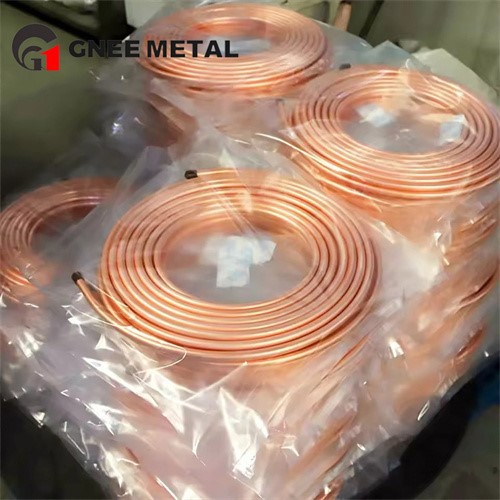
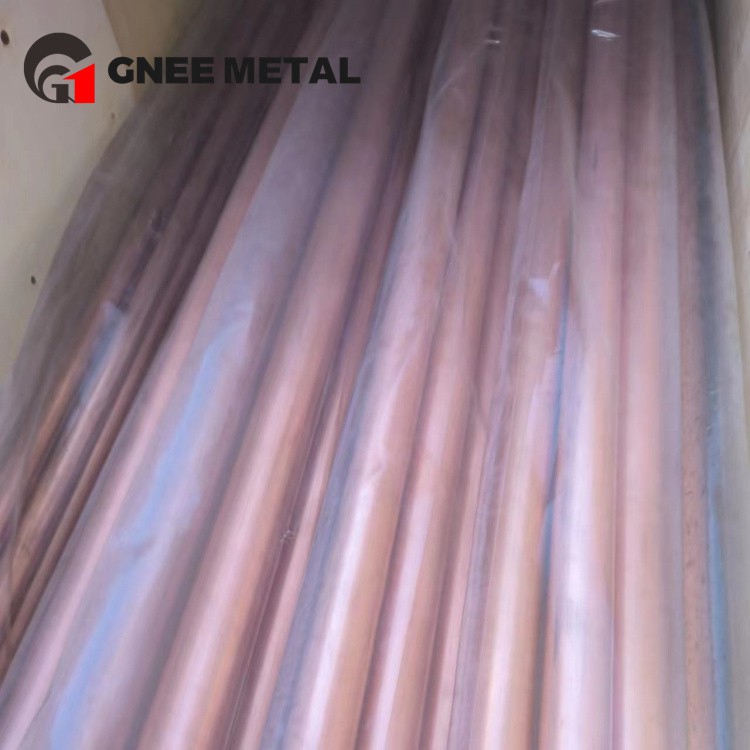
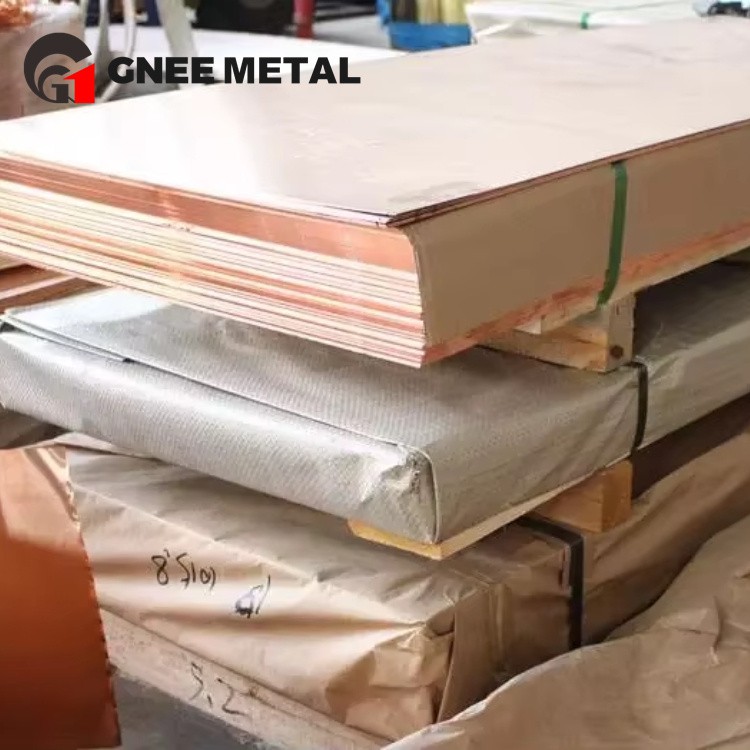
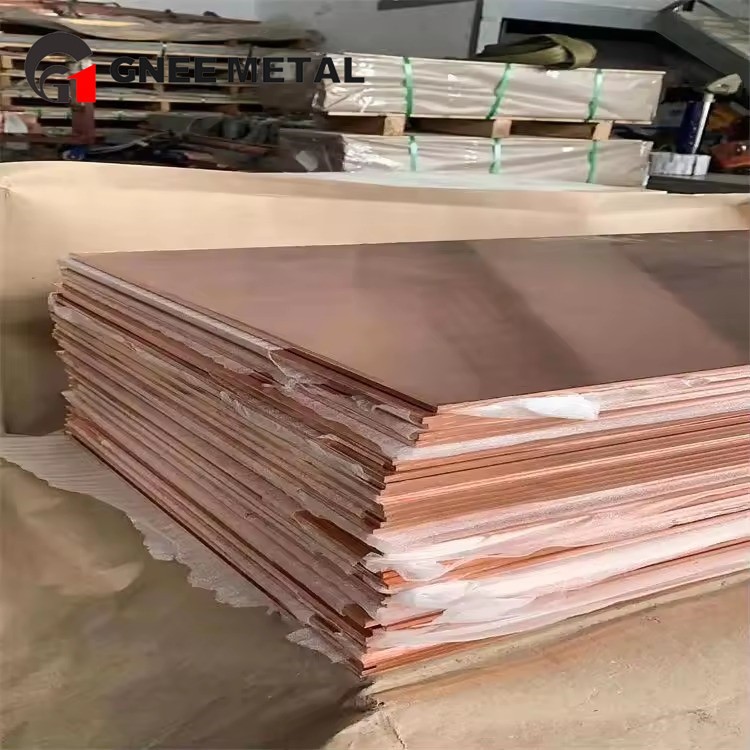
Industrial-Grade Export Packaging
Maximum protection against oxidation, moisture, and transit damage.
1. Anti-Oxidation Protection
VCI Paper & Moisture-Proof Film: Every order is vacuum-sealed or wrapped in anti-corrosion materials to ensure the copper remains bright and tarnish-free during sea freight.
2. Reinforced Structural Support
Seaworthy Wooden Crates: We use reinforced, fumigation-free wooden cases (ISPM-15) and steel strapping for rods, tubes, and heavy plates to prevent bending or surface scratches.
3. Secure Handling & Loading
Forklift-Ready Pallets: All materials are secured on standardized export pallets for easy unloading and maximum stability in containers.
4. Clear Identification
Professional Labeling: Each package includes detailed labels with heat numbers, specifications, and net weight for efficient inventory management.

Advanced Manufacturing & Quality Control
1. Core Production Equipment
Up-casting & Continuous Casting Lines: Ensures high-purity oxygen-free copper rods and wires with uniform grain structure.
High-Precision Cold/Hot Rolling Mills: Automated thickness control for copper plates and strips with tolerances within ±0.01mm.
Large-Scale Extrusion & Drawing Machines: Capable of producing seamless copper tubes and rods in diverse diameters and shapes.
Atmospheric Controlled Annealing Furnaces: Bright annealing process to achieve specific tempers (Soft, Half-hard, Hard) without surface oxidation.
2. In-House Testing Center
Direct-Reading Spectrometers: Instant chemical composition analysis to guarantee Cu purity and precise alloying (Brass, Bronze, etc.).
Universal Tensile Testers: Verifying mechanical properties including tensile strength, elongation, and yield strength.
Eddy Current & Ultrasonic Testing: 100% non-destructive inspection for tubes and rods to detect internal cracks or flaws.
Conductivity & Hardness Testers: Ensuring electrical conductivity (IACS) and Vickers/Rockwell hardness meet international standards (ASTM, EN, DIN).



Get Fast Quote & Logistics Plan


