

No, the black or brown discoloration on your c11000 copper is not a sign of poor quality or compromised purity. It is a natural oxidation process typical of electrolytic tough pitch copper. Even when the purity of C11000 copper is at its standard 99.90% min, the surface reacts with atmospheric oxygen almost immediately. For a B2B buyer, the "bright" salmon-pink color is largely cosmetic; the internal electrical performance of t2 copper remains unchanged at the core. However, if that oxide layer is sitting on a bolted contact surface, it must be removed to prevent high-resistance hot spots. You can evaluate our bright-finished or pre-plated inventory on the C11000 electrical copper busbar.
Does surface tarnish impact the 101% IACS conductivity of c11000 copper bar?
The bulk conductivity of cu etp copper is an inherent property of its internal crystal matrix. A dark brown bar still delivers the 101% IACS conductivity required for high-voltage systems. The tarnish is typically only a few microns thick and does not degrade the core c11000 material properties.
However, engineers must manage contact resistance. If you bolt two oxidized c11000 copper bar segments together, the current is forced to jump through a resistive film of cuprous oxide. This generates localized Joule heating. If this temperature rise is not managed, it accelerates further oxidation, potentially leading to terminal meltdown. This is why most industrial orders for uns c11000 busbars are now specified as "Tin-Plated" to eliminate field cleaning labor.
Why B2B buyers should prioritize surface protection:
Reduced Assembly Labor: Pre-plated or passivated copper can be installed directly without mechanical cleaning.
Predictable Connections: Plating ensures a gas-tight seal at the joint, keeping the c11000 copper price ROI high over a 20-year service life.
Safety Compliance: Eliminating "hot spots" reduces the risk of arc flashes in high-power cabinets.
Request a Mill Test Certificate (MTC)
How we prevent oxidation during long-distance sea freight
Receiving a container of copper that looks "old" or "spotted" is a major headache for procurement. To ensure your astm b152 c11000 sheet arrives in a bright state, our factory utilizes a multi-stage defense:
Chemical Passivation: We apply a thin, invisible layer of Benzotriazole (BTA) that inhibits tarnish for 3 to 6 months without affecting conductivity.
Vacuum Packing: For high-precision c11000 copper sheet manufacturer orders, we remove air entirely to stop oxidation at the source.
VCI Desiccant Management: We place Volatile Corrosion Inhibitor (VCI) bags in every wooden crate to stabilize the environment during ocean transit.
Comparison of Copper Surface Treatments
| Treatment | Bright Life | Engineering Best Use |
| Bare Mill Finish | 48 to 72 Hours | Immediate in-house fabrication |
| BTA Passivation | 3 to 6 Months | Standard international shipping |
| Tin Plating | 20 plus Years | High-voltage switchgear & busbars |
| Silver Plating | Indefinite (Sealed) | High-frequency / High-end connectors |
Get a Real-time Inventory Quote
Industrial cleaning methods for tarnished t2 copper
If your c11000 copper plate has already turned black in the warehouse, mechanical cleaning is the most common field fix. However, never use sandpaper. Sandpaper can leave non-conductive grit (insulators) embedded in the soft copper surface.
For small components: Use a stainless steel wire brush or specialized non-metallic scouring pads to reach a bright finish.
For large boards: An industrial "bright dip" (citric or mild sulfuric acid) removes the oxide in seconds without affecting the dimensions of the c11000 material.
Once cleaned, you must immediately apply an antioxidant grease to the contact area, or the metal will start turning brown again within hours. If your project involves brazing these parts later, remember that cleaning the surface does not remove internal oxygen, as discussed in the hydrogen embrittlement risk in C11000.
FAQ
1. Why did my copper turn green?
Green verdigris only occurs after long-term exposure to moisture and carbon dioxide. If your copper is green, it has likely been stored in a wet outdoor environment. This layer is a total insulator and must be ground off before any electrical use.
2. Is "Bright Pickled" better than "Mill Finish"?
Yes. Bright pickled material has been acid-cleaned at the factory to remove all scale. It is easier to inspect for surface defects, making it the preferred choice for electronic component manufacturers.
3. Does oxidation affect the soldering of t2 copper?
Yes. Solder will not "wet" an oxidized surface. You must use a flux to strip the oxide during the soldering process. If the oxidation is heavy (black), you must mechanically clean it first.
4. Why is my copper turning black specifically at the bolted joint?
This is a technical warning sign. The joint is likely loose or dirty, creating high resistance and heat. This heat accelerates the oxidation process. You must shut down the system and re-torque that connection immediately.
5. How do I distinguish C110 vs C11000 oxidation?
They are the same. Whether labeled as C110 or C11000, they are both oxygen-bearing grades and will tarnish at the same rate under identical environmental conditions.
6. Can your factory supply custom-machined parts that are already plated?
Yes. Most B2B clients prefer our C11000 CNC machining service because we can machine the part and then plate it in tin or silver immediately. This ensures the material is sealed before oxidation can begin, even inside the bolt holes.
Product Specifications & Range
| Product Category | Common Grades (Alloys) | Size Range (Dimensions) | Standards |
| Copper Rods | C11000, C12200, C10200, C14500 | Diameter: 3mm – 400mm Shape: Round, Hexagonal, Square |
ASTM B187, EN 12163 |
| Copper Tubes | C11000, C12200 (DHP), C10200 (OF), C27200 | OD: 2mm – 219mm Wall Thickness: 0.2mm – 20mm |
ASTM B280, EN 12735 |
| Copper Plates | C11000 (ETP), C10200, C12200 | Thickness: 0.1mm – 150mm Width: Up to 2500mm |
ASTM B152, DIN 1751 |
| Copper Wires | C11000, C10200, Brass Wire | Diameter: 0.05mm – 10.0mm Form: Spool or Coil |
ASTM B3, EN 13602 |
| Copper Strips | C11000, C12200, C26800 (Brass) | Thickness: 0.05mm – 3.0mm Width: 5mm – 610mm |
ASTM B19, EN 1652 |
Customization Note:
Custom Dimensions: We provide precision cutting and slitting services to meet your specific project requirements.
Tempers Available: Soft (O), Half-Hard (H02), Full Hard (H04), and Spring Hard (H08).
Surface Finish: Bright annealing, Polished, or Plated (Tin, Silver, Nickel) upon request.
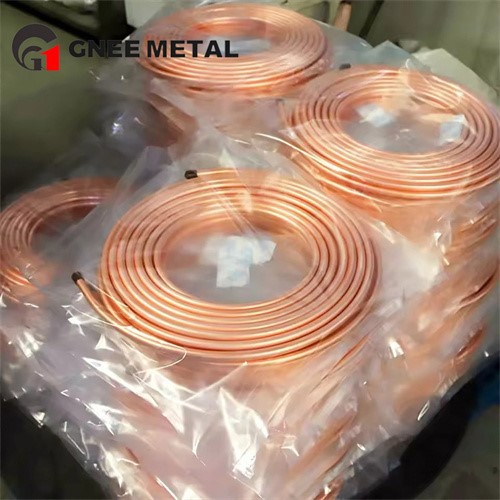
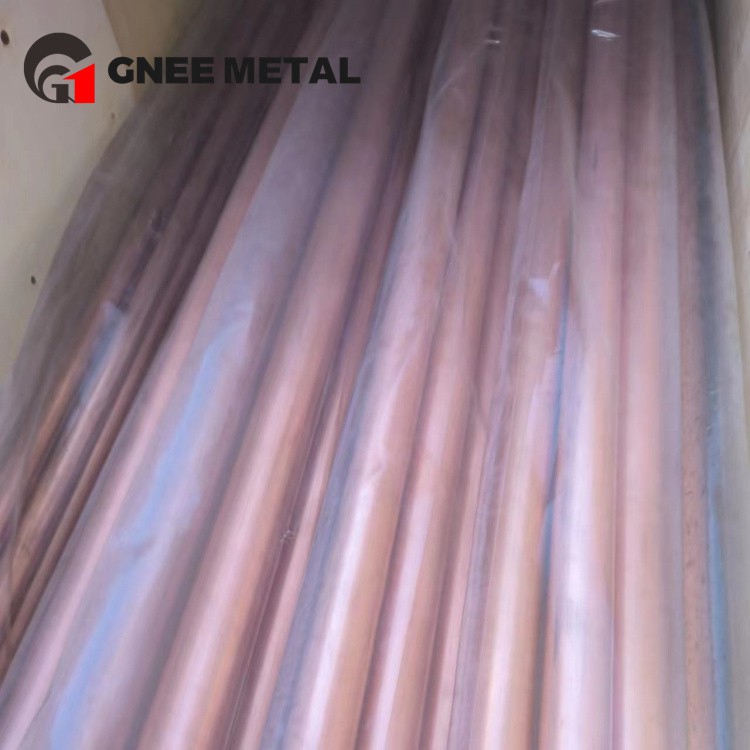
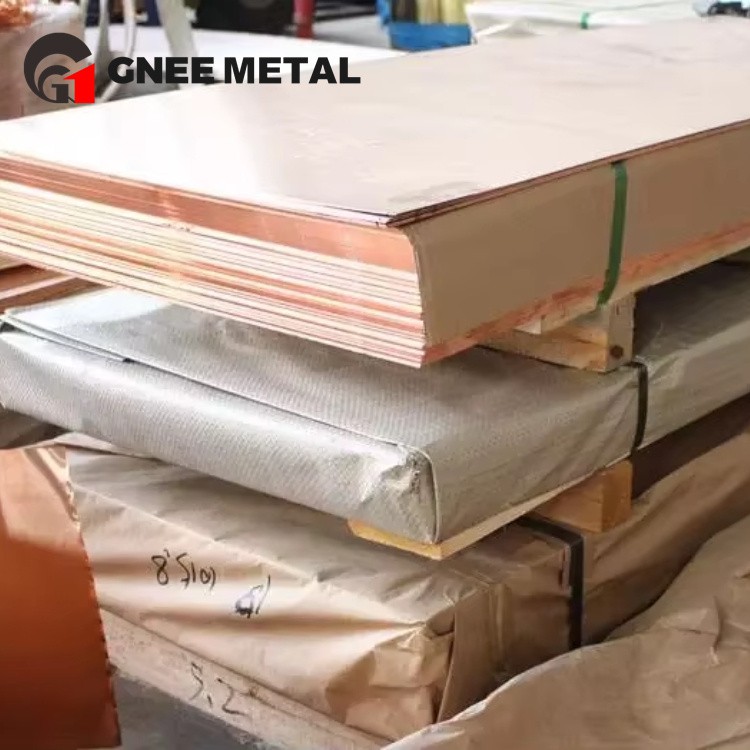
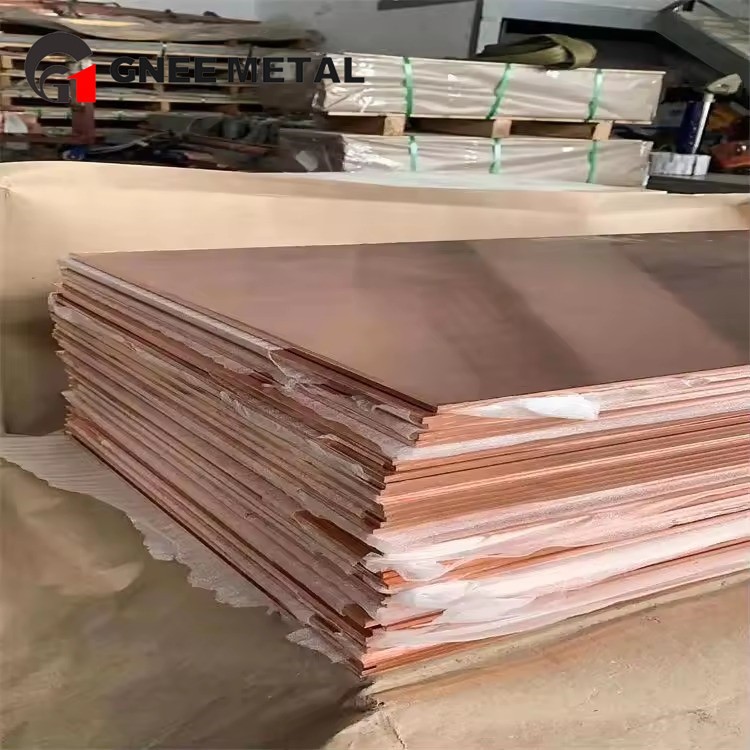
Industrial-Grade Export Packaging
Maximum protection against oxidation, moisture, and transit damage.
1. Anti-Oxidation Protection
VCI Paper & Moisture-Proof Film: Every order is vacuum-sealed or wrapped in anti-corrosion materials to ensure the copper remains bright and tarnish-free during sea freight.
2. Reinforced Structural Support
Seaworthy Wooden Crates: We use reinforced, fumigation-free wooden cases (ISPM-15) and steel strapping for rods, tubes, and heavy plates to prevent bending or surface scratches.
3. Secure Handling & Loading
Forklift-Ready Pallets: All materials are secured on standardized export pallets for easy unloading and maximum stability in containers.
4. Clear Identification
Professional Labeling: Each package includes detailed labels with heat numbers, specifications, and net weight for efficient inventory management.

Advanced Manufacturing & Quality Control
1. Core Production Equipment
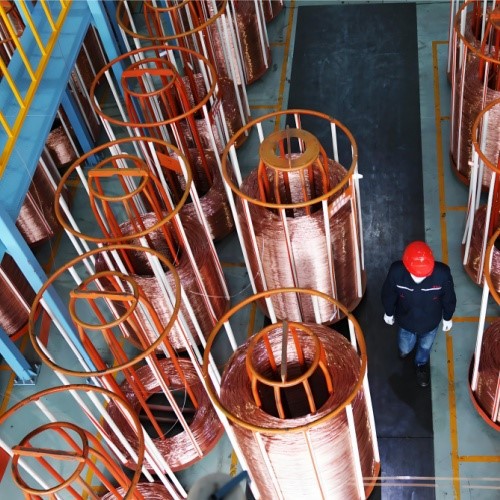
Up-casting & Continuous Casting Lines: Ensures high-purity oxygen-free copper rods and wires with uniform grain structure.
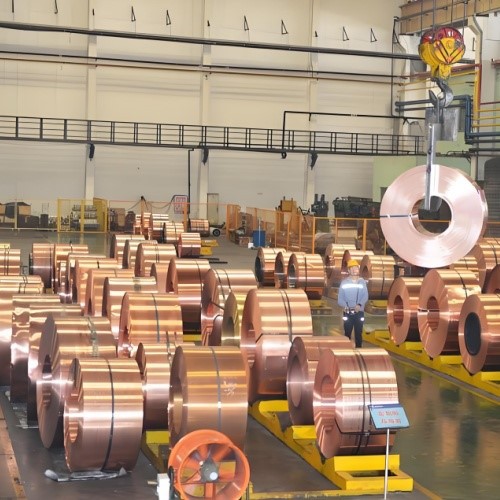
High-Precision Cold/Hot Rolling Mills: Automated thickness control for copper plates and strips with tolerances within ±0.01mm.
Large-Scale Extrusion & Drawing Machines: Capable of producing seamless copper tubes and rods in diverse diameters and shapes.
Atmospheric Controlled Annealing Furnaces: Bright annealing process to achieve specific tempers (Soft, Half-hard, Hard) without surface oxidation.
2. In-House Testing Center
Direct-Reading Spectrometers: Instant chemical composition analysis to guarantee Cu purity and precise alloying (Brass, Bronze, etc.).
Universal Tensile Testers: Verifying mechanical properties including tensile strength, elongation, and yield strength.
Eddy Current & Ultrasonic Testing: 100% non-destructive inspection for tubes and rods to detect internal cracks or flaws.
Conductivity & Hardness Testers: Ensuring electrical conductivity (IACS) and Vickers/Rockwell hardness meet international standards (ASTM, EN, DIN).



Get Fast Quote & Logistics Plan


