

For 95% of industrial power applications, C11000 (ETP) is the superior choice due to its high conductivity and cost-effectiveness. C11000 copper provides the industry-standard 101% IACS min conductivity, which is more than sufficient for high-current busbars and terminals. C10100 (Oxygen-Free) should only be specified for ultra-high-vacuum environments or assemblies requiring high-temperature brazing in a hydrogen atmosphere. For standard electrical distribution, the price premium for C10100 provides zero functional benefit. You can evaluate our available stock dimensions on the C11000 electrical copper busbar.
Does C10100 conductivity justify the price premium over C11000?
From a purely electrical standpoint, the difference is negligible. Both grades typically hit the same conductivity benchmarks. While c11000 copper material properties guarantee 101% IACS, C10100 might reach 102%, but this 1% gain rarely justifies a 20-40% increase in material cost. In a t2 copper plate factory, C11000 is the primary production grade because it offers the best ROI for power grids and switchgear.
The t2 copper meaning refers to Electrolytic Tough Pitch copper, which contains a controlled amount of oxygen to remove impurities. This oxygen content is what differentiates it from the ultra-pure C10100. For most B2B buyers, sticking with the 99.90% min purity of C11000 copper is the most commercially sound decision.
C11000 vs. C10100 Material Data Comparison
| Property | C11000 (ETP Copper) | C10100 (OFC Copper) | Procurement Impact |
| Copper Purity | 99.90% min | 99.99% min | High-purity requirement |
| Electrical Conductivity | 101% IACS min | 101% - 102% IACS | Negligible for power |
| Oxygen Content | 0.02% - 0.04% | 0.0005% max (5 ppm) | Brazing/Vacuum risk |
| Thermal Conductivity | 388 W/m·K | 391 W/m·K | Heat dissipation |
| Density | 8.89 g/cm³ | 8.94 g/cm³ | Weight calculation |
When does the oxygen content in C11000 become a failure point?
The "deal-breaker" for c11000 copper is hydrogen embrittlement. If your fabrication process involves heating the copper above 400°C in a reducing atmosphere (containing hydrogen), the internal oxygen will react to form steam, causing the metal to crack. This is common in high-end brazing or welding. C10100 is immune to this failure, which is why it is preferred for vacuum tubes and high-voltage medical equipment.
For engineers, reviewing the chemical composition of C11000 alloy is critical. If your assembly is joined via mechanical fasteners or ultrasonic welding, the oxygen in C11000 is stable and provides excellent mechanical reliability for years of service.
Fabrication and Joining Compatibility
| Process | C11000 (ETP) | C10100 (OFC) |
| Mechanical Bolting | Excellent (Standard) | Excellent |
| Soft Soldering | Excellent | Excellent |
| H-Atmosphere Brazing | Risk of Cracking | Excellent |
| Laser Welding | Poor (Porosity risk) | Good |
| Vacuum Performance | Low (Outgassing risk) | Excellent |
Is C10100 easier to machine than t2 copper?
No. Both grades are commercially pure coppers, meaning they are both "gummy" and difficult to machine. In a c11000 copper sheet manufacturer facility, we use the same diamond-coated tooling for both. The 99.99% purity of C10100 makes it slightly softer, but this does not translate into better CNC cycle times.
If your design requires complex threads or intricate milling, you will face the same 20% machinability rating for both. For high-volume terminal production, C11000 remains the logistical winner because it is more widely stocked in bar, rod, and sheet forms globally.
Selection for Power Terminals
| Application | Recommended Grade | Primary Driver |
| Electrical Busbars | C11000 | Conductivity / Cost |
| Grounding Lugs | C11000 | Economy / Ampacity |
| Vacuum Electronics | C10100 | Low Outgassing |
| HVAC Heat Sinks | C11000 | Thermal Dissipation |
| Waveguides | C10100 | Surface Purity |
FAQ: C11000 vs. C10100
1. Is C11000 "Pure Copper"?
Yes. With 99.90% minimum copper content, it is classified as commercially pure copper. C10100 is simply an ultra-pure variant with lower oxygen levels.
2. Why is C11000 the standard for data centers?
Reliability and cost. Data centers use massive amounts of copper for busbars. Using C11000 instead of C10100 saves hundreds of thousands of dollars in material costs without sacrificing electrical performance.
3. Can I weld C11000 busbars?
Standard arc welding is difficult due to the oxygen content. However, for most electrical installations, busbars are joined via mechanical bolting or flash welding, where C11000 performs exceptionally well.
4. How can I distinguish between C11000 and C10100 visually?
You cannot. Both have the same reddish-pink copper hue. Identification must be done via a Mill Test Certificate (MTC) showing the specific oxygen and impurity levels.
5. Does C10100 last longer in corrosive environments?
In standard industrial atmospheres, both oxidize at the same rate. The ultra-high purity of C10100 does not provide significantly better corrosion resistance than C11000.
6. Do you supply custom-cut plates in both grades?
Yes. Our factory stocks extensive inventories of c11000 material for power distribution and C10100 for high-vacuum and electronic projects. We provide precision water-jet and CNC cutting for both.
Product Specifications & Range
| Product Category | Common Grades (Alloys) | Size Range (Dimensions) | Standards |
| Copper Rods | C11000, C12200, C10200, C14500 | Diameter: 3mm – 400mm<br>Shape: Round, Hexagonal, Square | ASTM B187, EN 12163 |
| Copper Tubes | C11000, C12200 (DHP), C10200 (OF), C27200 | OD: 2mm – 219mm<br>Wall Thickness: 0.2mm – 20mm | ASTM B280, EN 12735 |
| Copper Plates | C11000 (ETP), C10200, C12200 | Thickness: 0.1mm – 150mm<br>Width: Up to 2500mm | ASTM B152, DIN 1751 |
| Copper Wires | C11000, C10200, Brass Wire | Diameter: 0.05mm – 10.0mm<br>Form: Spool or Coil | ASTM B3, EN 13602 |
| Copper Strips | C11000, C12200, C26800 (Brass) | Thickness: 0.05mm – 3.0mm<br>Width: 5mm – 610mm | ASTM B19, EN 1652 |
Customization Note:
Custom Dimensions: We provide precision cutting and slitting services to meet your specific project requirements.
Tempers Available: Soft (O), Half-Hard (H02), Full Hard (H04), and Spring Hard (H08).
Surface Finish: Bright annealing, Polished, or Plated (Tin, Silver, Nickel) upon request.
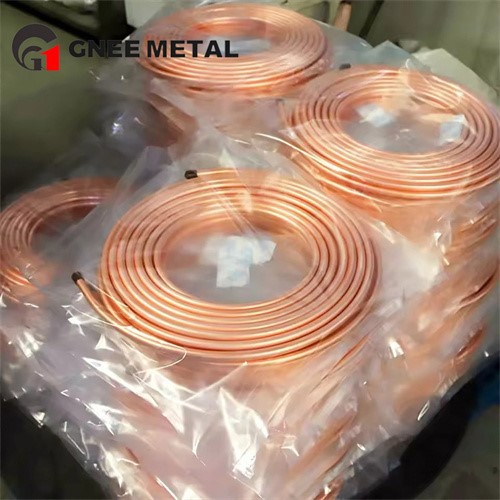
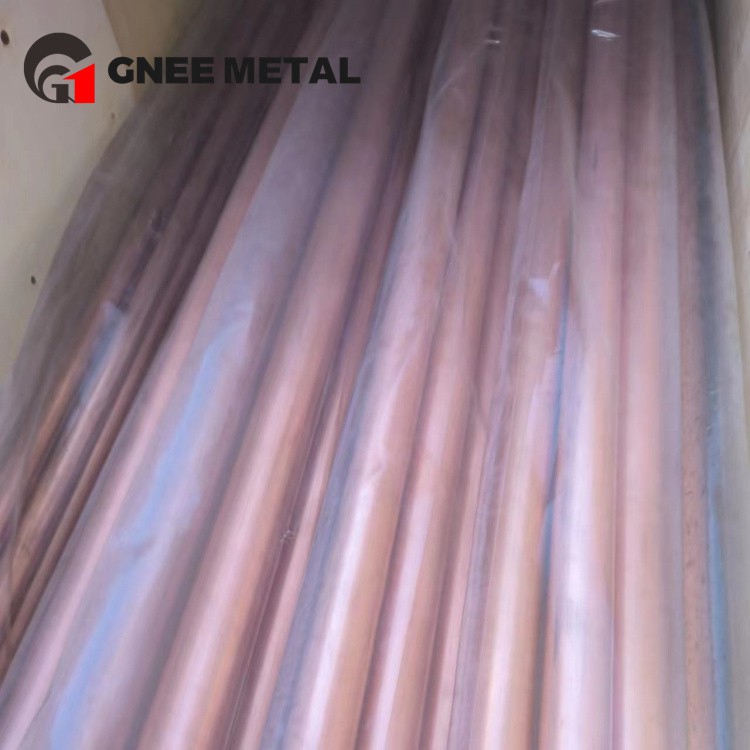
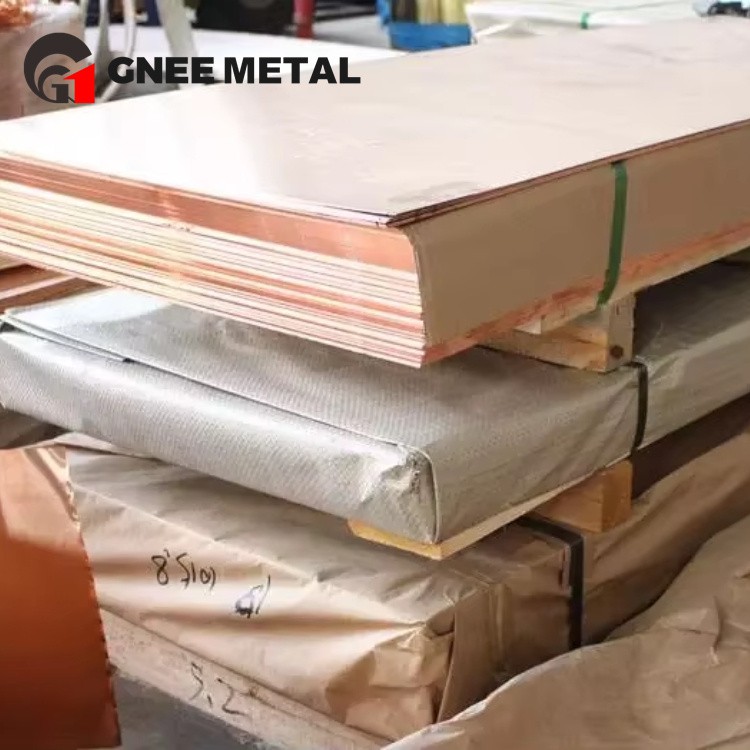
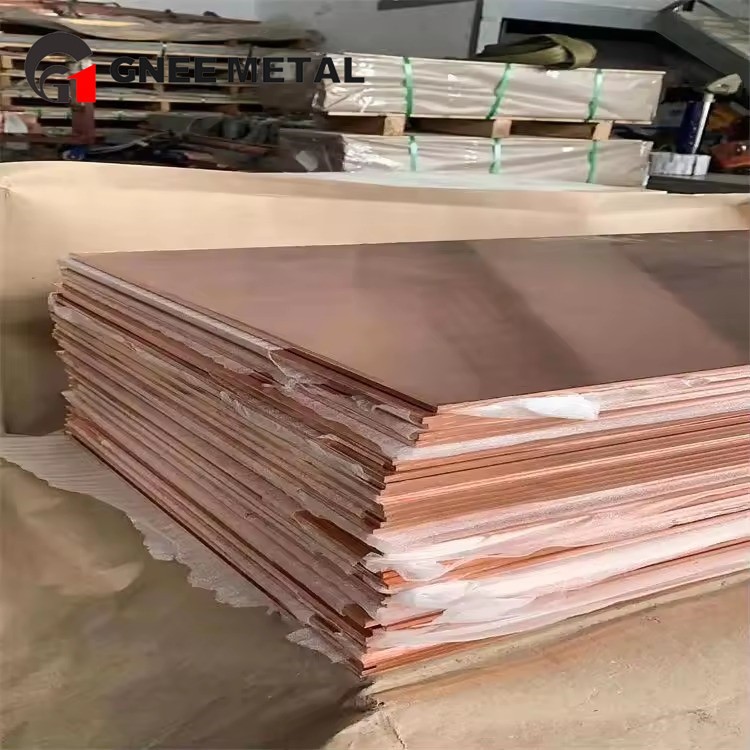
Industrial-Grade Export Packaging
Maximum protection against oxidation, moisture, and transit damage.
1. Anti-Oxidation Protection
VCI Paper & Moisture-Proof Film: Every order is vacuum-sealed or wrapped in anti-corrosion materials to ensure the copper remains bright and tarnish-free during sea freight.
2. Reinforced Structural Support
Seaworthy Wooden Crates: We use reinforced, fumigation-free wooden cases (ISPM-15) and steel strapping for rods, tubes, and heavy plates to prevent bending or surface scratches.
3. Secure Handling & Loading
Forklift-Ready Pallets: All materials are secured on standardized export pallets for easy unloading and maximum stability in containers.
4. Clear Identification
Professional Labeling: Each package includes detailed labels with heat numbers, specifications, and net weight for efficient inventory management.

Advanced Manufacturing & Quality Control
1. Core Production Equipment
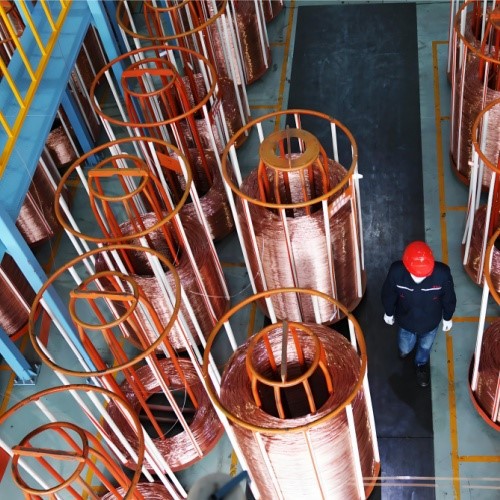
Up-casting & Continuous Casting Lines: Ensures high-purity oxygen-free copper rods and wires with uniform grain structure.
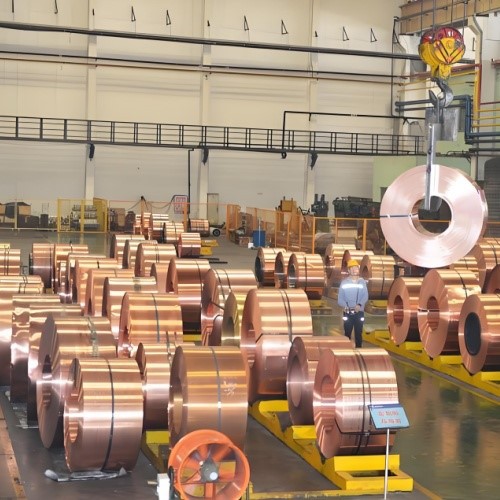
High-Precision Cold/Hot Rolling Mills: Automated thickness control for copper plates and strips with tolerances within ±0.01mm.
Large-Scale Extrusion & Drawing Machines: Capable of producing seamless copper tubes and rods in diverse diameters and shapes.
Atmospheric Controlled Annealing Furnaces: Bright annealing process to achieve specific tempers (Soft, Half-hard, Hard) without surface oxidation.
2. In-House Testing Center
Direct-Reading Spectrometers: Instant chemical composition analysis to guarantee Cu purity and precise alloying (Brass, Bronze, etc.).
Universal Tensile Testers: Verifying mechanical properties including tensile strength, elongation, and yield strength.
Eddy Current & Ultrasonic Testing: 100% non-destructive inspection for tubes and rods to detect internal cracks or flaws.
Conductivity & Hardness Testers: Ensuring electrical conductivity (IACS) and Vickers/Rockwell hardness meet international standards (ASTM, EN, DIN).



Get Fast Quote & Logistics Plan


