

The safe current-carrying capacity (ampacity) of a C11000 copper busbar is not a single number; it depends on the cross-sectional area and the allowable temperature rise (usually 30 to 50 degrees Celsius above ambient). For a standard 50mm x 5mm bar in a vertical indoor arrangement, the continuous rating is approximately 800 Amps. Because C11000 copper delivers a minimum conductivity of 101% IACS, it ensures the lowest possible heat generation even under heavy industrial loads. This high efficiency is a direct result of the 99.90% min purity of C11000 copper, which minimizes power loss in electrical distribution. You can evaluate our available bar dimensions and current ratings on the C11000 copper bar.
Why is C11000 preferred over other grades for high-current busbars?
In power transmission, resistance leads to heat, often referred to as I squared R loss. The c11000 material is the global standard because its electrolytic refining process removes trace impurities that would otherwise disrupt electron flow. This ensures that the 101% IACS conductivity remains consistent across the entire length of the conductor.
When you specify a busbar from our factory, you are choosing a material that balances low electrical resistance with high thermal conductivity. This allows the bar to transmit massive amounts of power while simultaneously dissipating heat, keeping the switchgear cabinet within safe operating limits.
Busbar Current Ratings and Weight (Indoor, 30C Temp Rise)
| Bar Size (mm) | Area (sq mm) | Approx. Ampacity (Amps) | Weight ( kg/m ) |
| 20 x 3 | 60 | 230 | 0.53 |
| 40 x 5 | 200 | 640 | 1.78 |
| 50 x 10 | 500 | 1350 | 4.45 |
| 100 x 10 | 1000 | 2400 | 8.90 |
Does the mounting orientation affect the heat rise of the copper?
A common mistake in cabinet design is ignoring the mounting orientation. A busbar mounted on its edge (vertically) allows air to flow naturally over both wide surfaces, increasing its capacity by roughly 10-15% compared to a bar mounted flat (horizontally). For a high-current installation, vertical mounting is an engineering best practice to maximize the efficiency of the c11000 material.
Furthermore, if your design requires complex offsets or 90-degree turns, you must verify that the C11000 is bendable in its current temper. We typically supply busbars in the H02 (Half-Hard) state, which offers the necessary stiffness for structural integrity while still allowing for precision forming without surface cracking.
Factors that reduce the safe capacity of your busbar
Skin Effect: In AC systems, current tends to flow on the surface. For bars thicker than 12mm, the center of the bar becomes less efficient.
Altitude: Above 1000 meters, thinner air reduces cooling efficiency, requiring you to de-rate the ampacity.
Ambient Temperature: If the cabinet interior exceeds 40 degrees Celsius, the bar size must be increased.
Surface Finish: Tin-plating prevents oxidation, which maintains low contact resistance over decades.
For engineers calculating these complex variables, the chemical composition of C11000 alloy provides the thermal data needed for accurate heat-rise simulations.
FAQ
1. Why use two thin bars instead of one thick C11000 bar?
Using two 50x5mm bars is more efficient than one 50x10mm bar because it increases the surface area for cooling and reduces the "skin effect" in AC power systems.
2. Does the green patina on old busbars affect current capacity?
The green patina is an insulator. While it doesn't affect the electricity flowing inside the bar, it must be ground off at the connection points to ensure a low-resistance, gas-tight joint.
3. Is C11000 strong enough to withstand short-circuit forces?
In the H02 (Half-Hard) state, yes. During a short circuit, magnetic forces can pull bars together or push them apart. The stiffness of C11000 prevents the bars from clashing.
4. What is the maximum operating temperature for a copper busbar?
Industry standards (like IEEE) usually limit the temperature to 105 degrees Celsius. Above this point, the copper may begin to soften (anneal), leading to loose bolted joints.
5. How do I calculate the weight of a custom length?
Copper has a density of 8.89 grams per cubic centimeter. A 1-meter bar of 50x10mm weighs 4.45 kg.
6. Do you provide CNC machining and tin-plating services?
Yes. Our factory provides precision drilling, bending, and plating. We supply finished components ready for immediate installation into your switchboard or inverter cabinets.
Product Specifications & Range
| Product Category | Common Grades (Alloys) | Size Range (Dimensions) | Standards |
| Copper Rods | C11000, C12200, C10200, C14500 | Diameter: 3mm – 400mm<br>Shape: Round, Hexagonal, Square | ASTM B187, EN 12163 |
| Copper Tubes | C11000, C12200 (DHP), C10200 (OF), C27200 | OD: 2mm – 219mm<br>Wall Thickness: 0.2mm – 20mm | ASTM B280, EN 12735 |
| Copper Plates | C11000 (ETP), C10200, C12200 | Thickness: 0.1mm – 150mm<br>Width: Up to 2500mm | ASTM B152, DIN 1751 |
| Copper Wires | C11000, C10200, Brass Wire | Diameter: 0.05mm – 10.0mm<br>Form: Spool or Coil | ASTM B3, EN 13602 |
| Copper Strips | C11000, C12200, C26800 (Brass) | Thickness: 0.05mm – 3.0mm<br>Width: 5mm – 610mm | ASTM B19, EN 1652 |
Customization Note:
Custom Dimensions: We provide precision cutting and slitting services to meet your specific project requirements.
Tempers Available: Soft (O), Half-Hard (H02), Full Hard (H04), and Spring Hard (H08).
Surface Finish: Bright annealing, Polished, or Plated (Tin, Silver, Nickel) upon request.
Industrial-Grade Export Packaging
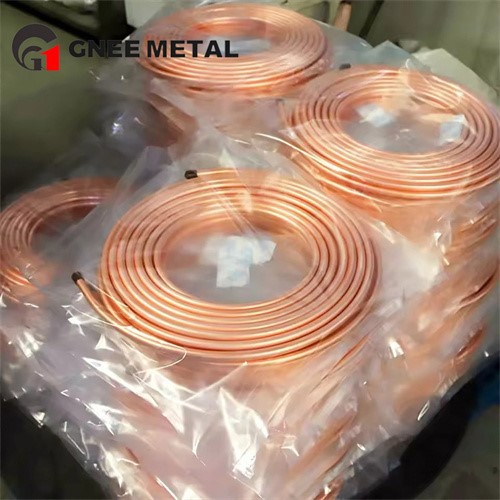
Maximum protection against oxidation, moisture, and transit damage.
1. Anti-Oxidation Protection
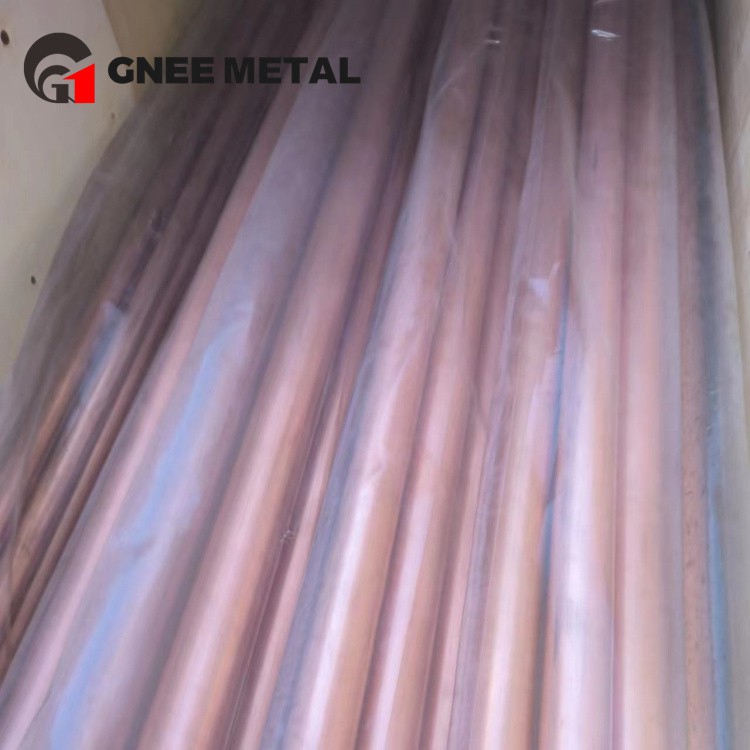
VCI Paper & Moisture-Proof Film: Every order is vacuum-sealed or wrapped in anti-corrosion materials to ensure the copper remains bright and tarnish-free during sea freight.
2. Reinforced Structural Support
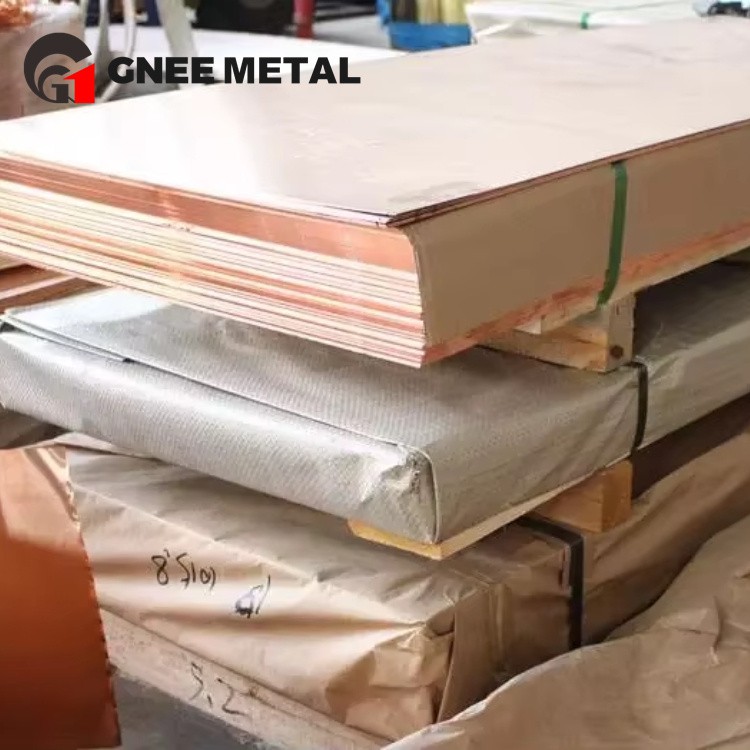
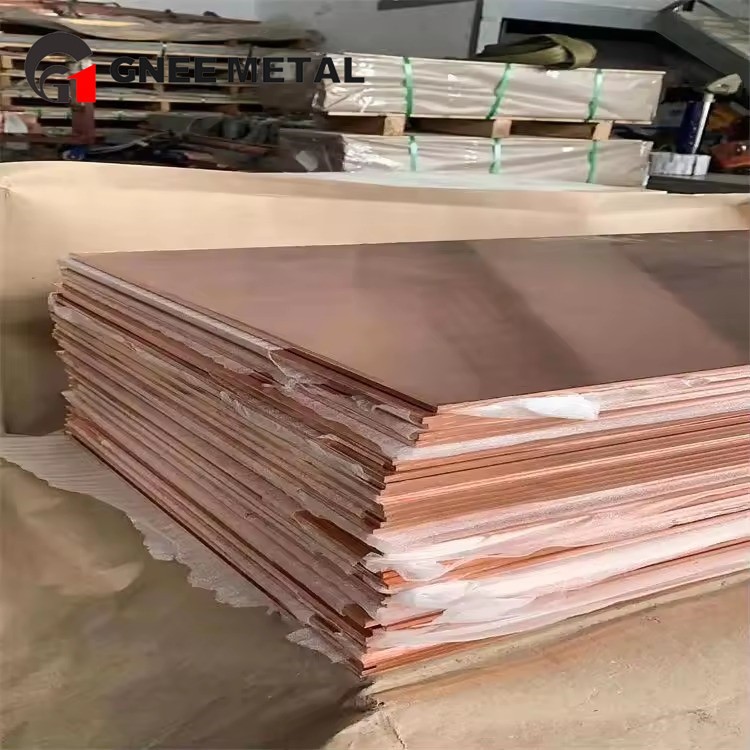
Seaworthy Wooden Crates: We use reinforced, fumigation-free wooden cases (ISPM-15) and steel strapping for rods, tubes, and heavy plates to prevent bending or surface scratches.
3. Secure Handling & Loading
Forklift-Ready Pallets: All materials are secured on standardized export pallets for easy unloading and maximum stability in containers.
4. Clear Identification
Professional Labeling: Each package includes detailed labels with heat numbers, specifications, and net weight for efficient inventory management.

Advanced Manufacturing & Quality Control
1. Core Production Equipment
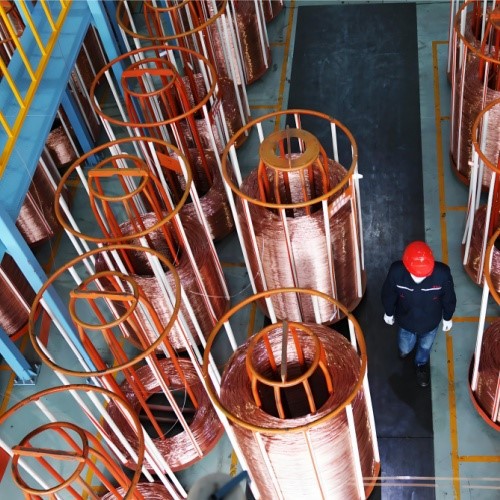
Up-casting & Continuous Casting Lines: Ensures high-purity oxygen-free copper rods and wires with uniform grain structure.
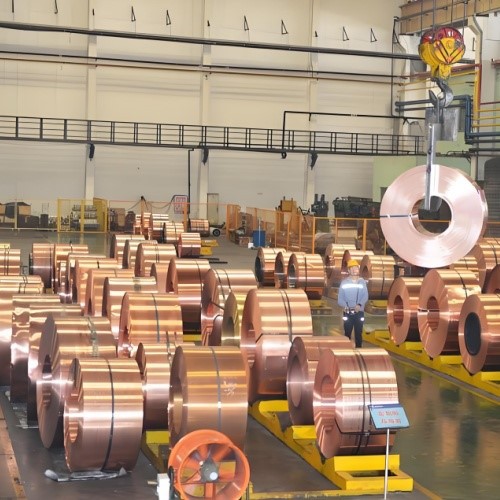
High-Precision Cold/Hot Rolling Mills: Automated thickness control for copper plates and strips with tolerances within ±0.01mm.
Large-Scale Extrusion & Drawing Machines: Capable of producing seamless copper tubes and rods in diverse diameters and shapes.
Atmospheric Controlled Annealing Furnaces: Bright annealing process to achieve specific tempers (Soft, Half-hard, Hard) without surface oxidation.
2. In-House Testing Center
Direct-Reading Spectrometers: Instant chemical composition analysis to guarantee Cu purity and precise alloying (Brass, Bronze, etc.).
Universal Tensile Testers: Verifying mechanical properties including tensile strength, elongation, and yield strength.
Eddy Current & Ultrasonic Testing: 100% non-destructive inspection for tubes and rods to detect internal cracks or flaws.
Conductivity & Hardness Testers: Ensuring electrical conductivity (IACS) and Vickers/Rockwell hardness meet international standards (ASTM, EN, DIN).



Get Fast Quote & Logistics Plan


