

For electrical cabinets and busbar supports, C11000 H02 copper sheet is the superior choice when the primary requirement is electrical conductivity and thermal dissipation. While C26000 (Cartridge Brass) offers higher mechanical strength and better corrosion resistance in certain environments, its conductivity is only about 28% IACS. In contrast, c11000 copper sheet in the H02 temper provides a minimum conductivity of 101% IACS, ensuring minimal heat generation under high current loads. You can compare our available stock of conductive materials on the C11000 product overview.
What is the conductivity difference between C11000 H02 and C26000 H02?
The gap in performance is massive for power distribution. C11000 copper is nearly pure, allowing electrons to flow with minimal resistance. C26000 brass, being an alloy of copper and zinc, has a disrupted crystal lattice that creates significant resistance. For a c11000 copper sheet manufacturer, the goal is to maintain a purity of 99.90% min, which you can verify in our breakdown of the chemical composition of C11000 alloy.
If your enclosure design requires the material to carry a current, using brass will lead to overheating and potential system failure. However, for non-conductive structural brackets, brass might be more cost-effective.
C11000 H02 vs. C26000 H02 Sheet Performance
| Property | C11000 H02 (ETP Copper) | C26000 H02 (Brass) |
| Electrical Conductivity | 101% IACS min | 28% IACS approx |
| Copper Content | 99.90% min | 70.0% approx |
| Tensile Strength | 240 to 300 MPa | 340 to 450 MPa |
| Thermal Conductivity | 388 W/m·K | 120 W/m·K |
| Hardness (Vickers) | 75 to 95 HV | 105 to 145 HV |
Is C11000 H02 copper sheet easier to form than C26000 brass?
Both materials in the H02 (half-hard) temper offer a good balance between strength and flexibility. However, t2 copper is generally more ductile than brass. If your electrical enclosure requires tight-radius 90-degree bends for busbar mounting, C11000 is less likely to develop surface micro-cracks during the process.
Before starting production, we recommend reviewing our technical analysis on whether C110 copper is bendable to ensure your tooling is optimized for pure copper. While brass is stronger, its higher zinc content makes it slightly more brittle during extreme cold-forming operations compared to c11000 material.
Fabrication Comparison for Cabinet Components
| Process | C11000 H02 Sheet | C26000 H02 Brass |
| Cold Bending | Excellent | Good |
| Punching/Stamping | Excellent | Excellent |
| Soft Soldering | Excellent | Excellent |
| Gas Shielded Welding | Poor (Oxygen risk) | Fair |
| Corrosion Resistance | Good | Excellent (Better in salt) |
When should you avoid C11000 H02 and switch to C10100?
If your electrical cabinet components must undergo high-temperature brazing in a reducing atmosphere, you must consider the oxygen content. As we discuss in the guide Is C110 copper oxygen free, the presence of oxygen in ETP copper can lead to internal failure at high temperatures. In these rare cases, upgrading to C11000 vs C10100 is necessary to ensure the structural integrity of the welded joints.
For 95% of industrial machine enclosures and switchgear cabinets, c11000 copper sheet in the H02 temper provides the best ROI, balancing excellent conductivity with manageable material costs.
FAQ: C11000 Copper Sheet vs. Brass Procurement
1. Which material has a better price for large enclosures?
The c11000 copper price is typically higher than brass because of the higher copper purity. However, because copper is more conductive, you can often use thinner sheets to achieve the same electrical performance, which can offset the per-kilogram cost.
2. Does C11000 copper sheet tarnish faster than brass?
Both will oxidize. Pure copper turns a deep brown (and eventually green), while brass develops a more muted brownish-gold tarnish. For electrical contacts, both should be silver or tin-plated to ensure long-term connection stability.
3. Is C11000 H02 considered "pure copper"?
Yes. As long as it meets the 99.90% threshold, it is Is C110 pure copper by industrial standards.
4. Can I use brass for the main ground bus inside the cabinet?
It is not recommended. A ground bus must have the lowest possible resistance to safely shunt fault currents. Using C11000 H02 ensures the safety of the system.
5. What is the standard thickness for C11000 cabinet sheets?
Most industrial cabinets use thicknesses ranging from 1.0mm to 3.0mm, depending on the structural load and the amount of heat dissipation required.
6. Is C11000 RoHS compliant?
Yes. Pure C11000 copper is naturally lead-free and meets all major environmental compliance standards for global export.
Product Specifications & Range
| Product Category | Common Grades (Alloys) | Size Range (Dimensions) | Standards |
| Copper Rods | C11000, C12200, C10200, C14500 | Diameter: 3mm – 400mm<br>Shape: Round, Hexagonal, Square | ASTM B187, EN 12163 |
| Copper Tubes | C11000, C12200 (DHP), C10200 (OF), C27200 | OD: 2mm – 219mm<br>Wall Thickness: 0.2mm – 20mm | ASTM B280, EN 12735 |
| Copper Plates | C11000 (ETP), C10200, C12200 | Thickness: 0.1mm – 150mm<br>Width: Up to 2500mm | ASTM B152, DIN 1751 |
| Copper Wires | C11000, C10200, Brass Wire | Diameter: 0.05mm – 10.0mm<br>Form: Spool or Coil | ASTM B3, EN 13602 |
| Copper Strips | C11000, C12200, C26800 (Brass) | Thickness: 0.05mm – 3.0mm<br>Width: 5mm – 610mm | ASTM B19, EN 1652 |
Customization Note:
Custom Dimensions: We provide precision cutting and slitting services to meet your specific project requirements.
Tempers Available: Soft (O), Half-Hard (H02), Full Hard (H04), and Spring Hard (H08).
Surface Finish: Bright annealing, Polished, or Plated (Tin, Silver, Nickel) upon request.
Industrial-Grade Export Packaging
Maximum protection against oxidation, moisture, and transit damage.
1. Anti-Oxidation Protection
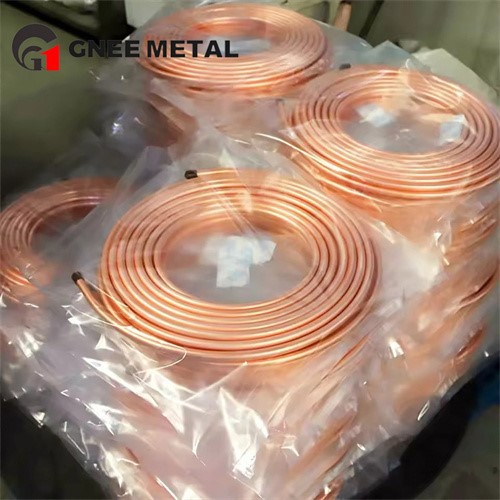
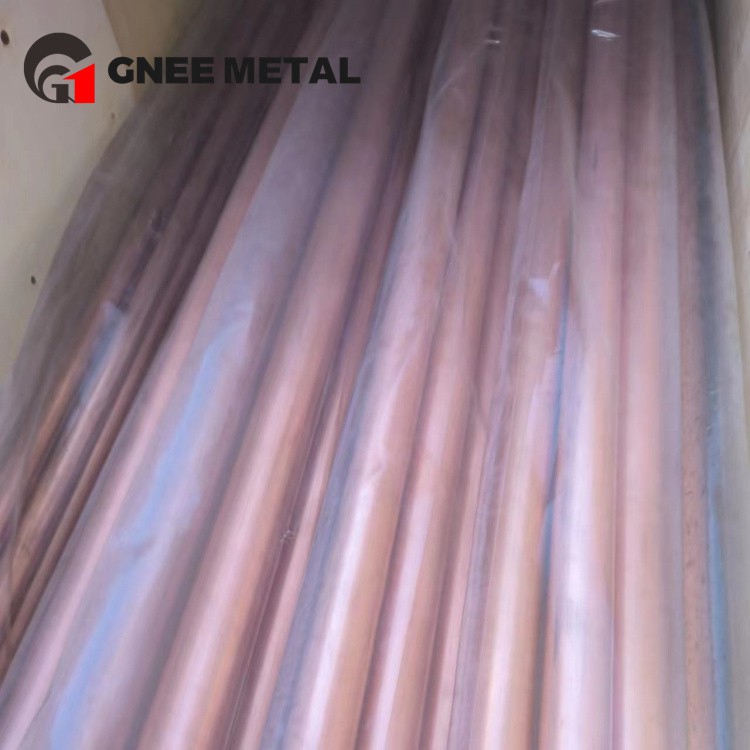
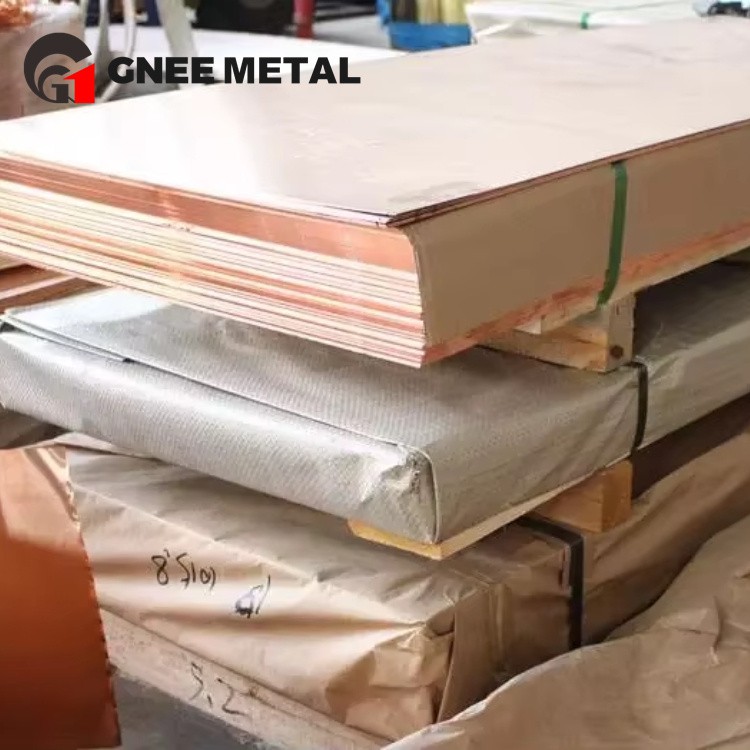
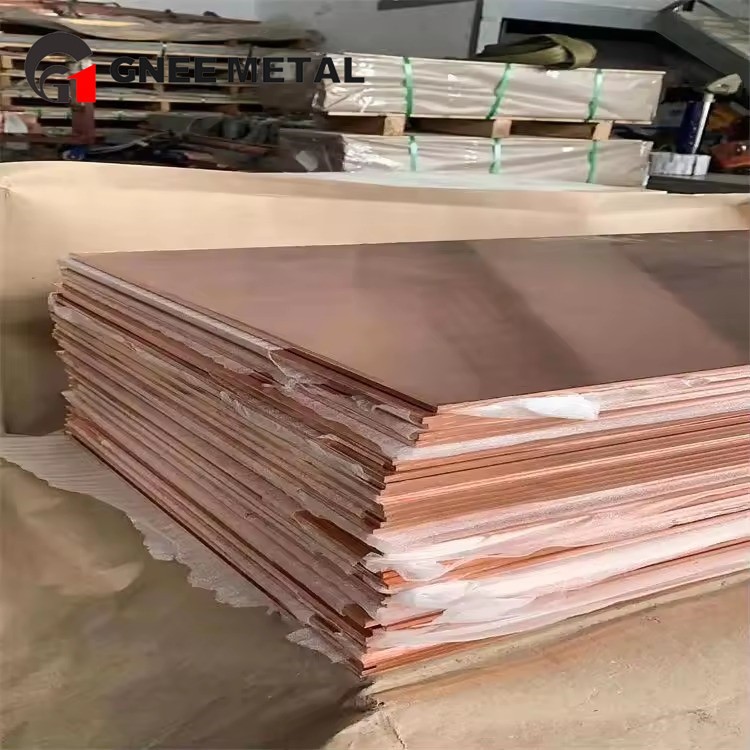
VCI Paper & Moisture-Proof Film: Every order is vacuum-sealed or wrapped in anti-corrosion materials to ensure the copper remains bright and tarnish-free during sea freight.
2. Reinforced Structural Support
Seaworthy Wooden Crates: We use reinforced, fumigation-free wooden cases (ISPM-15) and steel strapping for rods, tubes, and heavy plates to prevent bending or surface scratches.
3. Secure Handling & Loading
Forklift-Ready Pallets: All materials are secured on standardized export pallets for easy unloading and maximum stability in containers.
4. Clear Identification
Professional Labeling: Each package includes detailed labels with heat numbers, specifications, and net weight for efficient inventory management.

Advanced Manufacturing & Quality Control
1. Core Production Equipment
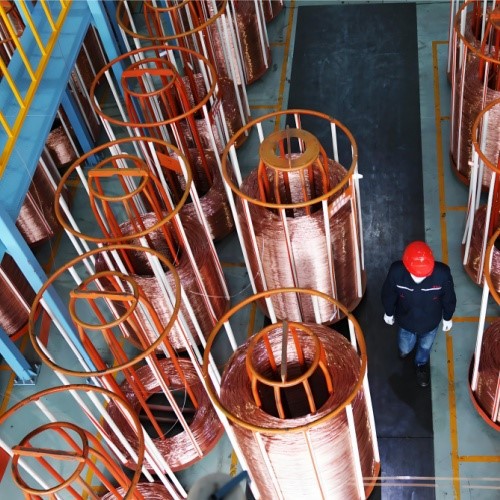
Up-casting & Continuous Casting Lines: Ensures high-purity oxygen-free copper rods and wires with uniform grain structure.
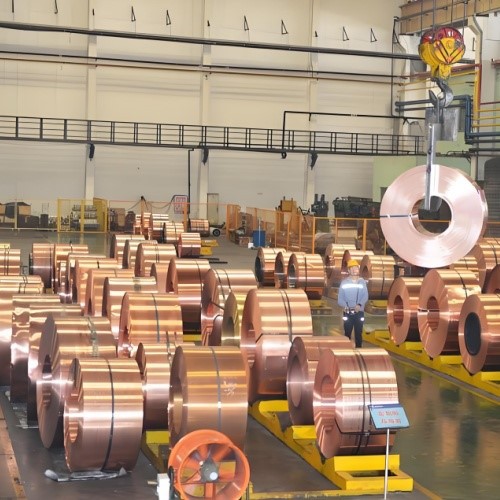
High-Precision Cold/Hot Rolling Mills: Automated thickness control for copper plates and strips with tolerances within ±0.01mm.
Large-Scale Extrusion & Drawing Machines: Capable of producing seamless copper tubes and rods in diverse diameters and shapes.
Atmospheric Controlled Annealing Furnaces: Bright annealing process to achieve specific tempers (Soft, Half-hard, Hard) without surface oxidation.
2. In-House Testing Center
Direct-Reading Spectrometers: Instant chemical composition analysis to guarantee Cu purity and precise alloying (Brass, Bronze, etc.).
Universal Tensile Testers: Verifying mechanical properties including tensile strength, elongation, and yield strength.
Eddy Current & Ultrasonic Testing: 100% non-destructive inspection for tubes and rods to detect internal cracks or flaws.
Conductivity & Hardness Testers: Ensuring electrical conductivity (IACS) and Vickers/Rockwell hardness meet international standards (ASTM, EN, DIN).



Get Fast Quote & Logistics Plan


