

Yes, C110 copper is classified as commercially pure copper. It is technically known as Electrolytic Tough Pitch (ETP) copper and must contain a minimum copper purity of 99.90% (including silver). While it is nearly 100% pure, it contains a small, controlled amount of oxygen (0.02% to 0.04%) to ensure high electrical conductivity. For engineers and buyers sourcing this material, you can find our full inventory of shapes on the C11000 product overview.
Is C110 the same as C11000 and T2 copper?
Yes - these terms refer to the same metallurgical grade. C110 is the common trade name, C11000 is the five-digit UNS designation used in North America, T2 copper is the designation in the Chinese GB standard, and Cu-ETP is used in the European EN designation system. Regardless of the name, the purity level remains consistent at 99.90% minimum. This purity level is the industry benchmark for electrical applications.
Regardless of the name, the purity level remains consistent at 99.90% min. If your project documentation requires a precise breakdown of the remaining 0.1% of elements, refer to our guide on the chemical composition of C11000 alloy This purity level is the industry benchmark for electrical applications.
C110 Pure Copper Chemical Limits (ASTM B152)
| Element | Symbol | Composition |
| Copper (plus Silver) | Cu + Ag | 99.90% min |
| Oxygen | O | 0.02% to 0.04% |
| Lead | Pb | 0.005% max |
| Iron | Fe | 0.005% max |
| Bismuth | Bi | 0.0005% max |
Why is C110 called "pure" if it contains oxygen?
The oxygen in C110 copper is not considered an impurity in the traditional sense. During the electrolytic refining of ETP copper, oxygen is used in the "pitching" process to remove residual sulfur and other elements that would lower the metal's conductivity. This ensures the copper reaches an electrical conductivity of at least 101% IACS. However, because it is not oxygen-free, C110 is susceptible to hydrogen embrittlement if heated above approximately 400 °C in reducing atmospheres - a key consideration for joining and heat treatment.
Mechanical Properties of Pure C110 Copper
| Property | Metric Unit | Value Range |
| Tensile Strength | MPa | 240 to 300 (Half-Hard) |
| Yield Strength | MPa | 170 to 280 |
| Elongation | % in 50mm | 15% min |
| Hardness | HV | 65 to 95 HV |
| Conductivity | % IACS | 101% min |
Is pure C110 copper suitable for electrical busbars?
Absolutely. Due to its high purity and excellent conductivity, C11000 copper bar is the global standard for c11000 electrical copper busbar systems. It offers the best balance of performance and cost.
While higher purity grades like C10100 exist, the 99.99% purity of those grades only offers a 1% increase in conductivity, which rarely justifies the significantly higher price for standard power distribution. You can compare the ROI of these grades in our analysis of C11000 vs C10100. For most industrial switchgear, C110 is the superior choice.
How does C110 purity affect fabrication and bending?
The high purity of c11000 material results in exceptional ductility. It can be cold-worked, bent, and stamped into complex shapes without losing its metallurgical integrity. This is particularly important for manufacturers of C11000 copper sheet used in architectural or electrical shielding.
Because it is a pure metal rather than an alloyed brass or bronze, C110 does not "work harden" as quickly as other materials. This allow for deep drawing and tight-radius bends, provided you select the correct temper for your specific fabrication equipment.
FAQ
1. Is C110 the same as 110 copper?
Yes. In the industry, "110 copper" and "C110" are shorthand for C11000 ETP copper. They all refer to the same 99.90% pure grade.
2. Does C110 copper rust?
Pure copper does not rust like iron, but it does oxidize. Over time, it will develop a brown tarnish and eventually a green patina (verdigris). This oxidation layer actually protects the underlying metal from further corrosion.
3. Can I weld pure C110 copper?
Welding is not recommended for C110 because the oxygen content causes porosity and cracking in the weld zone. Soldering and brazing (in non-reducing atmospheres) are the preferred joining methods.
4. Why is C110 called "Electrolytic"?
The name comes from the refining process. The copper is purified in an electrolytic cell, where electricity transfers pure copper from an impure anode to a pure cathode, leaving impurities behind.
5. How do I know if my C110 is actually 99.90% pure?
The only reliable way is to check the Mill Test Certificate (MTC). This document lists the exact chemical assay of the batch and confirms it meets ASTM B152 or B187 standards.
6. Is C110 copper lead-free?
For practical purposes, yes. It contains a maximum of 0.005% lead, which complies with most environmental and safety regulations for non-potable water applications.
Product Specifications & Range
| Product Category | Common Grades (Alloys) | Size Range (Dimensions) | Standards |
| Copper Rods | C11000, C12200, C10200, C14500 | Diameter: 3mm – 400mm Shape: Round, Hexagonal, Square |
ASTM B187, EN 12163 |
| Copper Tubes | C11000, C12200 (DHP), C10200 (OF), C27200 | OD: 2mm – 219mm Wall Thickness: 0.2mm – 20mm |
ASTM B280, EN 12735 |
| Copper Plates | C11000 (ETP), C10200, C12200 | Thickness: 0.1mm – 150mm Width: Up to 2500mm |
ASTM B152, DIN 1751 |
| Copper Wires | C11000, C10200, Brass Wire | Diameter: 0.05mm – 10.0mm Form: Spool or Coil |
ASTM B3, EN 13602 |
| Copper Strips | C11000, C12200, C26800 (Brass) | Thickness: 0.05mm – 3.0mm Width: 5mm – 610mm |
ASTM B19, EN 1652 |
Customization Note:
Custom Dimensions: We provide precision cutting and slitting services to meet your specific project requirements.
Tempers Available: Soft (O), Half-Hard (H02), Full Hard (H04), and Spring Hard (H08).
Surface Finish: Bright annealing, Polished, or Plated (Tin, Silver, Nickel) upon request.
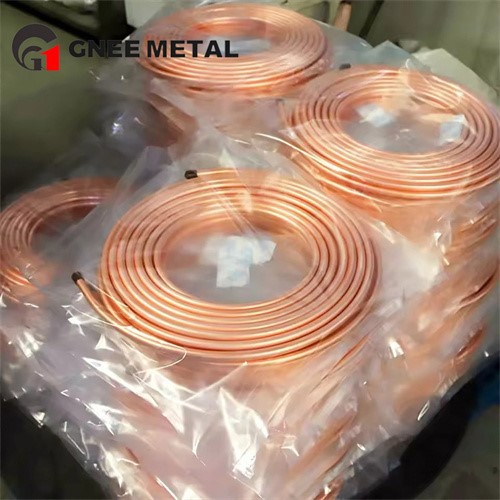
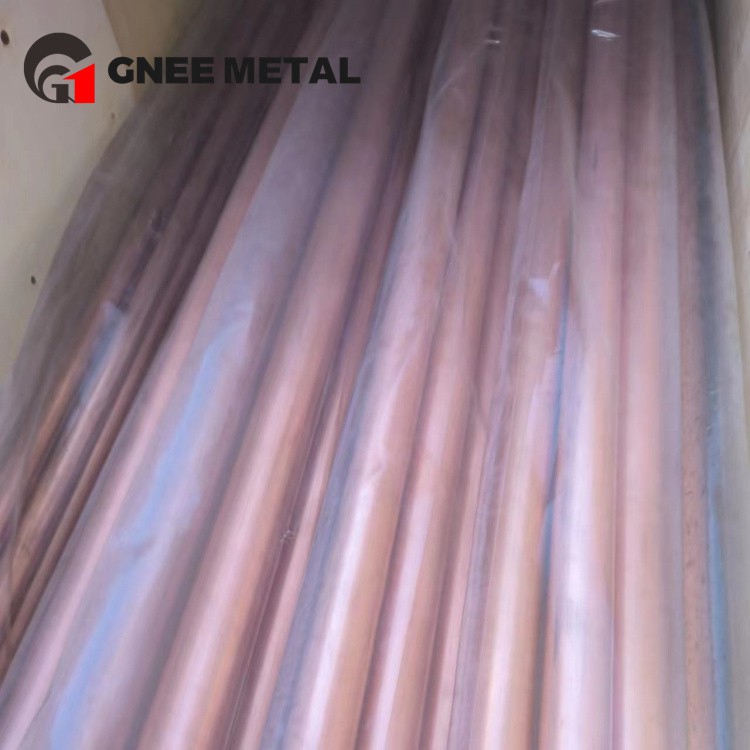
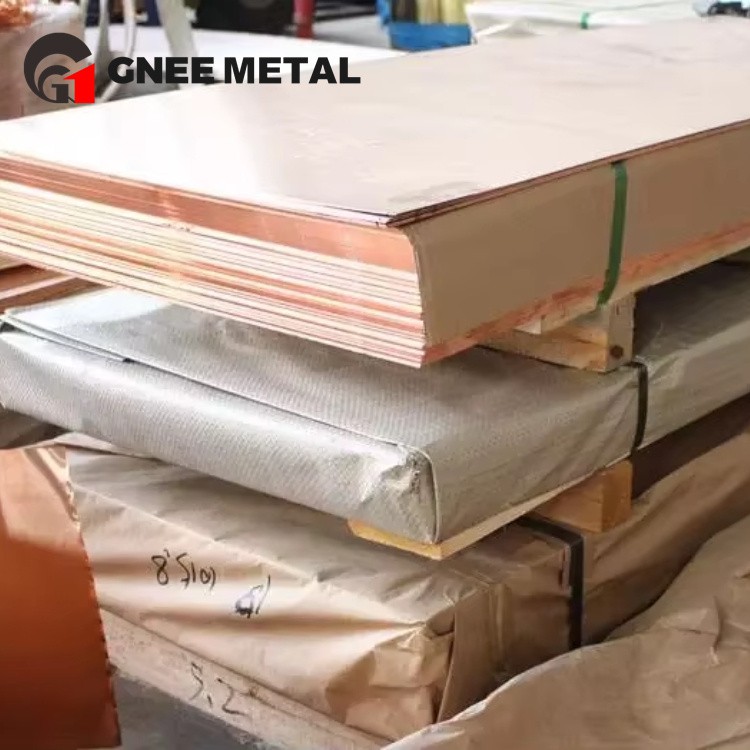
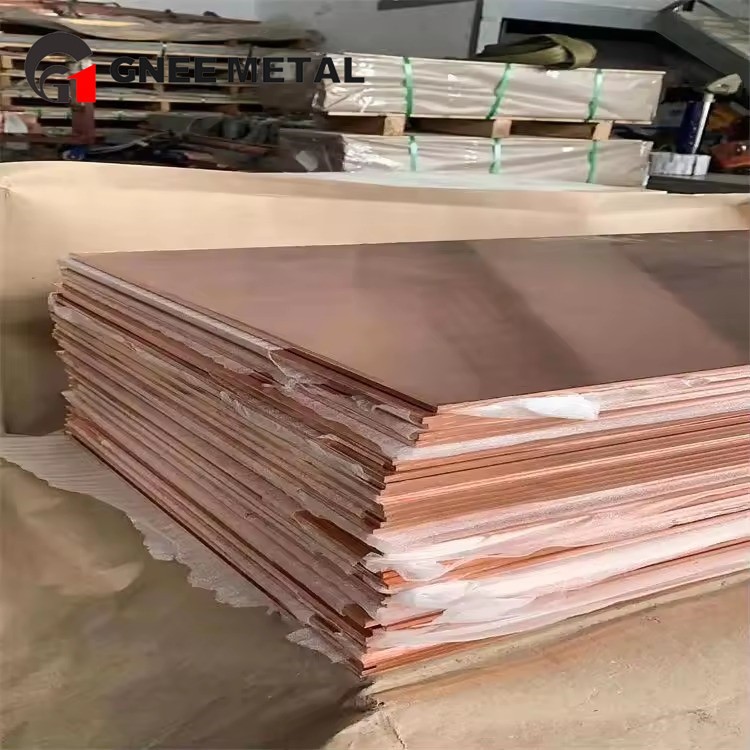
Industrial-Grade Export Packaging
Maximum protection against oxidation, moisture, and transit damage.
1. Anti-Oxidation Protection
VCI Paper & Moisture-Proof Film: Every order is vacuum-sealed or wrapped in anti-corrosion materials to ensure the copper remains bright and tarnish-free during sea freight.
2. Reinforced Structural Support
Seaworthy Wooden Crates: We use reinforced, fumigation-free wooden cases (ISPM-15) and steel strapping for rods, tubes, and heavy plates to prevent bending or surface scratches.
3. Secure Handling & Loading
Forklift-Ready Pallets: All materials are secured on standardized export pallets for easy unloading and maximum stability in containers.
4. Clear Identification
Professional Labeling: Each package includes detailed labels with heat numbers, specifications, and net weight for efficient inventory management.

Advanced Manufacturing & Quality Control
1. Core Production Equipment
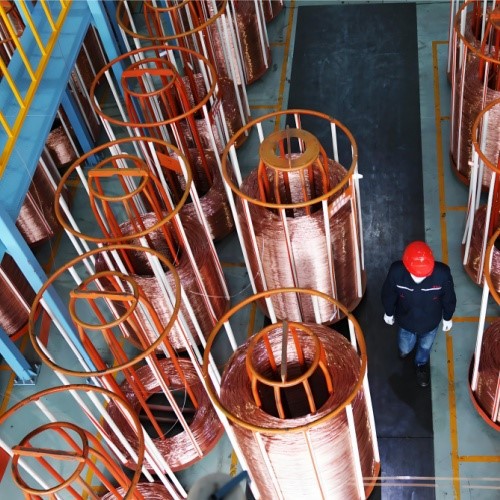
Up-casting & Continuous Casting Lines: Ensures high-purity oxygen-free copper rods and wires with uniform grain structure.
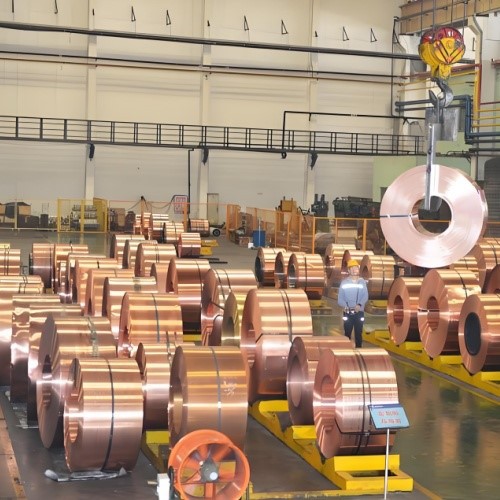
High-Precision Cold/Hot Rolling Mills: Automated thickness control for copper plates and strips with tolerances within ±0.01mm.
Large-Scale Extrusion & Drawing Machines: Capable of producing seamless copper tubes and rods in diverse diameters and shapes.
Atmospheric Controlled Annealing Furnaces: Bright annealing process to achieve specific tempers (Soft, Half-hard, Hard) without surface oxidation.
2. In-House Testing Center
Direct-Reading Spectrometers: Instant chemical composition analysis to guarantee Cu purity and precise alloying (Brass, Bronze, etc.).
Universal Tensile Testers: Verifying mechanical properties including tensile strength, elongation, and yield strength.
Eddy Current & Ultrasonic Testing: 100% non-destructive inspection for tubes and rods to detect internal cracks or flaws.
Conductivity & Hardness Testers: Ensuring electrical conductivity (IACS) and Vickers/Rockwell hardness meet international standards (ASTM, EN, DIN).



Get Fast Quote & Logistics Plan


