

Yes, C110 copper (UNS C11000) is exceptionally bendable and is one of the most ductile industrial metals available. Because it is a high-purity material (99.90% Cu), it can be cold-formed into sharp 90-degree or even 180-degree folds without cracking. However, its "bendability" is dictated by its temper; soft-annealed copper is far easier to fold than full-hard material.
If you are sourcing C11000 electrolytic tough pitch copper, you must select the correct hardness to avoid surface cracking or "orange peeling" during your bending process.
What are the bending limits of C11000 at different tempers?
The ductility of C11000 material is measured by its elongation percentage. For example, soft-annealed copper can have an elongation of over 35%, allowing it to be bent flat on itself. However, as the material is cold-rolled to achieve higher strength, its ability to stretch decreases.
If your project requires complex, tight-radius folds for a transformer C11000 copper coil, you should prioritize a softer temper. Conversely, if you need structural rigidity after bending, an H02 temper is the industry standard.
Minimum Bend Radius for C11000 (90-Degree Bends)
| Material Thickness (mm) | Soft (O60) Temper | Half-Hard (H02) Temper | Full-Hard (H04) Temper |
| 0.5mm - 1.0mm | 0 (Flat) | 0.5 x Thickness | 1.0 x Thickness |
| 2.0mm - 4.0mm | 0.5 x Thickness | 1.0 x Thickness | 2.5 x Thickness |
| Over 5.0mm | 1.0 x Thickness | 2.5 x Thickness | 4.0 x Thickness |
Why does the grain direction matter for C11000 bending?
Even though C11000 is highly bendable, its internal grain structure is directional due to the rolling process at the mill. Bending "with the grain" (parallel to the rolling direction) is more likely to cause fractures on the outer radius than bending "across the grain."
This is particularly important when using a heavy C11000 copper bar for high-current switchgear. If your design requires multiple bends in different directions, using a supplier who provides stress-relieved material is essential.
As we explored in our guide on the price of C11000 copper, specifying non-standard stress-relieving or custom-annealed tempers for easier bending may result in a higher fabrication premium on your final quote.
How to prevent "Orange Peel" on bent copper surfaces?
"Orange peel" refers to a roughened surface texture that appears on the outer radius of a bend. This occurs when the grain size of the copper is too large. To prevent this, you should partner with an ISO certified C11000 manufacturer that controls the annealing temperature to ensure a fine, uniform grain structure.
For high-end architectural projects using roofing C11000 copper sheet, a fine grain is vital for a smooth, aesthetic finish after the standing seams are folded.
FAQ
1. Is T2 copper as bendable as C11000?
Yes. As we analyzed in our article on the international copper equivalent of C11000, China's T2 copper and UNS C11000 share the same 99.90% purity and ductility standards, making them interchangeable for bending projects.
2. Does bending affect the electrical conductivity of C11000?
Minimally. The act of bending slightly "work-hardens" the copper at the point of the fold. While this slightly increases local resistance, it does not drop the overall performance of an electrical copper busbar below the required IACS rating.
3. Can I bend a C11000 copper tube without it kinking?
Yes, but it requires the correct tooling. Soft-annealed C11000 copper tube can be bent into tight coils for heat exchangers as long as you use an internal mandrel or a proper bending spring to support the walls.
4. Why does my copper crack when I bend it 180 degrees?
This usually happens if you are using a Full-Hard (H04) temper. As we discussed in our technical guide on the purity of C11000 copper, if the copper contains excessive impurities, it will become brittle and crack regardless of the bending method.
5. Can I "anneal" hard copper at home to make it more bendable?
Yes. You can heat a C11000 copper sheet to a dull red color (approx. 500°C) and quench it in water. This will return the material to a soft (annealed) state, making it much easier to fold manually.
6. What is the best temper for CNC folding?
Most automated folders prefer c11000 h02 (half-hard). It provides enough rigidity for the machine to handle accurately, while remaining ductile enough for a clean 90-degree bend. For even more complex shapes, we offer custom C11000 copper cnc machining to pre-mill fold lines.
Product Specifications & Range
| Product Category | Common Grades (Alloys) | Size Range (Dimensions) | Standards |
| Copper Rods | C11000, C12200, C10200, C14500 | Diameter: 3mm – 400mm<br>Shape: Round, Hexagonal, Square | ASTM B187, EN 12163 |
| Copper Tubes | C11000, C12200 (DHP), C10200 (OF), C27200 | OD: 2mm – 219mm<br>Wall Thickness: 0.2mm – 20mm | ASTM B280, EN 12735 |
| Copper Plates | C11000 (ETP), C10200, C12200 | Thickness: 0.1mm – 150mm<br>Width: Up to 2500mm | ASTM B152, DIN 1751 |
| Copper Wires | C11000, C10200, Brass Wire | Diameter: 0.05mm – 10.0mm<br>Form: Spool or Coil | ASTM B3, EN 13602 |
| Copper Strips | C11000, C12200, C26800 (Brass) | Thickness: 0.05mm – 3.0mm<br>Width: 5mm – 610mm | ASTM B19, EN 1652 |
Customization Note:
Custom Dimensions: We provide precision cutting and slitting services to meet your specific project requirements.
Tempers Available: Soft (O), Half-Hard (H02), Full Hard (H04), and Spring Hard (H08).
Surface Finish: Bright annealing, Polished, or Plated (Tin, Silver, Nickel) upon request.
Industrial-Grade Export Packaging
Maximum protection against oxidation, moisture, and transit damage.
1. Anti-Oxidation Protection
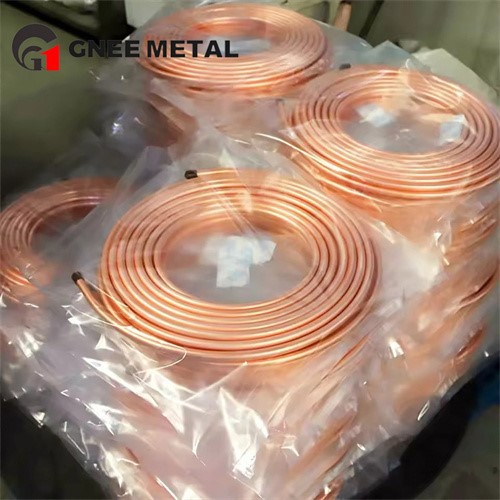
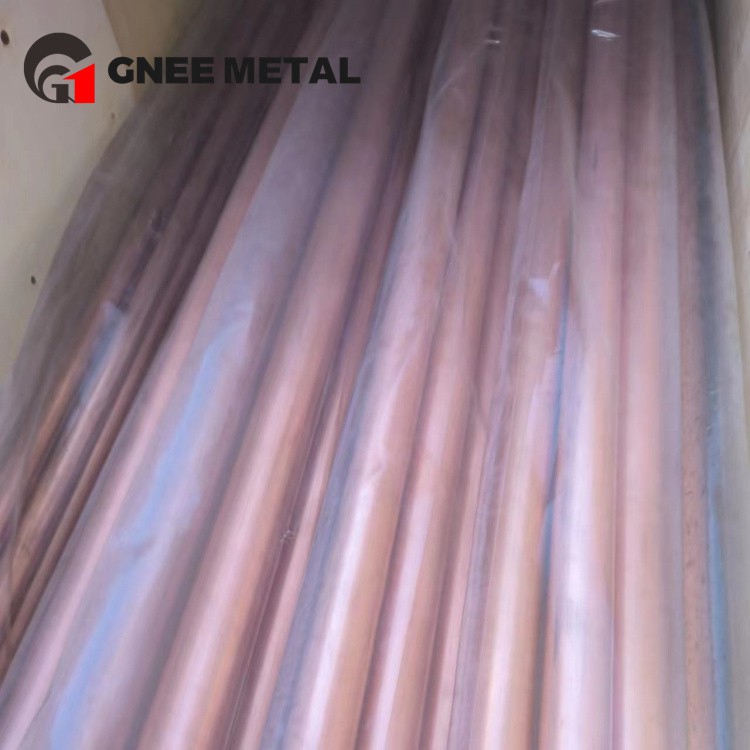
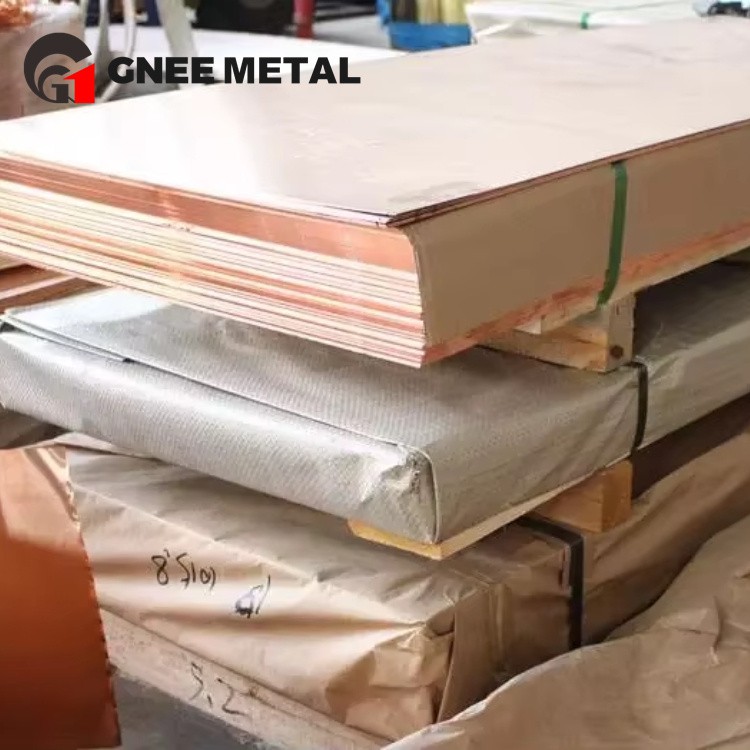
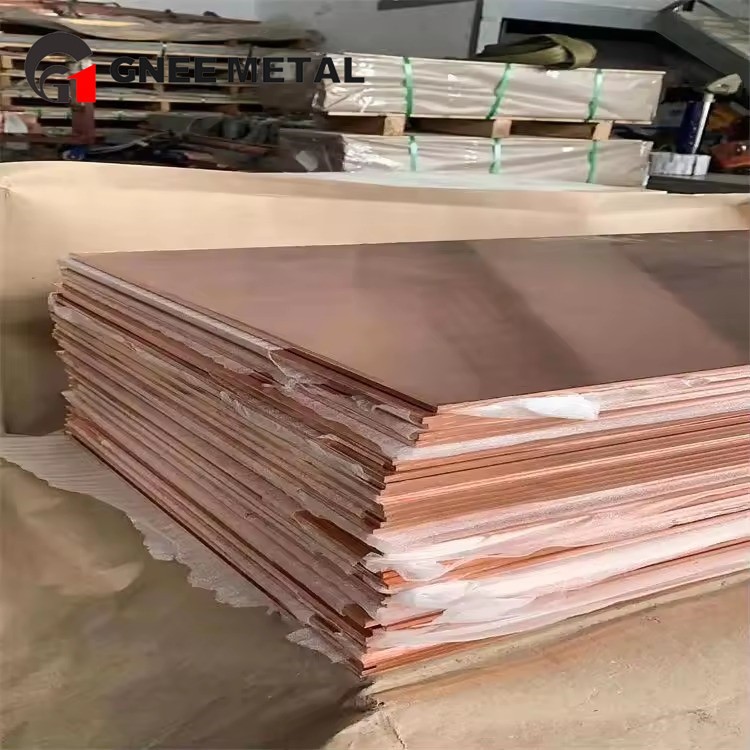
VCI Paper & Moisture-Proof Film: Every order is vacuum-sealed or wrapped in anti-corrosion materials to ensure the copper remains bright and tarnish-free during sea freight.
2. Reinforced Structural Support
Seaworthy Wooden Crates: We use reinforced, fumigation-free wooden cases (ISPM-15) and steel strapping for rods, tubes, and heavy plates to prevent bending or surface scratches.
3. Secure Handling & Loading
Forklift-Ready Pallets: All materials are secured on standardized export pallets for easy unloading and maximum stability in containers.
4. Clear Identification
Professional Labeling: Each package includes detailed labels with heat numbers, specifications, and net weight for efficient inventory management.

Advanced Manufacturing & Quality Control
1. Core Production Equipment
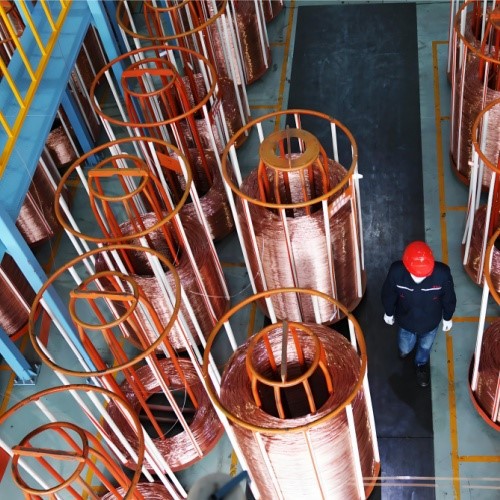
Up-casting & Continuous Casting Lines: Ensures high-purity oxygen-free copper rods and wires with uniform grain structure.
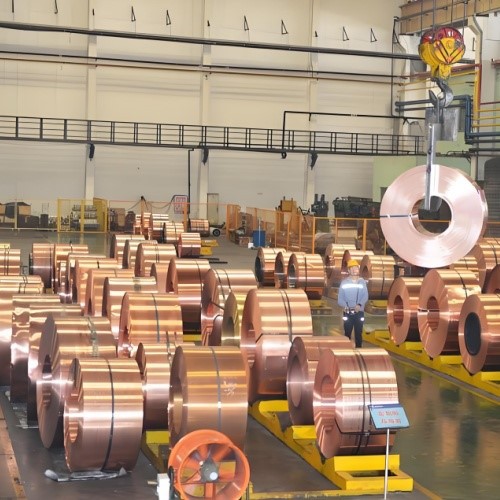
High-Precision Cold/Hot Rolling Mills: Automated thickness control for copper plates and strips with tolerances within ±0.01mm.
Large-Scale Extrusion & Drawing Machines: Capable of producing seamless copper tubes and rods in diverse diameters and shapes.
Atmospheric Controlled Annealing Furnaces: Bright annealing process to achieve specific tempers (Soft, Half-hard, Hard) without surface oxidation.
2. In-House Testing Center
Direct-Reading Spectrometers: Instant chemical composition analysis to guarantee Cu purity and precise alloying (Brass, Bronze, etc.).
Universal Tensile Testers: Verifying mechanical properties including tensile strength, elongation, and yield strength.
Eddy Current & Ultrasonic Testing: 100% non-destructive inspection for tubes and rods to detect internal cracks or flaws.
Conductivity & Hardness Testers: Ensuring electrical conductivity (IACS) and Vickers/Rockwell hardness meet international standards (ASTM, EN, DIN).



Get Fast Quote & Logistics Plan


