

The decision between C11000 H04 (Hard) plate and C17200 (Beryllium Copper) plate depends on whether your priority is electrical conductivity or mechanical strength. C11000 copper plate offers a superior conductivity of 101% IACS, making it the primary choice for high-current busbars and electrical panels. However, if the component requires high fatigue resistance or extreme hardness (up to 45 HRC after aging), C17200 is the technical winner. You can explore our available plate dimensions on the C11000 product overview.
What is the hardness difference between C11000 H04 and C17200 T00?
Hardness is the most striking differentiator. C11000 H04 plate reaches a hardness of approximately 95 to 120 HV through cold rolling. While this is sufficient for rigid busbars, it cannot compete with the strength of beryllium copper. C17200 in its "T00" (Solution Heat Treated) state starts at a higher base hardness and can be age-hardened to nearly four times the strength of pure copper.
Because of this, c11000 material is used for conducting current, while C17200 is used for spring contacts that must maintain tension over thousands of cycles. For a full elemental comparison of the pure grade, see our article on the chemical composition of C11000 alloy.
C11000 H04 vs. C17200 T00 Plate Mechanical Specs
| Property | C11000 Plate (H04) | C17200 Plate (T00) |
| Copper Purity | 99.90% Min | 98.00% Approx |
| Hardness (Vickers) | 95 - 120 HV | 150 - 200 HV (Pre-age) |
| Tensile Strength | 290 - 360 MPa | 410 - 550 MPa |
| Electrical Conductivity | 101% IACS | 15% to 25% IACS |
| Main Application | High-Current Busbars | Spring Contacts / Mold Inserts |
Can C11000 plate handle the same heat as Beryllium Copper?
Thermal stability is a major concern for engineers. c11000 copper plate has exceptional thermal conductivity (388 W/m·K), but it begins to soften (anneal) if exposed to temperatures above 200 degrees Celsius for extended periods. Beryllium copper, conversely, maintains its mechanical properties at much higher temperatures.
Another factor is the atmosphere. If your assembly process involves high-temperature brazing, you must consult our technical guide on whether Is C11000 copper oxygen free. In hydrogen-rich environments, the oxygen in C11000 can cause internal cracking, a risk that does not exist with deoxidized alloys.
Performance Trade-offs (Conductivity vs. Hardness)
| Component Type | Preferred Grade | Primary Reason |
| Electrical Busbar | C11000 copper plate | Maximum IACS / Low Resistance |
| Spring Clip | C17200 | Fatigue Resistance / Elasticity |
| Heatsink Base | C11000 | Superior Thermal Dissipation |
| Heavy-Duty Switch | C11000 (Main) / C17200 (Spring) | Hybrid Conductivity and Strength |
How does the C11000 price compare to C17200 for large plates?
From a procurement standpoint, c11000 copper is significantly more economical. Beryllium is an expensive and specialized alloying element, making C17200 plates three to five times more expensive per kilogram than c11000 copper price baselines. For large-scale electrical infrastructure, using C11000 for the bulk of the conductor is the only viable commercial strategy.
Before switching materials to save costs, ensure your design can handle the lower hardness of pure copper. If you need to bend the plate during installation, review our guide on whether C110 copper is bendable to ensure the H04 temper won't crack during tight-radius forming.
FAQ: C11000 vs. C17200
1. Why is C11000 better for busbars than C17200?
The conductivity of C17200 is too low (15-25% IACS) for efficient power transmission. Using it for a busbar would result in massive energy loss and overheating. C11000 copper is 4 to 6 times more efficient at moving electricity.
2. Is C11000 plate spark-resistant like C17200?
No. Beryllium copper is famous for being non-sparking, which is critical in explosive environments (oil and gas). While pure copper is also non-ferrous, it does not have the hardness required for non-sparking safety tools.
3. Can I silver-plate a C11000 H04 plate?
Yes. c11000 copper plate is an excellent substrate for silver or tin plating to improve surface conductivity and prevent oxidation at connection points.
4. What is the equivalent of C11000 plate in European standards?
The equivalent is Cu-ETP (CW004A). Most international drawings will accept this as a direct substitute for C11000.
5. How do I verify the temper of my C11000 plate?
Hardness testing (Vickers or Rockwell) is the most accurate method. A Mill Test Certificate (MTC) will also state the specific temper (O60, H02, or H04) and the corresponding tensile strength.
6. Is C11000 safe for environmental regulations like RoHS?
Yes. Pure copper C11000 is lead-free and compliant with major environmental standards, making it safe for global export.
Product Specifications & Range
| Product Category | Common Grades (Alloys) | Size Range (Dimensions) | Standards |
| Copper Rods | C11000, C12200, C10200, C14500 | Diameter: 3mm – 400mm<br>Shape: Round, Hexagonal, Square | ASTM B187, EN 12163 |
| Copper Tubes | C11000, C12200 (DHP), C10200 (OF), C27200 | OD: 2mm – 219mm<br>Wall Thickness: 0.2mm – 20mm | ASTM B280, EN 12735 |
| Copper Plates | C11000 (ETP), C10200, C12200 | Thickness: 0.1mm – 150mm<br>Width: Up to 2500mm | ASTM B152, DIN 1751 |
| Copper Wires | C11000, C10200, Brass Wire | Diameter: 0.05mm – 10.0mm<br>Form: Spool or Coil | ASTM B3, EN 13602 |
| Copper Strips | C11000, C12200, C26800 (Brass) | Thickness: 0.05mm – 3.0mm<br>Width: 5mm – 610mm | ASTM B19, EN 1652 |
Customization Note:
Custom Dimensions: We provide precision cutting and slitting services to meet your specific project requirements.
Tempers Available: Soft (O), Half-Hard (H02), Full Hard (H04), and Spring Hard (H08).
Surface Finish: Bright annealing, Polished, or Plated (Tin, Silver, Nickel) upon request.
Industrial-Grade Export Packaging
Maximum protection against oxidation, moisture, and transit damage.
1. Anti-Oxidation Protection
VCI Paper & Moisture-Proof Film: Every order is vacuum-sealed or wrapped in anti-corrosion materials to ensure the copper remains bright and tarnish-free during sea freight.
2. Reinforced Structural Support
Seaworthy Wooden Crates: We use reinforced, fumigation-free wooden cases (ISPM-15) and steel strapping for rods, tubes, and heavy plates to prevent bending or surface scratches.
3. Secure Handling & Loading
Forklift-Ready Pallets: All materials are secured on standardized export pallets for easy unloading and maximum stability in containers.
4. Clear Identification
Professional Labeling: Each package includes detailed labels with heat numbers, specifications, and net weight for efficient inventory management.
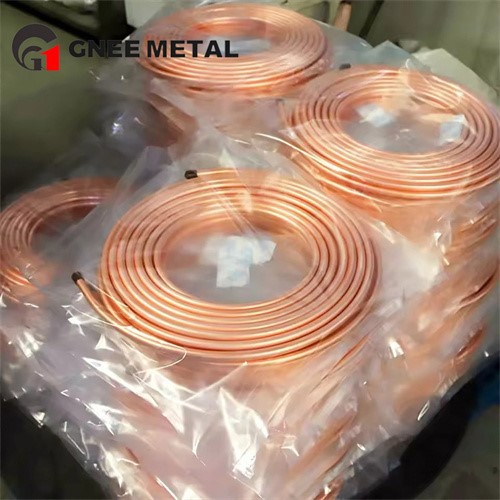

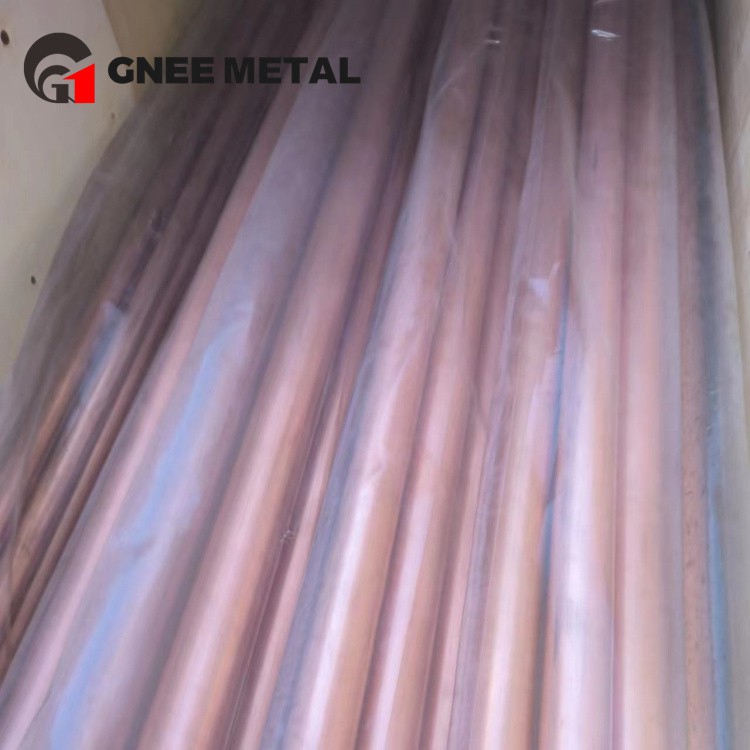
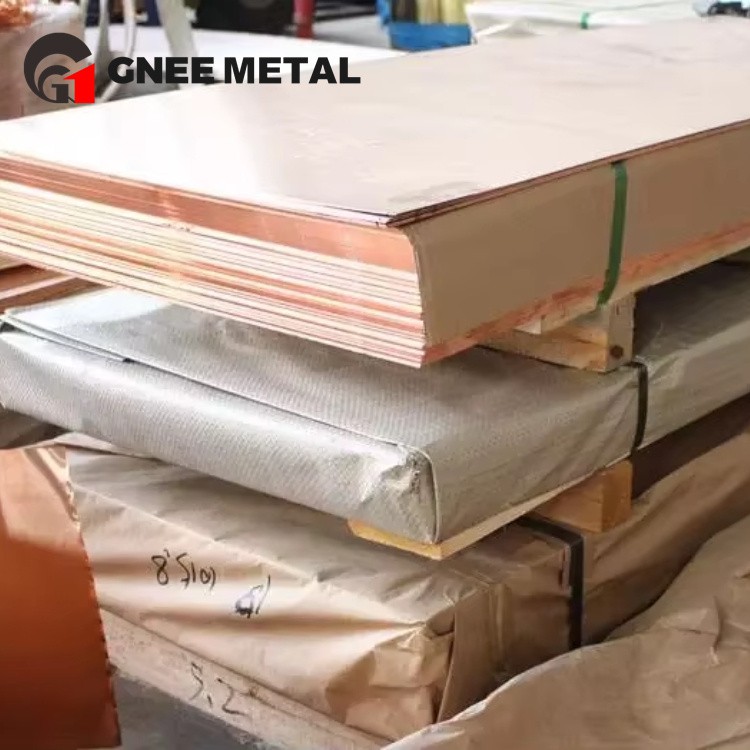
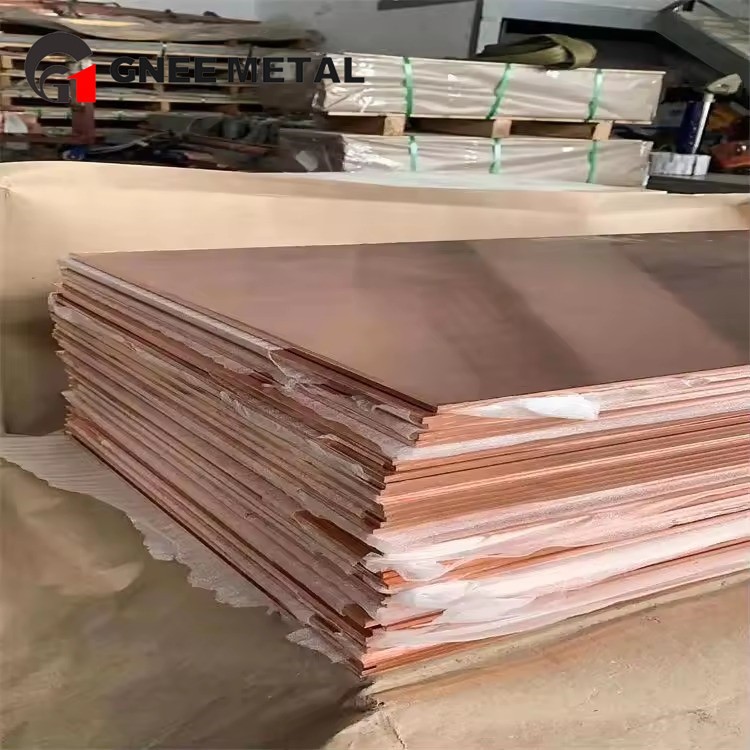
Advanced Manufacturing & Quality Control
1. Core Production Equipment
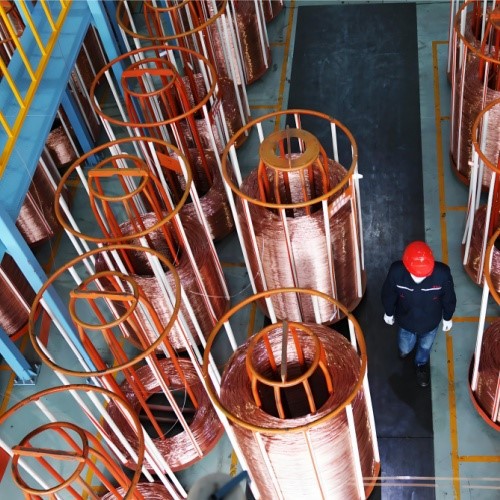
Up-casting & Continuous Casting Lines: Ensures high-purity oxygen-free copper rods and wires with uniform grain structure.
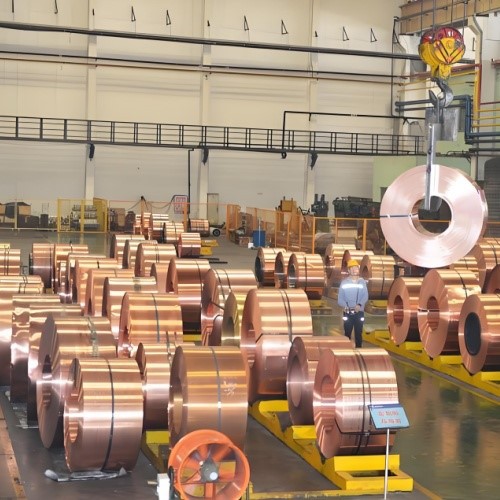
High-Precision Cold/Hot Rolling Mills: Automated thickness control for copper plates and strips with tolerances within ±0.01mm.
Large-Scale Extrusion & Drawing Machines: Capable of producing seamless copper tubes and rods in diverse diameters and shapes.
Atmospheric Controlled Annealing Furnaces: Bright annealing process to achieve specific tempers (Soft, Half-hard, Hard) without surface oxidation.
2. In-House Testing Center
Direct-Reading Spectrometers: Instant chemical composition analysis to guarantee Cu purity and precise alloying (Brass, Bronze, etc.).
Universal Tensile Testers: Verifying mechanical properties including tensile strength, elongation, and yield strength.
Eddy Current & Ultrasonic Testing: 100% non-destructive inspection for tubes and rods to detect internal cracks or flaws.
Conductivity & Hardness Testers: Ensuring electrical conductivity (IACS) and Vickers/Rockwell hardness meet international standards (ASTM, EN, DIN).



Get Fast Quote & Logistics Plan


