

The decision between C11000 (ETP) copper and C14500 (Tellurium) copper for high-precision terminals is a trade-off between electrical conductivity and manufacturing efficiency. C11000 copper provides the highest conductivity at 101% IACS min, but its machinability is poor (rated at 20%), making it "gummy" and difficult to mill. C14500 tellurium copper slightly reduces conductivity to 93% IACS min but offers an exceptional machinability rating of 85%, allowing for high-speed CNC production of threaded pins and complex connectors. You can evaluate our available rod and bar stock on the C11000 product overview.
Why is the machinability of C11000 so much lower than C14500?
Pure c11000 material is highly ductile, which causes it to "smear" and stick to cutting tools during high-speed operations. This leads to excessive heat, rapid tool wear, and poor surface finishes on C11000 CNC machining. C14500 solves this by adding 0.4% to 0.7% tellurium. The tellurium forms small particles in the copper matrix that act as natural chip breakers, ensuring clean cuts and high-quality finishes.
For high-volume production of precision electronic pins, C14500 is the technical standard. However, for simple power junctions where machining is minimal, the ultra-high purity of t2 copper is the preferred baseline. You can verify these elemental differences in our chemical composition of C11000 alloy.
C11000 vs. C14500 Machining and Electrical Properties
| Property | C11000 (ETP Copper) | C14500 (Te-Copper) |
| Machinability Rating | 20% (Standard) | 85% (Free-Cutting) |
| Electrical Conductivity | 101% IACS min | 93% IACS min |
| Copper Purity | 99.90% min | 99.20% approx |
| Tensile Strength | 240 to 300 MPa | 250 to 350 MPa |
| Thermal Conductivity | 388 W/m·K | 355 W/m·K |
Does the electrical conductivity of C14500 meet high-power terminal requirements?
For the majority of high-current connectors in the automotive and solar industries, the drop from 101% IACS to 93% IACS is technically acceptable. The high thermal conductivity of C14500 still ensures effective heat dissipation, making it much more capable than brass or bronze. Because C14500 is nearly as conductive as Is C110 pure copper, it has become the "Goldilocks" grade for high-speed machining of EV charging pins.
If your component is used in a high-voltage transformer where even a 1% loss is critical, you should specify an electrolytic grade C11000 copper bar. For parts that require bending after machining, review our guide on whether C110 copper is bendable to select the correct H02 or soft temper.
Production Efficiency and ROI Comparison
| Manufacturing Factor | C11000 Machining | C14500 Machining |
| Cycle Time | Long (Requires slow feeds) | Short (High-speed drilling) |
| Tool Replacement | Frequent (Gummy buildup) | Minimal |
| Surface Burrs | High (Requires deburring) | Very Low |
| Complexity Limit | Low (Simple shapes only) | High (Deep threads/fine pins) |
| Material Cost | Standard | Premium |
Is the material price premium of C14500 offset by lower machining costs?
From a B2B procurement standpoint, the c11000 copper price is the industry baseline. C14500 carries a 15% to 30% price premium per kilogram due to the tellurium alloying and specialized casting. However, for complex parts, the reduction in machine-hour costs is massive. If a terminal takes 5 minutes to machine in C11000 but only 60 seconds in C14500, the labor and overhead savings will far outweigh the material cost.
For small production runs or simple brackets, C11000 is usually the most economical. For high-volume precision manufacturing, C14500 provides a much better return on investment (ROI).
FAQ: Deciding between C11000 and C14500 for CNC Parts
1. Why does C11000 feel "gummy" during CNC milling?
The high ductility of pure copper means it doesn't break into chips. Instead, it wraps around the drill or end mill, leading to friction, heat, and potential tool breakage.
2. Is C14500 more resistant to hydrogen embrittlement?
Yes. C14500 is typically deoxidized, meaning it can be heated or brazed more safely than c11000 copper, which contains oxygen that reacts at high temperatures.
3. Which grade is better for fine threads?
C14500 is significantly better. It allows for high-precision tapping and threading without the risk of the "tear" common in soft, pure copper.
4. Can I achieve a mirror finish on these materials?
C14500 is much easier to polish to a high-quality finish. C11000 often requires extensive secondary buffing to remove the surface marks left by the cutting tool.
5. How does the scrap value compare?
Both have high scrap value, but t2 copper scrap is the most universally accepted and highest-value scrap grade in the market.
6. Can your factory supply both C11000 and C14500 machined parts?
Yes. We maintain extensive stock in both C11000 and C14500. If your priority is maximum current-carrying capacity, we use specialized diamond-coated tooling for C11000. If you require a high volume of complex connectors, we recommend C14500 to lower your total cost per part. Contact us for a comparative quote on both options.
Product Specifications & Range
| Product Category | Common Grades (Alloys) | Size Range (Dimensions) | Standards |
| Copper Rods | C11000, C12200, C10200, C14500 | Diameter: 3mm – 400mm<br>Shape: Round, Hexagonal, Square | ASTM B187, EN 12163 |
| Copper Tubes | C11000, C12200 (DHP), C10200 (OF), C27200 | OD: 2mm – 219mm<br>Wall Thickness: 0.2mm – 20mm | ASTM B280, EN 12735 |
| Copper Plates | C11000 (ETP), C10200, C12200 | Thickness: 0.1mm – 150mm<br>Width: Up to 2500mm | ASTM B152, DIN 1751 |
| Copper Wires | C11000, C10200, Brass Wire | Diameter: 0.05mm – 10.0mm<br>Form: Spool or Coil | ASTM B3, EN 13602 |
| Copper Strips | C11000, C12200, C26800 (Brass) | Thickness: 0.05mm – 3.0mm<br>Width: 5mm – 610mm | ASTM B19, EN 1652 |
Customization Note:
Custom Dimensions: We provide precision cutting and slitting services to meet your specific project requirements.
Tempers Available: Soft (O), Half-Hard (H02), Full Hard (H04), and Spring Hard (H08).
Surface Finish: Bright annealing, Polished, or Plated (Tin, Silver, Nickel) upon request.
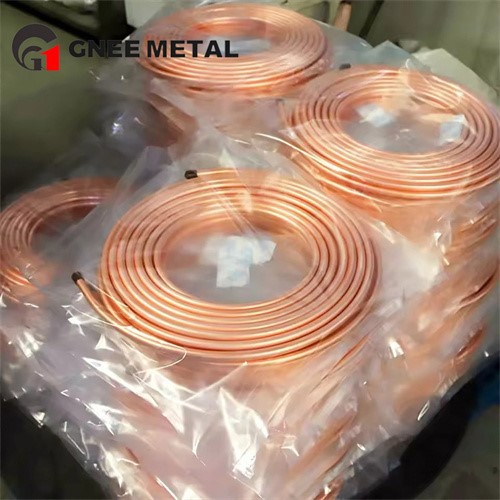
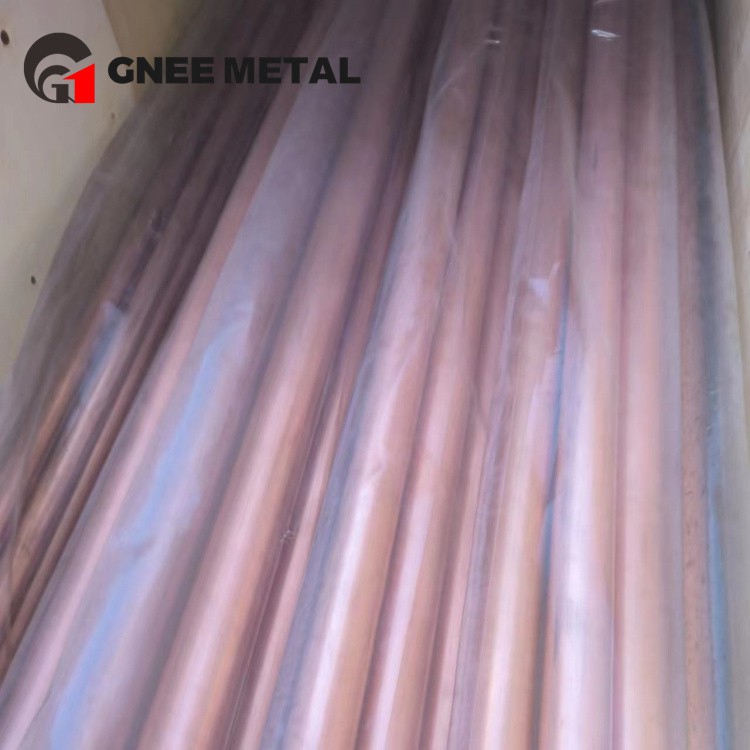
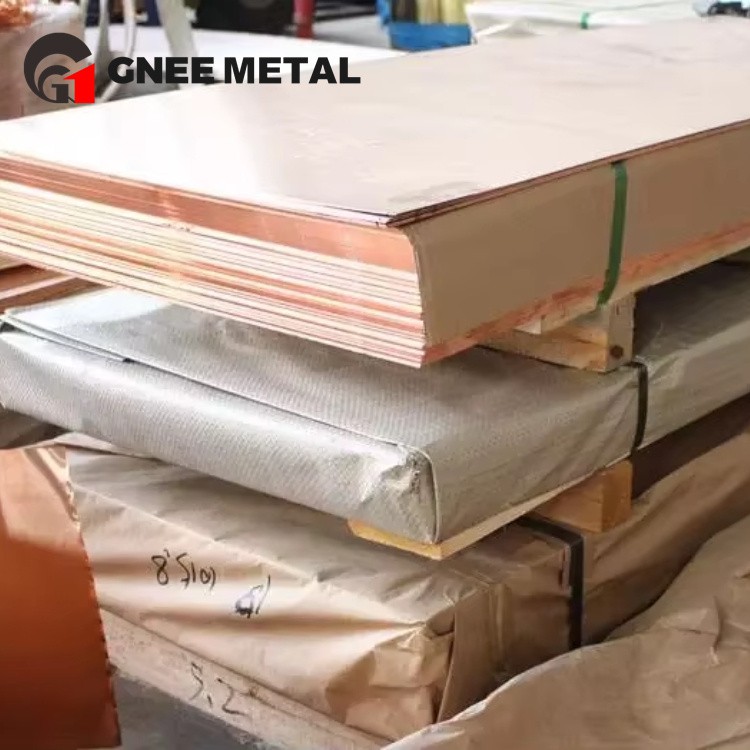
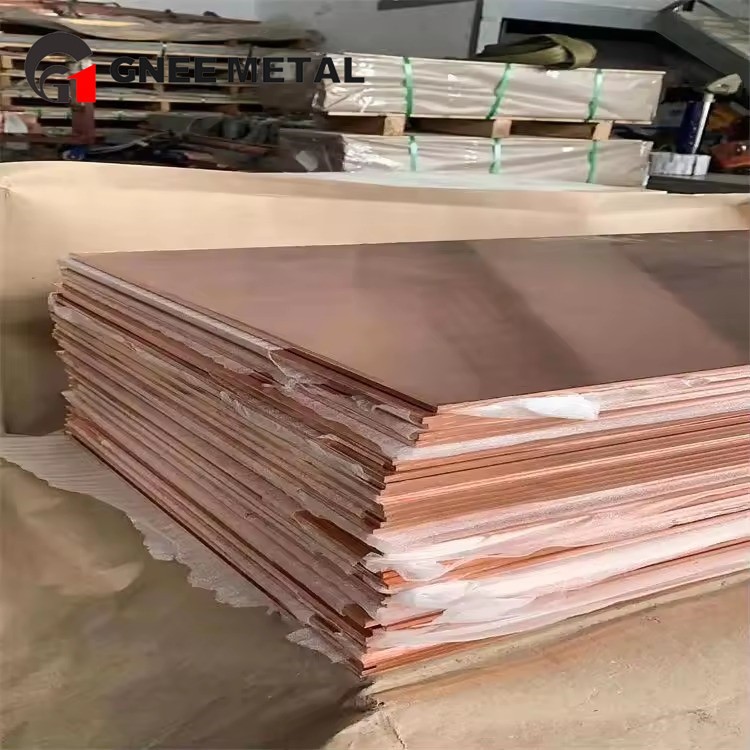
Industrial-Grade Export Packaging
Maximum protection against oxidation, moisture, and transit damage.
1. Anti-Oxidation Protection
VCI Paper & Moisture-Proof Film: Every order is vacuum-sealed or wrapped in anti-corrosion materials to ensure the copper remains bright and tarnish-free during sea freight.
2. Reinforced Structural Support
Seaworthy Wooden Crates: We use reinforced, fumigation-free wooden cases (ISPM-15) and steel strapping for rods, tubes, and heavy plates to prevent bending or surface scratches.
3. Secure Handling & Loading
Forklift-Ready Pallets: All materials are secured on standardized export pallets for easy unloading and maximum stability in containers.
4. Clear Identification
Professional Labeling: Each package includes detailed labels with heat numbers, specifications, and net weight for efficient inventory management.

Advanced Manufacturing & Quality Control
1. Core Production Equipment
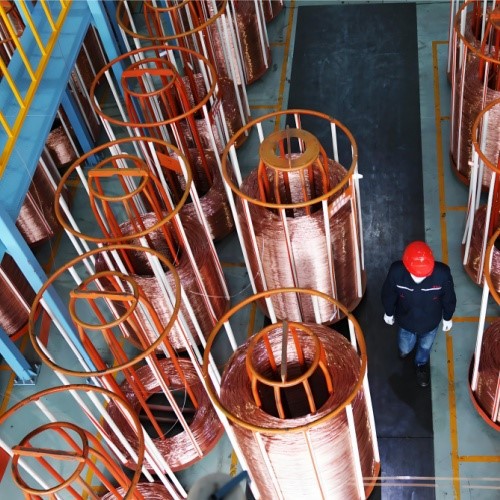
Up-casting & Continuous Casting Lines: Ensures high-purity oxygen-free copper rods and wires with uniform grain structure.
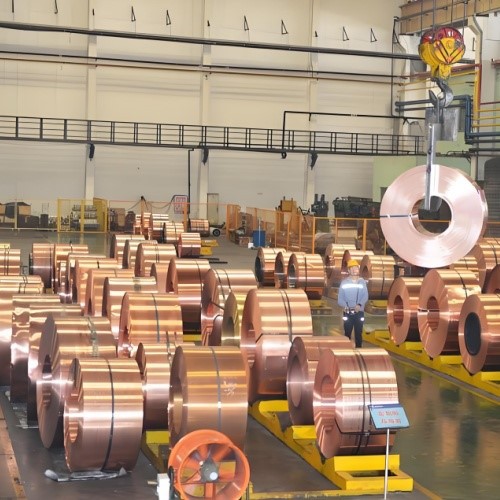
High-Precision Cold/Hot Rolling Mills: Automated thickness control for copper plates and strips with tolerances within ±0.01mm.
Large-Scale Extrusion & Drawing Machines: Capable of producing seamless copper tubes and rods in diverse diameters and shapes.
Atmospheric Controlled Annealing Furnaces: Bright annealing process to achieve specific tempers (Soft, Half-hard, Hard) without surface oxidation.
2. In-House Testing Center
Direct-Reading Spectrometers: Instant chemical composition analysis to guarantee Cu purity and precise alloying (Brass, Bronze, etc.).
Universal Tensile Testers: Verifying mechanical properties including tensile strength, elongation, and yield strength.
Eddy Current & Ultrasonic Testing: 100% non-destructive inspection for tubes and rods to detect internal cracks or flaws.
Conductivity & Hardness Testers: Ensuring electrical conductivity (IACS) and Vickers/Rockwell hardness meet international standards (ASTM, EN, DIN).



Get Fast Quote & Logistics Plan


