

The choice between C11000 (ETP) copper tube and C12200 (DHP) copper pipe depends on your joining method. For heat exchangers that require high-temperature brazing or welding, C12200 copper tube is the industry standard because it is deoxidized with phosphorus to prevent hydrogen embrittlement. While C11000 copper tube offers superior thermal conductivity (388 W/m·K), it is susceptible to internal cracking during brazing. You can compare our available tube dimensions and specifications on the C11000 product overview.
Products Description
In the HVAC and refrigeration industries, joints are almost always brazed. c11000 material contains a small amount of oxygen (0.02% to 0.04%), which reacts with hydrogen in the brazing torch flame to form steam inside the metal. This reaction causes the tube to become brittle and fail under pressure. C12200 is "Deoxidized High Phosphorus" copper, which removes this oxygen and ensures a sound, leak-proof joint.
However, phosphorus is a "conductivity killer." The addition of phosphorus reduces the electrical conductivity of t2 copper from 101% IACS down to approximately 85% IACS in C12200. You can review the exact elemental limits in our guide on the chemical composition of C11000 alloy.
C11000 vs. C12200 Tubing Material Properties
| Property | C11000 (ETP Copper) | C12200 (DHP Copper) |
| Joining Process | Soldering / Mechanical | Brazing / Welding |
| Thermal Conductivity | 388 W/m·K (High) | 339 W/m·K (Standard) |
| Electrical Conductivity | 101% IACS min | 85% IACS approx |
| Oxygen Content | 0.02% to 0.04% | None (Deoxidized) |
| Copper Purity | 99.90% min | 99.90% min |
Conductivity vs. Weldability: The C11000 tubing trade-off
If your cooling system uses mechanical compression fittings or low-temperature soldering instead of brazing, c11000 copper tube is technically superior. Its higher thermal conductivity allows for a more efficient heat transfer rate, which can lead to a smaller overall unit size. This is particularly useful in high-density electronics cooling where C11000 CNC machining is used for manifold bases.
For a deeper technical explanation of the "Hydrogen Embrittlement" trap mentioned above, please refer to our report on whether Is C11000 copper oxygen free. For most pressurized industrial boilers and condensers, C12200 is the safer, more reliable choice. You can find more details on these specific differences in our article difference between C11000 and C12200.
Joinability and Reliability for Cooling Systems
| Factor | C11000 Tube | C12200 Tube |
| Soft Soldering | Excellent | Excellent |
| Silver Brazing | Risk of Cracking | Excellent |
| TIG/MIG Welding | Not Recommended | Excellent |
| Corrosion Resistance | Good | Superior in water |
| Pressure Rating | High (Mechanical) | High (Brazed) |
Is the C12200 price premium justified for HVAC procurement?
From a B2B procurement standpoint, the c11000 copper price is the baseline for the global market. C12200 tubing often carries a small premium due to the additional phosphorus deoxidation step and the specific ASTM B75 or B280 refrigeration standards it must meet. However, the cost of a single field failure in a brazed HVAC unit far outweighs the material savings of using ETP copper.
For large-scale infrastructure where tubes are expanded mechanically into C11000 copper sheet fins, C11000 is still widely used to maximize thermal efficiency. Selecting the right grade requires a clear understanding of your assembly line's heat-treating and joining capabilities.
FAQ: C11000 vs. C12200 Tubing Decisions
1. Can I use C11000 tubes for ACR (Refrigeration)?
It is not recommended. ACR tubes are almost always brazed, and C11000 (ETP) is susceptible to embrittlement. Always use C12200 (DHP) for pressurized refrigerant lines.
2. Which grade is better for solar thermal collectors?
c11000 copper is often preferred for the absorber plate because of its high thermal conductivity, but the tubes carrying the fluid are typically C12200 to allow for easy brazing to the headers.
3. Does C12200 last longer in water applications?
Yes. C12200 generally has better resistance to "pitting" corrosion in certain water chemistries compared to electrolytic tough pitch copper.
4. What are the equivalents for these grades in Europe?
C11000 is equivalent to Cu-ETP (CW004A). C12200 is equivalent to Cu-DHP (CW024A). Both are common in international procurement.
5. How can I confirm which grade I received?
Check the Mill Test Certificate (MTC) for the phosphorus content. If the phosphorus is between 0.015% and 0.040%, it is C12200. If it is near zero, it is likely C11000.
6. Do you supply both C11000 and C12200 tubing?
Yes. Our facility stocks both c11000 material for high-conductivity electrical applications and C12200 for HVAC and refrigeration projects. We can provide custom lengths and tempers for both grades. Contact us to receive a comparative quote for your project requirements.
Product Specifications & Range
| Product Category | Common Grades (Alloys) | Size Range (Dimensions) | Standards |
| Copper Rods | C11000, C12200, C10200, C14500 | Diameter: 3mm – 400mm Shape: Round, Hexagonal, Square |
ASTM B187, EN 12163 |
| Copper Tubes | C11000, C12200 (DHP), C10200 (OF), C27200 | OD: 2mm – 219mm Wall Thickness: 0.2mm – 20mm |
ASTM B280, EN 12735 |
| Copper Plates | C11000 (ETP), C10200, C12200 | Thickness: 0.1mm – 150mm Width: Up to 2500mm |
ASTM B152, DIN 1751 |
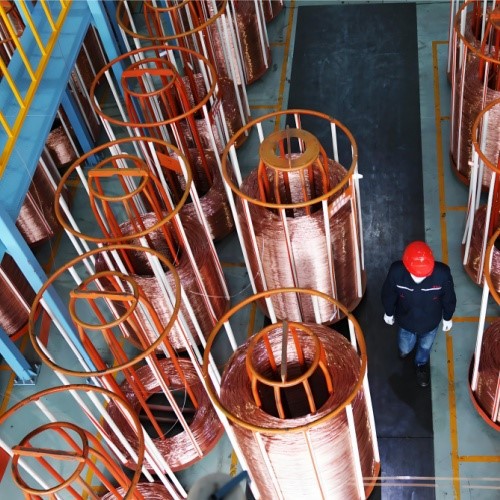
| Copper Wires | C11000, C10200, Brass Wire | Diameter: 0.05mm – 10.0mm Form: Spool or Coil |
ASTM B3, EN 13602 |
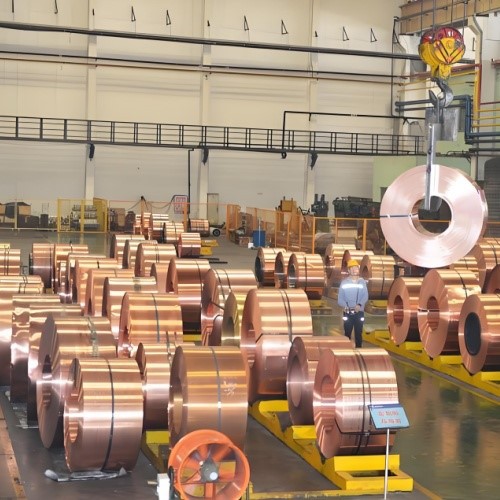
| Copper Strips | C11000, C12200, C26800 (Brass) | Thickness: 0.05mm – 3.0mm Width: 5mm – 610mm |
ASTM B19, EN 1652 |
Customization Note:
Custom Dimensions: We provide precision cutting and slitting services to meet your specific project requirements.
Tempers Available: Soft (O), Half-Hard (H02), Full Hard (H04), and Spring Hard (H08).
Surface Finish: Bright annealing, Polished, or Plated (Tin, Silver, Nickel) upon request.
Industrial-Grade Export Packaging
Maximum protection against oxidation, moisture, and transit damage.
1. Anti-Oxidation Protection
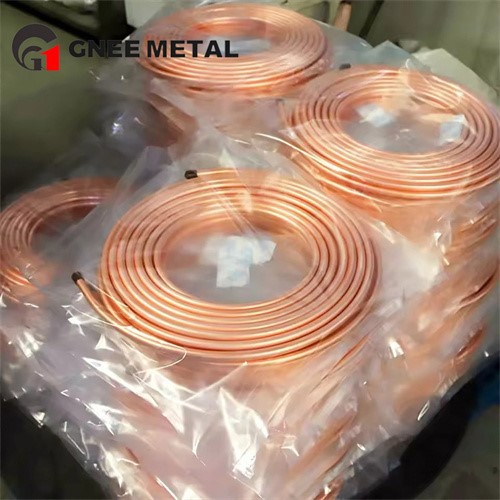
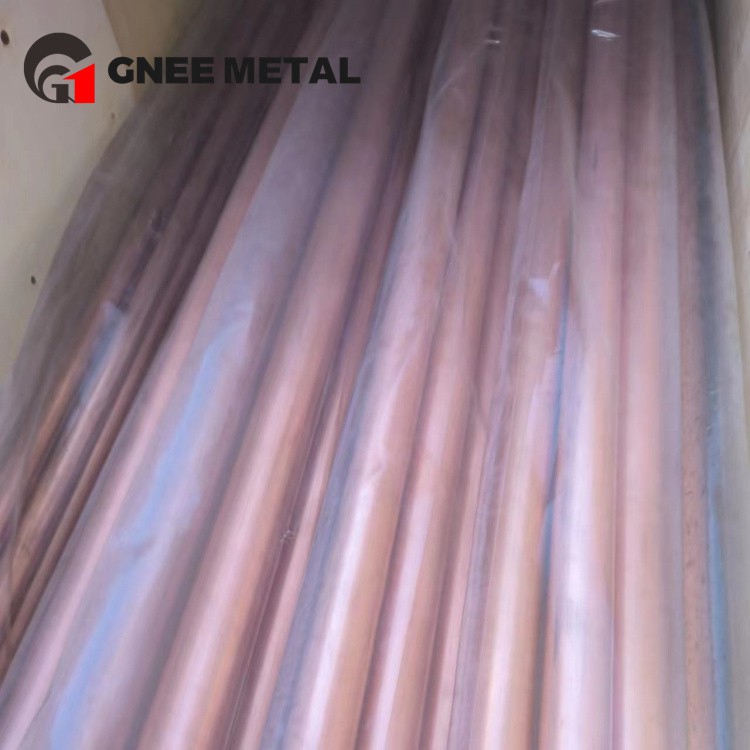
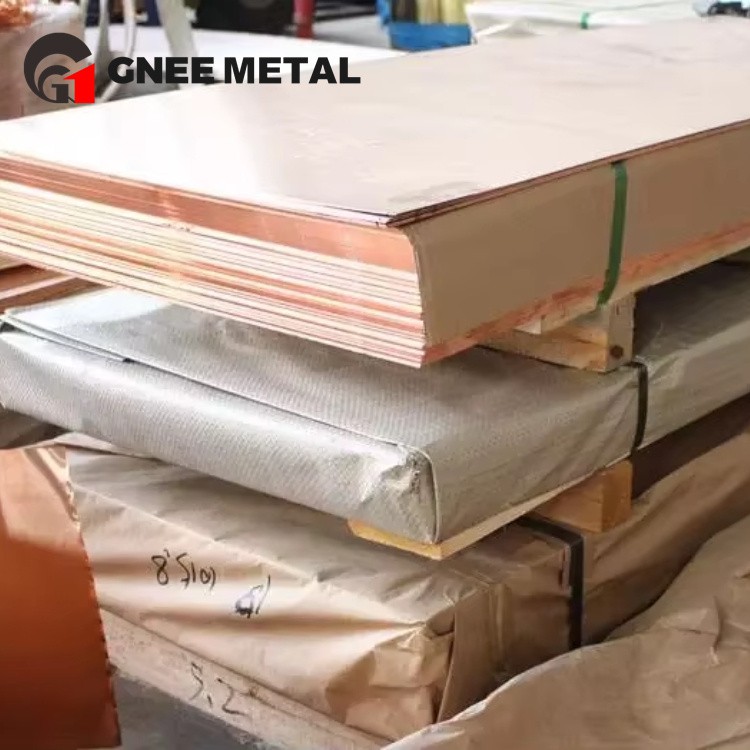
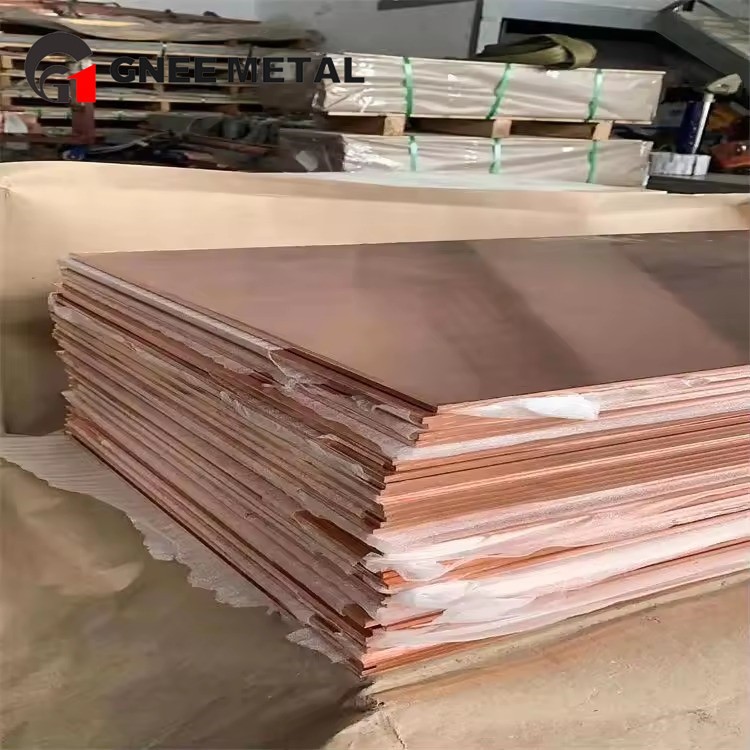
VCI Paper & Moisture-Proof Film: Every order is vacuum-sealed or wrapped in anti-corrosion materials to ensure the copper remains bright and tarnish-free during sea freight.
2. Reinforced Structural Support
Seaworthy Wooden Crates: We use reinforced, fumigation-free wooden cases (ISPM-15) and steel strapping for rods, tubes, and heavy plates to prevent bending or surface scratches.
3. Secure Handling & Loading
Forklift-Ready Pallets: All materials are secured on standardized export pallets for easy unloading and maximum stability in containers.
4. Clear Identification
Professional Labeling: Each package includes detailed labels with heat numbers, specifications, and net weight for efficient inventory management.

Advanced Manufacturing & Quality Control
1. Core Production Equipment
Up-casting & Continuous Casting Lines: Ensures high-purity oxygen-free copper rods and wires with uniform grain structure.
High-Precision Cold/Hot Rolling Mills: Automated thickness control for copper plates and strips with tolerances within ±0.01mm.
Large-Scale Extrusion & Drawing Machines: Capable of producing seamless copper tubes and rods in diverse diameters and shapes.
Atmospheric Controlled Annealing Furnaces: Bright annealing process to achieve specific tempers (Soft, Half-hard, Hard) without surface oxidation.
2. In-House Testing Center
Direct-Reading Spectrometers: Instant chemical composition analysis to guarantee Cu purity and precise alloying (Brass, Bronze, etc.).
Universal Tensile Testers: Verifying mechanical properties including tensile strength, elongation, and yield strength.
Eddy Current & Ultrasonic Testing: 100% non-destructive inspection for tubes and rods to detect internal cracks or flaws.
Conductivity & Hardness Testers: Ensuring electrical conductivity (IACS) and Vickers/Rockwell hardness meet international standards (ASTM, EN, DIN).



Get Fast Quote & Logistics Plan
FAQ
Does the phosphorus in C12200 affect heat transfer?
Slightly: thermal conductivity drops from 388 to about 339 W/m·K, a roughly 13% reduction, which is negligible for most brazed heat-exchanger designs where joint reliability dominates.
What is the difference between DHP and DLP copper?
DHP (C12200) uses a high phosphorus residual and DLP (C12000) a low phosphorus residual; DHP is the common deoxidized grade for tube and pipe service.
Which standard covers ACR copper tube?
ASTM B280 covers seamless copper tube for air-conditioning and refrigeration field service; C12200 is the standard material.
Can C11000 be used for heat exchangers at all?
Yes - for mechanically joined or soldered heat exchangers where no high-temperature brazing or welding occurs, C11000's higher conductivity is an advantage.


