

The choice between C11000 (ETP) copper and C18150 (Chromium Zirconium Copper) for welding electrodes depends on the operating temperature. C11000 copper has superior conductivity at 101% IACS min, but it begins to soften (lose hardness) at only 200 degrees Celsius. C18150 maintains its mechanical strength up to 500 degrees Celsius, making it the industry standard for resistance spot welding electrodes. You can compare our available bar and rod stock on the C11000 product overview.
Why is softening temperature critical?
In resistance welding, the electrode must transmit high current while under massive mechanical pressure. If you use c11000 material for a spot welding tip, the heat from the arc will quickly cause the copper to "mushroom" or deform, leading to poor weld quality and frequent downtime. C18150 is an alloyed grade containing Chromium and Zirconium, which allows for precipitation hardening.
While the alloys in C18150 increase heat resistance, they reduce electrical conductivity to approximately 80% IACS. For a standard current-carrying c11000 copper bar where temperatures stay below 150 degrees Celsius, pure copper is still the most efficient choice. You can verify these elemental differences in our chemical composition of C11000 alloy.
C11000 vs. C18150 Thermal and Electrical Data
| Property | C11000 (ETP) | C18150 (CrZrCu) |
| Softening Temperature | 200 degrees Celsius | 500 degrees Celsius |
| Electrical Conductivity | 101% IACS min | 80% IACS approx |
| Thermal Conductivity | 388 W/m·K | 320 W/m·K |
| Hardness (Rockwell B) | 45 to 55 HRB | 75 to 85 HRB |
| Tensile Strength | 240 to 300 MPa | 450 to 550 MPa |
When should you avoid C18150 and stick with C11000?
If your application is a high-voltage busbar, a grounding terminal, or a transformer component, the high strength of C18150 is unnecessary and the 20% loss in conductivity is a major drawback. For these electrical infrastructure projects, C110 copper bendable performance and low resistance are the primary requirements.
Furthermore, c11000 copper is significantly easier for C11000 CNC machining when the part geometry is simple. C18150 is much harder and requires specialized tooling to machine effectively.
Application Suitability for Welding and Power
| Component | Preferred Grade | Primary Reason |
| Spot Welding Tip | C18150 | High Softening Temp |
| Electrical Busbar | C11000 | Max Conductivity |
| MIG Welding Nozzle | C18150 | Durability under heat |
| Transformer Lead | C11000 | Low resistance |
| Heatsink Base | C11000 | Superior heat dissipation |
Is the C18150 price premium justified for industrial use?
From a procurement standpoint, the c11000 copper price is the baseline for the global market. C18150 is a specialized alloy that can be 2 to 3 times more expensive per kilogram. However, in an automotive assembly line, a C18150 electrode might last for 5,000 welds, while a t2 copper tip would fail after 500.
The reduced labor cost and minimized machine downtime make C18150 the more economical choice for high-heat environments. For B2B buyers, the decision must be based on the "cost per weld" rather than the "cost per kilogram."
FAQ: C11000 vs. C18150 Selection Guide
1. Can C11000 be used for projection welding?
No. Projection welding involves even higher localized heat and pressure than spot welding. C11000 will deform almost immediately. C18150 or C17200 is required.
2. Which grade is better for plastic injection mold inserts?
C18150 is often preferred because it balances high thermal conductivity (to cool the plastic quickly) with enough hardness to resist the wear and pressure of the molding process.
3. Does C18150 require heat treatment by the buyer?
Usually no. Most suppliers provide C18150 in the "Fully Aged" condition, meaning it has already reached its maximum hardness and conductivity.
4. What is the equivalent of C18150 in Europe?
The equivalent is CuCr1Zr (CW106C). It is standard across the European automotive industry.
5. How do I verify the hardness of a C18150 rod?
You should use a Rockwell B or Vickers hardness tester. If the rod tests below 70 HRB, it may not have been aged correctly and will fail prematurely in a welding application.
6. Can you supply both C11000 and C18150?
Yes. Our factory provides a wide range of electrolytic tough pitch copper for power transmission and Chromium Zirconium alloys for resistance welding. We also offer high-quality Aluminum alternatives for weight-sensitive structural parts. Contact us for a comparative technical quote.
Product Specifications & Range
| Product Category | Common Grades (Alloys) | Size Range (Dimensions) | Standards |
| Copper Rods | C11000, C12200, C10200, C14500 | Diameter: 3mm – 400mm<br>Shape: Round, Hexagonal, Square | ASTM B187, EN 12163 |
| Copper Tubes | C11000, C12200 (DHP), C10200 (OF), C27200 | OD: 2mm – 219mm<br>Wall Thickness: 0.2mm – 20mm | ASTM B280, EN 12735 |
| Copper Plates | C11000 (ETP), C10200, C12200 | Thickness: 0.1mm – 150mm<br>Width: Up to 2500mm | ASTM B152, DIN 1751 |
| Copper Wires | C11000, C10200, Brass Wire | Diameter: 0.05mm – 10.0mm<br>Form: Spool or Coil | ASTM B3, EN 13602 |
| Copper Strips | C11000, C12200, C26800 (Brass) | Thickness: 0.05mm – 3.0mm<br>Width: 5mm – 610mm | ASTM B19, EN 1652 |
Customization Note:
Custom Dimensions: We provide precision cutting and slitting services to meet your specific project requirements.
Tempers Available: Soft (O), Half-Hard (H02), Full Hard (H04), and Spring Hard (H08).
Surface Finish: Bright annealing, Polished, or Plated (Tin, Silver, Nickel) upon request.
Industrial-Grade Export Packaging
Maximum protection against oxidation, moisture, and transit damage.
1. Anti-Oxidation Protection
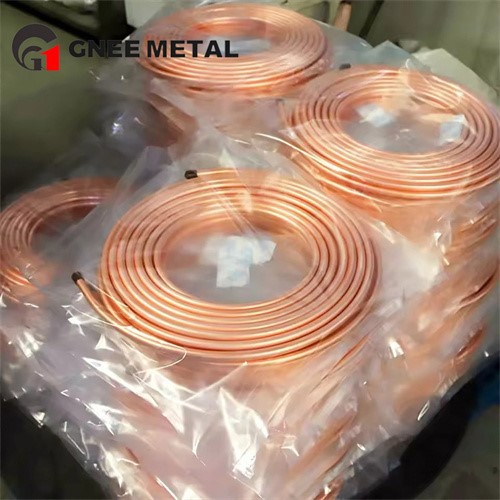
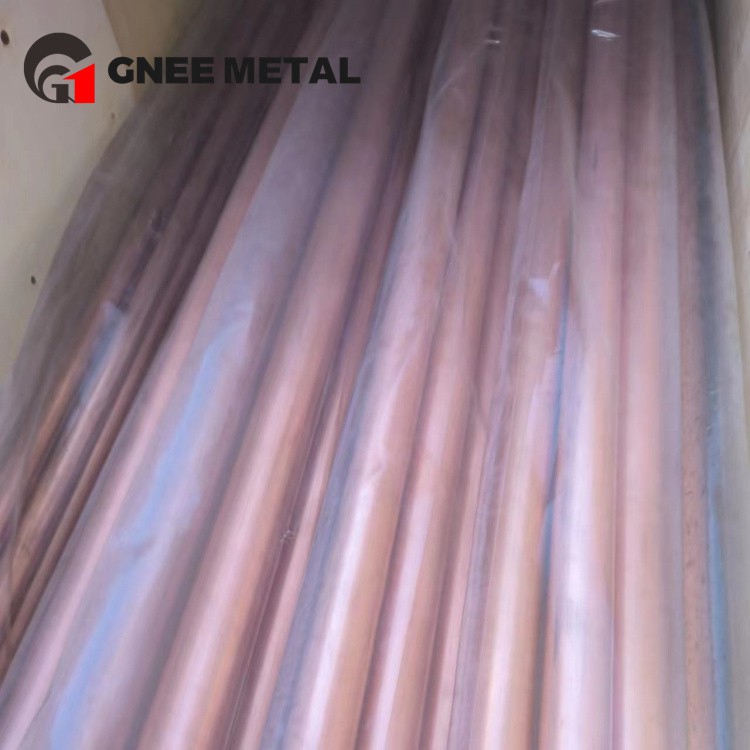
VCI Paper & Moisture-Proof Film: Every order is vacuum-sealed or wrapped in anti-corrosion materials to ensure the copper remains bright and tarnish-free during sea freight.
2. Reinforced Structural Support
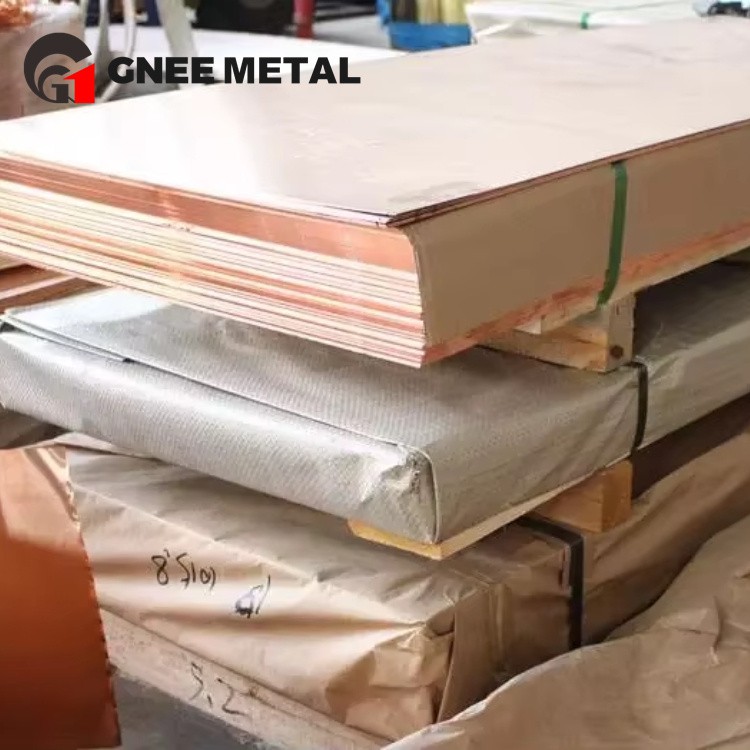
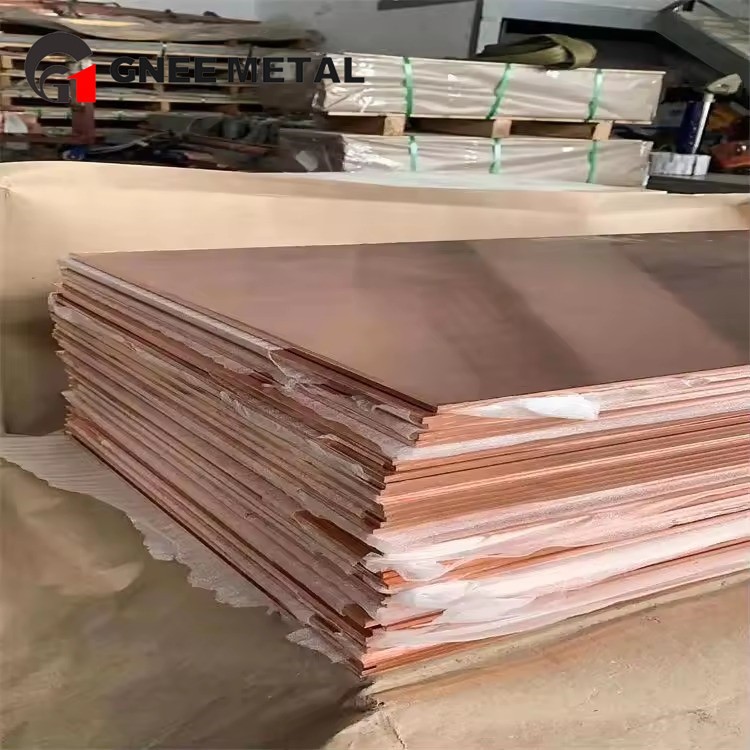
Seaworthy Wooden Crates: We use reinforced, fumigation-free wooden cases (ISPM-15) and steel strapping for rods, tubes, and heavy plates to prevent bending or surface scratches.
3. Secure Handling & Loading
Forklift-Ready Pallets: All materials are secured on standardized export pallets for easy unloading and maximum stability in containers.
4. Clear Identification
Professional Labeling: Each package includes detailed labels with heat numbers, specifications, and net weight for efficient inventory management.

Advanced Manufacturing & Quality Control
1. Core Production Equipment
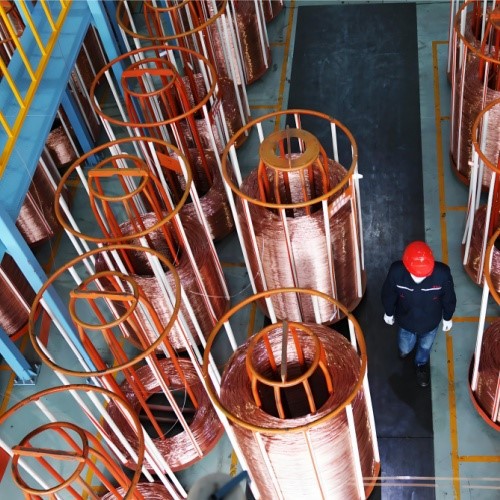
Up-casting & Continuous Casting Lines: Ensures high-purity oxygen-free copper rods and wires with uniform grain structure.
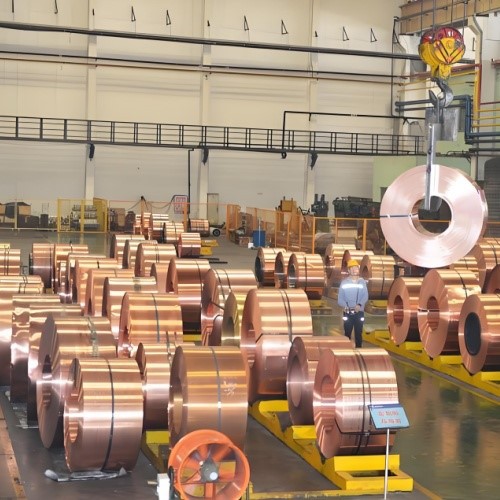
High-Precision Cold/Hot Rolling Mills: Automated thickness control for copper plates and strips with tolerances within ±0.01mm.
Large-Scale Extrusion & Drawing Machines: Capable of producing seamless copper tubes and rods in diverse diameters and shapes.
Atmospheric Controlled Annealing Furnaces: Bright annealing process to achieve specific tempers (Soft, Half-hard, Hard) without surface oxidation.
2. In-House Testing Center
Direct-Reading Spectrometers: Instant chemical composition analysis to guarantee Cu purity and precise alloying (Brass, Bronze, etc.).
Universal Tensile Testers: Verifying mechanical properties including tensile strength, elongation, and yield strength.
Eddy Current & Ultrasonic Testing: 100% non-destructive inspection for tubes and rods to detect internal cracks or flaws.
Conductivity & Hardness Testers: Ensuring electrical conductivity (IACS) and Vickers/Rockwell hardness meet international standards (ASTM, EN, DIN).



Get Fast Quote & Logistics Plan


