

In the manufacturing of electrical terminals and connectors, the choice between C11000 (ETP copper) and C36000 (Free-cutting brass) is a constant debate between electrical performance and manufacturing ROI. While C11000 offers a superior conductivity of 101% IACS min, C36000 brass provides a significant cost advantage due to its 100% machinability rating. For high-current busbars, 101% IACS standard is non-negotiable. However, for low-current signal pins, procurement managers often evaluate if the 26% IACS of brass is sufficient to lower the total cost per part. You can view our precision conductive bar specifications on the C11000 rod.
How does the 101% IACS of C11000 impact power loss compared to C36000?
The technical risk of substituting c11000 material with brass is Joule heating. C11000 is commercially pure, which you can verify in our chemical composition of C11000 alloy Because it is C110 pure copper, it has the lowest possible resistivity.
C36000 brass contains approximately 35% zinc, which disrupts the copper crystal lattice and increases resistance by nearly 400%. If you use brass for a high-current terminal, the temperature rise can exceed the safety limits of the surrounding insulation. For engineers designing for international infrastructure, ensuring the material meets the C11000 copper definition is essential for fire safety compliance.
Electrical and Thermal Trade-off Matrix
| Property | C11000 (ETP Copper) | C36000 (Leaded Brass) | Engineering Impact |
| Electrical Conductivity | 101% IACS min | 26% IACS approx | Energy efficiency |
| Thermal Conductivity | 388 W/m·K | 115 W/m·K | Heat dissipation |
| Melting Point | 1083°C | 885°C - 900°C | Arcing survival |
| Hardness (Vickers) | 75 - 95 HV | 130 - 160 HV | Contact pressure |
| Density | 8.89 g/cm³ | 8.50 g/cm³ | Weight calculation |
Why is C36000 the "default" choice for high-speed CNC signal pins?
While copper wins on performance, C36000 wins on machinability. On an automated Swiss lathe, a C36000 brass pin can be produced in one-third of the time required for a C11000 CNC machining component. Pure copper is "gummy" and tends to wrap around the tool, leading to poor surface finishes and torn threads.
As analyzed in our research on CNC machined terminals, the higher hardness of brass also allows for thinner, more rigid pin designs that can withstand repeated insertion cycles. For signal connectors where the current is measured in milliamps, the conductivity loss of brass is irrelevant, making the lower C11000 copper price of the alternative a logical choice.
Manufacturing and Tooling Benchmarks
| Metric | C11000 (Pure Copper) | C36000 (Free-Cutting Brass) |
| Machinability Rating | 20% (Difficult) | 100% (Standard) |
| Cycle Time (Relative) | 1.0x (Baseline) | 0.25x - 0.3x |
| Chip Control | Long, stringy ribbons | Small, brittle chips |
| Surface Finish | Requires buffing | Excellent / Polished |
| Tool Life | Short (High buildup) | Excellent |
What are the structural and bending limits of C11000 vs. C36000?
If your terminal design requires a 90-degree offset or a crimped connection, the ductility of the material is paramount. C11000 copper is exceptionally ductile; you can review its performance in our guide on whether C110 copper is bendable. It can handle extreme deformation without surface cracking.
C36000 brass, due to its lead and zinc content, is much more brittle. While it is excellent for machining, it is prone to snapping if bent at a sharp angle. For B2B buyers in the automotive or solar industries, this often makes C11000 the mandatory choice for busbars that must be formed to fit tight cabinet enclosures.
Application Decision
| Application | Recommended Grade | Primary Driver |
| EV Charging Pins | C11000 (Plated) | High Current / Low Heat |
| Consumer Signal Pins | C36000 | Low Cost / High Speed |
| Grounding Lugs | C11000 | Safety / Low Impedance |
| Complex Threaded Parts | C36000 | Manufacturing Ease |
| Transformer Busbars | C11000 | Max conductivity |
FAQ: Copper vs. Brass for Industrial
1. Can I use C36000 brass for a ground terminal?
No. Ground terminals must carry massive surge currents without failing. The high resistance of brass will cause a voltage spike and potential arc-flash. Always use electrolytic tough pitch copper for grounding.
2. Why is C11000 copper often tin-plated?
Because Is C110 pure copper, it will oxidize (tarnish) over time. Tin or silver plating ensures a stable, low-resistance connection in humid or industrial environments.
3. Is C36000 cheaper than C11000 per kilogram?
Generally, yes. Zinc is a cheaper alloying element than copper, and the faster machining speeds reduce the labor cost per finished part.
4. Which material has a better scrap value?
Pure t2 copper (C11000) scrap always fetches a higher market price than brass scrap.
5. Does C36000 contain lead?
Yes, standard C36000 contains about 3% lead to achieve its 100% machinability. If your project must be lead-free (RoHS), you must stick with C11000 or a specialized lead-free brass.
6. Do you provide CNC fabrication for both materials?
Yes. Our factory provides precision machining and fabrication for both copper and brass. We can provide a comparative quote for your terminal design in both materials to help you balance conductivity with your production budget.
Product Specifications & Range
| Product Category | Common Grades (Alloys) | Size Range (Dimensions) | Standards |
| Copper Rods | C11000, C12200, C10200, C14500 | Diameter: 3mm – 400mm<br>Shape: Round, Hexagonal, Square | ASTM B187, EN 12163 |
| Copper Tubes | C11000, C12200 (DHP), C10200 (OF), C27200 | OD: 2mm – 219mm<br>Wall Thickness: 0.2mm – 20mm | ASTM B280, EN 12735 |
| Copper Plates | C11000 (ETP), C10200, C12200 | Thickness: 0.1mm – 150mm<br>Width: Up to 2500mm | ASTM B152, DIN 1751 |
| Copper Wires | C11000, C10200, Brass Wire | Diameter: 0.05mm – 10.0mm<br>Form: Spool or Coil | ASTM B3, EN 13602 |
| Copper Strips | C11000, C12200, C26800 (Brass) | Thickness: 0.05mm – 3.0mm<br>Width: 5mm – 610mm | ASTM B19, EN 1652 |
Customization Note:
Custom Dimensions: We provide precision cutting and slitting services to meet your specific project requirements.
Tempers Available: Soft (O), Half-Hard (H02), Full Hard (H04), and Spring Hard (H08).
Surface Finish: Bright annealing, Polished, or Plated (Tin, Silver, Nickel) upon request.
Industrial-Grade Export Packaging
Maximum protection against oxidation, moisture, and transit damage.
1. Anti-Oxidation Protection
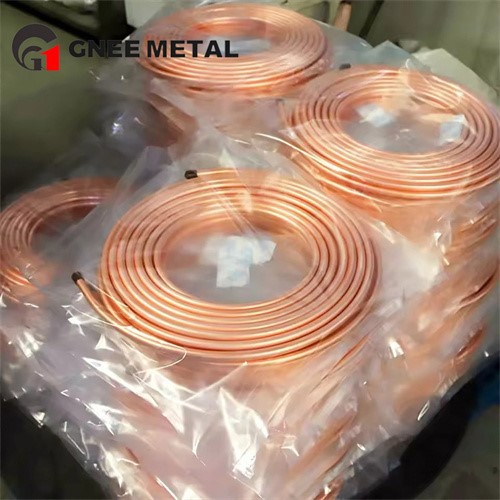
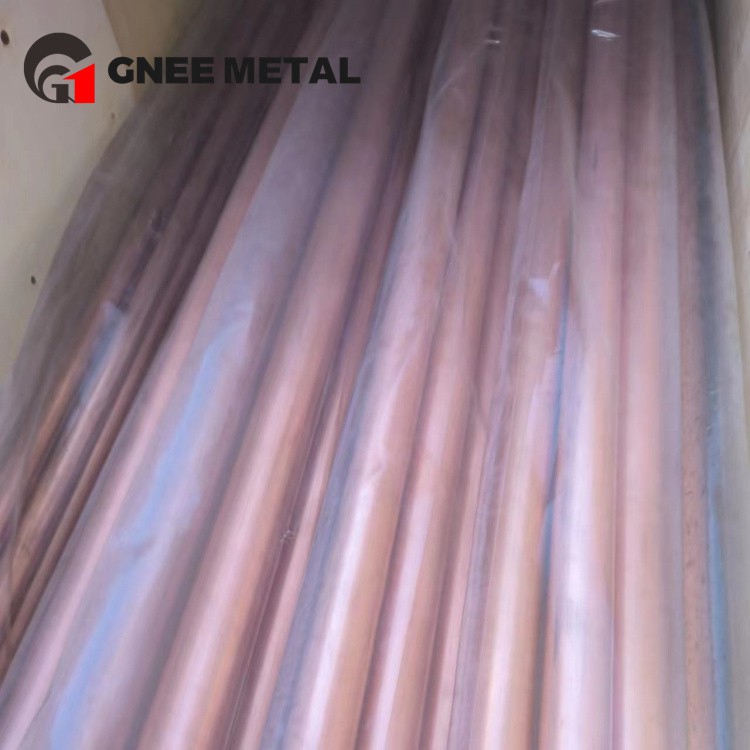
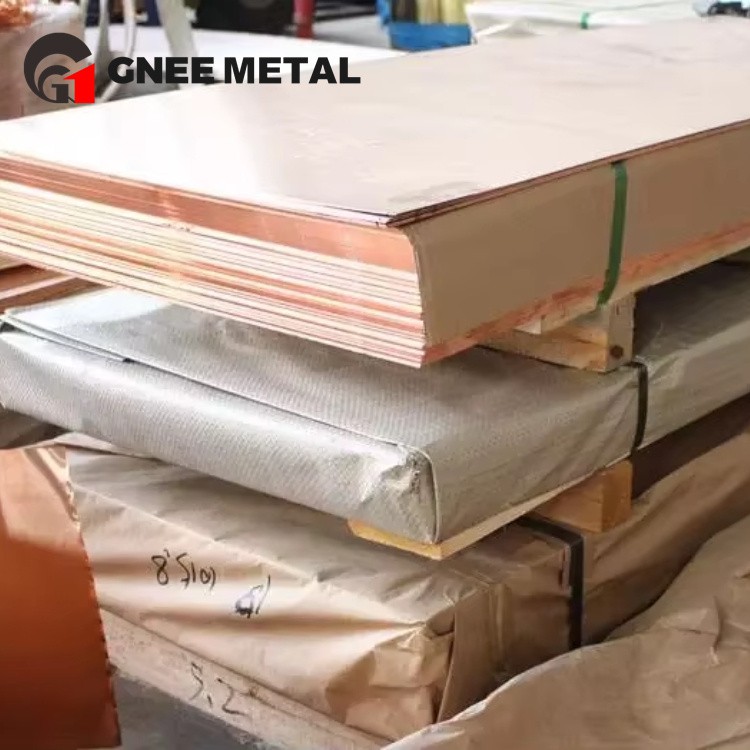
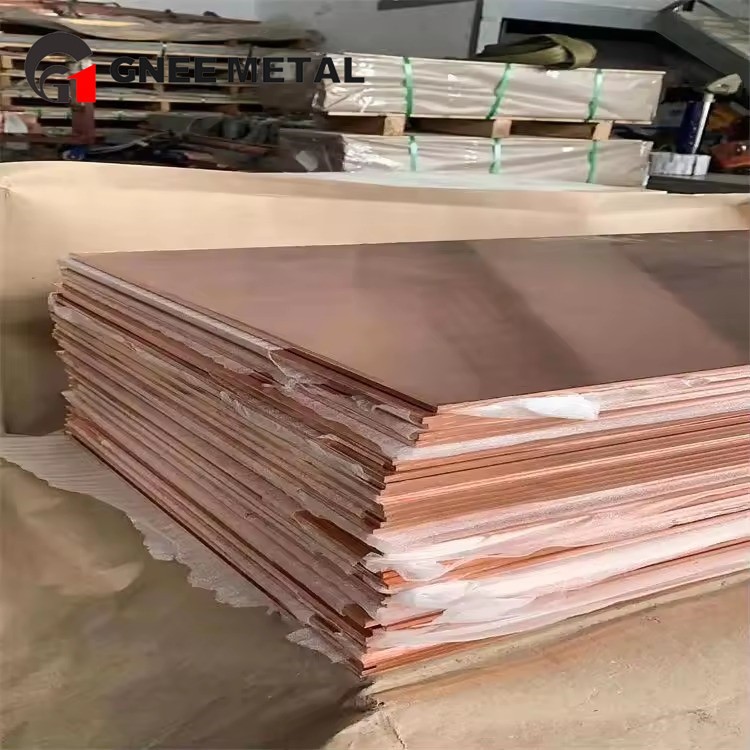
VCI Paper & Moisture-Proof Film: Every order is vacuum-sealed or wrapped in anti-corrosion materials to ensure the copper remains bright and tarnish-free during sea freight.
2. Reinforced Structural Support
Seaworthy Wooden Crates: We use reinforced, fumigation-free wooden cases (ISPM-15) and steel strapping for rods, tubes, and heavy plates to prevent bending or surface scratches.
3. Secure Handling & Loading
Forklift-Ready Pallets: All materials are secured on standardized export pallets for easy unloading and maximum stability in containers.
4. Clear Identification
Professional Labeling: Each package includes detailed labels with heat numbers, specifications, and net weight for efficient inventory management.

Advanced Manufacturing & Quality Control
1. Core Production Equipment
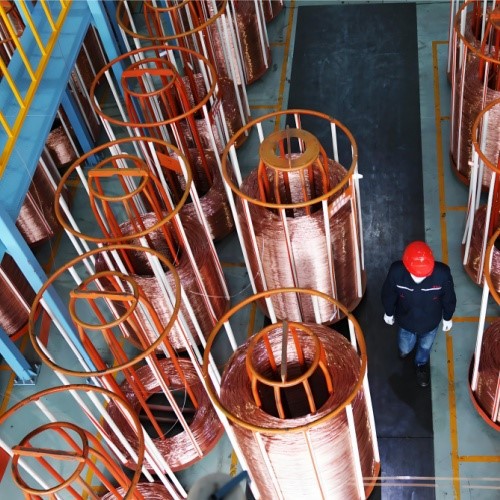
Up-casting & Continuous Casting Lines: Ensures high-purity oxygen-free copper rods and wires with uniform grain structure.
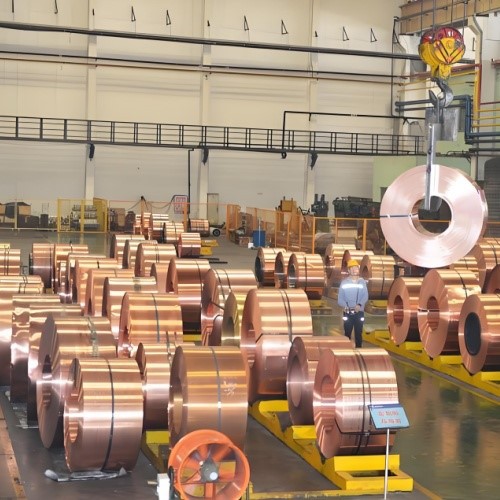
High-Precision Cold/Hot Rolling Mills: Automated thickness control for copper plates and strips with tolerances within ±0.01mm.
Large-Scale Extrusion & Drawing Machines: Capable of producing seamless copper tubes and rods in diverse diameters and shapes.
Atmospheric Controlled Annealing Furnaces: Bright annealing process to achieve specific tempers (Soft, Half-hard, Hard) without surface oxidation.
2. In-House Testing Center
Direct-Reading Spectrometers: Instant chemical composition analysis to guarantee Cu purity and precise alloying (Brass, Bronze, etc.).
Universal Tensile Testers: Verifying mechanical properties including tensile strength, elongation, and yield strength.
Eddy Current & Ultrasonic Testing: 100% non-destructive inspection for tubes and rods to detect internal cracks or flaws.
Conductivity & Hardness Testers: Ensuring electrical conductivity (IACS) and Vickers/Rockwell hardness meet international standards (ASTM, EN, DIN).



Get Fast Quote & Logistics Plan


