

Standard lead times for C11000 copper usually range from 3 to 7 business days for stock items like sheets and bars. For custom-fabricated components, such as a C11000 electrical copper busbar with precision drilling or silver plating, the lead time typically extends to 14–21 days. The C11000 copper price is determined by the daily London Metal Exchange (LME) or COMEX spot price plus a "fabrication premium" that covers the costs of rolling, slitting, and processing. Because copper is a volatile commodity, most quotes are valid for only 24 to 48 hours.
How do I verify that the copper is actually 101% IACS?
The only reliable way to confirm conductivity is through an eddy-current test reported on a batch-specific Mill Test Certificate (MTC). For high-voltage applications, you must ensure the 101% IACS conductivity is explicitly stated. If the material contains trace amounts of iron or phosphorus-even if it is 99% pure-the conductivity will drop, leading to overheating in your electrical assembly.
A professional factory will provide a 3.1 MTC that lists the full chemical composition of C11000 alloy. You should specifically look for the "Cu + Ag" total to be at least 99.90%. Silver is often counted toward the total because it does not negatively impact the electrical performance of electrolytic tough pitch copper.
Quality Verification Standards for Procurement
| Technical Metric | Minimum Requirement | Testing Standard |
| Purity (Cu plus Ag) | 99.90% min | ASTM B115 / B170 |
| Electrical Conductivity | 101% IACS min | ASTM B193 |
| Tensile Strength (H02) | 240 - 300 MPa | ASTM E8 |
| Hardness (Vickers) | 75 - 95 HV | ASTM E92 |
| Oxygen Content | 0.02% - 0.04% | ASTM E112 |
Request a Sample Mill Test Certificate (MTC)
Why is the final quote so much higher than the copper spot price?
When you see the copper "spot price" on news sites, it refers to massive 25-ton cathode plates sitting in a warehouse. To turn that raw cathode into a finished c11000 copper sheet, the material must undergo melting, continuous casting, multiple stages of cold rolling, and precision annealing.
The "fabrication premium" added to your quote covers:
Precision Rolling: Achieving thickness tolerances as tight as +/- 0.02mm.
Annealing: Reaching the specific H02 or O60 temper you require.
Slitting/Cutting: Waste management and the labor of high-speed sawing or shearing.
Packaging: Seaworthy wooden crates and anti-tarnish protection.
Will the copper turn black or green during sea freight?
Oxidation is a primary concern for any buyer. Since t2 copper is highly reactive to moisture and salt air, bare metal can arrive with brown or black spots if not packed correctly. We prevent this by applying an invisible chemical passivator (BTA) to the surface. For high-precision electronics, we recommend vacuum-sealing the material.
If your material arrives and you need to bend it immediately, a dull surface is usually just cosmetic. However, you should confirm if the purity of C11000 copper is correct before proceeding. If the surface is bright salmon-pink, it has been properly pickled and protected.
Packaging Levels and Protection
Standard Pallet: Best for local trucking or air freight; includes plastic wrap and cardboard.
Seaworthy Crate: Required for ocean transit; includes plastic-lined wooden boxes and desiccants.
Vacuum Sealing: Recommended for thin foils or c11000 material used in cleanroom environments.
Edge Protection: Heavy-duty guards to prevent the "bent corners" common during rough handling.
Can C11000 handle a 90-degree bend without cracking?
This is a frequent question for busbar manufacturers. Generally, the answer is yes, provided you use the H02 (Half-Hard) temper. If you use a harder H04 temper, the metal may crack at the bend line. For engineers, the fact that is C110 copper bendable is a key reason for its dominance in the switchgear market.
If your design requires a "dead-sharp" bend, we suggest using annealed copper, though this will make the bar softer and more prone to sagging. For most industrial cabinets, H02 copper with a bend radius equal to the thickness of the bar is the safe engineering standard.
FAQ
1. What is the Minimum Order Quantity (MOQ) for custom sizes?
For standard thickness plates and bars, we often have no MOQ. For custom-rolled strips or specialized CNC parts, the MOQ is usually 500kg to cover the machine setup and rolling costs.
2. How do I know if my copper was made from recycled scrap or virgin cathodes?
Technically, all C11000 is refined to the same 99.90% standard regardless of the source. However, we primarily use high-grade electrolytic cathodes to ensure the most consistent global copper equivalents performance for our international clients.
3. Why did the price of my quote change overnight?
Because the copper market is traded live on the LME, prices can fluctuate by 2-3% in a single day. We recommend "locking in" the price as soon as your project is approved.
4. Can you provide 3rd-party inspections like SGS?
Yes. We welcome SGS or TUV inspectors to our facility to verify the conductivity, dimensions, and purity of the material before the container is sealed.
5. Do you offer "Fixed Price" contracts?
For large-scale infrastructure projects, we can offer fixed pricing for up to 6 months by hedging the metal on the futures market. This protects your budget from market spikes.
6. Can your factory supply pre-drilled or CNC-machined busbars?
Yes. We maintain an in-house CNC shop for precision drilling, bending, and plating. We can provide a single quote that covers both the raw material and the finished fabrication to save you time and logistics costs.
Product Specifications & Range
| Product Category | Common Grades (Alloys) | Size Range (Dimensions) | Standards |
| Copper Rods | C11000, C12200, C10200, C14500 | Diameter: 3mm – 400mm<br>Shape: Round, Hexagonal, Square | ASTM B187, EN 12163 |
| Copper Tubes | C11000, C12200 (DHP), C10200 (OF), C27200 | OD: 2mm – 219mm<br>Wall Thickness: 0.2mm – 20mm | ASTM B280, EN 12735 |
| Copper Plates | C11000 (ETP), C10200, C12200 | Thickness: 0.1mm – 150mm<br>Width: Up to 2500mm | ASTM B152, DIN 1751 |
| Copper Wires | C11000, C10200, Brass Wire | Diameter: 0.05mm – 10.0mm<br>Form: Spool or Coil | ASTM B3, EN 13602 |
| Copper Strips | C11000, C12200, C26800 (Brass) | Thickness: 0.05mm – 3.0mm<br>Width: 5mm – 610mm | ASTM B19, EN 1652 |
Customization Note:
Custom Dimensions: We provide precision cutting and slitting services to meet your specific project requirements.
Tempers Available: Soft (O), Half-Hard (H02), Full Hard (H04), and Spring Hard (H08).
Surface Finish: Bright annealing, Polished, or Plated (Tin, Silver, Nickel) upon request.
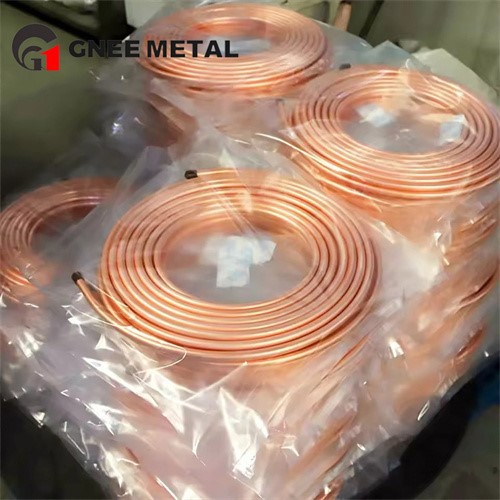
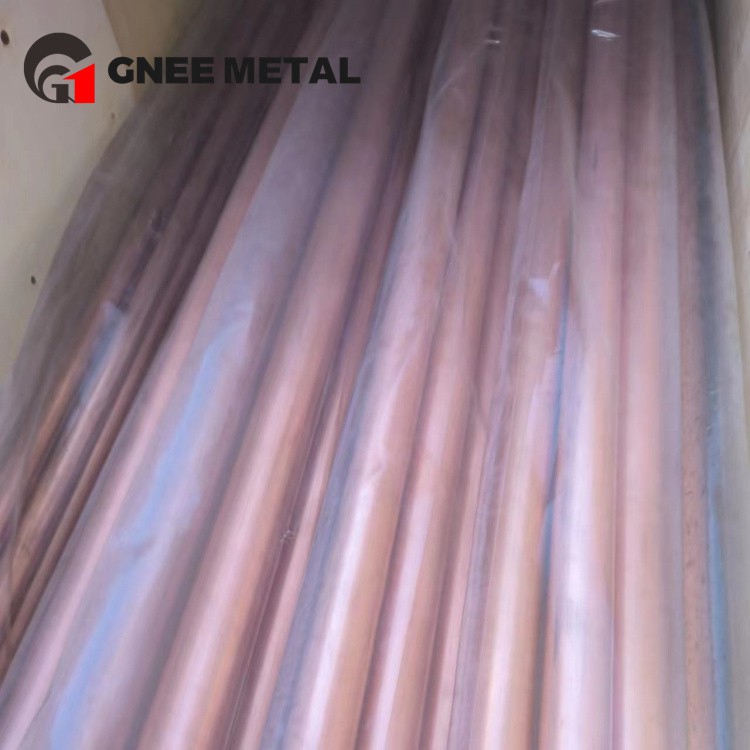
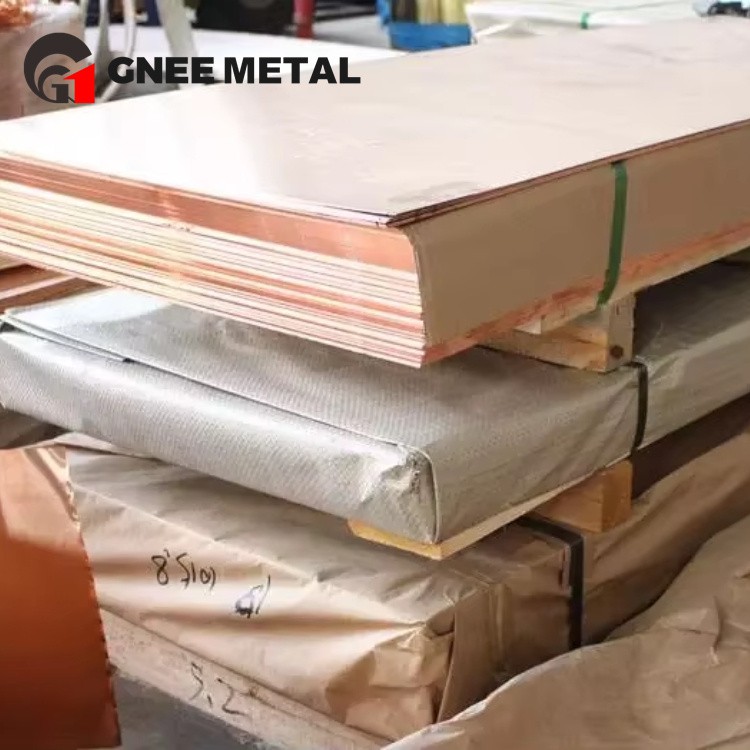
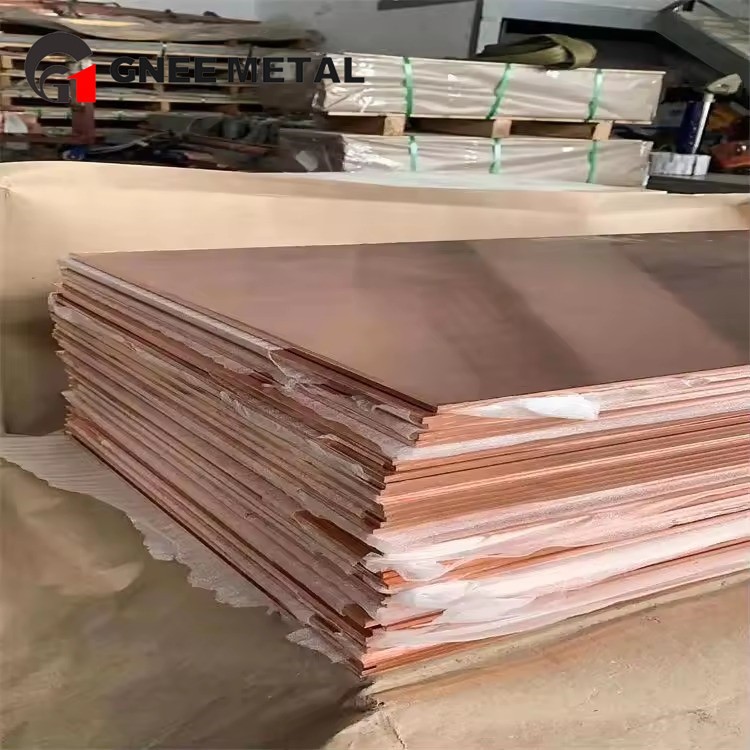
Industrial-Grade Export Packaging
Maximum protection against oxidation, moisture, and transit damage.
1. Anti-Oxidation Protection
VCI Paper & Moisture-Proof Film: Every order is vacuum-sealed or wrapped in anti-corrosion materials to ensure the copper remains bright and tarnish-free during sea freight.
2. Reinforced Structural Support
Seaworthy Wooden Crates: We use reinforced, fumigation-free wooden cases (ISPM-15) and steel strapping for rods, tubes, and heavy plates to prevent bending or surface scratches.
3. Secure Handling & Loading
Forklift-Ready Pallets: All materials are secured on standardized export pallets for easy unloading and maximum stability in containers.
4. Clear Identification
Professional Labeling: Each package includes detailed labels with heat numbers, specifications, and net weight for efficient inventory management.

Advanced Manufacturing & Quality Control
1. Core Production Equipment
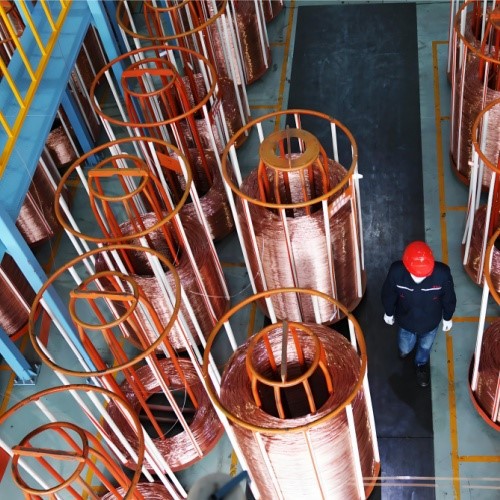
Up-casting & Continuous Casting Lines: Ensures high-purity oxygen-free copper rods and wires with uniform grain structure.
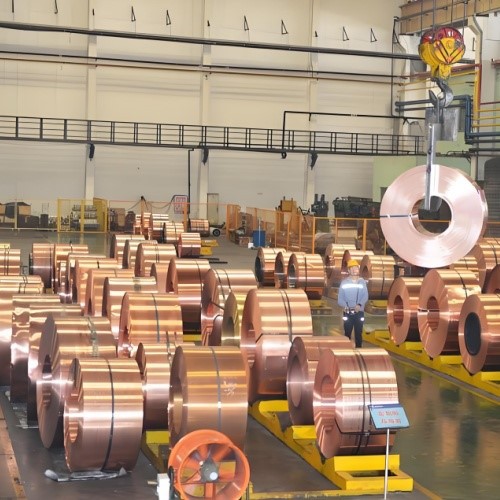
High-Precision Cold/Hot Rolling Mills: Automated thickness control for copper plates and strips with tolerances within ±0.01mm.
Large-Scale Extrusion & Drawing Machines: Capable of producing seamless copper tubes and rods in diverse diameters and shapes.
Atmospheric Controlled Annealing Furnaces: Bright annealing process to achieve specific tempers (Soft, Half-hard, Hard) without surface oxidation.
2. In-House Testing Center
Direct-Reading Spectrometers: Instant chemical composition analysis to guarantee Cu purity and precise alloying (Brass, Bronze, etc.).
Universal Tensile Testers: Verifying mechanical properties including tensile strength, elongation, and yield strength.
Eddy Current & Ultrasonic Testing: 100% non-destructive inspection for tubes and rods to detect internal cracks or flaws.
Conductivity & Hardness Testers: Ensuring electrical conductivity (IACS) and Vickers/Rockwell hardness meet international standards (ASTM, EN, DIN).



Get Fast Quote & Logistics Plan


