

For industrial heat exchangers, the choice between C11000 and C12200 is determined by your joining method. If you are using high-temperature brazing or welding, C12200 (DHP copper) is the engineering standard because it eliminates the risk of hydrogen embrittlement. However, if your design relies on mechanical expansion (tube-to-fin) and requires maximum thermal efficiency, C11000 copper sheet is superior due to its higher thermal conductivity. For procurement, C11000 is the most cost-effective electrolytic tough pitch grade, while C12200 carries a small premium for its deoxidation properties. You can evaluate our inventory of flat products on the C11000 copper sheet.
Why is phosphorus-deoxidized copper (C12200) the standard for HVAC?
The phosphorus in C12200 acts as a "scavenger" that removes oxygen from the copper matrix. This makes the material completely safe for torch brazing and TIG welding. In contrast, t2 copper contains a small amount of oxygen (0.02 to 0.04 percent). When heated in a flame containing hydrogen, this oxygen reacts to form internal steam, leading to microscopic cracks and leaks.
Before finalizing your assembly process, you must verify the oxygen content of C110 copper. For most condenser manufacturers using brazed joints, C12200 is the safer bet to prevent field failures. However, if you are simply laser-cutting a heat sink c11000 copper plate for an air-cooled application, the oxygen content is a non-issue.
Thermal and Chemical Performance Comparison
| Property | C11000 (Cu-ETP) | C12200 (Cu-DHP) | Impact on Exchanger |
| Thermal Conductivity | 388 W/m·K | 339 W/m·K | Heat transfer speed |
| Electrical Conductivity | 101% IACS min | 85% IACS approx | Energy efficiency |
| Phosphorus Content | None / Trace | 0.015 to 0.040% | Weldability |
| Oxygen Presence | Present (ETP) | None (Deoxidized) | Brazing risk |
| Classification | ETP vs DHP Copper | Deoxidized High Phos | Joining safety |
Thermal conductivity: How much do you lose when switching to C12200?
Switching from C11000 to C12200 results in an approximately 12 to 15 percent drop in thermal conductivity. For a high-performance custom cut c11000 copper plate used in a liquid cold plate, this loss can translate into a higher operating temperature for the electronics.
If your design requires the highest possible heat flux, you should consider C11000 and use mechanical fasteners or low-temperature soldering. Many engineers also compare these options against aluminum, as discussed in our study on copper vs aluminum heatsinks, to balance weight and thermal performance.
Fabrication and Joining Compatibility
| Method | C11000 (ETP) | C12200 (DHP) |
| Soft Soldering | Excellent | Excellent |
| Silver Brazing | Poor (Cracking risk) | Excellent |
| Mechanical Expansion | Excellent | Excellent |
| TIG / MIG Welding | Not Recommended | Excellent |
| Standard Tubing Use | C11000 vs C12200 tubes | HVAC / Refrigeration |
Can C11000 handle the brazing process in condenser manufacturing?
The short answer is: only with extreme care and inert gas shielding. However, the risk of "Hot Shortness" and porosity is much higher than with deoxidized grades. For large-scale production, the scrap rate with c11000 material is usually too high to justify its use in welded or brazed assemblies.
If your project involves high-current heating where the conductor also acts as a cooling path, the welding and brazing guide highlights why C12200 or oxygen-free grades are mandatory for structural integrity.
FAQ: Heat Exchanger Grade
1. Why is C11000 better for fins but C12200 better for tubes?
Fins are typically joined to tubes via mechanical expansion (no heat), so they use C11000 for maximum heat dissipation. Tubes are brazed to manifolds (high heat), so they must be C12200 to prevent cracking.
2. Does C12200 have better corrosion resistance?
Yes, in many water-handling applications, the deoxidized structure of C12200 is slightly more resistant to pitting corrosion than electrolytic tough pitch copper.
3. Is the price of C12200 much higher than C11000?
The base metal price is the same, but the fabrication premium for C12200 is often higher because it is a specialized industrial grade, whereas C11000 is produced in much larger global volumes.
4. Can I use C11000 for a liquid-cooled motor housing?
Only if the cooling jacket is sealed with O-rings or mechanical gaskets. If the jacket is welded, you must switch to C12200 or an oxygen-free grade.
5. How do I verify the phosphorus content?
Check the Mill Test Certificate (MTC). C12200 must show phosphorus between 0.015 and 0.040 percent. If the phosphorus is near zero, the material is likely C11000.
6. Do you supply custom-machined heat sinks?
Yes. We specialize in providing both the raw t2 copper and the finished fabrication. We can provide integrated quotes for CNC-machined cold plates including surface treatments like nickel plating.
Product Specifications & Range
| Product Category | Common Grades (Alloys) | Size Range (Dimensions) | Standards |
| Copper Rods | C11000, C12200, C10200, C14500 | Diameter: 3mm – 400mm<br>Shape: Round, Hexagonal, Square | ASTM B187, EN 12163 |
| Copper Tubes | C11000, C12200 (DHP), C10200 (OF), C27200 | OD: 2mm – 219mm<br>Wall Thickness: 0.2mm – 20mm | ASTM B280, EN 12735 |
| Copper Plates | C11000 (ETP), C10200, C12200 | Thickness: 0.1mm – 150mm<br>Width: Up to 2500mm | ASTM B152, DIN 1751 |
| Copper Wires | C11000, C10200, Brass Wire | Diameter: 0.05mm – 10.0mm<br>Form: Spool or Coil | ASTM B3, EN 13602 |
| Copper Strips | C11000, C12200, C26800 (Brass) | Thickness: 0.05mm – 3.0mm<br>Width: 5mm – 610mm | ASTM B19, EN 1652 |
Customization Note:
Custom Dimensions: We provide precision cutting and slitting services to meet your specific project requirements.
Tempers Available: Soft (O), Half-Hard (H02), Full Hard (H04), and Spring Hard (H08).
Surface Finish: Bright annealing, Polished, or Plated (Tin, Silver, Nickel) upon request.
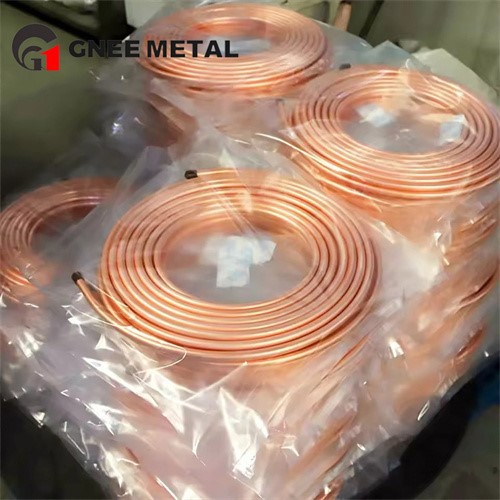
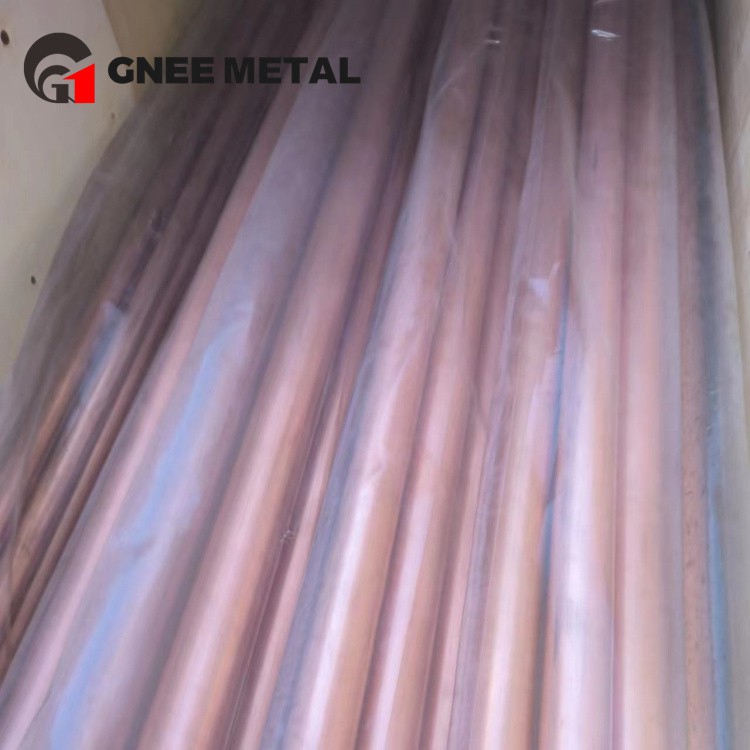
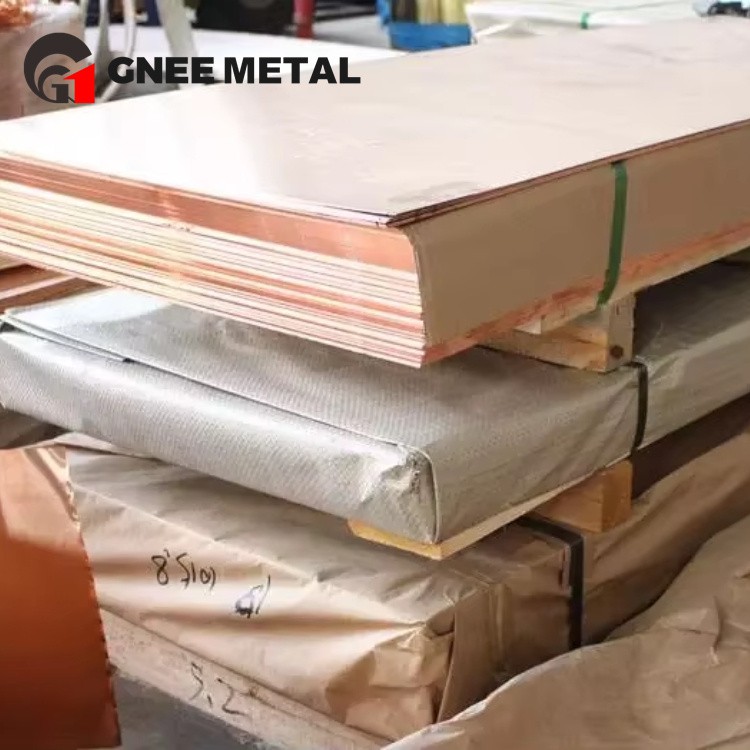
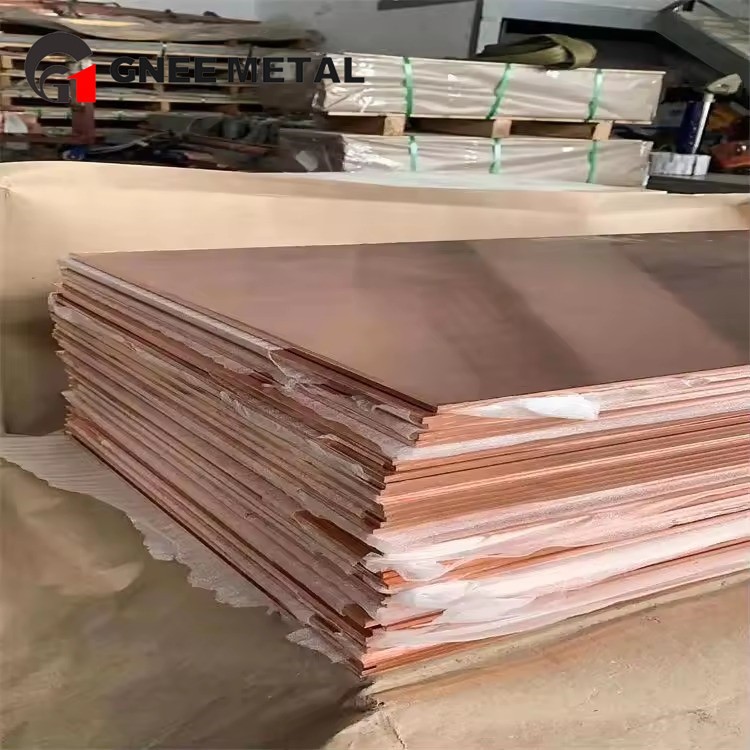
Industrial-Grade Export Packaging
Maximum protection against oxidation, moisture, and transit damage.
1. Anti-Oxidation Protection
VCI Paper & Moisture-Proof Film: Every order is vacuum-sealed or wrapped in anti-corrosion materials to ensure the copper remains bright and tarnish-free during sea freight.
2. Reinforced Structural Support
Seaworthy Wooden Crates: We use reinforced, fumigation-free wooden cases (ISPM-15) and steel strapping for rods, tubes, and heavy plates to prevent bending or surface scratches.
3. Secure Handling & Loading
Forklift-Ready Pallets: All materials are secured on standardized export pallets for easy unloading and maximum stability in containers.
4. Clear Identification
Professional Labeling: Each package includes detailed labels with heat numbers, specifications, and net weight for efficient inventory management.

Advanced Manufacturing & Quality Control
1. Core Production Equipment
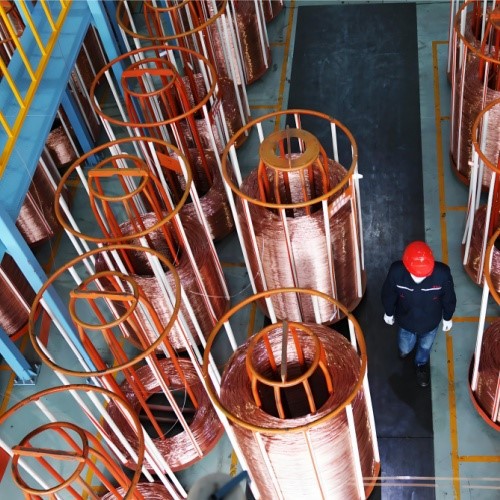
Up-casting & Continuous Casting Lines: Ensures high-purity oxygen-free copper rods and wires with uniform grain structure.
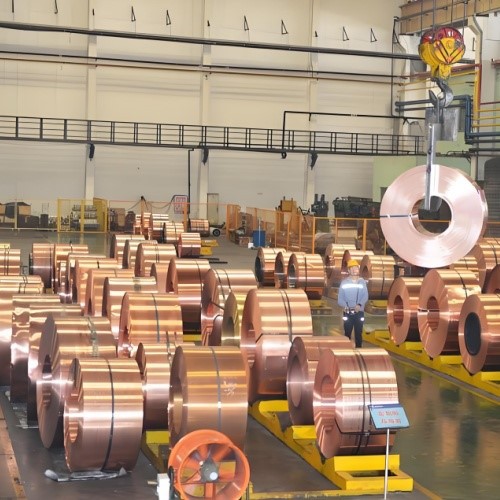
High-Precision Cold/Hot Rolling Mills: Automated thickness control for copper plates and strips with tolerances within ±0.01mm.
Large-Scale Extrusion & Drawing Machines: Capable of producing seamless copper tubes and rods in diverse diameters and shapes.
Atmospheric Controlled Annealing Furnaces: Bright annealing process to achieve specific tempers (Soft, Half-hard, Hard) without surface oxidation.
2. In-House Testing Center
Direct-Reading Spectrometers: Instant chemical composition analysis to guarantee Cu purity and precise alloying (Brass, Bronze, etc.).
Universal Tensile Testers: Verifying mechanical properties including tensile strength, elongation, and yield strength.
Eddy Current & Ultrasonic Testing: 100% non-destructive inspection for tubes and rods to detect internal cracks or flaws.
Conductivity & Hardness Testers: Ensuring electrical conductivity (IACS) and Vickers/Rockwell hardness meet international standards (ASTM, EN, DIN).



Get Fast Quote & Logistics Plan


