

For high-density electrical panels and switchgear, C11000 copper is the technical superior to Aluminum 6061. The primary driver is ampacity: C11000 copper provides an electrical conductivity of 101% IACS min, while Aluminum 6061 offers only 40% to 43% IACS. This massive difference means an aluminum busbar must be nearly 60% larger in cross-sectional area to carry the same current as a copper bar. For procurement managers, the choice is between the lower C11000 copper price per unit of conductivity and the lighter weight of aluminum. You can evaluate our industrial stock dimensions on the C11000 copper plate.
Why is the ampacity of C11000 superior to Aluminum 6061?
In electrical infrastructure, space is a premium. Because 101% IACS conductivity allows more electrons to flow through a smaller volume, C11000 busbars enable compact enclosure designs. Aluminum 6061 is an alloy containing magnesium and silicon, which creates internal resistance and heat. If you substitute copper with aluminum without increasing the bar size, the system will suffer from excessive Joule heating and potential insulation failure.
Furthermore, the thermal conductivity of c11000 material (388 W/m·K) is significantly higher than that of Aluminum 6061 (approx 167 W/m·K). This allows copper to dissipate heat faster from the bolted joints, ensuring the system remains within safe operating temperatures during peak loads.
Electrical and Thermal Performance Comparison
| Property | C11000 (ETP Copper) | Aluminum 6061-T6 | Engineering Impact |
| Electrical Conductivity | 101% IACS min | 40% - 43% IACS | Busbar size/Ampacity |
| Electrical Resistivity | 0.0171 Ohm·mm²/m | 0.0400 Ohm·mm²/m | Energy loss/Heating |
| Thermal Conductivity | 388 W/m·K | 167 W/m·K | Cooling efficiency |
| Melting Point | 1083 degrees Celsius | 582 degrees Celsius | Short-circuit survival |
| Density (Weight) | 8.89 g/cm³ | 2.70 g/cm³ | Structural load |
Request a Mill Test Certificate (MTC)
Does C11000 or 6061 resist "creep" better?
"Creep" is the tendency of a solid material to move slowly or deform permanently under the influence of persistent mechanical stresses. Aluminum is notorious for high creep rates at electrical operating temperatures. Over time, an aluminum bolted joint will loosen, increasing contact resistance and eventually leading to an arc flash. C11000 copper has excellent creep resistance, maintaining tight connections for decades.
If your design involves complex 90-degree offsets or tight-radius bends, the fact that C110 copper is bendable and maintains its grain integrity is a major advantage. Aluminum 6061-T6 is much more brittle and often cracks when bent without specialized large-radius tooling.
Mechanical and Structural Comparison
| Metric | C11000 Copper (H02) | Aluminum 6061-T6 |
| Tensile Strength | 240 - 300 MPa | 310 MPa min |
| Yield Strength | 170 - 280 MPa | 275 MPa min |
| Modulus of Elasticity | 115 GPa | 69 GPa |
| Hardness (Vickers) | 75 - 95 HV | 95 - 105 HV |
| Bending Reliability | Excellent | Fair (Cracking risk) |
FAQ: C11000 Copper vs. Aluminum 6061 Busbars
1. Is Aluminum 6061 cheaper than C11000 copper?
Per kilogram, yes. However, since you must use nearly double the volume of aluminum to match the conductivity of copper, the total "system cost" (including larger enclosures and supports) is often very similar.
2. Why do compact switchgears only use C11000?
Compact designs do not have the physical room for the large busbars required by aluminum. Copper's high ampacity allows for the smallest possible footprint.
3. Does Aluminum 6061 dissipate heat better because it's larger?
While the increased surface area of an aluminum bar helps with convection, the internal thermal conductivity of t2 copper is so much higher that it remains the superior material for pulling heat away from the actual contact points.
4. Can I weld C11000 to Aluminum 6061?
It is extremely difficult to do directly. It requires specialized friction stir welding or bi-metallic transition inserts to prevent the formation of brittle intermetallic compounds.
5. Which material is easier to machine for custom terminals?
Aluminum 6061 machines much "cleaner" than copper. Copper is "gummy" and requires specialized diamond-coated tools to prevent surface tearing during CNC milling.
6. Do you supply Aluminum 6061 plates as well?
Yes. While we are copper specialists, we recognize that many thermal and structural projects require hybrid solutions. We stock high-grade Aluminum 6061 for customers who need to balance weight and conductivity. Contact us for a comparative quote on both materials.
Product Specifications & Range
| Product Category | Common Grades (Alloys) | Size Range (Dimensions) | Standards |
| Copper Rods | C11000, C12200, C10200, C14500 | Diameter: 3mm – 400mm<br>Shape: Round, Hexagonal, Square | ASTM B187, EN 12163 |
| Copper Tubes | C11000, C12200 (DHP), C10200 (OF), C27200 | OD: 2mm – 219mm<br>Wall Thickness: 0.2mm – 20mm | ASTM B280, EN 12735 |
| Copper Plates | C11000 (ETP), C10200, C12200 | Thickness: 0.1mm – 150mm<br>Width: Up to 2500mm | ASTM B152, DIN 1751 |
| Copper Wires | C11000, C10200, Brass Wire | Diameter: 0.05mm – 10.0mm<br>Form: Spool or Coil | ASTM B3, EN 13602 |
| Copper Strips | C11000, C12200, C26800 (Brass) | Thickness: 0.05mm – 3.0mm<br>Width: 5mm – 610mm | ASTM B19, EN 1652 |
Customization Note:
Custom Dimensions: We provide precision cutting and slitting services to meet your specific project requirements.
Tempers Available: Soft (O), Half-Hard (H02), Full Hard (H04), and Spring Hard (H08).
Surface Finish: Bright annealing, Polished, or Plated (Tin, Silver, Nickel) upon request.
Industrial-Grade Export Packaging
Maximum protection against oxidation, moisture, and transit damage.
1. Anti-Oxidation Protection
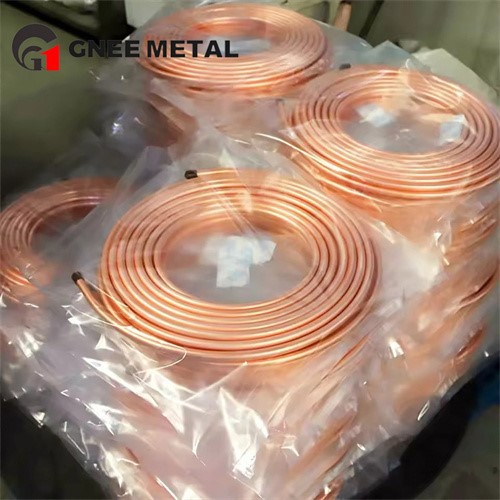
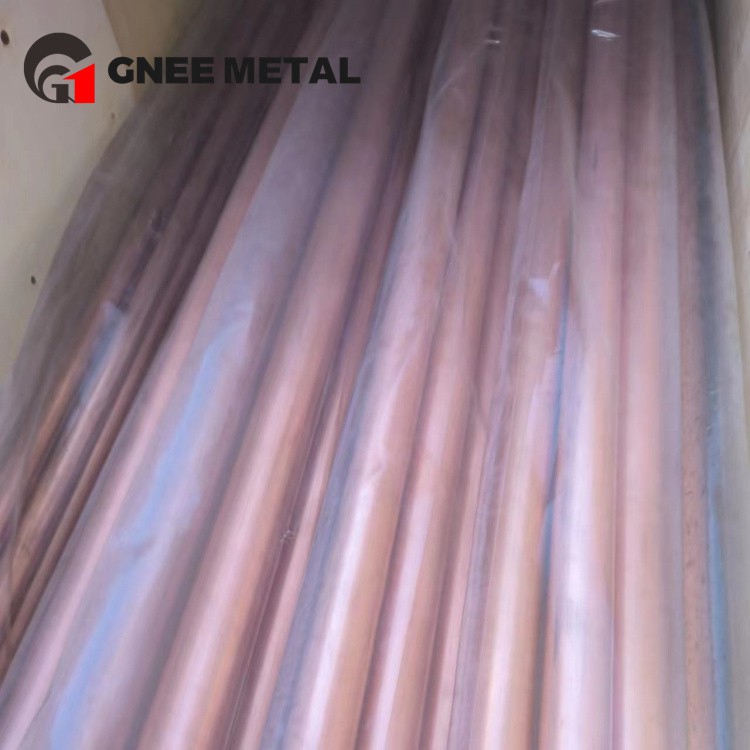
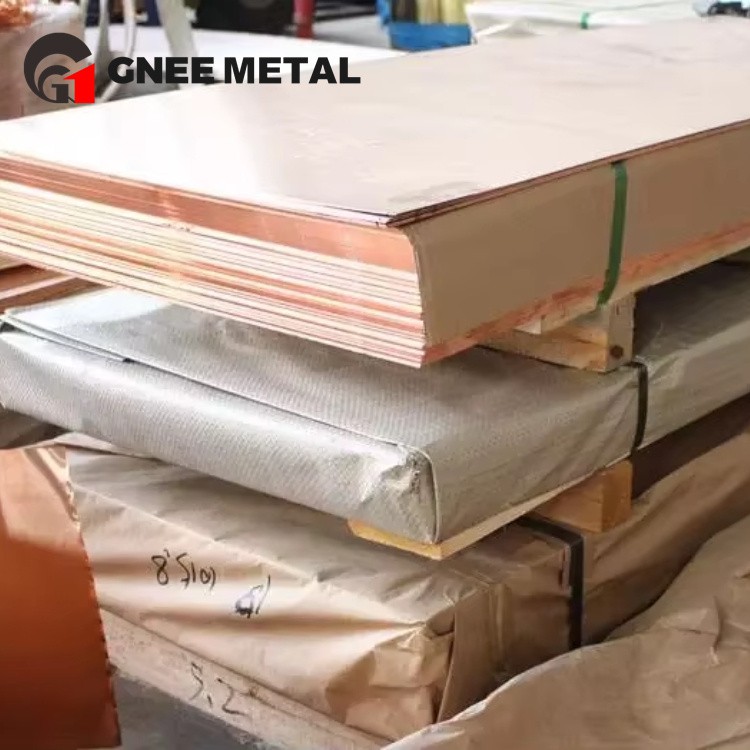
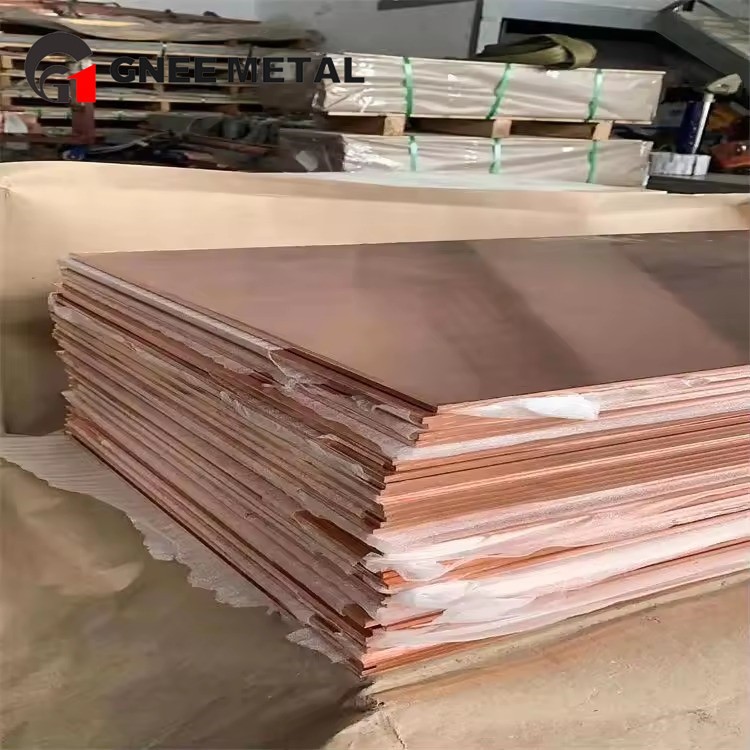
VCI Paper & Moisture-Proof Film: Every order is vacuum-sealed or wrapped in anti-corrosion materials to ensure the copper remains bright and tarnish-free during sea freight.
2. Reinforced Structural Support
Seaworthy Wooden Crates: We use reinforced, fumigation-free wooden cases (ISPM-15) and steel strapping for rods, tubes, and heavy plates to prevent bending or surface scratches.
3. Secure Handling & Loading
Forklift-Ready Pallets: All materials are secured on standardized export pallets for easy unloading and maximum stability in containers.
4. Clear Identification
Professional Labeling: Each package includes detailed labels with heat numbers, specifications, and net weight for efficient inventory management.

Advanced Manufacturing & Quality Control
1. Core Production Equipment
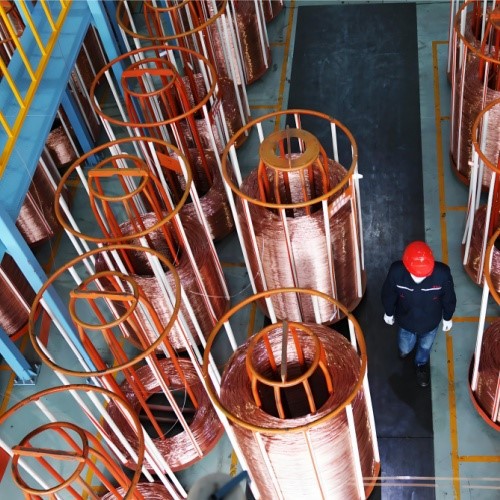
Up-casting & Continuous Casting Lines: Ensures high-purity oxygen-free copper rods and wires with uniform grain structure.
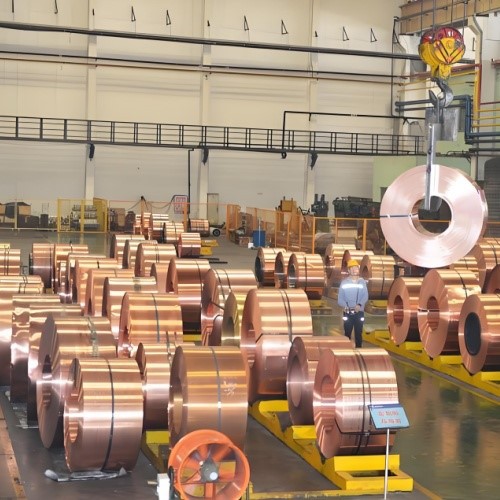
High-Precision Cold/Hot Rolling Mills: Automated thickness control for copper plates and strips with tolerances within ±0.01mm.
Large-Scale Extrusion & Drawing Machines: Capable of producing seamless copper tubes and rods in diverse diameters and shapes.
Atmospheric Controlled Annealing Furnaces: Bright annealing process to achieve specific tempers (Soft, Half-hard, Hard) without surface oxidation.
2. In-House Testing Center
Direct-Reading Spectrometers: Instant chemical composition analysis to guarantee Cu purity and precise alloying (Brass, Bronze, etc.).
Universal Tensile Testers: Verifying mechanical properties including tensile strength, elongation, and yield strength.
Eddy Current & Ultrasonic Testing: 100% non-destructive inspection for tubes and rods to detect internal cracks or flaws.
Conductivity & Hardness Testers: Ensuring electrical conductivity (IACS) and Vickers/Rockwell hardness meet international standards (ASTM, EN, DIN).



Get Fast Quote & Logistics Plan


