

The choice between C11000 (ETP) copper tube and C12200 (DHP) copper tube depends entirely on whether your application prioritizes electrical conductivity or weldability and corrosion resistance. For high-efficiency heat exchangers where welding is not required, C11000 copper tubes offer superior thermal performance. However, for most HVAC and refrigeration systems requiring brazed joints, C12200 is the industry standard because it eliminates the risk of hydrogen embrittlement. You can evaluate our industrial tubing specifications on the C11000 product overview.
Why is C12200 the standard for HVAC while C11000 is used for busbars?
The primary difference lies in the residual phosphorus content. C12200 is "Deoxidized High Phosphorus" copper, which makes it exceptionally easy to weld and braze without losing structural integrity. In contrast, c11000 material contains oxygen, which can cause cracking during high-temperature brazing. This is why you will see c11000 copper bar used in electrical panels but rarely see it in pressurized refrigerant lines.
For engineers comparing C11000 vs C12200, it is critical to note that the phosphorus in C12200 significantly lowers its electrical conductivity to around 85% IACS, compared to the 101% IACS found in cu-etp.
C11000 vs. C12200 Tube Material Properties
| Property | C11000 (ETP Copper) | C12200 (DHP Copper) |
| Copper Purity | 99.90% Min | 99.90% Min |
| Phosphorus Content | None | 0.015% to 0.040% |
| Oxygen Content | 0.02% to 0.04% | None (Deoxidized) |
| Electrical Conductivity | 101% IACS | 85% IACS |
| Thermal Conductivity | 388 W/m·K | 339 W/m·K |
Thermal Conductivity vs. Weldability: The C11000 Trade-off
If your cooling system uses mechanical fittings or expansion joints rather than welding, c11000 copper tubes are technically superior due to their higher thermal conductivity. This allows for faster heat dissipation in high-density electronics cooling. However, the oxygen content in C11000 creates a "trap" for B2B buyers who plan to braze their assemblies.
As explained in our technical guide on whether C11000 copper is oxygen free, heating ETP copper in a hydrogen-rich atmosphere causes internal steam pockets. For complex cooling manifolds, we recommend consulting our engineering team to determine if your joining process is compatible with C11000.
Mechanical Specs for Hard-Drawn Tubes (H80 Temper)
| Specification | C11000 Tube | C12200 Tube |
| Tensile Strength | 310 MPa Min | 310 MPa Min |
| Yield Strength | 275 MPa Min | 275 MPa Min |
| Rockwell Hardness | B45 to B90 | B45 to B90 |
| Fabrication Method | Cold Drawn | Cold Drawn |
Which grade is more cost-effective for large-scale procurement?
From a procurement perspective, the c11000 copper price is generally more stable and slightly lower than specialized deoxidized grades because it is the "baseline" product of electrolytic refineries. For massive projects like heatsink C11000 copper plate production or large-scale electrical cooling, the cost savings of C11000 are significant.
However, for ACR (Air Conditioning and Refrigeration) applications, the availability of C12200 in long coils makes it more practical. If you are sourcing C11000 copper sheet for fins to be paired with tubes, using C11000 for the fins and C12200 for the tubes is a common way to optimize both cost and performance. You can track the latest market trends in our c11000 copper price update.
FAQ
1. Can I use C11000 tubes for potable water plumbing?
While technically possible, C12200 is preferred for plumbing because it handles brazing better and has superior long-term resistance to pits and corrosion in varying water chemistries.
2. Why does C12200 have lower conductivity?
Phosphorus is an "electron killer" in the copper matrix. Even a tiny amount (0.02%) drastically interferes with the path of electrons, which is why copper c11000 material properties are always preferred for power-carrying components.
3. Is C11000 tube suitable for vacuum applications?
Generally, no. For high-vacuum environments, you should use C10100 (OFE) to prevent outgassing. C11000 contains oxygen which can react under vacuum at high temperatures.
4. How can I distinguish these two tubes in my warehouse?
Visually, they are identical. You must check the ASTM B75 or B88 markings. C12200 is almost always marked as "DHP" or "ACR" grade.
5. What is the equivalent of C11000 tube in Europe?
The equivalent is Cu-ETP (CW004A). For C12200, the equivalent is Cu-DHP (CW024A).
6. Can C11000 be bent as easily as C12200?
Yes, in the annealed (soft) state, both grades have similar ductility. For more on this, see our article on whether C110 copper is bendable.
Product Specifications & Range
| Product Category | Common Grades (Alloys) | Size Range (Dimensions) | Standards |
| Copper Rods | C11000, C12200, C10200, C14500 | Diameter: 3mm – 400mm<br>Shape: Round, Hexagonal, Square | ASTM B187, EN 12163 |
| Copper Tubes | C11000, C12200 (DHP), C10200 (OF), C27200 | OD: 2mm – 219mm<br>Wall Thickness: 0.2mm – 20mm | ASTM B280, EN 12735 |
| Copper Plates | C11000 (ETP), C10200, C12200 | Thickness: 0.1mm – 150mm<br>Width: Up to 2500mm | ASTM B152, DIN 1751 |
| Copper Wires | C11000, C10200, Brass Wire | Diameter: 0.05mm – 10.0mm<br>Form: Spool or Coil | ASTM B3, EN 13602 |
| Copper Strips | C11000, C12200, C26800 (Brass) | Thickness: 0.05mm – 3.0mm<br>Width: 5mm – 610mm | ASTM B19, EN 1652 |
Customization Note:
Custom Dimensions: We provide precision cutting and slitting services to meet your specific project requirements.
Tempers Available: Soft (O), Half-Hard (H02), Full Hard (H04), and Spring Hard (H08).
Surface Finish: Bright annealing, Polished, or Plated (Tin, Silver, Nickel) upon request.
Industrial-Grade Export Packaging
Maximum protection against oxidation, moisture, and transit damage.
1. Anti-Oxidation Protection
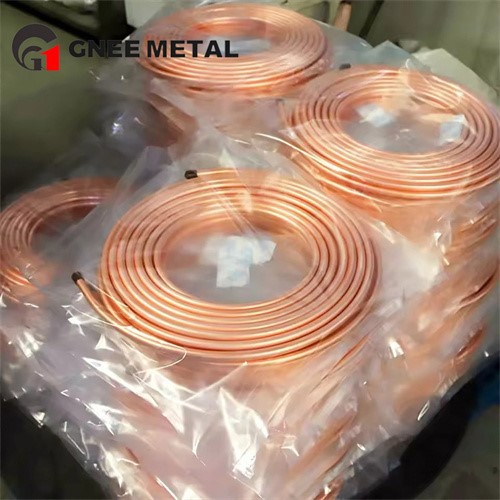
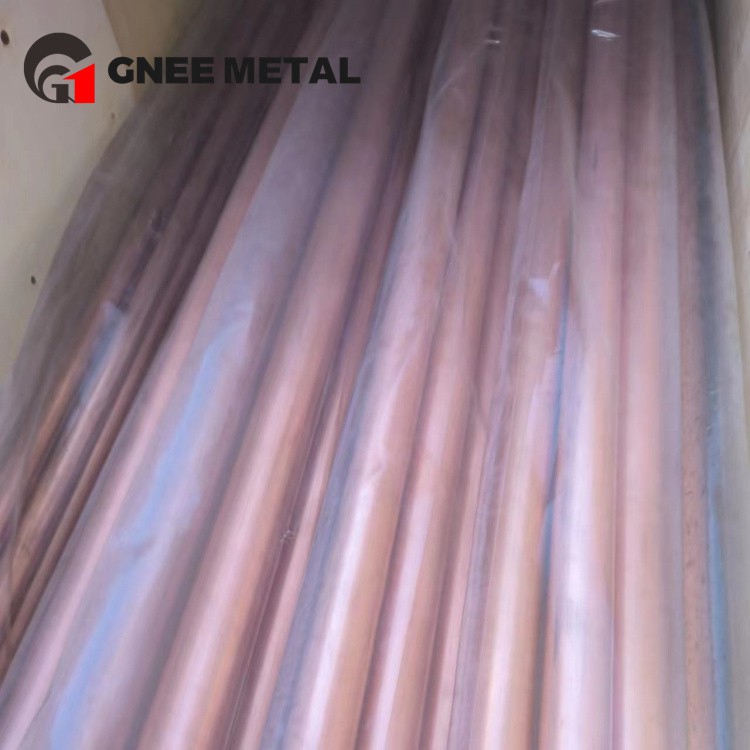
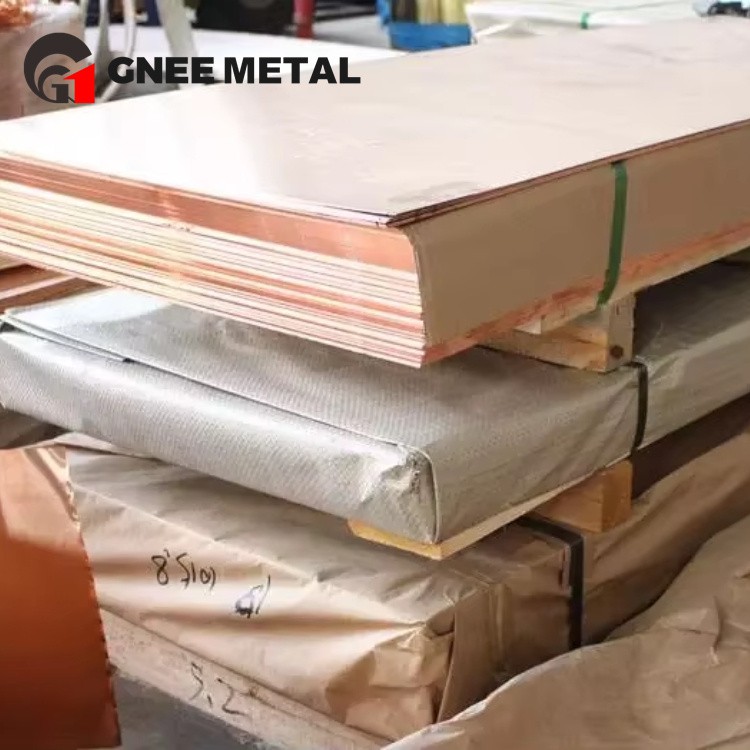
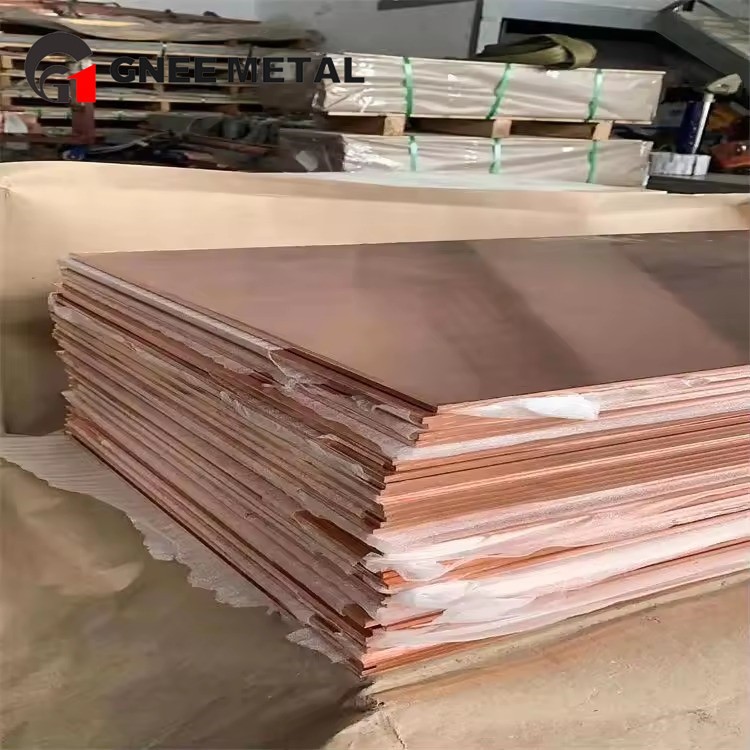
VCI Paper & Moisture-Proof Film: Every order is vacuum-sealed or wrapped in anti-corrosion materials to ensure the copper remains bright and tarnish-free during sea freight.
2. Reinforced Structural Support
Seaworthy Wooden Crates: We use reinforced, fumigation-free wooden cases (ISPM-15) and steel strapping for rods, tubes, and heavy plates to prevent bending or surface scratches.
3. Secure Handling & Loading
Forklift-Ready Pallets: All materials are secured on standardized export pallets for easy unloading and maximum stability in containers.
4. Clear Identification
Professional Labeling: Each package includes detailed labels with heat numbers, specifications, and net weight for efficient inventory management.

Advanced Manufacturing & Quality Control
1. Core Production Equipment
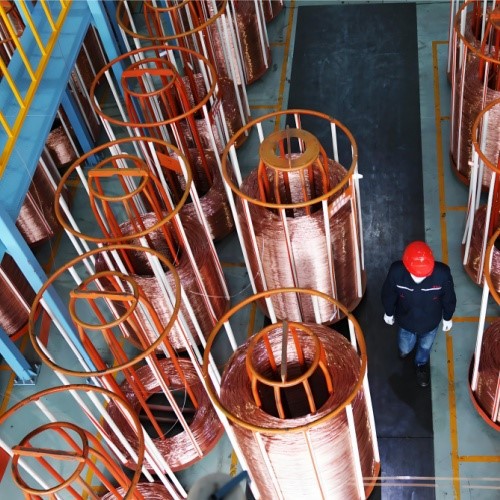
Up-casting & Continuous Casting Lines: Ensures high-purity oxygen-free copper rods and wires with uniform grain structure.
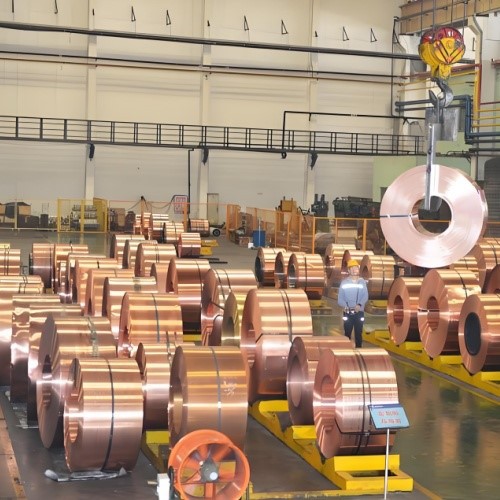
High-Precision Cold/Hot Rolling Mills: Automated thickness control for copper plates and strips with tolerances within ±0.01mm.
Large-Scale Extrusion & Drawing Machines: Capable of producing seamless copper tubes and rods in diverse diameters and shapes.
Atmospheric Controlled Annealing Furnaces: Bright annealing process to achieve specific tempers (Soft, Half-hard, Hard) without surface oxidation.
2. In-House Testing Center
Direct-Reading Spectrometers: Instant chemical composition analysis to guarantee Cu purity and precise alloying (Brass, Bronze, etc.).
Universal Tensile Testers: Verifying mechanical properties including tensile strength, elongation, and yield strength.
Eddy Current & Ultrasonic Testing: 100% non-destructive inspection for tubes and rods to detect internal cracks or flaws.
Conductivity & Hardness Testers: Ensuring electrical conductivity (IACS) and Vickers/Rockwell hardness meet international standards (ASTM, EN, DIN).



Get Fast Quote & Logistics Plan


