

Condenser tube failure is a costly problem. Unexpected downtime, lost production, and expensive retubing can cost your facility hundreds of thousands of dollars. If you are using or considering copper alloy tubes, understanding corrosion mechanisms is essential to preventing premature failure.
ASTM B111 C68700 (Arsenical Aluminum Brass) was specifically developed to resist the most common failure modes in seawater-cooled condensers. But how does it work, and what are its limitations?
This article explains everything you need to know about C68700 tube corrosion resistance and how to maximize tube life.
What Are the Most Common Causes of Condenser Tube Failure?
| Failure Mode | Cause | Typical Timeline |
|---|---|---|
| Erosion Corrosion | High velocity, turbulence, sand, air bubbles | Months to 2 years |
| Dezincification | Selective leaching of zinc from brass | 2-10 years |
| Pitting Corrosion | Low flow, deposits, stagnant conditions | 1-5 years |
| Stress Corrosion Cracking | Residual stress + ammonia + moisture | Weeks to 2 years |
| Galvanic Corrosion | Dissimilar metals in electrolyte | Variable |
| Fatigue | Vibration, thermal cycling | 5-15 years |
ASTM B111 C68700 was engineered to address the top three: erosion corrosion, dezincification, and pitting.

How Does C68700 Resist Erosion Corrosion?
Erosion corrosion occurs when high-velocity water or entrained bubbles strip away the protective oxide film on a tube's inner surface. Once the film is damaged, the underlying metal corrodes rapidly.
C68700 aluminum brass tube contains 1.8-2.5% aluminum. This aluminum forms a hard, durable, and self-healing aluminum-rich oxide film that is much more resistant to erosion than the film on pure copper or ordinary brass.
Key advantage: The protective film on ASTM B111 C68700 can withstand velocities up to 3-4 m/s in clean seawater, while pure copper fails above 1-1.5 m/s.
However, this film requires minimum flow velocity (typically > 1 m/s) to form and maintain. In stagnant or low-flow conditions, the film can break down, leading to pitting.
What Makes C68700 Dezincification Resistant?
Dezincification is a selective corrosion process where zinc is leached out of brass, leaving behind a weak, porous copper structure. This can cause tube leakage without visible wall thinning.
Ordinary brass (like C27000 or C28000) is highly susceptible to dezincification. However, ASTM B111 C68700 contains 0.02-0.06% arsenic, which acts as an inhibitor.
| Alloy | Dezincification Resistance | Mechanism |
|---|---|---|
| Ordinary brass (C27000) | Poor | Zinc leaches freely |
| Admiralty brass (C44300) | Good (with arsenic) | Arsenic inhibits zinc diffusion |
| ASTM B111 C68700 | Excellent | Arsenic + aluminum provide dual protection |
Why it works: The arsenic atoms segregate at grain boundaries and block the diffusion paths for zinc ions. This makes C68700 one of the most dezincification-resistant brass alloys available.
Where Does ASTM B111 C68700 Perform Best?
C68700 tube corrosion resistance is maximized in specific operating conditions. Understanding these conditions is key to achieving 15-25 years of service life.
| Optimal Condition | Recommended Range |
|---|---|
| Water type | Clean seawater, brackish water |
| Flow velocity | 1.0 - 3.5 m/s |
| Water temperature | 10 - 50°C (50 - 120°F) |
| pH range | 6.5 - 8.5 |
| Chloride content | 10,000 - 35,000 ppm |
| Dissolved oxygen | > 2 ppm (to maintain film) |
| Ammonia concentration | < 2 ppm |
| Hydrogen sulfide | < 0.1 ppm |
When operated within these parameters, ASTM B111 C68700 condenser tube provides excellent, long-term performance.
What Are the Limitations of C68700 Corrosion Resistance?
No alloy is perfect. ASTM B111 C68700 has several limitations you must understand to avoid unexpected failures.
1. Poor performance in low-flow or stagnant seawater
Below 1 m/s, the protective film cannot form properly. Deposits accumulate, leading to under-deposit corrosion and pitting. This is the #1 cause of C68700 tube failure.
2. Susceptibility to ammonia attack
Ammonia (common in fertilizer plants and some chemical processes) can cause stress corrosion cracking. Keep ammonia below 2 ppm.
3. Vulnerability to sulfides
Hydrogen sulfide (H2S) reacts with copper to form copper sulfide, destroying the protective film. Do not use C68700 in polluted harbors or sulfidic waters.
4. Difficult to weld
As discussed in our previous comparison, welding C68700 is challenging. Use roller expansion or brazing instead.
For applications with these limitations, consider C70600 (Copper-Nickel) or stainless steel. Browse our full range of [ASTM B111 heat exchanger tubes] for alternative options.
How Does C68700 Compare to Other Corrosion-Resistant Alloys?
To put C68700 tube corrosion resistance in perspective, here is how it compares to other common condenser tube alloys.
| Alloy | Seawater Resistance | Erosion Resistance | Dezincification Resistance | Cost |
|---|---|---|---|---|
| C12200 (Pure Copper) | Poor | Poor | Not applicable | Low |
| C44300 (Admiralty Brass) | Good | Fair | Good | Low-Medium |
| C68700 (Aluminum Brass) | Excellent | Excellent | Excellent | Medium |
| C70600 (90/10 Cu-Ni) | Excellent | Good | Not applicable | High |
| C71500 (70/30 Cu-Ni) | Superior | Excellent | Not applicable | Very High |
| Stainless Steel (316L) | Good | Good | Not applicable | High |
Value analysis: ASTM B111 C68700 offers the best balance of seawater corrosion resistance and cost among all copper alloys. It is significantly cheaper than C70600 while providing similar performance in clean, high-velocity seawater.
How Can You Maximize the Lifespan of C68700 Tubes?
Proper operation and maintenance are just as important as alloy selection. Follow these best practices to maximize C68700 aluminum brass tube life.
Operation Best Practices:
Maintain flow velocity above 1 m/s - never operate below this threshold
Avoid frequent start-stop cycles - film takes time to reform
Keep water clean - use strainers to remove sand and debris
Monitor water chemistry - check pH, ammonia, and sulfides regularly
Maintenance Best Practices:
Perform eddy current testing (ECT) every 2-3 years - detect wall thinning early
Clean tubes regularly - use sponge balls or chemical cleaning to remove deposits
Protect during outages - drain, flush, and dry tubes during extended shutdowns
Inspect inlet ends - erosion often starts at tube inlets
Pro tip: During plant shutdowns longer than one week, fill the water box with treated fresh water or dry the tubes completely. Stagnant seawater left in C68700 tubes will cause rapid pitting.
Case Study
Let's examine a real-world failure scenario to illustrate the importance of proper operating conditions.
Scenario: A coastal power plant experienced C68700 tube bundle replacement after only 4 years of service - expected life was 15+ years.
Failure mode: Severe pitting and under-deposit corrosion on the inner tube surface.
Root cause analysis:
Plant reduced circulating water flow during low-load periods
Flow velocity dropped to 0.5 m/s for extended periods
Sediment and biofouling accumulated on tube surfaces
Under-deposit corrosion caused deep pits within 18 months
Solution:
Installed variable-speed pumps to maintain minimum 1 m/s flow at all loads
Implemented weekly tube cleaning during low-load periods
Added online corrosion monitoring
Result: Replacement tubes are now expected to achieve full 15+ year design life.
Lesson learned: ASTM B111 C68700 works perfectly when operated correctly. Operating outside design parameters - even temporarily - can cause premature failure.
FAQ
1. What is the primary corrosion resistance mechanism of ASTM B111 C68700?
The primary mechanism is the formation of a protective aluminum-rich oxide film on the tube surface. When ASTM B111 C68700 is exposed to oxygenated water, the aluminum content (1.8-2.5%) reacts to form a thin, dense, and adherent layer of aluminum oxide (Al2O3) and copper oxide (Cu2O). This film is much harder and more durable than the film on pure copper or ordinary brass, providing excellent resistance to erosion corrosion and impingement attack. The film is also self-healing - if damaged, it will reform as long as oxygenated water continues to flow.
2. How does the arsenic in C68700 prevent dezincification?
The arsenic (0.02-0.06%) in C68700 aluminum brass tube acts as a corrosion inhibitor by segregating at grain boundaries and blocking the diffusion paths for zinc ions. In ordinary brass, zinc ions can diffuse through the grain boundaries to the surface, where they are selectively leached out, leaving behind porous, weak copper. Arsenic atoms occupy these diffusion pathways, preventing zinc from migrating to the surface. This mechanism is so effective that C68700 is considered "dezincification resistant" under ASTM B111 specifications, meaning it passes the standard mercurous nitrate test for dezincification.
3. What flow velocity is required to maintain the protective film on C68700?
A minimum flow velocity of 1.0 m/s (approximately 3.3 ft/s) is required to maintain the protective oxide film on ASTM B111 C68700 condenser tube. Below this threshold, the film can break down, and deposits may accumulate on the tube surface. However, velocities above 3.5 m/s can cause erosion corrosion if sand or other abrasives are present in the water. The optimal operating range is 1.0 to 3.5 m/s for clean seawater. For comparison, C12200 (pure copper) requires a minimum velocity of only 0.5 m/s but fails rapidly above 1.5 m/s in seawater.
4. Can C68700 be used in polluted seawater or harbors?
No, ASTM B111 C68700 is not recommended for polluted seawater or harbors. Pollutants commonly found in harbors - such as hydrogen sulfide (H2S) from decomposing organic matter, ammonia from industrial discharge, and low dissolved oxygen levels - all accelerate corrosion of aluminum brass. H2S reacts with copper to form copper sulfide, destroying the protective film. For polluted or brackish harbor water, C70600 (90/10 Copper-Nickel) is a much better choice. If you must use C68700 in such conditions, continuous water treatment and frequent cleaning are essential.
5. What is the difference between erosion corrosion and impingement attack?
These terms are often used interchangeably, but there is a technical distinction. Erosion corrosion is a broad term for accelerated corrosion caused by relative motion between the fluid and metal surface. Impingement attack is a specific type of erosion corrosion that occurs when water jets or bubbles impinge directly on the metal surface, typically at tube inlets or changes in direction. ASTM B111 C68700 is highly resistant to both because its aluminum-rich oxide film is mechanically strong and adheres tightly to the base metal. In contrast, pure copper tubes (C12200) often fail within months from impingement attack at tube inlets.
6. Does C68700 suffer from stress corrosion cracking (SCC)?
Yes, C68700 can suffer from stress corrosion cracking if three conditions are present simultaneously: (1) residual tensile stress from manufacturing or installation, (2) an environment containing ammonia or amines, and (3) moisture. The cracking is typically intergranular (along grain boundaries) and can occur within weeks to months in severe cases. To prevent SCC, always stress-relief anneal C68700 tubes after bending (heat to 300-400°C for 1-2 hours), avoid ammonia-based cleaning chemicals, and keep ammonia concentration below 2 ppm in cooling water.
7. How does temperature affect C68700 corrosion resistance?
Corrosion rates of ASTM B111 C68700 approximately double for every 10-15°C increase above 50°C. At temperatures below 50°C (120°F), C68700 exhibits excellent corrosion resistance. Between 50-80°C, corrosion rates increase moderately, but the alloy remains usable. Above 80°C (175°F), dezincification risk increases significantly, even with arsenic inhibition. Above 200°C (400°F), the protective film breaks down completely. For high-temperature applications (e.g., feedwater heaters), consider C70600 or stainless steel instead.
8. Can C68700 tubes be used with stainless steel tubesheets?
Yes, but you must be aware of galvanic corrosion risks. Stainless steel (e.g., 316L) is more noble (cathodic) than C68700 aluminum brass tube, meaning the brass will corrode preferentially if both are electrically connected and immersed in an electrolyte (cooling water). To prevent galvanic corrosion, use isolation techniques: (1) apply a non-conductive coating on the tubesheet around each tube, (2) use insulating tube end sleeves, or (3) maintain water chemistry to minimize conductivity. For seawater service, it is generally better to use a C68700 tubesheet or a copper-nickel tubesheet to avoid galvanic mismatch.
9. How often should I perform eddy current testing on C68700 tubes?
For critical power plant condensers, eddy current testing (ECT) should be performed every 2-3 years. ECT can detect wall thinning, pitting, and cracking before leaks occur. For less critical applications (e.g., HVAC chillers), testing every 5 years may be sufficient. More frequent testing (annually) is recommended if: (1) your plant has experienced previous tube failures, (2) water quality is poor or variable, (3) the unit operates with frequent start-stop cycles, or (4) flow velocity regularly drops below 1 m/s. Early detection allows targeted tube plugging or replacement before a leak forces an unplanned outage.
10. What is the typical lifespan of ASTM B111 C68700 tubes in proper service?
In clean, high-velocity seawater with proper operation and maintenance, C68700 tubes typically last 15-25 years. Many power plants report 20+ years of service before retubing becomes necessary. However, lifespan can be significantly shorter (3-10 years) if operated outside design parameters - low flow, polluted water, high temperatures, or poor maintenance. The #1 factor affecting lifespan is flow velocity. Plants that maintain minimum 1 m/s flow at all loads consistently achieve 20+ year tube life. Plants that allow low-flow operation often retube within 5-10 years.
100% Inspection Per ASTM B111 / C68700 – Customer Witnessed
Every tube in this lot has passed third-party witnessed inspection per ASTM B111 standard for C68700 alloy. Below are actual photos from customer-onsite inspection, including eddy current testing and dimensional verification.
Inspection items verified:
• Eddy current testing (ECT) – no through-wall defects
• Outer diameter & wall thickness – within ±0.02mm tolerance
• Surface finish & temper (O61) – conforms to ASTM
• Hardness & chemical composition – certified.
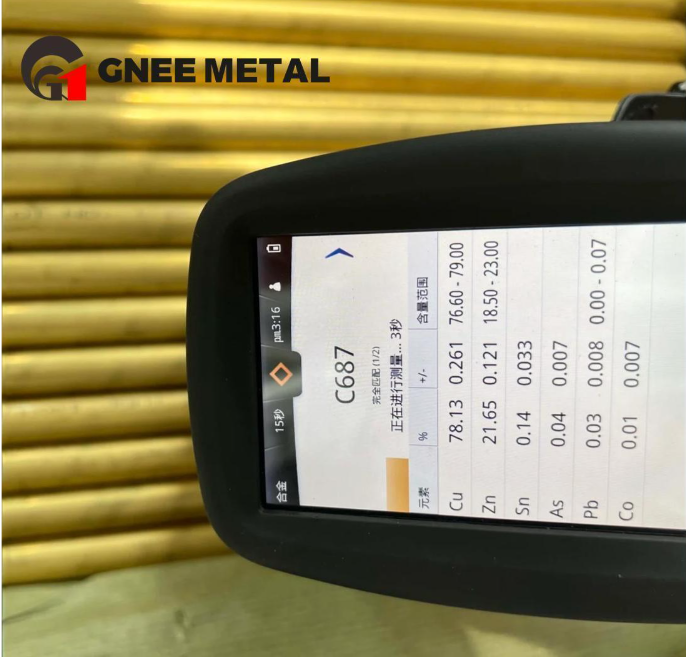

Export-Ready Packing – Anti-Rust & Wooden Case
After passing inspection, all tubes are packed according to export standards and customer-specific requirements. The packing process is documented below to ensure traceability and damage-free delivery.
Packing steps shown in video & images:
1. Tube cleaning & drying
2. Plastic end caps on both ends
3. VCI anti-rust paper wrapping
4. Bundle strapping with moisture barrier film
5. Plywood wooden case (ISPM-15 compliant) with foam padding
6. Labeling with ASTM grade, lot number, and inspection stamp


Our Factory & Equipment
All ASTM C68700 tubes are produced and inspected on our in-house equipment, allowing full process control from billet casting to final packing.
Key equipment used for this lot:
• Induction melting furnace – precise alloying (Cu + Zn + Al + As)
• Horizontal continuous casting – uniform billet structure
• Extrusion press (800T / 1630T) – seamless tube forming
• Cold drawing bench (5–40m) – dimensional accuracy to ±0.02mm
• Online eddy current tester (FOERSTER / MAC) – 100% NDT
• Ultrasonic wall thickness gauge – real-time monitoring
• Annealing furnace (controlled atmosphere) – temper O61
In-house metrology: Micrometers, pin gauges, optical comparator, hardness tester (HV/HRB)
All equipment is calibrated quarterly. Production records are traceable by lot number.
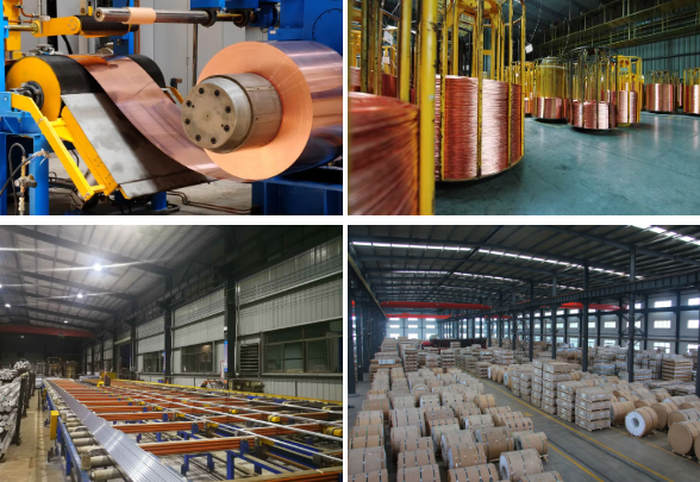
Copper & Copper Alloy Products – Supply Range
| Product Form | Common Alloys / Grades | Size Range | Standards | Typical Applications |
|---|---|---|---|---|
| Tube / Pipe | C12200, C11000, C68700, C70600, C71500, C44300, C27000 | OD: 4mm – 219mm Wall: 0.5mm – 20mm Length: up to 15m |
ASTM B68, B75, B111, B280, B359, B466 | Heat exchangers, condensers, HVAC, plumbing, oil coolers |
| Plate / Sheet | C11000, C12200, C26000, C26800, C52100, C68700 | Thk: 0.5mm – 50mm Width: up to 1200mm Length: up to 4000mm |
ASTM B152, B169, B103, B465 | Electrical parts, roofing, gaskets, industrial panels |
| Rod / Bar | C11000, C26000, C36000, C46400, C48500, C63000 | Dia: 3mm – 120mm Length: 1m – 6m (or custom) |
ASTM B16, B124, B138, B150, B453 | Valve stems, shafts, fasteners, machined components |
| Wire | C11000, C16200, C17500, C26000, C52100, C64700 | Dia: 0.1mm – 12mm Coil weight: up to 100kg |
ASTM B1, B2, B3, B197, B206, B624 | Welding electrodes, electrical conductors, springs, mesh |
| Strip / Foil | C11000, C19400, C26000, C26800, C52100, C70250 | Thk: 0.05mm – 3.0mm Width: 5mm – 600mm |
ASTM B36, B465, B694, B888 | Connectors, terminals, battery tabs, shielding, stamping parts |
Check Today's Stock & Lead Time


