

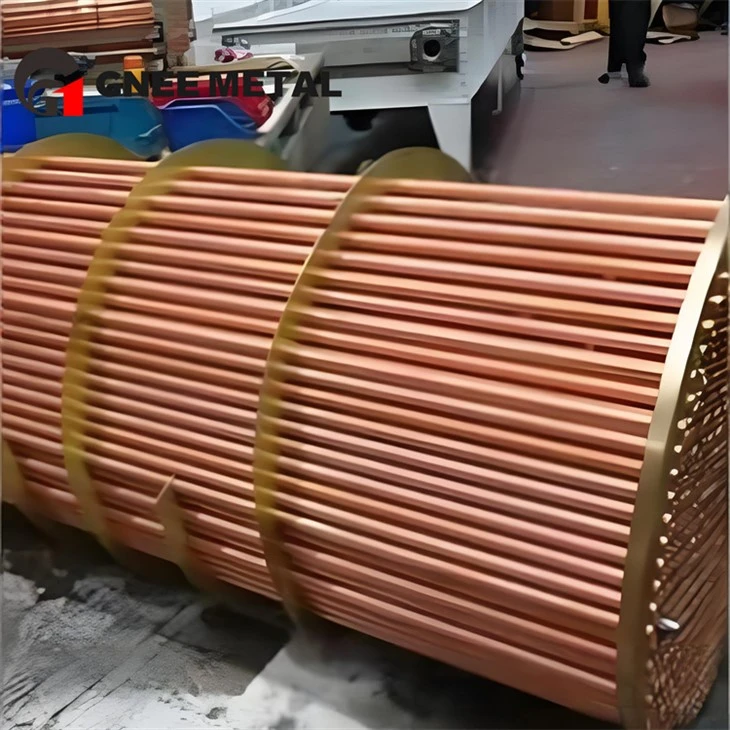
ASTM B111 C12200 Copper Heat Exchanger Tube
Henan Gnee New Material Co., Ltd. is one of the most professional manufacturers and suppliers of astm b111 c12200 copper heat exchanger tube in China, specialized in providing high quality copper products with competitive price. Welcome to buy discount astm b111 c12200 copper heat exchanger tube for sale here from our factory. Customized orders are welcome.
ASTM B111 C12200
C12200 is one of the most common copper alloys specified under ASTM B111 and ASME SB111. It is a phosphorus-deoxidized copper with a minimum copper content of 99.9%. The deoxidization process removes oxygen from the material, which significantly improves its performance during welding and brazing.
Unlike standard plumbing copper, C12200 is engineered for heat exchanger tube rolling and heat exchanger tube expansion. It provides consistent results in shell tube evaporator and u tube condenser applications.
This alloy is suitable for:
Heat exchanger HVAC systems
Heat exchanger boiler units
Heat exchanger car radiators and heaters
Heat exchanger air cooling coils
Available Supply Conditions


ASTM B111 C12200 copper heat exchanger tubes are available in multiple forms to meet the requirements of heat exchanger manufacturers, HVAC equipment producers, and industrial cooling system applications.
| Supply Form | Description |
|---|---|
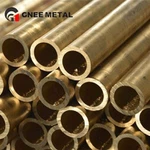
| Straight Tubes | Seamless tubes supplied in fixed lengths with precise dimensional tolerances for heat exchanger fabrication. |
| U-Bend Tubes | Precision U-bent tubes manufactured according to customer-specified bend radius and leg length requirements. |
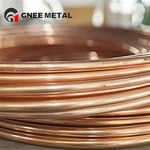
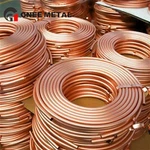
| Coil Tubes | Continuous-length copper tubes supplied in coil form for HVAC, refrigeration, and cooling equipment applications. |
| Finned Tubes | Copper tubes with enhanced external surface area for improved heat transfer performance in air-cooled systems. |
ASTM B111 C12200 Tube Specifications
| Specification Item | Details |
| Material Grade | C12200 (Phosphorus-Deoxidized Copper, DHP Copper) |
| UNS Number | C12200 |
| Standard | ASTM B111 |
| Product Type | Seamless Heat Exchanger Tubes |
| Manufacturing Process | Extruded + Cold Drawn |
| Supply Forms | Straight Tubes, U-Bend Tubes, Coil Tubes, Finned Tubes |
| Outside Diameter (OD) | 6.35 mm – 127 mm (1/4" – 5") |
| Wall Thickness | 0.50 mm – 5.00 mm |
| Length | Up to 18 meters |
| Temper | O60 Annealed, H55 Light Drawn |
| End Finish | Plain Ends (PE), Deburred Ends |
| Surface Finish | Bright Annealed, Pickled & Cleaned, Mill Finish |
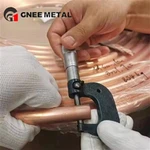
| Inspection & Testing | Eddy Current Test, Hydrostatic Test, Dimensional Inspection |
| Certification | Mill Test Certificate (MTC), EN 10204 3.1 |
| Packaging | Wooden Cases, Bundles, Export Seaworthy Packing |
| Element | Composition (%) |
| Copper + Silver (Cu + Ag) | 99.90 Min |
| Phosphorus (P) | 0.015 – 0.040 |
C12200, also known as phosphorus-deoxidized high residual phosphorus copper (DHP Copper), is widely used for heat exchanger tubes due to its excellent corrosion resistance, weldability, and thermal conductivity. The controlled phosphorus content removes residual oxygen from the copper, reducing the risk of hydrogen embrittlement during fabrication and service.
Mechanical Properties of ASTM B111 C12200 Copper Tubes
| Property | Annealed (O60) |
| Tensile Strength | ≥ 220 MPa (32 ksi) |
| Yield Strength (0.5% Extension Under Load) | ≥ 69 MPa (10 ksi) |
| Elongation (50 mm) | ≥ 45% |
| Hardness | 40–65 HV (Typical) |
Physical Properties of ASTM B111 C12200 Copper pipe
| Property | Value |
| Density | 8.94 g/cm³ |
| Thermal Conductivity | 330 – 390 W/m·K |
| Electrical Conductivity | ~85% IACS |
| Melting Point | 1083°C |
| Coefficient of Thermal Expansion | 16.8 × 10⁻⁶ /°C |
ASTM B111 Dimensional Tolerances
ASTM B111 C12200 copper heat exchanger tubes are manufactured under strict dimensional control to ensure reliable performance in heat exchanger, condenser, and HVAC applications.
| Parameter | Tolerance |
|---|---|
| Outside Diameter (OD) | ±0.05 mm to ±0.13 mm (depending on size per ASTM B111) |
| Wall Thickness | ±10% of nominal wall thickness |
| Length | +6 mm / 0 mm (standard) or as specified by customer |
| Straightness | Max 1.5 mm per 1 meter (typical ASTM requirement) |
| Ovality | Not exceeding OD tolerance limits |
| Surface Condition | Free from cracks, pits, and harmful defects affecting service performance |
Surface Finish Options for B111 C12200 Copper Tubes

| Surface Finish | Description | Applications |
| Bright Annealed (BA) | Clean, bright surface from controlled atmosphere annealing. | HVAC, refrigeration, clean heat exchangers |
| Mill Finish | Standard as-produced copper surface. | Industrial heat exchangers, general service |
| Pickled & Cleaned | Oxide-free surface for improved cleanliness and brazing. | Condensers, evaporators, HVAC systems |
| Polished Finish | Smooth surface with reduced roughness. | High-efficiency heat exchangers, OEM equipment |
| Protective Coating | Temporary anti-oxidation protection during storage and transport. | Export packaging, long-distance shipping |
Manufacturing Process

Applications – Where Is C12200 Used?
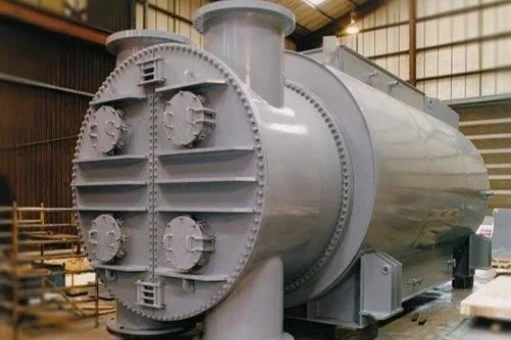
Power Plant Surface Condensers
Used for steam condensation in power plants with excellent heat transfer and seawater resistance in cooling systems.
Common Form: Straight Tubes / U-Bend Tubes / Tube Bundles
Surface Finish: Pickled & Cleaned / Bright Annealed (BA)
Temper: Annealed (O60)

Shell & Tube Heat Exchangers
Widely used for industrial heating and cooling with stable thermal performance and easy fabrication.
Common Form: Straight Tubes / U-Bend Tubes
Surface Finish: Pickled & Cleaned / Mill Finish
Temper: Annealed (O60)

HVAC Chillers & Cooling Systems
Applied in air conditioning and chilled water systems with good formability and high efficiency.
Common Form: Coil Tubes / Straight Tubes
Surface Finish: Bright Annealed (BA)
Temper: Annealed (O60)

Refrigeration Equipment
Used in condensers and evaporators with excellent brazing performance and heat transfer efficiency.
Common Form: Coil Tubes / Small Diameter Straight Tubes
Surface Finish: Bright Annealed (BA) / Pickled & Cleaned
Temper: Annealed (O60)

Industrial Oil Coolers
Used in hydraulic and lubrication cooling systems with stable operation and good corrosion resistance.
Common Form: Straight Tubes / U-Bend Tubes
Surface Finish: Pickled & Cleaned
Temper: Annealed (O60)

Process Heat Recovery Systems
Used in energy recovery systems with reliable conductivity and long service life.
Common Form: Straight Tubes / U-Bend Tubes
Surface Finish: Mill Finish / Pickled & Cleaned
Temper: Annealed (O60)
Request Quotation for My Project
Comparison – C12200 vs Other Heat Exchanger Tube Alloys
| Property | C12200 (DHP Copper) | C44300 (Admiralty Brass) | C68700 (Aluminum Brass) | C70600 (90/10 Cu-Ni) | C71500 (70/30 Cu-Ni) |
| Thermal Conductivity | Excellent | Good | Good | Medium | Medium |
| Corrosion Resistance (Freshwater) | Good | Good | Very Good | Good | Good |
| Corrosion Resistance (Seawater) | Limited | Moderate | Good | Excellent | Excellent |
| Biofouling Resistance | Low | Medium | Medium | Good | Excellent |
| Mechanical Strength | Medium | Medium | Medium-High | High | Higher |
| Dezincification Resistance | N/A | Moderate | Excellent | N/A | N/A |
| Cost Level | Low | Low-Medium | Medium | Medium | High |
| Fabrication (Bending / Expansion) | Excellent | Good | Good | Good | Moderate |
| Typical Applications | HVAC, refrigeration, freshwater exchangers | Condensers, marine cooling (mild) | Marine condensers, desalination, power plants | Marine systems, seawater coolers | Offshore, severe seawater service |
C12200: Best for HVAC, refrigeration, and freshwater heat exchangers requiring high thermal efficiency.
C44300: Cost-effective choice for general condensers and mild marine environments.
C68700: Improved seawater corrosion resistance for desalination and marine cooling systems.
C70600: Reliable seawater service alloy for marine and offshore cooling systems.
C71500: Premium alloy for severe seawater and offshore environments with maximum corrosion resistance.
Testing & Quality Inspection

| Inspection Item | Method / Standard | Description |
| Eddy Current Testing | ASTM E243 | 100% non-destructive testing to detect surface and subsurface defects |
| Hydrostatic Test | ASTM B111 | Pressure test to ensure leak-free performance under operating conditions |
| Dimensional Inspection | ASTM B111 | Verification of OD, wall thickness, length, and straightness |
| Surface Inspection | Visual / Manual | Check for cracks, scratches, pits, and surface defects |
| Chemical Composition Test | Spectrometric Analysis | Ensure compliance with C12200 material requirements |
| Mechanical Testing | Tensile Test | Verify tensile strength, yield strength, and elongation |
| Hardness Test | Vickers / Brinell | Confirm material hardness in annealed condition |
| PMI Testing (Optional) | Positive Material Identification | Ensure correct material grade for critical applications |
Request Mill Test Certificate (MTC)
Copper Heat Exchanger Tubes Package

| Packaging Stage | Material / Method | Purpose |
|---|---|---|
| Individual Tube Protection | Anti-rust VCI paper + plastic end caps | Prevents moisture, dust, and scratches on copper tube heat exchanger inner surfaces. |
| Bundling | Nylon straps + wooden spacers | Keeps copper heat exchanger tube OD 19mm, 1 inch, or 5/8 inch sizes organized and vibration-free. |
| Moisture Barrier | Thick PE film wrap (heat-shrunk) | Blocks humidity during long sea voyages to copper heat exchanger tube Germany or Saudi Arabia. |
| Outer Packing | Export-grade plywood cases or steel-banded wooden crates | Withstands stacking and rough handling. Each crate labeled with PO number, alloy (e.g., SB111 C70600), and quantity. |
| Documentation | Packing list + Mill Test Certificate (MTC) attached outside | Customs clearance support for copper heat exchanger tube stockist and distributor partners. |
For U-Bundle Orders: U tube heat exchanger and U tube bundle heat exchanger are placed in dedicated steel jigs inside the crate to prevent bending radius distortion.
Our Factory & Equipment

| Equipment Type | Specification / Capability | Quality Impact |
|---|---|---|
| Horizontal Continuous Casting Line | 10-ton capacity | Produces homogeneous copper alloy tube for heat exchanger billets with zero porosity. |
| Three-Roll Piercing Mill | Up to 60mm OD | Precision wall thickness control for heat exchanger tube wall thickness as low as 0.5mm. |
| Cold Drawing Bench | 5 draws in sequence | Achieves tight tolerances on copper heat exchanger tube length and heat exchanger pipe diameter. |
| Straightening & Cutting Line | CNC servo-controlled | Burr-free cutting for copper heat exchanger tube 3/4 inch and 1 inch to exact project lengths. |
| U-Bending Machine | CNC mandrel type | Produces u tube condenser and U tube bundle heat exchanger without kinking or ovality. |
| Eddy Current Tester | NDT (Non-Destructive Testing) | 100% inspection of C70600 tube and C71500 tube for pinholes or cracks per ASTM B111 pdf standards. |
| Hydrostatic Tester | Up to 200 bar | Validates heat exchanger tube expansion and tube rolling integrity. |
| Spectrometer | Optical emission (OES) | Confirms chemical composition of ASME SB111, EN 12451, and JIS H3300 grades on every batch. |
Our Certifications & Compliance:
ASTM B111 pdf and ASME SB111 pdf full traceability.
ISO 9001:2015 quality management system.
Third-party inspection accepted: SGS, BV, Lloyds, or TUV.
Copper heat exchanger tube life expectancy testing reports available upon request.
Get Fast Quote & Logistics Plan
FAQ
What is ASTM B111 C12200 used for?
It is used for heat exchanger and condenser tubes in HVAC, refrigeration, power plants, and industrial cooling systems where high thermal conductivity is required.
Is C12200 suitable for seawater service?
No. C12200 is mainly designed for freshwater and non-aggressive environments. For seawater applications, copper-nickel alloys such as C70600 or C71500 are recommended.
What is the advantage of C12200 copper tubes?
C12200 offers very high thermal conductivity, excellent formability, and low fabrication cost, making it ideal for efficient heat transfer systems.
What tube forms can be supplied?
It can be supplied in straight tubes, U-bend tubes, coil tubes, and finned tubes depending on the heat exchanger design requirements.
Can ASTM B111 C12200 tubes be bent or expanded?
Yes. In annealed condition, C12200 has excellent ductility and is suitable for bending, U-bending, flaring, and tube sheet expansion.
What surface finishes are available?
Common finishes include bright annealed (BA), pickled & cleaned, mill finish, and protective coating for storage and transport.
What tests are performed before delivery?
Each tube can be tested by eddy current testing (ASTM E243), hydrostatic pressure testing, and dimensional inspection.
What certifications are available?
Mill Test Certificate (MTC) is standard, and EN 10204 3.1 certification can be provided upon request.
What is the typical supply condition?
Tubes are usually supplied in annealed (O60) condition to ensure maximum formability for fabrication and installation.
What industries use ASTM B111 C12200 tubes?
They are widely used in HVAC systems, condensers, evaporators, power plant heat exchangers, and industrial cooling equipment.
Hot Tags: astm b111 c12200 copper heat exchanger tube, China astm b111 c12200 copper heat exchanger tube manufacturers, suppliers, factory, copper
You Might Also Like


Send Inquiry