

When sourcing tubes for heat exchangers, condensers, or cooling systems, two common options under the ASTM B111 standard are C68700 (Arsenical Aluminum Brass) and C12200 (Phosphorized Copper). Choosing the wrong tube can lead to unexpected corrosion, frequent maintenance, and premature system replacement.
So, which alloy is right for your application? This detailed comparison will help you understand the differences and make an informed decision.
What Are the Chemical Compositions of C68700 and C12200?
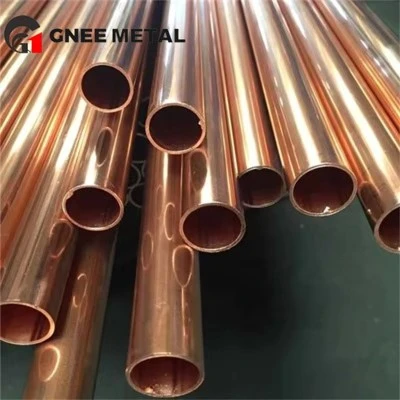
The fundamental difference between these two alloys lies in their chemistry. ASTM B111 C68700 is a brass-based alloy (copper-zinc with aluminum and arsenic), while C12200 is commercially pure copper with a small amount of phosphorus.
| Element | ASTM B111 C68700 (Aluminum Brass) | C12200 (Phosphorized Copper) |
|---|---|---|
| Copper (Cu) | 76.0 - 79.0% | 99.9% min |
| Zinc (Zn) | Remaining (approx. 20.5%) | - |
| Aluminum (Al) | 1.8 - 2.5% | - |
| Arsenic (As) | 0.02 - 0.06% | - |
| Phosphorus (P) | - | 0.015 - 0.040% |
| Other Elements | 0.3% max | 0.1% max |
Key insight: C12200 is nearly pure copper, while C68700 is a complex engineered alloy designed specifically for seawater applications.

Which Alloy Offers Better Corrosion Resistance for Your Application?
Corrosion resistance is often the #1 concern for engineers selecting heat exchanger tubes.
ASTM B111 C68700 was specifically developed for seawater and brackish water service. The aluminum content helps form a protective oxide film, while the arsenic addition prevents dezincification - a common failure mode in brass alloys.
C12200, being pure copper, offers excellent corrosion resistance in fresh water, steam, and non-aggressive environments. However, it performs poorly in seawater or fluids containing sulfides.
| Corrosion Environment | ASTM B111 C68700 | C12200 |
|---|---|---|
| Clean Fresh Water | Good | Excellent |
| High-Velocity Seawater | Excellent | Poor (rapid erosion) |
| Low-Velocity Seawater | Fair (risk of pitting) | Poor |
| Steam / Condensate | Fair | Excellent |
| Sulfide-Bearing Fluids | Poor | Very Poor |
| Ammonia Environments | Poor | Fair |
Verdict: For seawater, choose C68700. For fresh water or steam, choose C12200.
How Do Mechanical Properties Compare Between C68700 and C12200?
Mechanical properties determine how well a tube withstands pressure, vibration, and installation stresses.
| Property | ASTM B111 C68700 | C12200 |
|---|---|---|
| Tensile Strength (min, psi) | 50,000 | 40,000 |
| Yield Strength (min, psi) | 18,000 | 12,000 |
| Elongation (min, %) | 30 | 35 |
| Hardness (Rockwell F) | 60 - 80 | 40 - 65 |
| Thermal Conductivity (W/m·K) | ~120 | ~380 |
ASTM B111 C68700 is significantly stronger than C12200 - approximately 25% higher tensile strength. This means C68700 tubes can withstand higher operating pressures and are more resistant to vibration-induced fatigue.
However, C12200 has much higher thermal conductivity (about 3x higher), making it more efficient for heat transfer in clean applications.
Which Alloy is Easier to Install, Bend, and Weld?
Installation costs can significantly impact your project budget.
ASTM B111 C68700: Has good formability but requires proper heat treatment after bending to prevent stress corrosion cracking. Welding is difficult and not recommended - use roller expansion or brazing instead.
C12200: Excellent formability and weldability. This alloy can be bent, flared, and welded with standard procedures. It is the preferred choice for complex tube assemblies and field repairs.
Installation tip: If your design requires extensive welding or tight U-bends, C12200 is much easier to work with. For roller-expanded straight tubes, both alloys perform well.
What About Cost - Which One Saves You More Money?
Cost is always a consideration, but remember to factor in total lifecycle cost, not just purchase price.
| Cost Factor | ASTM B111 C68700 | C12200 |
|---|---|---|
| Raw Material Cost | Moderate | Lower |
| Installation Cost | Moderate (requires care) | Lower (easier to work) |
| Expected Lifespan (Seawater) | 15-25 years | 1-5 years |
| Expected Lifespan (Fresh Water) | 15-20 years | 20-30+ years |
For fresh water applications: C12200 is more economical overall due to lower material cost and longer lifespan.
For seawater applications: ASTM B111 C68700 is actually cheaper in the long run because C12200 will fail rapidly, requiring frequent retubing.
When Should You Choose C12200 Over C68700?
C12200 is the better choice in these scenarios:
Fresh water cooling (rivers, lakes, cooling towers) - C12200 lasts decades
Steam condensers in clean environments - excellent resistance to steam-side corrosion
HVAC chillers using fresh water or glycol - high thermal conductivity improves efficiency
Applications requiring extensive welding - C12200 is easily welded
Low-pressure applications where strength is not critical
When Must You Choose C68700 Instead?
If your application involves seawater, brackish water, or any high-velocity water with entrained air, you must choose ASTM B111 C68700. C12200 will suffer from rapid erosion corrosion and impingement attack, potentially failing within months rather than years.
Specific applications requiring C68700 include:
Power plant condensers using seawater or brackish water
Marine heat exchangers and auxiliary coolers
Desalination plant pre-heaters
Chemical plant coolers with saline cooling water
Offshore platform cooling systems
Comparison: Power Plant vs. HVAC Chiller
Scenario 1: Coastal Power Plant (Seawater Cooling)
Using C12200 → Tubes fail within 6-12 months due to erosion corrosion
Using ASTM B111 C68700 → Tubes last 15-20 years with proper maintenance
Winner: C68700
Scenario 2: Office Building HVAC (Cooling Tower Water)
Using C12200 → Tubes last 20-30 years, excellent heat transfer
Using ASTM B111 C68700 → Also works but lower thermal conductivity and higher cost
Winner: C12200
100% Inspection Per ASTM B111 / C68700 – Customer Witnessed
Every tube in this lot has passed third-party witnessed inspection per ASTM B111 standard for C68700 alloy. Below are actual photos from customer-onsite inspection, including eddy current testing and dimensional verification.
Inspection items verified:
• Eddy current testing (ECT) – no through-wall defects
• Outer diameter & wall thickness – within ±0.02mm tolerance
• Surface finish & temper (O61) – conforms to ASTM
• Hardness & chemical composition – certified.


Export-Ready Packing – Anti-Rust & Wooden Case
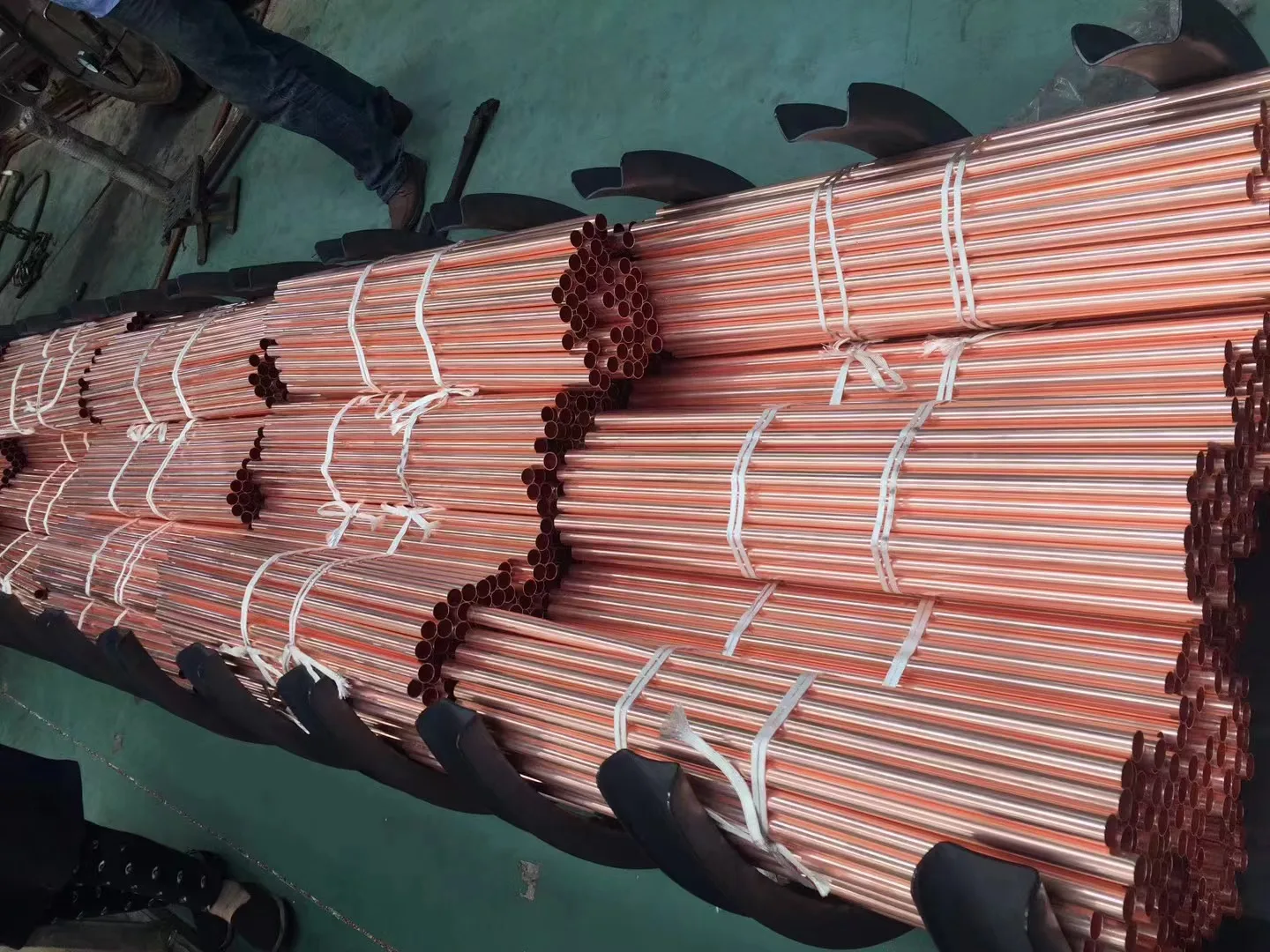
After passing inspection, all tubes are packed according to export standards and customer-specific requirements. The packing process is documented below to ensure traceability and damage-free delivery.
Packing steps shown in video & images:
1. Tube cleaning & drying
2. Plastic end caps on both ends
3. VCI anti-rust paper wrapping
4. Bundle strapping with moisture barrier film
5. Plywood wooden case (ISPM-15 compliant) with foam padding
6. Labeling with ASTM grade, lot number, and inspection stamp


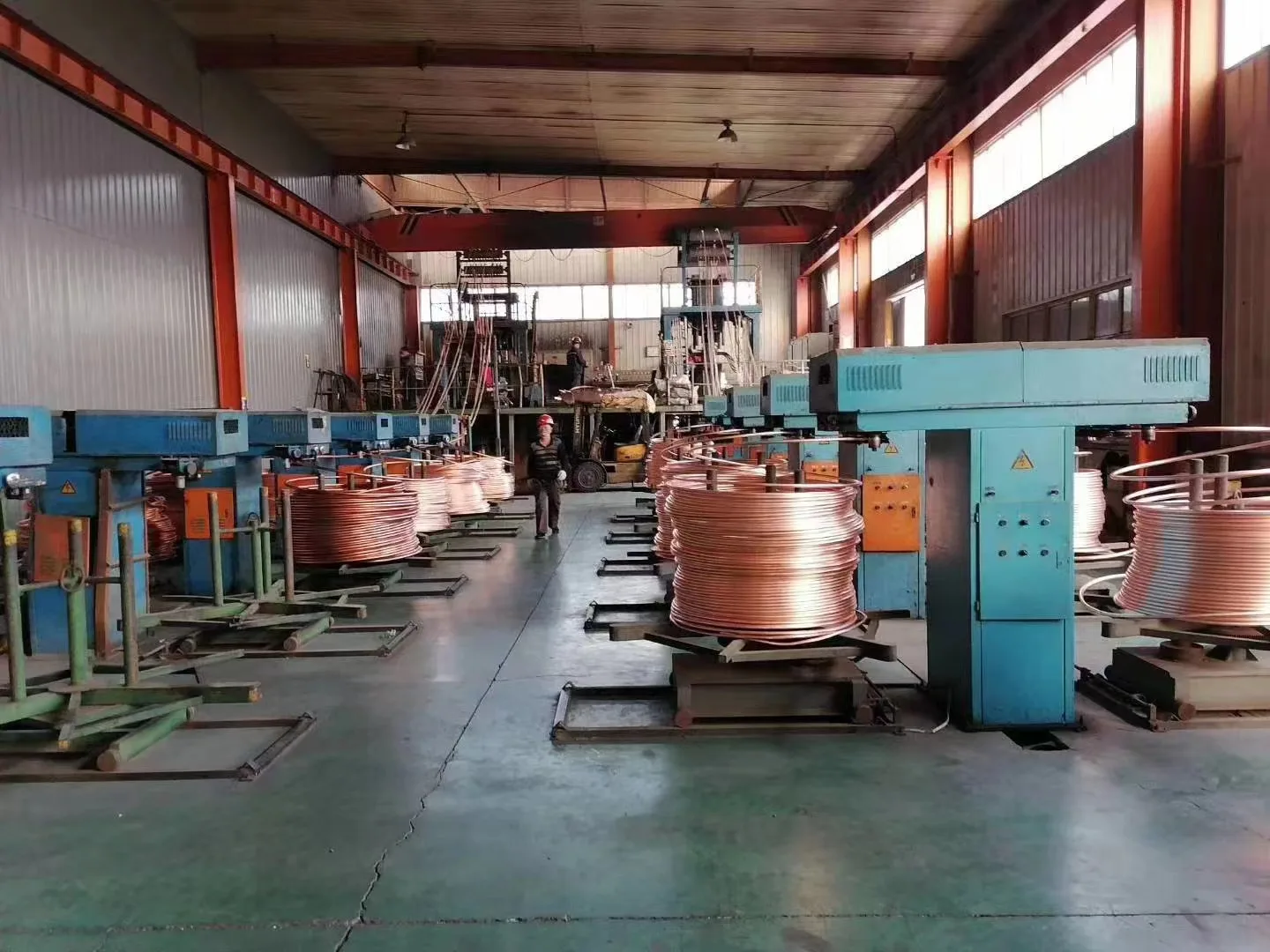
Our Factory & Equipment
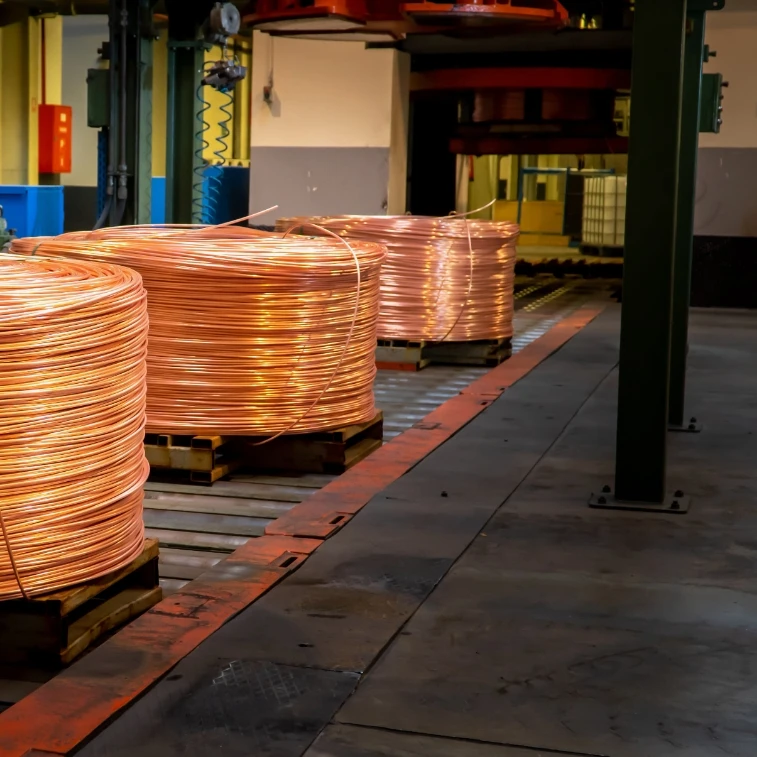
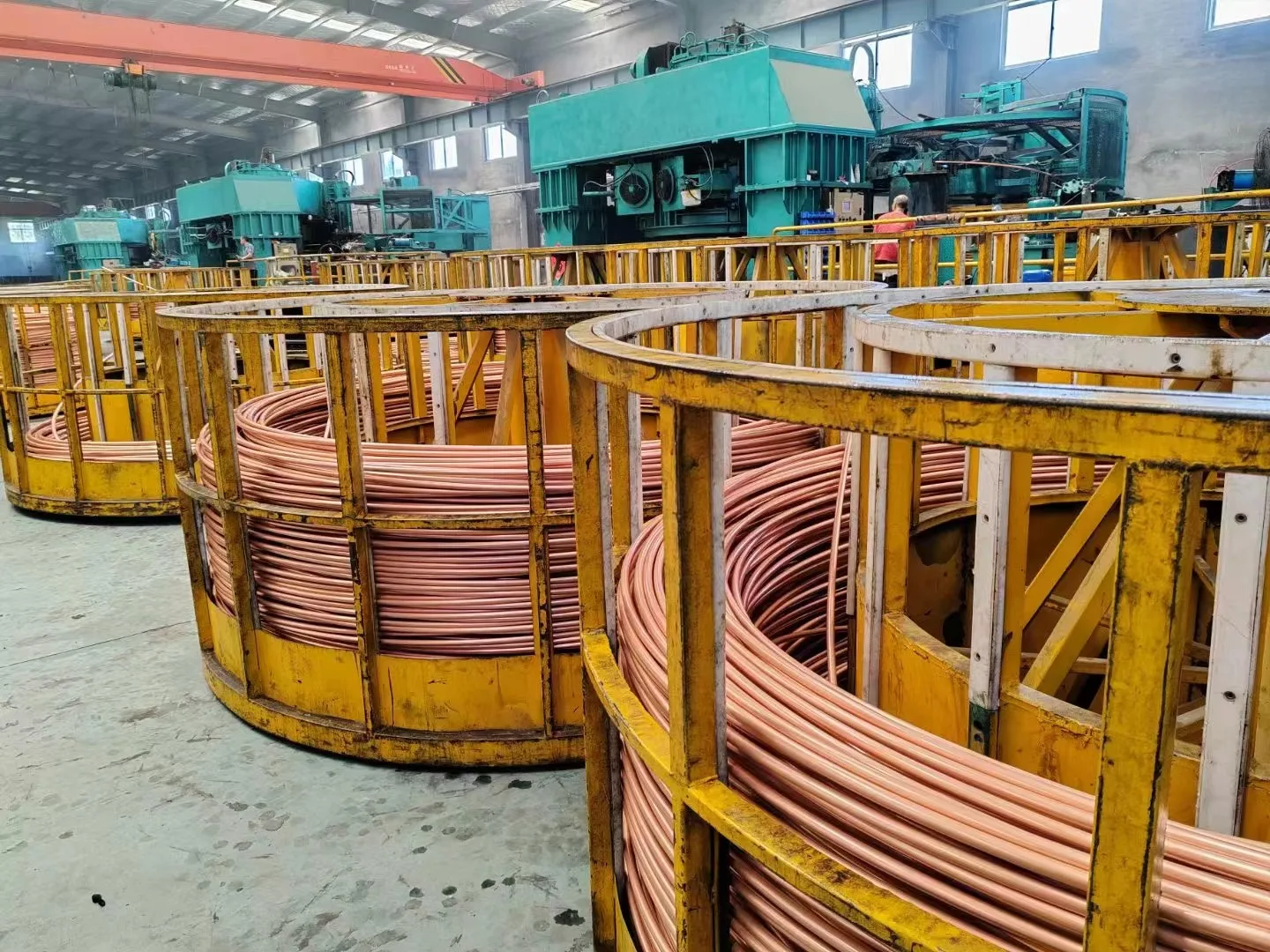
All ASTM C68700 tubes are produced and inspected on our in-house equipment, allowing full process control from billet casting to final packing.
Key equipment used for this lot:
• Induction melting furnace – precise alloying (Cu + Zn + Al + As)
• Horizontal continuous casting – uniform billet structure
• Extrusion press (800T / 1630T) – seamless tube forming
• Cold drawing bench (5–40m) – dimensional accuracy to ±0.02mm
• Online eddy current tester (FOERSTER / MAC) – 100% NDT
• Ultrasonic wall thickness gauge – real-time monitoring
• Annealing furnace (controlled atmosphere) – temper O61
In-house metrology: Micrometers, pin gauges, optical comparator, hardness tester (HV/HRB)
All equipment is calibrated quarterly. Production records are traceable by lot number.
Copper & Copper Alloy Products – Supply Range
| Product Form | Common Alloys / Grades | Size Range | Standards | Typical Applications |
|---|---|---|---|---|
| Tube / Pipe | C12200, C11000, C68700, C70600, C71500, C44300, C27000 | OD: 4mm – 219mm Wall: 0.5mm – 20mm Length: up to 15m |
ASTM B68, B75, B111, B280, B359, B466 | Heat exchangers, condensers, HVAC, plumbing, oil coolers |
| Plate / Sheet | C11000, C12200, C26000, C26800, C52100, C68700 | Thk: 0.5mm – 50mm Width: up to 1200mm Length: up to 4000mm |
ASTM B152, B169, B103, B465 | Electrical parts, roofing, gaskets, industrial panels |
| Rod / Bar | C11000, C26000, C36000, C46400, C48500, C63000 | Dia: 3mm – 120mm Length: 1m – 6m (or custom) |
ASTM B16, B124, B138, B150, B453 | Valve stems, shafts, fasteners, machined components |
| Wire | C11000, C16200, C17500, C26000, C52100, C64700 | Dia: 0.1mm – 12mm Coil weight: up to 100kg |
ASTM B1, B2, B3, B197, B206, B624 | Welding electrodes, electrical conductors, springs, mesh |
| Strip / Foil | C11000, C19400, C26000, C26800, C52100, C70250 | Thk: 0.05mm – 3.0mm Width: 5mm – 600mm |
ASTM B36, B465, B694, B888 | Connectors, terminals, battery tabs, shielding, stamping parts |
Check Today's Stock & Lead Time


