

C11000 copper is formally known as Electrolytic Tough Pitch (ETP) copper. It is the most common grade of commercially pure copper used in global electrical and industrial applications. This material is defined by a minimum copper purity of 99.90% and a controlled oxygen content of 0.02% to 0.04%. For procurement managers and engineers, it is the industry benchmark for high electrical conductivity ( ≥ 101% IACS) and thermal efficiency. You can view our full range of dimensions and tempers on the C11000 product overview.
What is the chemical makeup of C11000 copper?
The "Tough Pitch" designation in c11000 copper refers to the specific oxygen level maintained during the refining process. This oxygen is not an accidental impurity; it is intentionally left in the metal to scavenge and oxidize residual elements like sulfur, which would otherwise severely degrade the material's conductivity. Because of this high purity, it is often cross-referenced as t2 copper in Chinese standards or cu-etp / cw004a in European markets.
For a comprehensive element-by-element breakdown, including the ppm limits for lead and iron, refer to our guide on the chemical composition of C11000 alloy. Understanding this chemistry is vital when calculating the performance of a c11000 electrical copper busbar under heavy load.
C11000 (Cu-ETP) Chemical & Physical Data
| Property | Specification | Industrial Value |
| Copper Purity | Cu + Ag | 99.90% Min |
| Oxygen Content | O | 0.02% - 0.04% |
| Conductivity | Electrical | 101% IACS Min |
| Density |
ρρ |
8.89 g/cm³ |
| Thermal Conductivity | k | 388 W/m·K |
What are the primary mechanical c11000 copper properties?
In terms of fabrication, c11000 material is prized for its extreme ductility and cold-working capabilities. In its half-hard state, often called cu etp r240, it balances tensile strength with the flexibility required for complex forming. This makes it the ideal choice for C11000 copper bar used in power distribution systems.
One critical concern for designers is whether the material can withstand tight-radius bends without fracturing. As explored in our technical note on whether C110 copper is bendable, C11000 is highly resilient, but the specific temper (H02, H04) must be matched to the fabrication process.
C11000 Hardness and Tensile Strengths
| Temper | Hardness (HV) | Tensile Strength (MPa) | Elongation (%) |
| Soft (O60) | 40 - 65 | 200 - 250 |
≥ 35% |
| Half-Hard (H02) | 65 - 95 | 240 - 300 |
≥ 15% |
| Hard (H04) | 95 - 120 | 290 - 360 |
≥ 4% |
Why is C11000 often compared to oxygen-free copper?
While c11000 copper is the standard, it has a technical "weakness": the oxygen content makes it susceptible to hydrogen embrittlement. If you heat C11000 above 400°C in a hydrogen-rich atmosphere, the material will crack internally. This is why engineers must decide between C11000 and C10100 when high-temperature vacuum brazing is involved.
For a deeper dive into the physics of this reaction, read our detailed report on whether is C11000 copper oxygen free. For the vast majority of custom cut C11000 copper plate applications in the thermal management and electrical sectors, C11000 is the most cost-effective and high-performing choice.
FAQ
1. Is C11000 a pure copper?
Yes. With a purity of 99.90%, it is considered commercially pure. It is the most common grade for C11000 copper sheet used in architectural and electrical shielding.
2. What is the equivalent of C11000 in ASTM standards?
C11000 is the UNS designation. It is governed by standards such as ASTM B152 for plate/sheet and ASTM B187 for busbars.
3. Does the oxygen affect the electrical conductivity?
Actually, it helps. By oxidizing impurities, the oxygen ensures the copper matrix stays pure, allowing C11000 to consistently exceed 101% IACS conductivity.
4. Why is C11000 cheaper than C10100?
C11000 is the primary product of electrolytic refineries. Oxygen-free grades like C10100 require expensive vacuum melting, which significantly increases the c11000 copper price.
5. Can C11000 be used for transformer coils?
Yes, transformer C11000 copper coil is an industry standard due to its excellent thermal dissipation and low resistive loss.
6. Is C11000 the same as C110?
Yes. C110 is the shorter 3-digit trade name for the 5-digit uns c11000 designation. They refer to the exact same electrolytic tough pitch material.
Request Custom Machining Quote
Product Specifications & Range
| Product Category | Common Grades (Alloys) | Size Range (Dimensions) | Standards |
| Copper Rods | C11000, C12200, C10200, C14500 | Diameter: 3mm – 400mm<br>Shape: Round, Hexagonal, Square | ASTM B187, EN 12163 |
| Copper Tubes | C11000, C12200 (DHP), C10200 (OF), C27200 | OD: 2mm – 219mm<br>Wall Thickness: 0.2mm – 20mm | ASTM B280, EN 12735 |
| Copper Plates | C11000 (ETP), C10200, C12200 | Thickness: 0.1mm – 150mm<br>Width: Up to 2500mm | ASTM B152, DIN 1751 |
| Copper Wires | C11000, C10200, Brass Wire | Diameter: 0.05mm – 10.0mm<br>Form: Spool or Coil | ASTM B3, EN 13602 |
| Copper Strips | C11000, C12200, C26800 (Brass) | Thickness: 0.05mm – 3.0mm<br>Width: 5mm – 610mm | ASTM B19, EN 1652 |
Customization Note:
Custom Dimensions: We provide precision cutting and slitting services to meet your specific project requirements.
Tempers Available: Soft (O), Half-Hard (H02), Full Hard (H04), and Spring Hard (H08).
Surface Finish: Bright annealing, Polished, or Plated (Tin, Silver, Nickel) upon request.
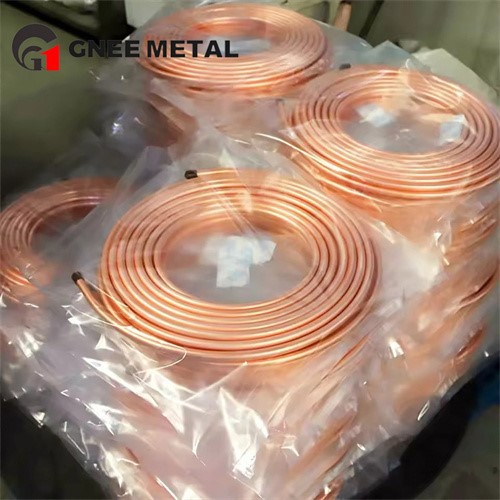
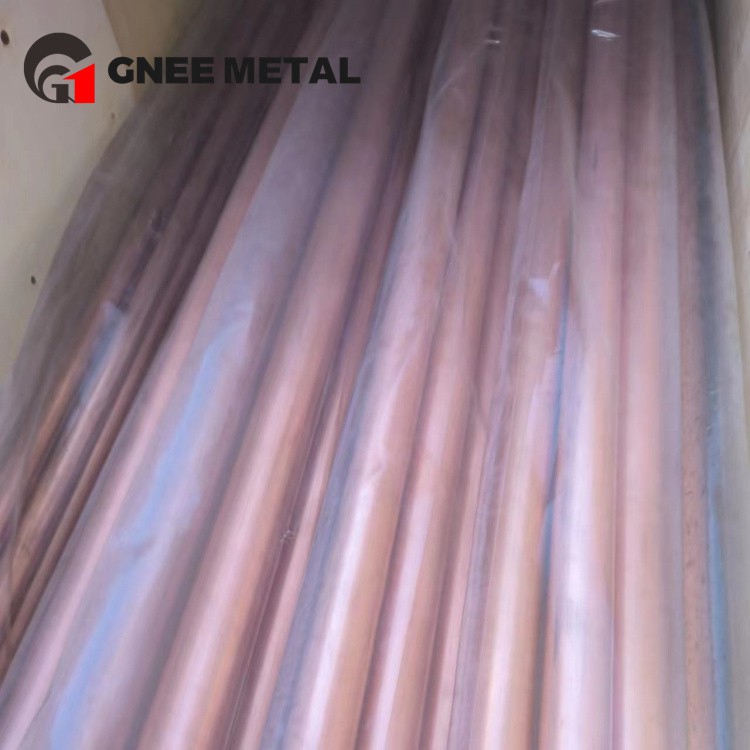
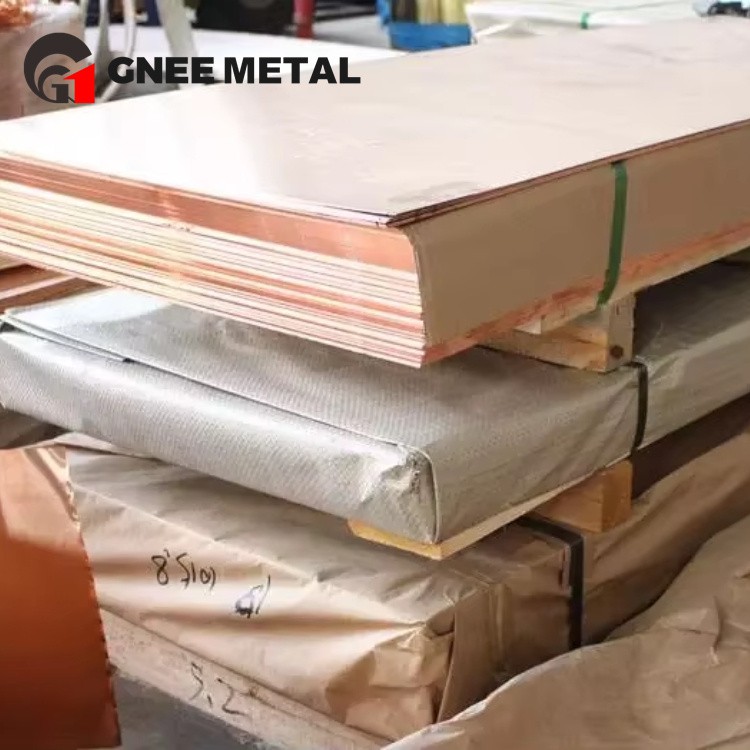
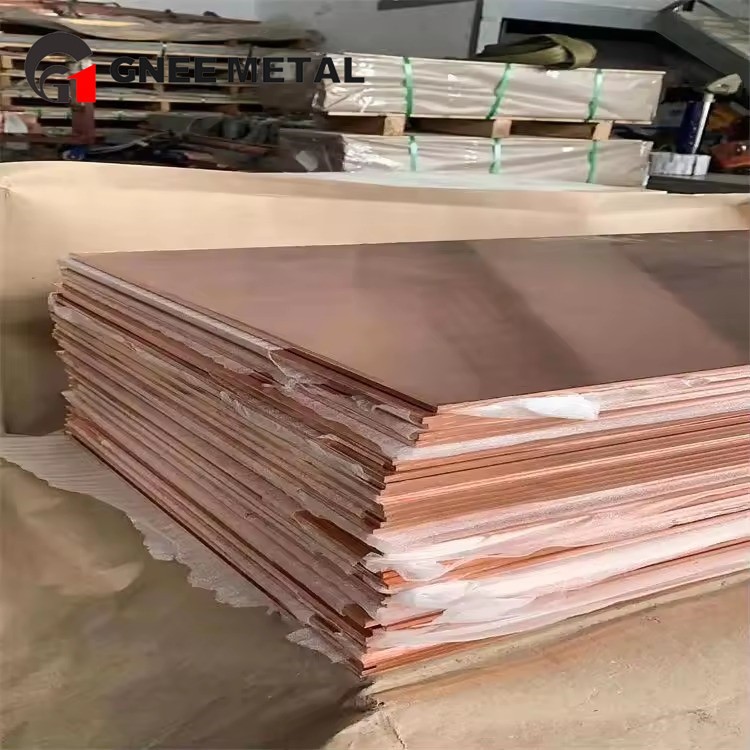
Industrial-Grade Export Packaging
Maximum protection against oxidation, moisture, and transit damage.
1. Anti-Oxidation Protection
VCI Paper & Moisture-Proof Film: Every order is vacuum-sealed or wrapped in anti-corrosion materials to ensure the copper remains bright and tarnish-free during sea freight.
2. Reinforced Structural Support
Seaworthy Wooden Crates: We use reinforced, fumigation-free wooden cases (ISPM-15) and steel strapping for rods, tubes, and heavy plates to prevent bending or surface scratches.
3. Secure Handling & Loading
Forklift-Ready Pallets: All materials are secured on standardized export pallets for easy unloading and maximum stability in containers.
4. Clear Identification
Professional Labeling: Each package includes detailed labels with heat numbers, specifications, and net weight for efficient inventory management.

Advanced Manufacturing & Quality Control
1. Core Production Equipment
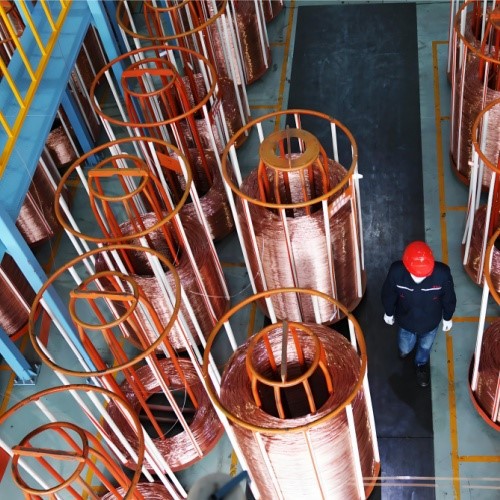
Up-casting & Continuous Casting Lines: Ensures high-purity oxygen-free copper rods and wires with uniform grain structure.
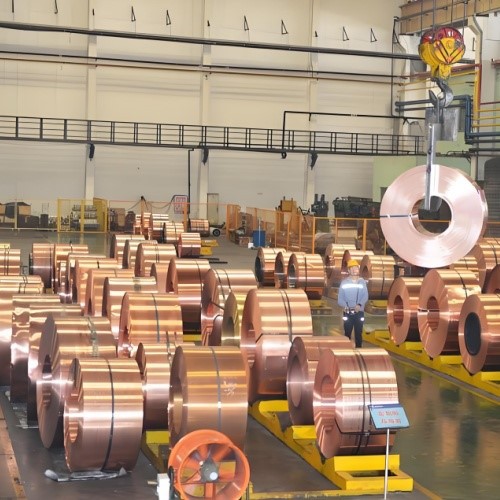
High-Precision Cold/Hot Rolling Mills: Automated thickness control for copper plates and strips with tolerances within ±0.01mm.
Large-Scale Extrusion & Drawing Machines: Capable of producing seamless copper tubes and rods in diverse diameters and shapes.
Atmospheric Controlled Annealing Furnaces: Bright annealing process to achieve specific tempers (Soft, Half-hard, Hard) without surface oxidation.
2. In-House Testing Center
Direct-Reading Spectrometers: Instant chemical composition analysis to guarantee Cu purity and precise alloying (Brass, Bronze, etc.).
Universal Tensile Testers: Verifying mechanical properties including tensile strength, elongation, and yield strength.
Eddy Current & Ultrasonic Testing: 100% non-destructive inspection for tubes and rods to detect internal cracks or flaws.
Conductivity & Hardness Testers: Ensuring electrical conductivity (IACS) and Vickers/Rockwell hardness meet international standards (ASTM, EN, DIN).



Get Fast Quote & Logistics Plan


