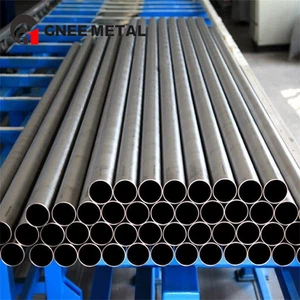
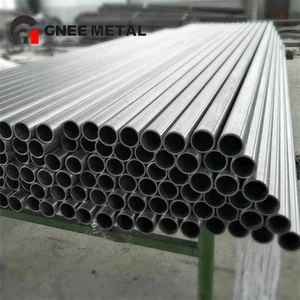
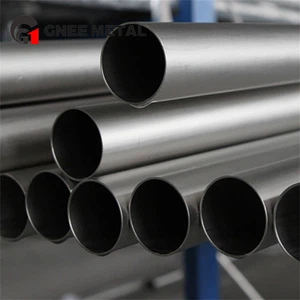
White copper tubes are copper-nickel alloy-based metal tubes, so called because of their silvery-white metallic luster. This kind of pipe combines the excellent processing performance of copper and the corrosion-resistant characteristics of nickel perfectly, and plays an irreplaceable role in the fields of ocean engineering, chemical industry, energy, etc., which is called the "corrosion-resistant pioneer" in industrial materials.
I. Material Composition and Classification
(a) Core Alloy Composition
The basic composition of white copper pipe is copper (Cu) and nickel (Ni), which can be divided into various models according to the different nickel content:
B10 White Copper Pipe: Containing about 10% nickel and 90% copper, it's one of the most common white copper pipes, with balanced comprehensive performance.
B30 white copper tubes: containing about 30% nickel and 70% copper, they are more resistant to corrosion and are especially suitable for extreme corrosive environments.
Other models: such as B20, BFe10 - 1 - 1 (containing a small amount of iron), etc., by adding iron, manganese, zinc and other elements to optimize performance.
(ii) Classification
Classification by application:
White copper tubes for condensing: used in heat exchangers, condensers and other equipment, utilizing its good thermal conductivity and corrosion resistance.
Structural copper tubes: used in mechanical structures, piping systems, emphasizing strength and fatigue resistance.
Categorized by production process:
Extruded Copper White Tubes: for large diameter, thick walled tubes with high strength.
Drawn copper tubes: high precision, smooth surface, mostly used for precision instruments or small-diameter pipes.
Second, the core performance advantages
(a) excellent corrosion resistance
seawater corrosion resistance: the corrosion rate in seawater is only 1/20 of ordinary carbon steel, even lower than stainless steel, so it becomes the "standard" material for marine engineering. For example, seawater cooling pipes for ships and offshore platform water transfer systems commonly use B10 white copper pipes, which can avoid the risk of leakage caused by seawater corrosion.
Chemical media resistance: good resistance to chemical solutions such as sulfuric acid, hydrochloric acid, caustic soda, etc. When used in the chemical industry for conveying corrosive media (such as acidic solutions in fertilizer production), the service life is far beyond that of ordinary metal pipes.
Resistance to stress corrosion cracking: in the chloride-containing environment (such as coastal industrial zones), it is not easy to stress corrosion cracking, while stainless steel is prone to "intergranular corrosion" problems in such environments.
(B) excellent physical and mechanical properties
Thermal conductivity: thermal conductivity of about 1/3 of copper, although lower than pure copper, but better than most stainless steel, suitable for heat exchanger tubing (such as power plant condenser, air conditioning condenser).
Strength and toughness: tensile strength of up to 300 - 500MPa, elongation of more than 20%, can withstand high pressure (such as high-pressure steam piping), but also to adapt to vibration or bending conditions (such as ship shaking environment).
Temperature resistance: stable performance in the temperature range of - 200 ° C to 300 ° C, low-temperature not brittle, high-temperature oxidation resistance (nickel elements to form a dense oxide film NiO).
(C) processing and welding performance
can be cold-drawn, hot-rolled and other processes into a variety of specifications of the pipe, can also be bent, flared and other molding operations.
Welding performance is good, the use of argon arc welding, arc welding and other processes, without special flux, weld strength close to the base material.
Typical Application Scenarios
(A) Marine engineering field
Shipbuilding: as seawater cooling system piping (such as diesel engine cooling water piping), every year about 60% of the world's B10 copper alloy tubes are used in the shipbuilding industry; in the seawater desalination device of luxury cruise ships, B30 copper alloy tubes can resist the corrosion of high-concentration salt water.
Marine platforms: the seawater injection system of offshore oil drilling platforms and the water pipelines of tidal energy power stations rely on the corrosion resistance of copper alloy pipes to realize long-term stable operation.
(ii) Chemical and energy industry
Chemical equipment: in the chlor-alkali industry to transport caustic soda solution, in the fertilizer plant to transport ammonia-containing media, in the pharmaceutical plant to transport corrosive drug solution, white copper tubes can reduce the risk of media contamination (copper-nickel alloy itself is non-toxic).
Power industry: B10 copper alloy tubes are used for condensers in thermal power plants to condense steam into water, and B30 copper alloy tubes are used for seawater circulating systems in nuclear power plants to transport cooling water to ensure safe operation of equipment.
(III) Other special fields
Salt and food industry: brine conveying pipes in salt making equipment, acidic beverage conveying pipes in food processing factories, utilizing its corrosion resistance and hygiene (copper ions have certain antibacterial effect).
Instrumentation and precision instruments: used in the manufacture of pressure sensors, thermometers casing, or medical equipment in the corrosion-resistant piping, because of its high material stability.
We can provide high quality products, good service and competitive price. We have been committed to producing high quality copper products such as copper tubes, copper wires, copper plates, copper strips, copper rods and other copper products.
Mob:+8615824687445
E-mail: sales@gneesteel.com
Skype: mmkelly1314
Whatsapp/Wechat: +86 15824687445