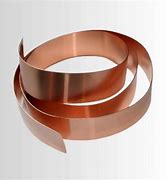
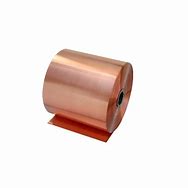
UNS C7130 Composition
UNS C71300 is a high-strength brass alloy that is comprised of copper, nickel, and tin. The alloy typically contains 65-70% copper, 18-23% nickel, and 7-9% tin. The alloy may also have trace amounts of iron, manganese, and zinc. This specific composition gives UNS C71300 excellent corrosion resistance and high strength, making it suitable for marine and industrial applications.
| Element | Content (%) |
|---|---|
| Cu | 71.25-76.5 |
| Fe | ≤ 0.20 |
| Pb | ≤0.050 |
| Mn | ≤ 1.0 |
| Ni | 23.5-26.5 |
| Zn | ≤ 1.0 |
UNS C7130 Mechanical Properties
The mechanical properties of UNS C71300 depend on the temper or condition of the alloy. The alloy generally has a tensile strength of 94 ksi, yield strength of 39 ksi, and a hardness of 180 HB. UNS C71300 also has good impact resistance and can withstand temperatures up to 500°F.
| Properties | Metric | Imperial |
|---|---|---|
| Hardness, Rockwell B (hard drawn-H80 for tubing / rolled-H04 for flat products) | 69 | 69 |
| Tensile strength (annealed) | 359 MPa | 52000 psi |
| Tensile strength (hard drawn-H80 for tubing / rolled-H04 for flat products) | 538 MPa | 78000 psi |
| Yield strength (annealed) | 103 MPa | 15000 psi |
| Elongation at break (hard drawn-H80 for tubing / rolled-H04 for flat products) | 11.00% | 11.00% |
| Elongation at break (annealed) | 40% | 40% |
| Elastic modulus (C71500 annealed) | 152 GPa | 22000 ksi |
| Poisson's ratio (C71500 annealed) | 0.325 | 0.325 |
| Machinability (based on free-cutting brass = 100) | 20 | 20 |
| Shear modulus (C71500 annealed) | 57.2 GPa | 8300 ksi |
UNS C7130 Physical Properties
In addition to its mechanical properties, UNS C71300 has good physical properties. The alloy has a density of 0.319 lb/in³, a melting point of 1982°F, and thermal conductivity of 52.7 BTU/ft²/hr/°F. The alloy is also non-magnetic and has good electrical conductivity.
UNS C7130 Thermal Properties
| Properties | Metric | Imperial |
|---|---|---|
| Thermal expansion co-efficient (@20-300°C/68-572°F) | 16.2 µm/m°C | 9.00 µin/in°F |
| Thermal conductivity | 32.9 W/mK | 0.0900 BTU in/hr.ft².°F |
UNS C7130 Uses
Due to its excellent corrosion resistance, UNS C71300 is widely used in marine applications, such as seawater piping, condenser tubes, valve stems, and pump shafts. Due to its high-strength properties, the alloy is also used in industrial applications, such as valve bodies, springs, gears, and fasteners. In addition, the alloy is commonly used in musical instruments, such as cymbals, due to its acoustic properties.
UNS C7130 Corrosion Resistance
One of the critical advantages of UNS C71300 is its excellent corrosion resistance. The alloy can withstand various types of corrosion, including corrosion caused by seawater, brackish water, and industrial chemicals. UNS C71300 has good pitting and crevice corrosion resistance and can maintain performance even in harsh environments.
UNS C7130 Heat Treatment
UNS C71300 can be heat treated to enhance its mechanical properties. The alloy can be annealed at 1000-1100°F for 1-2 hours, followed by water quenching. This treatment can improve the alloy's ductility and impact toughness. Further, UNS C71300 can be aged by heating at 750-800°F for 4-16 hours, increasing the alloy's strength.
UNS C7130 Machining
UNS C71300 has good machinability, making it easy to work with. The alloy can be machined using standard machine tools, producing a good surface finish. However, the alloy contains nickel, which can cause machining difficulties if not adequately cooled.
UNS C7130 Welding
UNS C71300 is weldable using various welding techniques, such as gas tungsten arc welding (GTAW), gas metal arc welding (GMAW), and brazing. However, different precautions must be taken depending on the type of welding. For example, GTAW and GMAW require a preheating temperature of 350-450°F and post-weld heat treatment to prevent cracking.