

There is no technical difference between C11000 and 110 copper; they are the exact same material. "110" (or Alloy 110) is the traditional 3-digit trade name established by the Copper Development Association (CDA), while "C11000" is the modern 5-digit designation under the Unified Numbering System (UNS). Both refer to Electrolytic Tough Pitch (ETP) copper with a minimum purity of 99.90% and a conductivity of 101% IACS.
Whether you are sourcing for high-voltage switchgear or architectural projects, specifying C11000 electrolytic tough pitch ensures you receive the global industrial standard for high-conductivity unalloyed copper.
Why does the copper industry use two different names?
The transition from the old "110" code to the modern "C11000" was driven by the need for a standardized numbering system across all metal alloys. By adding two zeros to the end of the original CDA 110 code, the system allowed for more precise categorization in computerized inventory and procurement software.
For a procurement manager, seeing "Alloy 110" on an old blueprint is functionally the same as seeing "C11000" on a modern mill test certificate. Both names guarantee that the material meets the strict chemical limits and purity of C11000 required by ASTM B152 or B187 standards.
Grade Correlation for 110 / C11000 Copper
| Trade Name | UNS Designation | Min Copper Purity | Common Standard |
| Alloy 110 | C11000 | 99.90% | ASTM B152 |
| CDA 110 | C11000 | 99.90% | ASTM B187 |
| ETP Copper | C11000 | 99.90% | SAE J461 |
| T2 Copper | C11000 | 99.90% | GB/T 5231 |
Are the chemical specifications for 110 copper identical to C11000?
Yes. Because they are the same material, the chemical profile is governed by the same purity standards. Both contain a controlled amount of oxygen (0.02% to 0.04%) which helps remove impurities during the refining process.
Sourcing from an ISO certified C11000 manufacturer ensures that trace elements like lead or iron are kept within the strict limits required for high-current applications. When reviewing the international copper equivalent for your global supply chain, you can treat 110 and C11000 as completely interchangeable.
Table 2: Typical Chemical Composition Limits
| Element | Content (%) | Procurement Impact |
| Copper (Cu + Ag) | 99.90% Min | Core baseline for 101% IACS |
| Oxygen (O) | 0.005% - 0.04% | Optimizes the grain structure |
| Lead (Pb) | 0.005% Max | Ensures RoHS compliance |
| Iron (Fe) | 0.005% Max | Prevents spikes in electrical resistance |
How does the naming affect the procurement cost?
The naming convention itself does not influence the market value. The price of C11000 is determined by the LME copper base price and the fabrication premium for the specific form, such as a heavy C11000 copper bar or a precision sheet.
Whether your quote says "Alloy 110" or "C11000," the price is driven by volume and processing requirements. Sourcing from a china t2 copper plate factory often provides a price advantage for these materials because the high production volume for the global electronics market reduces the per-unit fabrication cost.
FAQ
1. Can I use T2 copper to replace Alloy 110?
Yes. As we explored in our guide on equivalent grades, China's T2 copper and US C11000 are functionally identical and share the same 99.90% purity baseline.
2. Is 110 copper oxygen-free?
No. Standard 110 (C11000) contains a small amount of oxygen. For applications involving high-temperature hydrogen brazing, you must upgrade to an oxygen-free grade to prevent embrittlement.
3. What is the standard temper for 110 copper bar?
The industry standard is c11000 h02 (half-hard). It provides enough structural rigidity for switchgear while remaining ductile enough for 90-degree bending.
4. Is the lead time longer for C11000 material?
No. Because C11000 is the most common industrial grade, we maintain a massive inventory of bars, sheets, and tubes to support immediate shipping for global projects.
5. Why do some vendors still use the "110" name?
"110" is a legacy trade name deeply ingrained in the industry, especially in North America. While formal paperwork will specify C11000, many machinists and distributors still use "110" for verbal communication.
6. Can I get a C11000 mill test certificate for Alloy 110 orders?
Absolutely. Since C11000 is the modern UNS code for Alloy 110, any C11000 copper sheet or bar you purchase will have a C11000 mill test certificate (MTC) that satisfies the requirements for Alloy 110.
Procurement Tip: Verify your MTC to avoid scrap
Regardless of the name used, the most important document for your quality audit is the MTC. This document proves that the material meets the 99.90% minimum purity and the 101% IACS conductivity required for high-risk infrastructure. When outsourcing custom C11000 cnc machining, always ensure the raw material batch matches the technical specs on your drawing to prevent part failure in the field.
Request a Multi-Batch Quality & Purity Assurance Plan
Product Specifications & Range
| Product Category | Common Grades (Alloys) | Size Range (Dimensions) | Standards |
| Copper Rods | C11000, C12200, C10200, C14500 | Diameter: 3mm – 400mm<br>Shape: Round, Hexagonal, Square | ASTM B187, EN 12163 |
| Copper Tubes | C11000, C12200 (DHP), C10200 (OF), C27200 | OD: 2mm – 219mm<br>Wall Thickness: 0.2mm – 20mm | ASTM B280, EN 12735 |
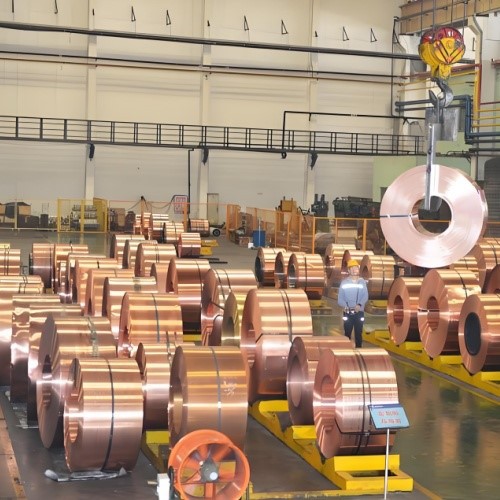
| Copper Plates | C11000 (ETP), C10200, C12200 | Thickness: 0.1mm – 150mm<br>Width: Up to 2500mm | ASTM B152, DIN 1751 |
| Copper Wires | C11000, C10200, Brass Wire | Diameter: 0.05mm – 10.0mm<br>Form: Spool or Coil | ASTM B3, EN 13602 |
| Copper Strips | C11000, C12200, C26800 (Brass) | Thickness: 0.05mm – 3.0mm<br>Width: 5mm – 610mm | ASTM B19, EN 1652 |
Customization Note:
Custom Dimensions: We provide precision cutting and slitting services to meet your specific project requirements.
Tempers Available: Soft (O), Half-Hard (H02), Full Hard (H04), and Spring Hard (H08).
Surface Finish: Bright annealing, Polished, or Plated (Tin, Silver, Nickel) upon request.
Industrial-Grade Export Packaging
Maximum protection against oxidation, moisture, and transit damage.
1. Anti-Oxidation Protection
VCI Paper & Moisture-Proof Film: Every order is vacuum-sealed or wrapped in anti-corrosion materials to ensure the copper remains bright and tarnish-free during sea freight.
2. Reinforced Structural Support
Seaworthy Wooden Crates: We use reinforced, fumigation-free wooden cases (ISPM-15) and steel strapping for rods, tubes, and heavy plates to prevent bending or surface scratches.
3. Secure Handling & Loading
Forklift-Ready Pallets: All materials are secured on standardized export pallets for easy unloading and maximum stability in containers.
4. Clear Identification
Professional Labeling: Each package includes detailed labels with heat numbers, specifications, and net weight for efficient inventory management.
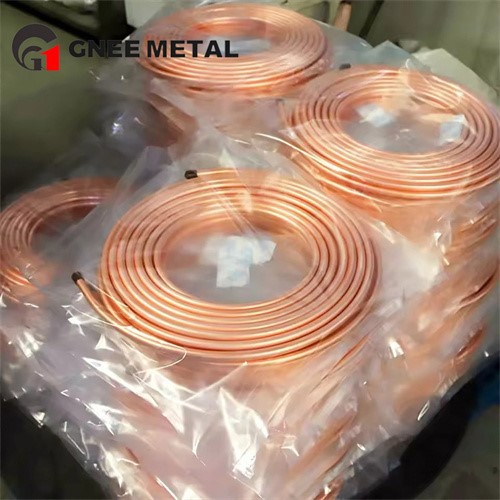

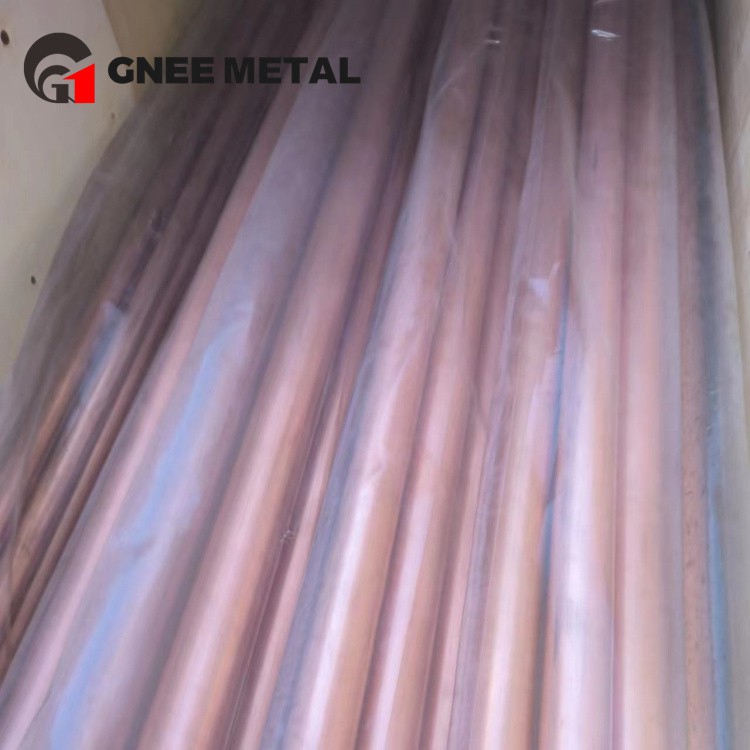
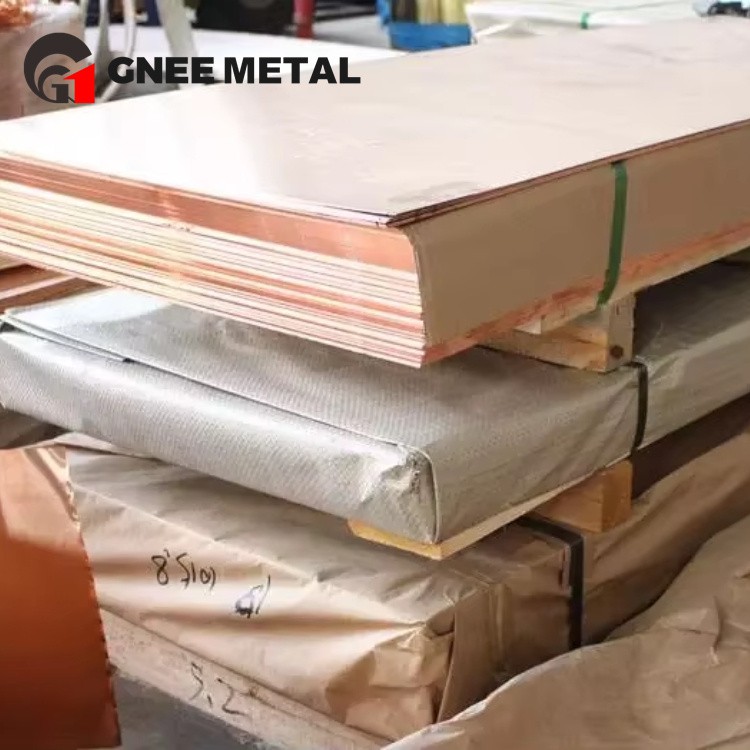
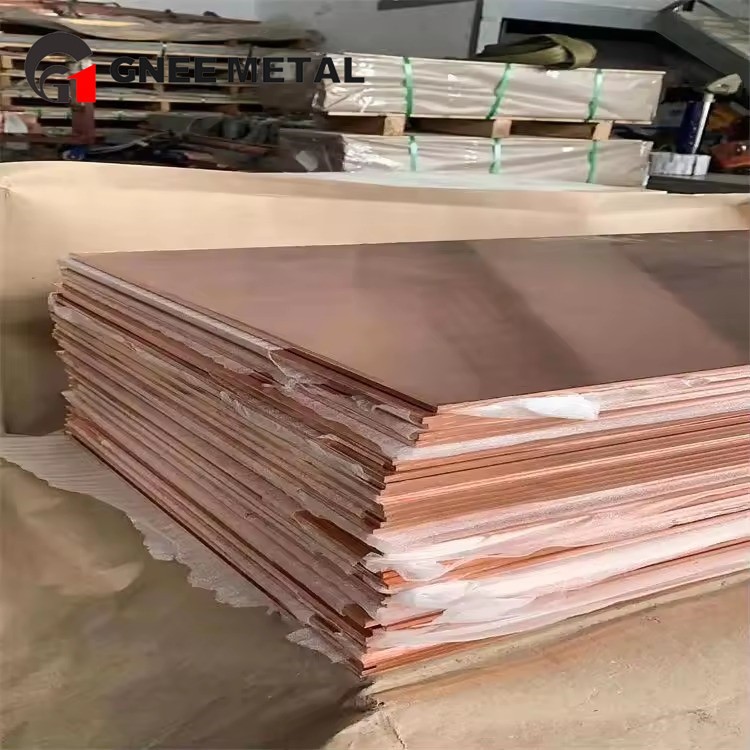
Advanced Manufacturing & Quality Control
1. Core Production Equipment
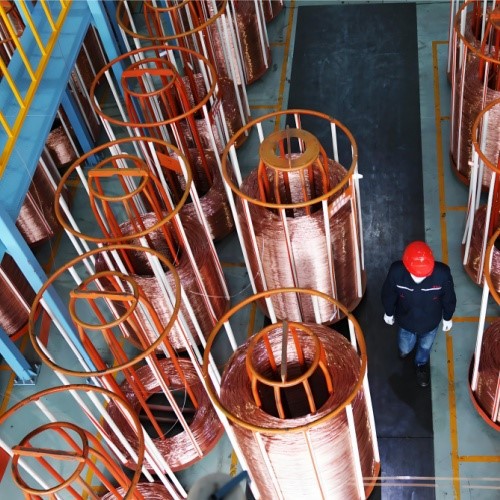
Up-casting & Continuous Casting Lines: Ensures high-purity oxygen-free copper rods and wires with uniform grain structure.
High-Precision Cold/Hot Rolling Mills: Automated thickness control for copper plates and strips with tolerances within ±0.01mm.
Large-Scale Extrusion & Drawing Machines: Capable of producing seamless copper tubes and rods in diverse diameters and shapes.
Atmospheric Controlled Annealing Furnaces: Bright annealing process to achieve specific tempers (Soft, Half-hard, Hard) without surface oxidation.
2. In-House Testing Center
Direct-Reading Spectrometers: Instant chemical composition analysis to guarantee Cu purity and precise alloying (Brass, Bronze, etc.).
Universal Tensile Testers: Verifying mechanical properties including tensile strength, elongation, and yield strength.
Eddy Current & Ultrasonic Testing: 100% non-destructive inspection for tubes and rods to detect internal cracks or flaws.
Conductivity & Hardness Testers: Ensuring electrical conductivity (IACS) and Vickers/Rockwell hardness meet international standards (ASTM, EN, DIN).



Get Fast Quote & Logistics Plan


