

Yes, C11000 is officially classified as unalloyed "pure copper" in industrial standards. To meet the UNS C11000 designation, the material must contain a minimum of 99.90% copper (including silver). It is most commonly referred to as C11000 electrolytic tough pitch copper because it is refined via electrolysis to achieve this elite purity level without the need for added alloys like zinc or tin.
This high purity ensures that the material achieves a minimum conductivity of 101% IACS, making it the global benchmark for high-voltage power distribution and industrial busway systems.
What is the exact chemical composition of C11000?
While C11000 is 99.90% pure, the remaining 0.1% consists of trace elements and a controlled oxygen content (typically 0.02% to 0.04%). This oxygen is not a contaminant; it is a vital refining agent used during the melting process to sequester other impurities.
If your quality department requires a deeper breakdown of trace element control, you should consult our guide on the purity of C11000 copper, which explains how the 99.90% baseline is verified at the mill level.
Chemical Composition of C11000 (ASTM B152 / B187)
| Element | Content (%) | Procurement Impact |
| Copper (Cu + Ag) | 99.90% Min | Core baseline for electrical efficiency |
| Oxygen (O) | 0.005% - 0.04% | Optimizes the grain structure |
| Lead (Pb) | 0.005% Max | Critical for RoHS compliant C11000 copper |
| Iron (Fe) | 0.005% Max | Excessive iron increases resistivity |
Does the purity level impact the fabrication cost?
The high purity of C11000 means it is more expensive than brass or bronze, as it requires intensive electrolytic refining. However, because it is the most widely produced pure grade, it offers a much better ROI than specialty oxygen-free coppers.
You can see how current market fluctuations and purity requirements affect the price of C11000 copper in our latest cost analysis. For most electrical contractors, this grade provides the perfect balance between high-performance conductivity and raw material cost.
Is C11000 pure enough for high-precision CNC work?
Yes. While the 99.90% purity makes the material "gummy" and ductile, it is the standard choice for thermal management. Professional shops specializing in C11000 copper cnc machining use specialized tool geometries to handle this pure, soft metal without tool smearing.
For components like a heatsink C11000 copper plate, the high thermal conductivity (391 W/m·K) derived from its purity is far more important than the ease of machining.
Table 2: Typical Mechanical Properties for Pure C11000 (H02 Temper)
| Property | Typical Value | Why it matters |
| Tensile Strength | 260 - 330 MPa | Prevents deformation in busbars |
| Hardness (Vickers) | 75 - 95 HV | Influences CNC tool selection |
| Electrical Conductivity | 101% IACS | Core requirement for transformers |
Request Purity & Conductivity Test Report
FAQ
1. Does T2 copper have the same purity as C11000?
Yes. As we analyzed in our guide on the international copper equivalent of C11000, China's T2 and Europe's Cu-ETP both require a minimum purity of 99.90%.
2. Why isn't C11000 called 99.99% pure?
The 99.99% rating (4N copper) is reserved for Oxygen-Free Electronic (OFE) grades. In our technical guide on the difference between C11000 and C10100 copper, we explain why 99.90% is more cost-effective for standard power projects.
3. Does silver (Ag) count as an impurity in C11000?
No. In the ASTM standard for C11000, silver is counted as copper. It does not reduce conductivity and actually slightly improves the softening temperature, which is beneficial for a transformer C11000 copper coil.
4. Is the purity of a C11000 copper tube different from a plate?
The chemical purity is identical. Whether you are sourcing a C11000 copper tube for HVAC or a C11000 copper bar for a switchboard, the raw material must meet the same 99.90% UNS C11000 purity baseline.
5. Can I verify the purity with a field conductivity test?
Yes. Since C11000 is pure copper, it must reach 100-101% IACS. If a C11000 material sample only tests at 80% IACS, it likely contains excessive impurities or is a lower-grade alloy.
6. Does surface tarnish mean the purity has dropped?
No. Surface oxidation is a natural reaction. The internal chemistry of your C11000 copper sheet remains 99.90%. Oxidation can be removed via pickling without affecting the material grade.
How to ensure you are buying genuine pure C11000?
The biggest risk in procurement is receiving "re-melted" copper that hasn't been properly refined. This material will have high resistance and can lead to electrical failure. Always insist on a mill-direct C11000 mill test certificate (MTC) from an ISO certified C11000 manufacturer to confirm the material meets the 99.90% UNS C11000 baseline.
Request Long-Term Quality Assurance Agreement
Product Specifications & Range
| Product Category | Common Grades (Alloys) | Size Range (Dimensions) | Standards |
| Copper Rods | C11000, C12200, C10200, C14500 | Diameter: 3mm – 400mm<br>Shape: Round, Hexagonal, Square | ASTM B187, EN 12163 |
| Copper Tubes | C11000, C12200 (DHP), C10200 (OF), C27200 | OD: 2mm – 219mm<br>Wall Thickness: 0.2mm – 20mm | ASTM B280, EN 12735 |
| Copper Plates | C11000 (ETP), C10200, C12200 | Thickness: 0.1mm – 150mm<br>Width: Up to 2500mm | ASTM B152, DIN 1751 |
| Copper Wires | C11000, C10200, Brass Wire | Diameter: 0.05mm – 10.0mm<br>Form: Spool or Coil | ASTM B3, EN 13602 |
| Copper Strips | C11000, C12200, C26800 (Brass) | Thickness: 0.05mm – 3.0mm<br>Width: 5mm – 610mm | ASTM B19, EN 1652 |
Customization Note:
Custom Dimensions: We provide precision cutting and slitting services to meet your specific project requirements.
Tempers Available: Soft (O), Half-Hard (H02), Full Hard (H04), and Spring Hard (H08).
Surface Finish: Bright annealing, Polished, or Plated (Tin, Silver, Nickel) upon request.
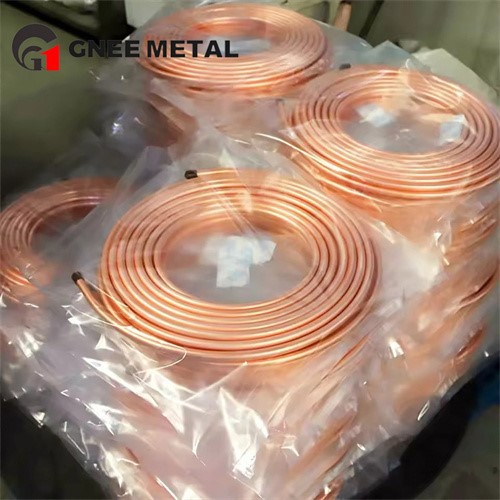
Industrial-Grade Export Packaging
Maximum protection against oxidation, moisture, and transit damage.
1. Anti-Oxidation Protection
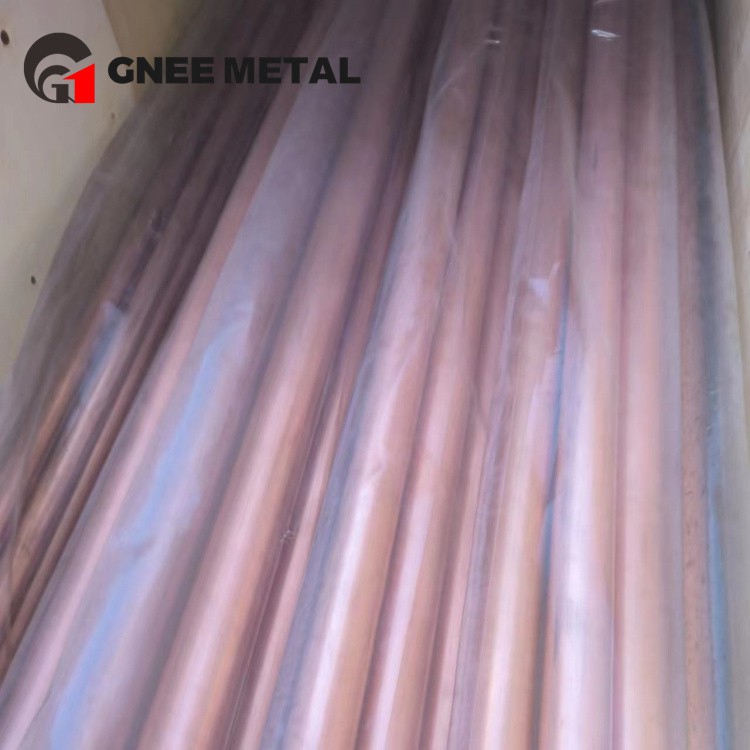
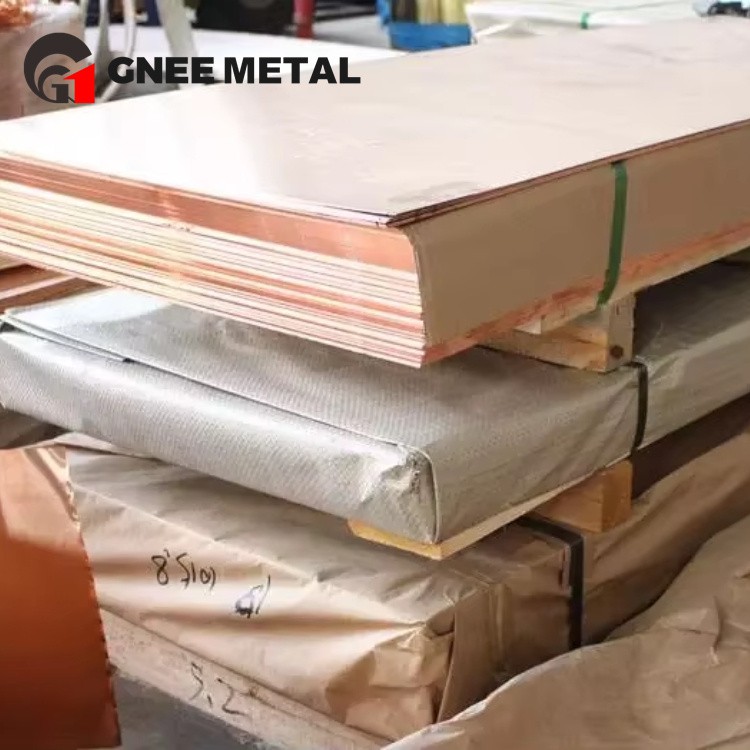
VCI Paper & Moisture-Proof Film: Every order is vacuum-sealed or wrapped in anti-corrosion materials to ensure the copper remains bright and tarnish-free during sea freight.
2. Reinforced Structural Support
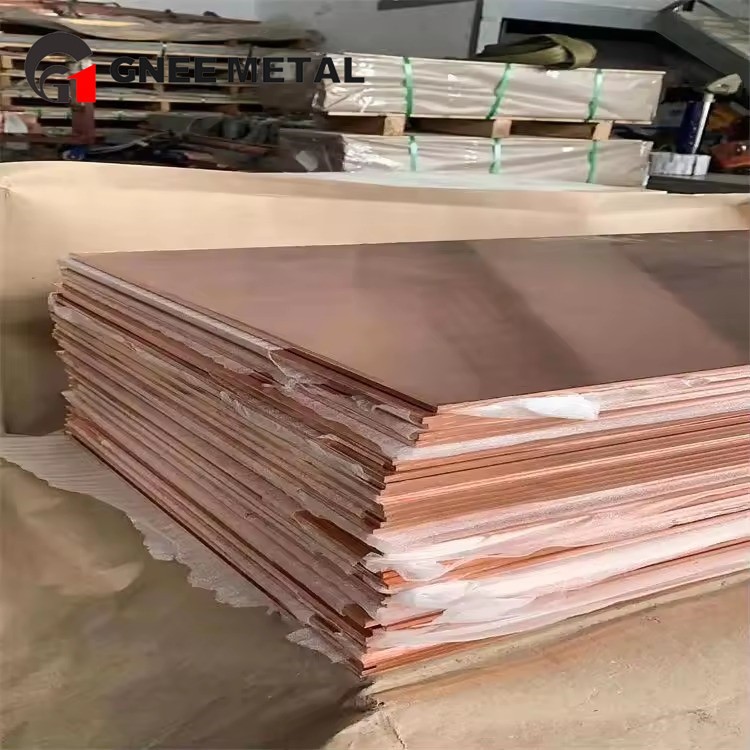
Seaworthy Wooden Crates: We use reinforced, fumigation-free wooden cases (ISPM-15) and steel strapping for rods, tubes, and heavy plates to prevent bending or surface scratches.
3. Secure Handling & Loading
Forklift-Ready Pallets: All materials are secured on standardized export pallets for easy unloading and maximum stability in containers.
4. Clear Identification
Professional Labeling: Each package includes detailed labels with heat numbers, specifications, and net weight for efficient inventory management.

Advanced Manufacturing & Quality Control
1. Core Production Equipment
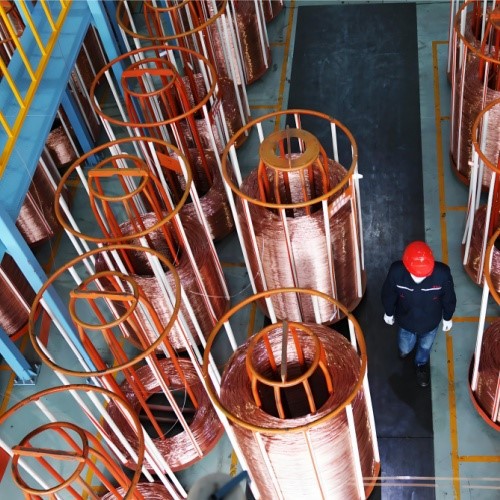
Up-casting & Continuous Casting Lines: Ensures high-purity oxygen-free copper rods and wires with uniform grain structure.
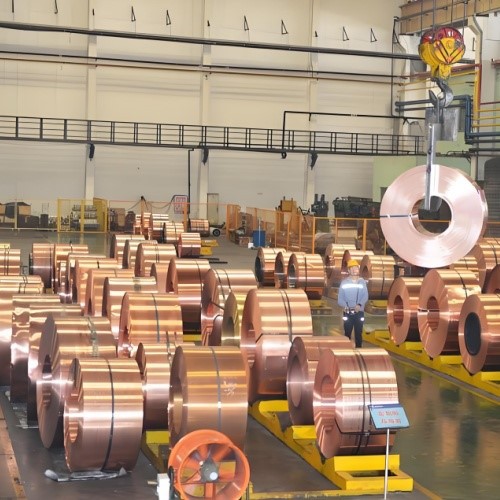
High-Precision Cold/Hot Rolling Mills: Automated thickness control for copper plates and strips with tolerances within ±0.01mm.
Large-Scale Extrusion & Drawing Machines: Capable of producing seamless copper tubes and rods in diverse diameters and shapes.
Atmospheric Controlled Annealing Furnaces: Bright annealing process to achieve specific tempers (Soft, Half-hard, Hard) without surface oxidation.
2. In-House Testing Center
Direct-Reading Spectrometers: Instant chemical composition analysis to guarantee Cu purity and precise alloying (Brass, Bronze, etc.).
Universal Tensile Testers: Verifying mechanical properties including tensile strength, elongation, and yield strength.
Eddy Current & Ultrasonic Testing: 100% non-destructive inspection for tubes and rods to detect internal cracks or flaws.
Conductivity & Hardness Testers: Ensuring electrical conductivity (IACS) and Vickers/Rockwell hardness meet international standards (ASTM, EN, DIN).



Get Fast Quote & Logistics Plan


