

What is H96 brass?
H96 brass is a type of copper alloy belonging to the category of copper-zinc alloys, specifically classified as a simple or common brass.
Chemical Composition
The primary chemical composition of H96 brass consists of 95.0–97.0% copper (Cu), with nickel (Ni) content at 0.5%, iron (Fe) content at 0.10%, and total impurities not exceeding 0.2%. The remainder is zinc (Zn).
Physical Properties
Strength: H96 brass exhibits higher strength than pure copper but is the weakest among common brass alloys. The addition of an appropriate amount of zinc enhances its strength while maintaining excellent electrical and thermal conductivity. This balance between strength, conductivity, and thermal performance makes it widely applicable in the electrical and electronics industries, such as in the manufacturing of wires, cables, and electrical connectors. Its stable current transmission and heat dissipation capabilities make it ideal for these applications.
Density and Machinability: With a density of 8.85 g/cm³, H96 brass offers good plasticity and ductility. Its moderate density facilitates easy forming and shaping during processing, providing manufacturers with greater design flexibility. This allows for the production of components with complex shapes and precise dimensions, such as waveguides, heat exchanger fins, and intricate mechanical parts.
Chemical Stability
H96 brass demonstrates high corrosion resistance in atmospheric and freshwater environments, attributed to the synergistic effect of its copper and zinc content, as well as trace elements like lead and tin, which further enhance its corrosion resistance. As a result, it is widely used in outdoor architecture, hydraulic facilities, and shipbuilding. However, under specific conditions-such as high temperatures, high humidity, or corrosive environments-its corrosion resistance may be compromised. For extended durability in harsh conditions, surface treatments like passivation or protective coatings are recommended.


Processing Capabilities
Pressure Processing: H96 brass exhibits excellent workability and can be easily processed through both cold and hot working methods. During cold working, it can be shaped via stretching, stamping, and bending to meet the requirements of complex geometries. For hot working, processes such as heating and forging can further refine its microstructure and enhance its mechanical properties, improving strength and toughness.
Welding and Tin Plating: H96 brass offers superior weldability, supporting various welding methods, including gas welding, arc welding, and laser welding, to achieve robust connections between components. It also demonstrates excellent tin-plating performance, allowing for the formation of a dense tin layer on its surface through electroplating or hot-dip plating. This not only enhances its corrosion resistance but also improves its aesthetic appeal, making it suitable for applications in decorative hardware and electronic terminals.
FAQ
| Q: Is H96 brass resistant to dezincification? A: Yes, it has very high resistance to dezincification due to its high copper content (above 85%). This makes it suitable for use in certain aqueous environments where lower-copper brasses (like H70, H62) would be susceptible. |
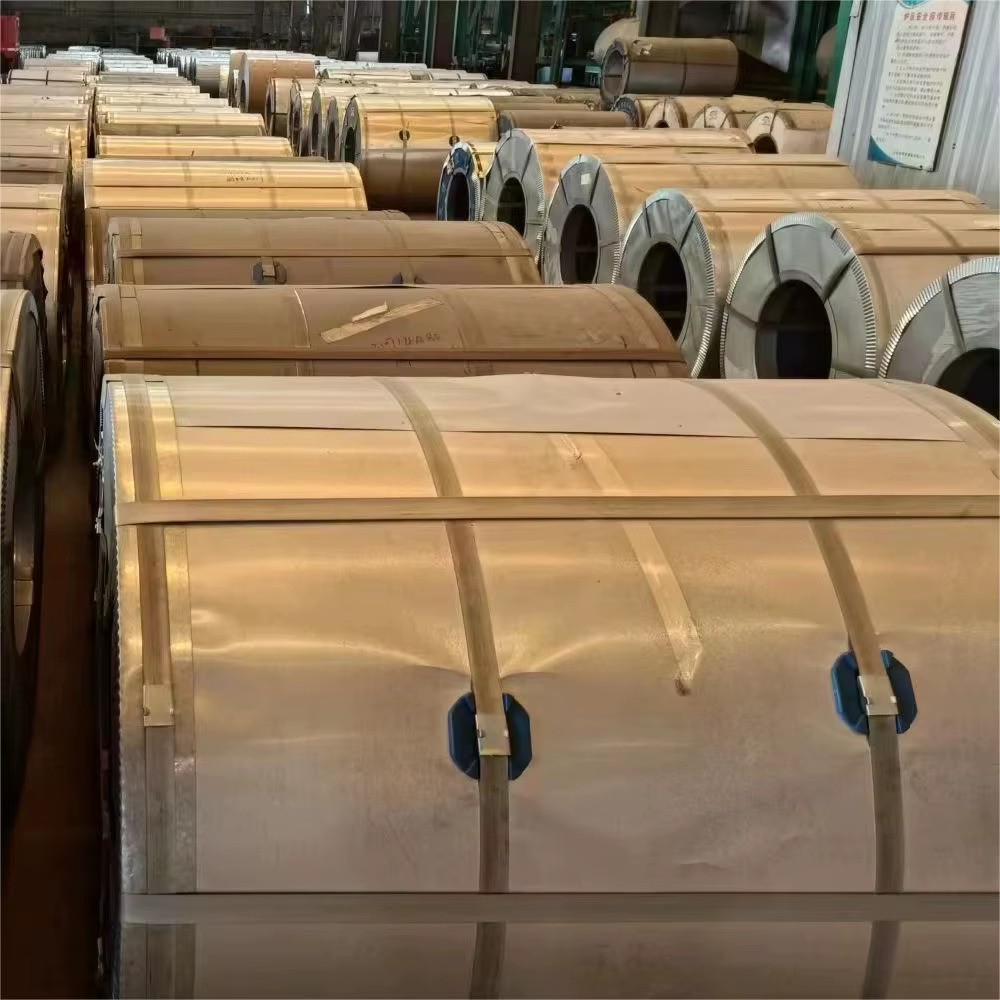
| Q: What is the typical form and size range for H96 products? A: It is commonly supplied as strip/coil, sheet/plate, wire, and tube. Typical dimensions include: Strip/Coil: Thickness 0.1mm - 3.0mm, Width up to 600mm. Wire: Diameter 0.5mm - 12.0mm. Tube: Outer Diameter (OD) 3mm - 50mm. |
| Q: What is the temper (hardness state) available for H96 strip? A: It is commonly available in soft (O), quarter-hard (H01), half-hard (H02), and hard (H04) tempers to suit different forming requirements. |
| Q: How does the price of H96 compare to other brasses and copper? A: Due to its high copper content, its price is higher than common brasses like H62 and H68, but generally lower than pure copper and premium alloys like phosphor bronze. It offers a good balance of performance and cost. |
| Q: What are the main surface finishes available for H96/C21000 brass? A: Standard finishes for H96/C21000 brass include mill finish (matte), polished, and various coated finishes (such as clear lacquer or passivation) to prevent tarnishing, especially for decorative uses. |
| Q: Is H96 suitable for making springs? A: Yes, its good combination of conductivity, corrosion resistance, and spring properties (in hardened tempers) makes H96/C21000 a preferred material for certain electrical conductivity springs and contacts. |
| Q: How does H96 perform in terms of machinability? A: Its machinability rating is relatively low (around 20% on the free-cutting brass C36000=100% scale). It is gummy and tends to adhere to cutting tools. It is not typically chosen for high-volume machining operations. |
| Q: Are H96 from China and C21000 from the USA exactly the same? A: They are equivalent grades with nearly identical nominal compositions. Minor differences may exist in permissible impurity levels between the GB (Chinese) and ASTM (U.S.) standards. For most applications, they are considered interchangeable, but critical applications should verify the exact specification requirements. |
| Q: Can H96/C21000 brass be used for marine applications? A: With its high corrosion and dezincification resistance, H96/C21000 brass can be used in certain low-corrosion marine environments (e.g., interior components, decorative fittings). However, for critical seawater applications, more specialized alloys like aluminum brass or copper-nickel are recommended over H96 brass. |
Our product range
| Category | Other Key Grades (Extensive Range) | Product Forms | Typical Size Range |
|---|---|---|---|
| Pure Copper | T2 (C11000/C10100), TU1/TU2 (Oxygen-Free), T3 (C11000), C10100, C10200 (OF), C10300, C10400, C10500, C10700, C10800, C11000, C11300, C11400, C11500, C11600, C12000, C12200 | Pipe/Tube, Plate/Sheet, Coil/Strip, Wire/Rod, Busbar | Pipe/Tube: OD 3mm - 400mm, WT 0.5mm - 15mm Sheet/Plate/Coil: Thk 0.1mm - 50mm, Width ≤ 1250mm Wire/Rod: Dia. 0.5mm - 80mm |
| Phosphorus Deoxidized Copper | TP2 (C12200), C1201, C1220, C12200, C14200 | Pipe/Tube, Plate/Sheet, Coil/Strip | Pipe/Tube: OD 4mm - 300mm, WT 0.5mm - 10mm Sheet/Plate/Coil: Thk 0.2mm - 30mm, Width ≤ 1000mm |
| Brass | H96, H68, H65, H70, HPb59-1 (C3771), CW505L (C12200), C2600 (Cartridge Brass), C2680, C2720, C28000, C36000 (Free-Cutting), C38500 | Coil/Strip, Plate/Sheet, Rod/Bar, Wire | Strip/Sheet/Coil: Thk 0.05mm - 10.0mm, Width ≤ 650mm Rod/Bar: Dia. 3mm - 200mm Wire: Dia. 0.5mm - 12mm |
| Bronze & Other Alloys | Phosphor Bronze: C51000, C52100, C54400 Copper-Nickel: C71500, C71640 Aluminum Bronze: C60600, C63000 Beryllium Copper: C17200, C17500 Other: C19210, C19400 |
Strip/Coil, Plate, Rod/Bar, Wire, Pipe | Customizable per alloy and form. Strip/Coil: Thk 0.05mm - 5.0mm Rod/Bar: Dia. up to 150mm |


