

What is H96 brass?
H96 brass is a copper alloy conforming to the Chinese national standard GB/T 5231-2001. Its composition is 95.0%–97.0% copper, with the remainder being zinc and trace amounts of nickel, iron, lead, and other elements. The total impurity content does not exceed 0.2%.
Among common brass alloys, H96 has the lowest strength, but it is superior to pure copper. It possesses excellent thermal and electrical conductivity, as well as good corrosion resistance in atmospheric and freshwater environments. This alloy exhibits good plasticity and is not prone to stress corrosion cracking. It can be formed through cold and hot working processes and is suitable for manufacturing processes such as forging, welding, tin plating, and custom machining. Its standard mechanical properties include tensile strength ≥320 MPa and elongation ≥3%.
Physical Properties:
Color: Typically exhibits a yellowish hue.
Density: While a specific value is not provided in the source, as a brass alloy, its density typically falls within the range of 8.5–8.9 g/cm³.
Mechanical Properties:
Strength: Higher than pure copper but the lowest among common brass alloys.
Plasticity: Excellent plasticity, facilitating both cold and hot working processes. It is easily formed, welded, forged, and tin-plated, with no tendency for stress corrosion cracking.
Tensile Strength and Elongation: Tensile strength (σb) ≥ 275 MPa; elongation (δ10) ≥ 45%.
Fabrication and Machinability:
Processing Methods: Can be processed into components of various shapes through techniques such as forging, cold drawing, and rolling, making it suitable for complex and precision machining.
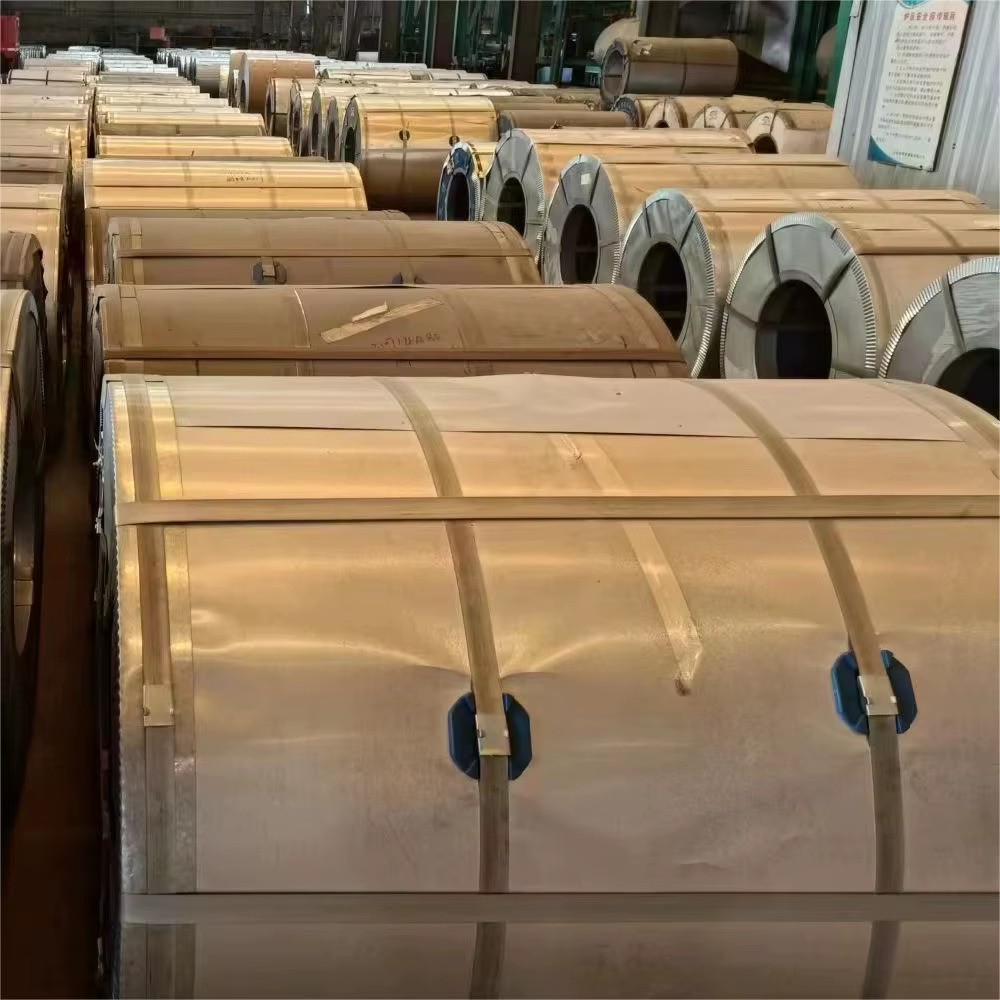
Customization: Available in forms including sheet, plate, strip/coil, rod/bar, wire, and custom profiles/tubes (like the mentioned double-ridge rectangular waveguide tubes) to meet diverse application needs.
Surface Finishes: Can be supplied with various surface conditions, including mill finish, polished, buffed, or with protective coatings (e.g., lacquer, passivation) for enhanced appearance or corrosion prevention.


Electrical and Thermal Conductivity:
Electrical Conductivity: Very good. With its high copper content, H96 offers conductivity close to pure copper, making it an efficient and cost-effective alternative for many electrical applications.
Thermal Conductivity: Excellent, suitable for applications requiring efficient heat dissipation.
Corrosion Resistance:
Resistance: Demonstrates relatively high corrosion resistance in atmospheric conditions and freshwater environments. Its high copper content also provides good resistance to dezincification compared to lower-copper brasses.
Product Specifications & Standards:
Primary Standard: GB/T 5231-2001 (China).
Common International Equivalents: UNS C21000 (USA, "Gilding Metal 96"), CW500L (Europe).
Typical Available Forms & Sizes:
Sheet/Plate/Strip: Thickness from 0.1 mm up to 50 mm; widths up to 600 mm (strip) or 1000+ mm (sheet).
Rod/Bar: Diameter from 3 mm up to 150 mm.
Wire: Diameter from 0.5 mm up to 12 mm.
Tubes/Profiles: Custom sizes and shapes (like waveguides) are manufacturable.
Application Fields:
Electrical & Electronic Equipment: Used in manufacturing elastic components (springs, contacts), lead frames for integrated circuits, conductive springs, and other parts requiring a balance of conductivity, formability, and spring properties.
Mechanical Manufacturing: Commonly used for mechanical parts, valves, pipes, fittings, bolts, nuts, and precision-machined components.
Communications & RF/Microwave Technology: Applied in the fabrication of double-ridge rectangular waveguides and other precision waveguide components for communication systems, microwave transmission, and electronic warfare equipment, leveraging its excellent plasticity and good conductivity for complex shaping.
Other Applications: Also finds use in decorative architectural elements, heat exchanger components, medal/coinage blanks, and nameplates.
Our product range
| Category | Other Key Grades (Extensive Range) | Product Forms | Typical Size Range |
|---|---|---|---|
| Pure Copper | T2 (C11000/C10100), TU1/TU2 (Oxygen-Free), T3 (C11000), C10100, C10200 (OF), C10300, C10400, C10500, C10700, C10800, C11000, C11300, C11400, C11500, C11600, C12000, C12200 | Pipe/Tube, Plate/Sheet, Coil/Strip, Wire/Rod, Busbar | Pipe/Tube: OD 3mm - 400mm, WT 0.5mm - 15mm Sheet/Plate/Coil: Thk 0.1mm - 50mm, Width ≤ 1250mm Wire/Rod: Dia. 0.5mm - 80mm |
| Phosphorus Deoxidized Copper | TP2 (C12200), C1201, C1220, C12200, C14200 | Pipe/Tube, Plate/Sheet, Coil/Strip | Pipe/Tube: OD 4mm - 300mm, WT 0.5mm - 10mm Sheet/Plate/Coil: Thk 0.2mm - 30mm, Width ≤ 1000mm |
| Brass | H96, H68, H65, H70, HPb59-1 (C3771), CW505L (C12200), C2600 (Cartridge Brass), C2680, C2720, C28000, C36000 (Free-Cutting), C38500 | Coil/Strip, Plate/Sheet, Rod/Bar, Wire | Strip/Sheet/Coil: Thk 0.05mm - 10.0mm, Width ≤ 650mm Rod/Bar: Dia. 3mm - 200mm Wire: Dia. 0.5mm - 12mm |
| Bronze & Other Alloys | Phosphor Bronze: C51000, C52100, C54400 Copper-Nickel: C71500, C71640 Aluminum Bronze: C60600, C63000 Beryllium Copper: C17200, C17500 Other: C19210, C19400 |
Strip/Coil, Plate, Rod/Bar, Wire, Pipe | Customizable per alloy and form. Strip/Coil: Thk 0.05mm - 5.0mm Rod/Bar: Dia. up to 150mm |


