

What is C210 Brass and Why Does It Matter?
C210 brass, widely known as gilding metal, is a copper-zinc alloy, with copper making up about 90% and zinc taking up the remaining 10%. The higher copper percentage level gives it great corrosion resistance, ductility, and an attractive reddish golden color. This profile of properties lends important industrial uses in fields like decorative hardware, ammunition casings, and intricate machine parts. Its versatility and dependability have earned it the reputation of a classic material for both-working and decorative purposes.
the Composition of C21000 Alloy
C21000, or gilding metal, is one type of brass with copper and zinc as the main metals sharing their composition, with 89.0% to 91.0% copper, and the balance made by zinc. The high copper content brings with it the belligerent reddish golden-red color and mechanical properties. The alloy can have some traces of lead, iron, or other elements, but these impurities will hardly exceed 0.05%.
The composition of C21000 is so well controlled as to confer maximum corrosion resistance and excellent ductility to the alloy, making it easy to machine and form intricate shapes. Its ductility is combined with excellent thermal and electrical conductivity, making C21000 attractive for electrical connectors, jewelry, and decorative finishes. From tensile strength, this ranges from approximately 220 MPa to 310 MPa, while total elongation would typically be anywhere from 40% to 55%, depending on the means of processing.
On the other hand, considering their behavior at given conditions, C21000 basically maintains its mechanical properties in moderately aggressive environments, acting as a practically resistant coating against wear and tarnishing. Hence, its indisputable combination of the industrial application of appearance and practically C21000.
Some Distinctive Features of the C210: Copper and Zinc Blend
Being a common name given to gilding metal, the C21000 is largely made of copper and zinc. This material is appreciated for super corrosion resistance, medium strength, and good-looking golden color. That durability combined with aesthetic value lets it fit decorative applications, architectural components, and the like. Moreover, C21000 is quite soft, which provides for easy fabrication and forming.
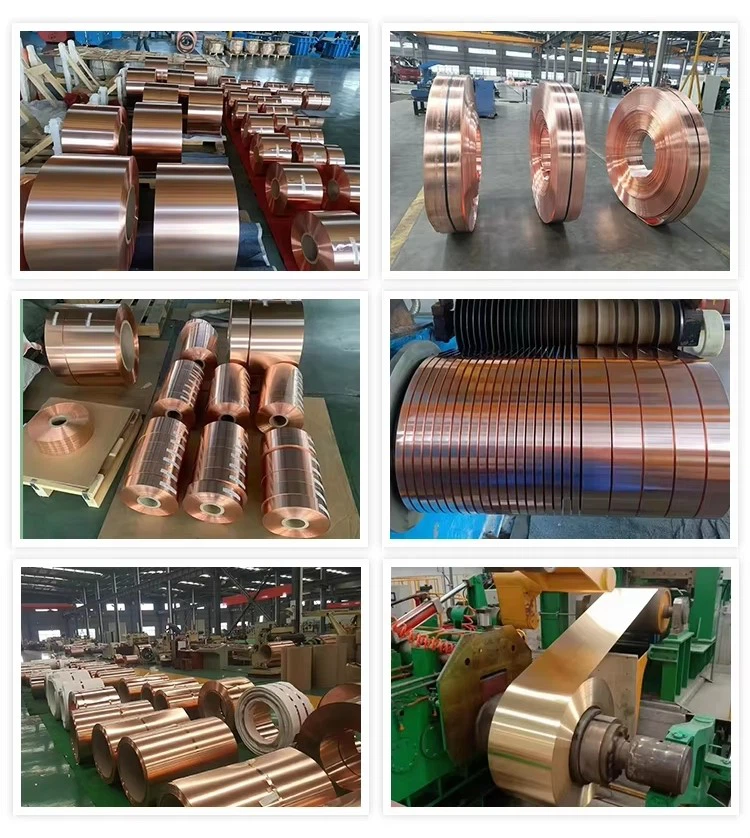
Applications of C210 Brass in Different Industries
C210 brass, also known as Gilding metal, finds some kind of use across many different industries due to its special combination of properties. These are:
Decorations and Architecture: Its golden hue gives C210 brass the preferred choice for decorations such as jewelry, sculptures, and ornamentals. Corrosion resistance further guarantees durability in outdoor architectural elements like facades, trims, and fittings.
Manufacture of Ammunition: C210 is widely applied by virtue of its malleability and strength for bullet jacket manufacture. In this regard, the metal provides a cheap material option while retaining sufficient mechanical strength during application.
Electronics: C210 Brass can be employed with confidence for electrical connectors and terminals due to its good conductivity, while protection against corrosion guarantees an extended service life for components exposed to environmental stresses.
Automotive Applications: C210 is put to use in automotive interior trims and decorations for aesthetics and function. C210 resists wear and is used in these applications.
Music: Manufactures high-grade music instruments like cymbals, bells, and brass wind instruments. This also contributes to some of the best acoustic properties for C210 brass.
Industrial: The C210, being malleable and moderately strong, is used to make a variety of industrial components such as fasteners, washers, and mechanisms that involve repeated forming or shaping.
Research into the Mechanical Properties of C210 Brass
The C210 brass presents superior mechanical properties, rendering it useful for a number of applications. Its tensile strength varies from 290 to 540 MPa depending on the temper condition, and it must bear loads smoothly until failure. It also has a reasonable ductility that tends to make forming and shaping easy without breaking, as well as moderately hard and good wear resistance that serves in aging strength in demanding applications.
Moderate Strength and Good Ductility
C210 brass has made a name for itself as a material possessing a medium level of strength with good ductility and the possibilities are quite many for its use in manufacturing. It has tensile strengths of roughly 290 to 540 MPa and yield strengths varying from 110 to 430 MPa, rendering it sufficiently durable and able to withstand various structural and mechanical stresses. The elongations can range from 15% up to 65%, dependent on temper and reflect from the high level of ductility, whereby significant deformation can take place before breaking occurs. Such a combination of strength and flexibility assists in forming, bending, and drawing processes, especially in the automobile, electrical, and architectural industries. Also, these characteristics allow C210 brass to maintain structural integrity without compromising adaptability to intricate designs or custom applications.
How Does One Use C210 Brass in CNC Machining?
C210 brass is a good CNC machining material because it has very good machinability and can be machined to precise specifications, often efficiently. It is machined into such precise items as electrical connectors, ornamental articles, and fittings. Because of its reasonable strength, corrosion resistance, and beauty, it is a material of choice used by the electronics, automotive, and architectural industries.
Advantages of C210 in Precision Machining
C210 Brass has an abundance of merits when it comes to precision machining, making it the top material choice among manufacturers. With high machinability aptitude of utmost 80-90 percent when compared with free-cutting brass, the material gets easily processed, at lesser tool wear and tear. Being advantageous to big production runs helps save time and cuts down on operating costs.
Another big ploy is dimensional stability: C210 guarantees the produced components to meet design specifications that are normally tight in aerospace and medical apparatuses. Also, the C210 can resist corrosion well in harsh environments, which makes the maintenance cost for a machined component lower-disposable as well as replacement.
Data from recent years put the conductivity at around 28% of IACS, which makes C210 brass ideally fit for electrical applications; whereas tensile strength between 44,000 PSI to 58,000 PSI allows this brass to hold for mechanical parts needing strength. Moreover, ease of polishing and plating ensures that these parts perform well and look good all at once. All this makes C210 brass an essential family member in the precision machining in many disciplines.
Product Range of GNEE
| Product Category | Product Forms | Comprehensive Materials & Standards (UNS / Common Names) |
|---|---|---|
| Copper & Copper Alloy Tubes | Round, Square, Rectangular, Capillary, Coiled, Bundles, Straight Lengths | Pure Copper: C10200 (OFE), C11000 (ETP) Brass: C21000 (Gilding 95%), C23000 (Red Brass 85%), C26000 (Cartridge Brass 70/30), C28000 (Muntz Metal 60/40), C44300, C68700 (Arsenical Aluminum Brass) Bronze: C22000 (Commercial Bronze 90%), C38500 (Architectural Bronze) Copper-Nickel: C70600 (90/10), C71500 (70/30) Others: C12000 (DLP), C12200 (DHP) |
| Copper & Copper Alloy Sheets/Plates | Sheets, Plates, Rolls, Circles/Blanks, Embossed, Perforated | Pure Copper: C11000, C10200 Brass: C26000, C26800, C27200 (Yellow Brass 65/35),C21000 Phosphor Bronze: C51000 (A), C52100, C52400 Nickel Silver (German Silver): C75200 (65-18), C77000 (55-18) Beryllium Copper: C17200, C17500 High Copper Alloys: C19400 |
| Copper & Copper Alloy Rods/Bars | Round, Hex, Square, Flat, Rectangular, Forging Billets, Hollow Bars | Free-Cutting Brass: C36000 (CDA 360) Leaded Brass: C38500, C35600 Naval Brass: C46400, C48200, C48500 Bronze: C22000, C51000, C54400 (Free-Cutting Phosphor Bronze) Copper-Nickel: C71000, C71500 Pure Copper: C11000, C10100 |
| Copper & Copper Alloy Wires | Round, Flat, Square, Stranded, Bare, Tin-Plated, Annealed, Hard Drawn | Pure Copper Wire: C11000 (ETP), C10200 (OF) for magnet wire Brass Wire: C26000, C27200, C21000 Beryllium Copper Wire: C17200, C17500 Phosphor Bronze Wire: C51000, C52100 Resistance Welding Wire: C11000, C18200 (Chromium Copper) Spring Wire: Various tempers of C51000, C52100, C17200 |
| Copper & Copper Alloy Strips/Foils | Thin Strip, Foil (down to 0.05mm), Precision Slit Coils, Shim Stock, Finned Strip | Brass Strip: C26000, C26800, C22000,C21000 Phosphor Bronze Strip: C51000, C51900, C52100, C52400 Pure Copper Strip: C11000, C10200, C12000 Nickel Silver Strip: C75200, C77000 Electronic Alloys: C19400 (Lead Frame), C70250, C70350 Special Alloys: C72500 (Cu-Ni-Sn) |
Get the complete product catalog
Copper product packaging
We are committed to providing comprehensive and reliable packaging solutions for your shipments. For standard products, we employ industrial-grade packaging: copper tubes are lined with moisture-proof paper and packed in sturdy wooden cases or secured with iron strapping; sheets, strips, and foils are sealed with waterproof plastic film, placed on wooden pallets, and reinforced with steel straps; rods and wires are bundled with anti-rust protection. All packaging is designed to withstand long-distance sea freight and multimodal transportation. We also offer customized services such as logo printing, vacuum packaging, or special inner lining protection upon request, ensuring the products arrive in perfect condition.


