Copper nickel alloys (C70600 and C71500) have established a long and successful history in seawater cooled heat exchangers, condensers, and piping systems. For power plants, ships, chemical processing facilities, and desalination plants, the heat exchanger tube is the critical component that determines overall system reliability and efficiency.
This guide covers everything from water quality and intake system design to corrosion resistance, material selection, and maintenance procedures for copper nickel 90/10 (UNS C70600) and 70/30 (UNS C71500) alloys.
The Role of Heat Exchangers in Marine Systems
For the vast majority of heat transfer equipment applications, heat is transferred between two fluid streams through a conducting wall while the streams remain physically separate. This thermally conductive wall is the tube in shell-and-tube type heat exchangers, which make up a large percentage of such units in:
| Industry | Application |
|---|---|
| Power Generation | Main condensers, cooling water systems |
| Shipbuilding | Main and auxiliary condensers, oil coolers |
| Chemical Processing | Process heat exchangers, coolers |
| Desalination | Heat recovery sections, brine heaters |
The relatively thin-walled tube, selected primarily for heat transfer efficiency, must perform well over long periods under difficult operating conditions. Copper nickel alloys have proven their reliability in these demanding environments.
Water Quality Considerations for Copper Nickel Tubing
Standard seawater analyses include temperature, salinity, dissolved oxygen, and pH. However, the following factors have a significant effect on copper alloy performance and must be identified:
| Factor | Impact on C70600 / C71500 |
|---|---|
| Dissolved Oxygen | Beneficial for film formation |
| Hydrogen Sulfide (H₂S) | Accelerated corrosion, forms black sulfide film |
| Ammonia (NH₃) | Can be damaging, especially to C68700 |
| Debris (sticks, shells, gravel, sand) | Causes tube blockage and downstream erosion |
| Marine larvae | Biofouling attachment during low flow |
Intake System Design: The First Line of Defense
Design, operation and maintenance of the seawater intake system have a profound effect on heat exchanger tubing performance. Tube failures from debris lodgements are screen failures and should be recognized as such.
Recommended Intake Screen Configuration
| Screen Type | Purpose | Typical Opening |
|---|---|---|
| Bar Grates | Keep out large debris (boxes, logs, fish) | Large |
| Traveling Screens | Screen out fish, crab claws, shells, bags | 1/2 inch or less |
| Stationary Screens (Basket/Automatic) | Final screening before waterbox | 3/8 inch |
Critical Requirement: Heat exchanger tube size should be set at a minimum of two times the screen opening.
Case Example from Desalination Plant
In one facility, a broken screen (opening 3/8 inch) allowed rocks, a nail, and steel pieces to enter the tube bundle. The debris lodged in tubes, leading to tube penetration downstream of the lodgements. The operators recorded these as tube failures, but they were really screen failures.
Corrosion Resistance of Copper Nickel Alloys
Corrosion Product Film Formation
The corrosion resistance of C70600 and C71500 material in seawater depends entirely on the protective corrosion product film that forms on the surface after it is wetted.
| Time After Startup | Copper Level in Effluent |
|---|---|
| 10 minutes | Decreased 10x |
| 1 hour | Decreased 100x |
| 3 months | Same as intake (film mature) |
Key Finding: The protective nature of the film continues to increase through 14 years of exposure. This is responsible for the 20+ years service life of alloy C71500 in shipboard condensers and coastal plants.

Formation rate of corrosion product film on alloy C70600 in seawater

Corrosion rates for alloy C70600 in long-term seawater exposures
Chemical Composition of Copper Nickel Alloys
| Element | C70600 (90/10) | C71500 (70/30) | C71640 | C72200 |
|---|---|---|---|---|
| Nickel (Ni) | 9.0 - 11.0 | 29.0 - 33.0 | 29.0 - 32.0 | 15.0 - 18.0 |
| Chromium (Cr) | - | - | - | 0.3 - 0.7 |
| Iron (Fe) | 1.0 - 1.8 | 0.4 - 1.0 | 1.7 - 2.3 | 0.5 - 1.0 |
| Manganese (Mn) | 1.0 max | 1.0 max | 1.5 - 2.5 | 1.0 max |
| Copper (Cu) | Balance | Balance | Balance | Balance |
Velocity Effects on Corrosion
The corrosion rate of copper alloys is affected by seawater velocity above a certain limit. The more protective the film, the higher the breakaway velocity.
| Alloy | Maximum Design Velocity (m/s) |
|---|---|
| C12200 (Copper) | 0.6 |
| C44300 (Admiralty Brass) | 1.2 |
| C68700 (Aluminum Brass) | 2.4 |
| C70600 (90/10 Cu-Ni) | 3.6 |
| C71500 (70/30 Cu-Ni) | 4.6 |
| C72200 | > 9.0 |
| Minimum to prevent sediment deposition | 1.0 |
| Normal design velocity | 2.0 |
Important: Low flow rates (below 1 m/s) are as damaging as high flow rates. Under-deposit corrosion and tube failures can be expected within 6-12 months at velocities below 1 m/s.
Sand and Silt Effects
| Condition | Effect on C70600 / C71500 |
|---|---|
| Sand < 200 ppm | Rarely damages protective film |
| Sand 200-1000 ppm | Increasingly abrasive |
| Sand > 1000 ppm | Requires C71640 or C72200 |
| Silt/mud deposits | Leads to under-deposit corrosion and MIC |
Order of sand abrasion resistance (most to least): C71640 > C72200 > C71500 > C70600 > C68700
Galvanic Effects
Copper nickel alloys are galvanically compatible with one another in seawater. However, caution is required when coupling with other materials.
| Couple | Corrosion Rate of C70600 (µm/year) | Corrosion Rate of Other Alloy (µm/year) |
|---|---|---|
| Uncoupled C70600 | 31 | - |
| C70600 + Carbon Steel | 3 | 787 |
| C70600 + Titanium | 208 | 2 |
| C71500 + Carbon Steel | 3 | 711 |
| C71500 + Titanium | 107 | 2 |
Effects of Pollution (Hydrogen Sulfide / H₂S)
Polluted cooling waters containing hydrogen sulfide (H₂S) have caused premature failures of condenser tubing. The primary sources of sulfide are:
Sulfate reducing bacteria acting on natural sulfate in seawater under anaerobic conditions (in mud, silt, or sediment deposits)
Putrefaction of organic sulfur compounds from decaying plant and animal matter during extended shutdown periods
| Condition | Corrosion Rate |
|---|---|
| Complete absence of oxygen | Low (even at high H₂S) |
| Aerated clean seawater | Moderate |
| Aerated + H₂S (transient) | Very High |
Effects of Chlorine
| Chlorine Concentration | Effect on Cu-Ni Alloys |
|---|---|
| 0.2 - 0.5 ppm (continuous) | Controls biofouling, no adverse effect on corrosion |
| 1.5 ppm (intermittent) | Slight reduction in corrosion rate |
| Residual chlorine > 0.2 ppm (effluent) | Limited by EPA regulations |
Marine Biofouling Resistance
Copper nickel alloys have long been recognized for inherent resistance to marine fouling. Studies show:
Fouling is not observed on alloys containing 80% copper or more
Only incipient fouling noted on C71500
Initial and continuous water velocities above 1 m/s can keep most alloys free of biofouling
| Alloy | Biofouling Resistance | Mechanical Cleaning Frequency |
|---|---|---|
| C70600 (90/10) | Excellent (slightly superior) | Every 3-4 months |
| C71500 (70/30) | Good | Every 2-3 months |
| Titanium | Poor (requires >1.2 m/s velocity or chlorination) | 12 times in 120 days |
Materials Selection Guidelines
Tubing Selection
| Condition | Recommended Alloy |
|---|---|
| Clean seawater, normal velocities (≤ 3.6 m/s) | C70600 (90/10) |
| Higher velocities, turbulence, entrained solids | C71500 (70/30) , C71640, or C72200 |
| Large tankers with scoop intakes | C71640 |
| Polluted seawater (H₂S, ammonia) | C71500 (preferred) |
Tubesheet Selection
| Tubing Alloy | Recommended Tubesheet Alloy |
|---|---|
| C70600 | C70600 |
| C71500 / C71640 | C71500 |
Waterbox Selection
| Material | Recommendation |
|---|---|
| Carbon steel (coated) | Requires cathodic protection (galvanic anodes or impressed current) |
| Ni-Resist cast iron | Better corrosion resistance than steel, but provides galvanic protection to tubes |
| Solid C70600 / C71500 | Widely used in ships and desalination plants |
FAQ
1. What is the difference between UNS C70600 and UNS C71500 for condenser tubes?
UNS C70600 (90/10 copper nickel) contains 90% copper and 10% nickel, offering superior biofouling resistance. UNS C71500 (70/30 copper nickel) contains 70% copper and 30% nickel, providing higher strength and better resistance to impingement corrosion at higher seawater velocities.
2. What is the maximum design velocity for ASTM B111 C70600 heat exchanger tubes?
For ASTM B111 C70600 tubes in seawater service, the maximum design velocity is 3.6 meters per second (approximately 12 feet per second). Exceeding this can cause impingement attack.
3. Does C71500 material require post-weld heat treatment for condenser fabrication?
No. C71500 material does not require post-weld heat treatment when welded using conventional methods such as GTAW/TIG with ERCuNi filler metal.
4. What is the typical corrosion rate of copper nickel 70/30 in clean seawater?
The typical corrosion rate for copper nickel 70/30 in clean flowing seawater is 0.0025 - 0.025 mm per year, which makes it suitable for most marine applications requiring 20+ years of service life.
5. How does the density of C71500 affect heat exchanger weight calculations?
The c71500 density is 8.94 g/cm³. This is essential for calculating total heat exchanger weight for shipping, structural support design, and logistics planning.
6. Can sb111 c71500 tubes be used in polluted seawater containing hydrogen sulfide?
sb111 c71500 (70/30) is preferred over 90/10 for polluted seawater containing H₂S, though it is not completely immune. If the protective film is mature, short-term exposure is tolerable.
7. What is the minimum water velocity to prevent sediment deposition in copper nickel tubing?
The minimum water velocity to prevent sediment deposition and under-deposit corrosion for c70600 copper pipe is 1.0 meter per second. Below this, failures can be expected within 6-12 months.
8. Why should the tubesheet alloy not be more noble than the tubing alloy for asme sb466 c715 condensers?
For asme sb466 c715 condensers, a tubesheet that is more noble than the tubing creates a galvanic couple where the less noble tube becomes the anode, accelerating corrosion at the tube end where it meets the tubesheet.
9. What is the annealing temperature range for cold-worked Copper Nickel Alloy UNS C71500?
For Copper Nickel Alloy UNS C71500, the annealing temperature range to restore ductility after cold working is 700 - 825°C.
10. How does the machinability of 70/30 copper nickel compare to free-cutting brass for flange production?
The 70/30 copper nickel machinability rating is 20% of free-cutting brass, meaning it requires slower speeds and more powerful tooling. C71500 is slightly harder to machine than C70600 due to its higher nickel content.
11. What type of welding is recommended for C70600 heat exchanger tubes to tubesheets?
Gas Tungsten Arc Welding (GTAW/TIG) with ERCuNi filler metal (AWS A5.7) is the recommended method for welding C70600 tubes to copper alloy tubesheets.
12. Are third-party inspection reports available for C71500 condenser tubes?
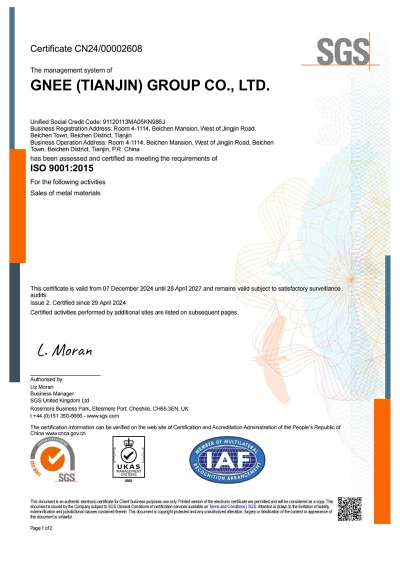
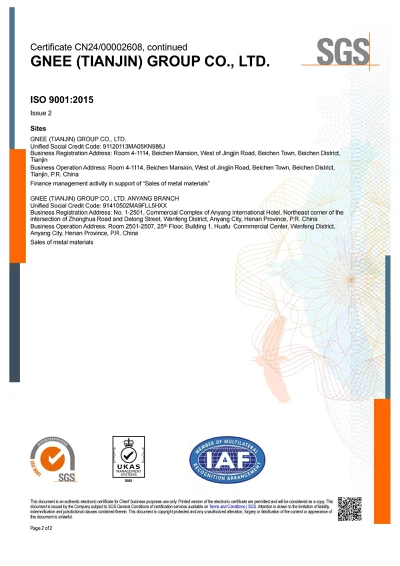
Yes. Third-party inspection reports (SGS, BV, ABS, DNV) for C71500 condenser tubes are available upon customer request, including EN 10204 3.1 mill test certificates.
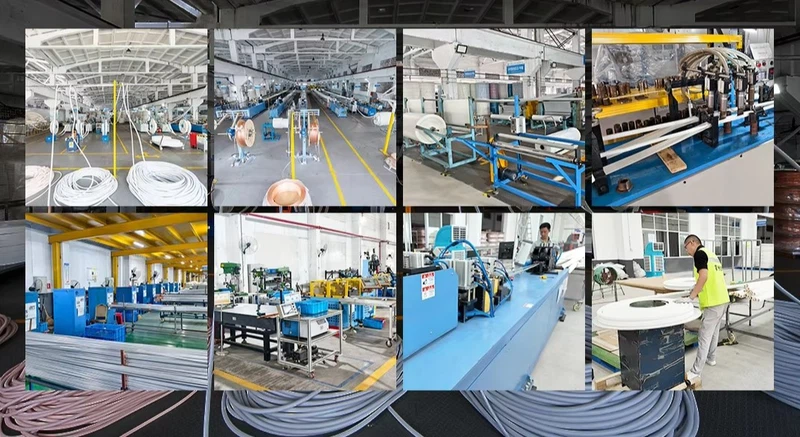
Factory Equipment
| Equipment | Purpose for Copper Nickel Production |
|---|---|
| Induction Melting Furnace | Precise control of c71500 chemical composition |
| Continuous Casting Machine | Billet production |
| Extrusion Press | Hollow shell formation |
| Cold Pilger Mill | Tube diameter reduction |
| Draw Bench | Final sizing and surface finish |
| Annealing Furnace | Stress relief (700-825°C for C70600/C71500) |
| Straightening Machine | Dimensional accuracy |
| CNC Machining Center | Flange and fitting production |
| NDT Equipment | Eddy current and ultrasonic testing |
Certificates