

Basic Introduction
C72500 copper-nickel-tin alloy is a high-performance copper-based alloy. The addition of elements such as nickel (Ni) and tin (Sn) creates solid solution strengthening and precipitation strengthening, significantly improving the material's overall performance. Its typical composition is approximately 88%-90% copper (Cu), 9%-10% nickel (Ni), and 0.5%-1.5% tin (Sn). It may also contain trace elements to optimize specific properties. This alloy is renowned for its high strength, excellent corrosion resistance, and stress relaxation resistance, making it widely used in precision industry.
Physical and Chemical Properties
Physical Properties
Density: Approximately 8.94 g/cm³, close to pure copper, but with significantly improved mechanical properties.
Electrical/Thermal Conductivity: Electrical conductivity is approximately 15%-20% of pure copper, offering good thermal conductivity, making it suitable for applications requiring heat dissipation.
Coefficient of Thermal Expansion: Low, with excellent dimensional stability at high temperatures. Chemical Properties
Corrosion Resistance: Strong resistance to seawater, industrial atmosphere, and weakly acidic media, especially in chlorine-containing environments.
Oxidation Resistance: A dense oxide film easily forms on the surface at high temperatures, retarding further oxidation.
Mechanical Properties
Strength: Tensile strength reaches 500-700 MPa, and yield strength is approximately 400-600 MPa, significantly higher than ordinary brass and phosphor bronze.
Hardness: Rockwell hardness (HRB) reaches 80-95, with excellent wear resistance.
Ductility: Retains a certain degree of plasticity after cold working, making it suitable for forming processes such as stamping and bending.
Fatigue Resistance: Excellent high-cycle fatigue resistance, suitable for dynamic load environments.
Processing and Manufacturing Processes
Cold Working Properties
Strength can be further improved through processes such as cold rolling and cold drawing, but the processing rate must be controlled to avoid cracking.
Heat Treatment
Age hardening can optimize the distribution of precipitated phases, increasing hardness and strength. Typical aging temperatures are 300-450°C. Welding and Joining
TIG/MIG welding is recommended. Avoid high temperatures that cause grain coarsening.
Machining
Machining performance is moderate. Carbide tools and lubricant are recommended.


Typical Applications
Electronics and Electrical
Used for manufacturing high-strength elastic contacts, connectors, and lead frames, balancing electrical conductivity and creep resistance.
Aerospace
As a corrosion-resistant fastener and bearing bushing material, it adapts to complex operating environments.
Marine Engineering
Used in desalination equipment and ship accessories, resisting seawater corrosion and biofouling.
Automotive
Manufacturing fuel injection system components and transmission synchronizer rings, meeting high wear resistance requirements.
Core Advantages
High Strength and Lightweight: Its specific strength exceeds that of traditional copper alloys, enabling reduced component thickness and equipment weight.
Stress Relaxation Resistance: Minimal deformation under long-term load, making it suitable for precision springs and fasteners.
Environmental Adaptability: Maintains stable performance from low to medium-high temperatures (-50°C to 250°C). Economical: Compared to specialty alloys like beryllium copper, it offers lower costs and no toxicity risks.
C72500 copper-nickel-tin alloy plate, with its unique combination of properties, has become a key material in high-end manufacturing. With technological innovation and in-depth interdisciplinary research, its application potential in emerging fields such as new energy and semiconductors will be further unleashed.
why choose us

Professional copper pipe supplier
The company has a cluster of leading copper processing production lines in China, including:
German imported precision copper tube production line (annual output of 30,000 tons)
Japanese technology copper foil rolling line (thinnest up to 6μm)
Fully automatic copper bar continuous extrusion line
Intelligent copper sheet and strip finishing mill unit
Digitalized control and management of the whole production process is realized through MES system, and the dimensional accuracy of the products can reach ±0.01mm.
Contact us today for a quotation:sales@gneesteel.com
Packaging and shipping
GNEE offers professional packaging for exported copper pipes. First, we apply anti-rust oil and plastic film to prevent oxidation. Then, we securely strap with steel straps and add corner protectors. Finally, we place the pipes on wooden pallets and reinforce them with iron or wooden boxes, ensuring they are moisture-proof and impact-resistant during ocean transport, while facilitating easy loading and unloading. All packaging meets export standards.


Customer visits


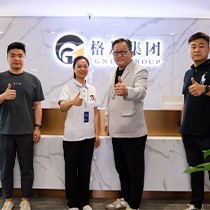


GNEE participated in the exhibition


