

Chemical Composition and Standards
C76200 white copper (copper-nickel-zinc white copper) is an alloy primarily composed of copper, nickel, and zinc. Its chemical composition strictly adheres to ASTM B122 (1990/1992/1993 editions). The core composition range is as follows:
Copper (Cu) + Silver (Ag): 57.0%–61.0% (Copper dominates the balance, with Ag added in trace amounts).
Nickel (Ni) + Cobalt (Co): 11.0%–13.5% (Nickel is a key alloying element, with Co as an optional addition).
Zinc (Zn): Balance (typically approximately 20%–30%, providing solid solution strengthening).
Impurity Control: Lead (Pb) ≤ 0.10%, Iron (Fe) ≤ 0.25%, Manganese (Mn) ≤ 0.50%, and other impurities (such as silicon and sulfur) ≤ 0.9%.
The low-lead design (≤0.10%) significantly reduces the tendency toward intergranular corrosion, improving the long-term reliability of high-stress components such as ship propellers.
Core Performance Advantages
Excellent Corrosion Resistance
Marine Environment: Excellent resistance to seawater and salt spray corrosion, with a lifespan over three times longer than ordinary brass. Widely used in ship propellers, seawater pumps, valves, and piping systems.
Chemical Media: Resistant to weak acids (such as acetic acid), weak bases, and organic solvents, suitable for harsh environments such as reactor linings and chemical equipment.
High Strength and Toughness
Tensile Strength: ≥440 MPa (longitudinal tensile strength at room temperature for bars), elongation ≥5%, capable of withstanding high loads and fatigue stresses.
Cold Working Properties: Ultimate deformation >70%, suitable for precision stamping (such as crystal oscillator housings), with a high surface finish.
Excellent Machinability and Weldability
Cold Working: Cold drawing and forging processes significantly increase strength, making it suitable for precision components such as instrument gears and watch parts.
Hot Working: The temperature must be controlled between 950°C and 970°C to avoid high-temperature brittleness.
Welding: Brazing and resistance welding are preferred; fusion welding (such as argon arc welding) requires a shielding gas to prevent cracking.
Conductivity and Thermal Stability
Maintaining good electrical conductivity, it is suitable for electrical applications such as electrical contacts, switches, and connectors. It also has a low temperature coefficient of resistivity, ensuring stable thermoelectric performance.


Typical Applications
Marine Engineering
Shipbuilding: Propellers, pump casings, valves, and piping systems, utilizing its seawater corrosion resistance and high strength.
Offshore Platforms: Salt spray-resistant components extend equipment life.
Electrical and Electronics
Electrical Contacts: Switches, relays, and connectors, relying on its conductivity and wear resistance.
Precision Instruments: Crystal oscillator housings and instrument gears, utilizing its cold working formability and surface finish.
Chemical Equipment
Reactor Lining: Resists corrosion from weak acids, weak bases, and organic solvents.
Piping: Corrosion-resistant pipes for transporting chemical media, reducing maintenance costs.
Other Applications
Architectural Decoration: Door handles, window frames, and decorative strips, combining aesthetics with corrosion resistance.
Automotive: Radiators and brake system parts, utilizing their thermal conductivity and strength.
Artistic Casting: Sculptures and decorative items, utilizing their attractive color and ease of molding.
Manufacturing and Processing Key Points
Melting and Casting
The main components are melted at high temperatures to ensure alloy homogeneity; sand casting or die casting is used to form the product.
Heat Treatment
Heat treatment further enhances strength and toughness and eliminates processing stresses.
Machining
The lead-containing design (≤0.10%) improves cutting efficiency, produces brittle chips, and produces a smooth workpiece surface, making it suitable for automated machining.
why choose us

Professional copper pipe supplier
The company has a cluster of leading copper processing production lines in China, including:
German imported precision copper tube production line (annual output of 30,000 tons)
Japanese technology copper foil rolling line (thinnest up to 6μm)
Fully automatic copper bar continuous extrusion line
Intelligent copper sheet and strip finishing mill unit
Digitalized control and management of the whole production process is realized through MES system, and the dimensional accuracy of the products can reach ±0.01mm.
Contact us today for a quotation:sales@gneesteel.com
Packaging and shipping
GNEE offers professional packaging for exported copper pipes. First, we apply anti-rust oil and plastic film to prevent oxidation. Then, we securely strap with steel straps and add corner protectors. Finally, we place the pipes on wooden pallets and reinforce them with iron or wooden boxes, ensuring they are moisture-proof and impact-resistant during ocean transport, while facilitating easy loading and unloading. All packaging meets export standards.


Customer visits


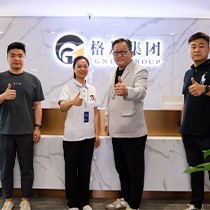


GNEE participated in the exhibition


