


Bare Copper Wire
Henan Gnee New Material Co., Ltd. is one of the most professional manufacturers and suppliers of bare copper wire in China, specialized in providing high quality copper products with competitive price. Welcome to buy discount bare copper wire for sale here from our factory. Customized orders are welcome.
Gnee group is a supply chain integrated enterprise including metal plate, coil, profile, outdoor landscape design and processing.Gnee is becoming the most professional international steel supply chain company in china central plains with explicit strategic framework, integrated governance structure, firm management foundation, abundant fund and human power.
Why Choose Us?
High quality
Our products are manufactured or executed to very high standards, using the finest materials and manufacturing processes.
Professional team
Our professional team collaborate and communicate effectively with one another, and are committed to delivering high-quality results. They are capable of handling complex challenges and projects that require their specialized expertise and experience.
Rich experience
Dedicated to strict quality control and attentive customer service, our experienced staff is always available to discuss your requirements and ensure complete customer satisfaction.
24h online service
We try and respond to all concerns within 24 hours and our teams are always at your disposal in case of any emergencies.

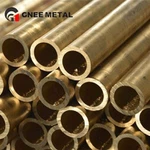
C11000 copper pipe is a very common piping material with good thermal and electrical conductivity. It is widely used in various industrial and civil fields, such as construction, water supply system, heating system and so on.

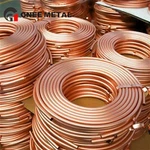
In the air conditioning system, the copper tube serves as a channel for the transmission of refrigerant and other substances, and its high thermal conductivity can rapidly transmit substances from one part to another, thus realizing the effect of rapid cooling or heating. At the same time, copper tube can withstand high pressure and high temperature, not easy to deformation or rupture, to ensure the long-term stability of the system.

C10100 ofhc copper is produced by direct conversion of selected refined cathodes and castings under carefully controlled conditions to prevent contamination of the pure oxygen-free metal during processing.The method of production of ofhc copper ensures an ultra-high grade metal with a copper content of 99.99%. Due to the extremely low content of foreign elements, the inherent properties of the copper element are highly utilized.

For c11000 copper, soldering techniques such as brazing, brazing, gas shielded arc welding, oxyacetylene welding and butt welding are recommended.

Copper sheet is able to maintain stable performance in humid, high temperature and strong acidic and alkaline environments, and the surface can form an oxide film to protect it from oxidation or corrosion.

Copper foil is an anionic electrolytic material deposited on the substrate layer of the circuit board as a thin, continuous metal foil, which acts as a conductor of electricity for the pcb. It is easily bonded to the insulating layer, receives a printed protective layer, and is corroded to form the circuit pattern.

Copper tape is a flat metal strip made of pure copper or copper alloy, which is usually used in the fields of electrical, electronics, and communications for manufacturing cables, transformers, inductors, capacitors, pcbs and other electronic components. Copper tape is characterized by good conductivity, good processing performance, good toughness, good corrosion resistance, etc., so it is widely used.

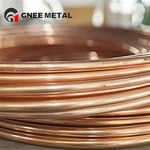
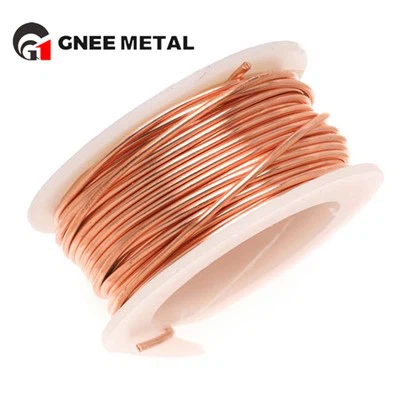
Bare copper wire is single stranded wire with no plating. Copper is the second best electrical conductor (after silver) and this type of wire is available in solid or stranded construction.

Copper push fit components are durable and easy to install, the push-fit system is suitable for hot and cold water applications and no tools are required for installation as components are reusable.
Bare copper wire offers some of the highest electrical conductivity of all metals, second only to silver. The electrical signal can zip through a copper wire with very little resistance, making it a great choice for applications that range from consumer electronics to power transmission and residential wiring. Unlike silver, copper wire is much more affordable and stands up better to wear and tear. This low cost is a big reason why copper is such a popular choice in the industry.
Resistant against heat
The foremost advantage of using bare copper wires – they don't get heated up easily. Since copper has the property of being heat resistant, copper wires can be used with electronics, which get heated up easily. Electrical appliances that get heated up tend to increase the chances of electrical accidents.
Good conductor of electricity
It is a well-known fact that after silver, copper wires conduct electricity the best. It can bear electrical current to a great extent without getting overloaded. Most electrical appliances get damaged due to overloading current because the wires used are unable to tolerate and transfer electricity.
Reaches places you have never thought of
Bare copper wires are not stranded or braided, which is why they have a unique characteristic of reaching places that no wire can. Electricians prefer using copper wires when they are working in areas that are small and congested.
Very high thermal and electrical power
Consumers generally look for products that do not wear down easily. Most of the wires tend to depreciate and become obsolete in few months itself. However, bare copper wires are long-lasting; you don't need an electrician to change the wires again and again.
Types of Bare Copper Wire
Soft drawn bare copper
Soft drawn bare copper wire is one of the most well-known electrical copper wire types and what most people envision when looking for bare copper. This type of wire is aptly named since it is solid but flexible for configuring and fitting around corners. It is shaped simply and annealed for durability, with somewhat improved conductivity compared to hard drawn copper conductors. It is softened or annealed to form by heating it above a critical temperature and letting it cool to ambient temperature slowly.
It's corrosion-resistant, especially when treated with tin, and suitable for wet, damp and dry locations. It can be easily worked and formed into place, making it a highly versatile bare copper wire. Bare copper is often used for overhead drive transmission installations. It's also helpful for circuit-grounding, bonding and equipment that requires high conductivity rating and flexibility.
Hard drawn bare copper
Hard drawn copper wire has a coating over it to give it a bit of protection and to strengthen the wire. It is bare copper that hasn't had heat applied to it after completing the drawing process with each die, hardening it. You'll notice when holding it that the soft drawn wire is much easier to bend than the hard drawn. Sometimes a stiff wire is easier to install when the application isn't bending around corners.
Forgoing the heat treatment gives hard drawn copper a higher tensile strength than annealed copper. It also has more resistivity since the crystalline structure in the copper breaks down with each pull through the series of dies. While this type of bare copper wire is less flexible, it's often more affordable than other types since the processing time of making it is short.
Stranded bare copper
If you require superior flexibility, consider using stranded bare copper. Using multiple thinner strands bundled together will give the wire more movement and bendability, which can be helpful in some situations. Making this type of copper involves drawing individual wires together and annealing them. After, the wires are run through another machine that twists them around a center wire.
With each new strand, the wire gains more flexibility. Each strand is often insulated with a non-conductive material. They are easy to route through complicated obstacles and flexible enough for even the smallest spaces.
What are the Reasons to Use the Bare Copper Wire
Copper wires are highly flexible
They can be conveniently bent or twisted to do wiring in constricted areas. For home wiring, copper wires are highly recommended because you will need to use wires in narrow hard-to-reach places. Even though the bare copper wires are very flexible, it does not suggest that they are weak and brittle. They will not break easily even under duress. They can be tweaked in precarious angles to get the wiring work done smoothly.
Copper wires are also long-lasting
They will not need to be repaired frequently and they do not become loose unlike other materials which may be used for wiring purposes. Besides, bare copper wires are recommended for appliances which emit a lot of heat as they will not catch fire. So, this advantage makes copper wires easy to work with. They are safe, and even with an overloading or surge, they will not start to melt. This means that you can use the bare copper wire at home without worrying about fire hazards.
Copper wire is always used at home to avoid issues of compatibility
Most electrical product manufacturers will use these wires in their appliances. As such, it is advisable to use copper wiring for homes so that they work compatibly with these appliances. It is important to understand that when you use a wire other than copper with a bare copper wire, chances are that a galvanic reaction will happen which can be fatal. With copper wiring in everything, such problems will never arise and this is why electrical goods experts recommend usage of copper for appliances.
Copper wires are bendable and easy to work with
You will not need to worry about oxides forming on these wires as they are highly resistant to corrosion. Many metals face wear and tear due to exposure to high humidity, especially in wet areas. But, copper wires are corrosion resistant and this explains why marine equipments mainly use copper wiring.
Manufacturers of bare copper wire use an automated production process that utilizes extrusion machines. The wire is typically covered with rubber skin, which is achieved by evenly squeezing it into a tiny hole on the outer skin of the bare copper wire. This process is carried out through the use of an extrusion machine, which is highly efficient and widely utilized in the production of bare copper wires.
When it comes to bare copper wire, the material used is of high quality and has a bright color. This type of wire is usually yellow in color and when woven into a network, it exhibits great stability. To protect its surface, a galvanized protective film is added which not only gives the wire a good gloss but also ensures its durability, strength, and ability to resist corrosion. All these features make bare copper wire an ideal choice for various applications.
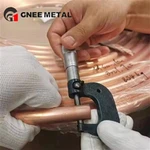
When testing samples, it's important to not only visually inspect the appearance and surface, but also measure how well the specimen responds to external force. Tests like the cupping test for plates and reverse bending test for wires are common ways to do this. Bare copper plating wire specifically offers great conductivity and high-frequency anti-disturbance, making it ideal for a range of applications. These include things like outdoor telephone lines, power system grounding wires, electronic leads, and tram lines, as well as network cables, electronic component patch cables, and more.
To prevent any issues with the material during use, it is crucial to keep an eye on the uniformity of the finishing. Following this requirement is essential when sorting through the material, so be sure to pay close attention to the processing. By doing so, you can ensure that the material has been properly handled and avoid any potential complications.
There are several methods that can be used to achieve a mirror finish on bare copper wires depending on the complexity of the wire and the user's requirements. These methods include mechanical polishing, chemical polishing, and electrochemical polishing. When copper wires are colored, they serve to enhance the decorative variety of titanium mesh products and also improve their wear resistance and performance. Coloration of bare copper wires is an effective way of giving products unique colors while adding to their aesthetics and durability.
Bare copper wire is a very important metal material, widely used in electrical, communications, construction and other fields. Copper as a good conductor representative, used to make connectors, cables, electrical equipment, etc., this material conductivity is very strong, low resistivity, and relatively stable, will not be affected by heat, humidity, gas and other factors, will not be affected by electromagnetic interference, very suitable for the transmission of electrical signals.
First of all, bare copper wire is a metal material with good conductivity, and the densely packed copper atoms can form a good conductive network, so that the current can be quickly transmitted to the desired location. In the field of communication, bare copper wire is used to manufacture communication cables such as telephone lines and network cables, which can communicate through signal and network data transmission. In the construction field, bare copper wire is also used to manufacture electrical equipment such as wires and distribution boxes to ensure the stable transmission of electricity.
Secondly, bare copper wire also has good mechanical properties. Compared with other metals, copper has better toughness and ductility, and is not easy to break or deform, so bare copper wire is also widely used to manufacture electronic components such as motors, transformers, and inductors.
Then, the bare copper wire also has good corrosion resistance. Bare copper wire is not easy to be oxidized or rusted, even if used in wet or harsh environments, it can maintain good electrical and mechanical properties, so it is also widely used in marine engineering and chemical equipment.
Bare copper wire is a single stranded wire that is annealed for high ductility and meets qq-w-343 standards for uninsulated copper wire. It consists of copper with small amount of copper oxide impurities.
Making of a bare copper wire an electrical wire carried electric current, which is proportional to its gauge size and is coated with some metal to insulate. Another objective to coat the wire with a metal is to safeguard it against moisture, chemicals, heat, corrosion and abrasion. Copper is the most frequently used metal for electric wire, but is sometime mixed with alloys to offer better strength and resistance to the wire. A wire can either have a single strand or multiple smaller strands, depending on the supplication of the wire.

Certifications

Our Factory
Gnee group is a supply chain integrated enterprise including metal plate, coil, profile, outdoor landscape design and processing.Gnee is becoming the most professional international steel supply chain company in china central plains with explicit strategic framework, integrated governance structure, firm management foundation, abundant fund and human power.


FAQ
Hot Tags: bare copper wire, China bare copper wire manufacturers, suppliers, factory, copper, C26000 copper cable, C10100 grounding wire, C23000 thin copper wire, bare C12500 copper cable, bare C22000 copper wire, bare C12200 copper cable
You Might Also Like



Send Inquiry