

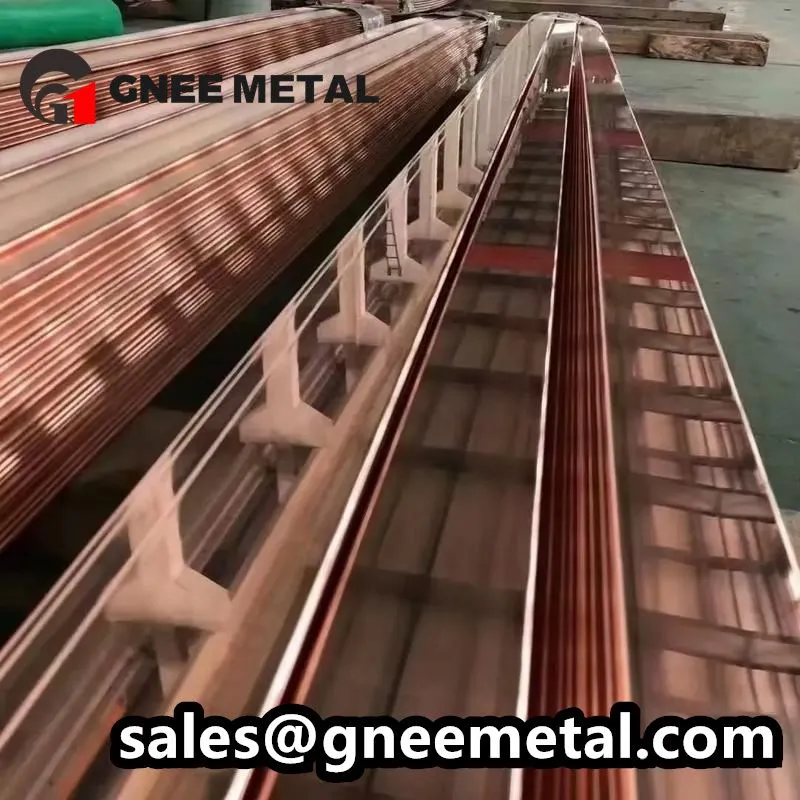


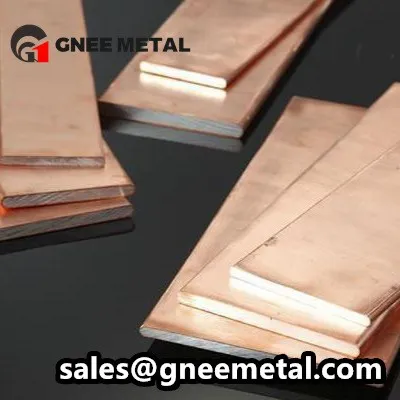
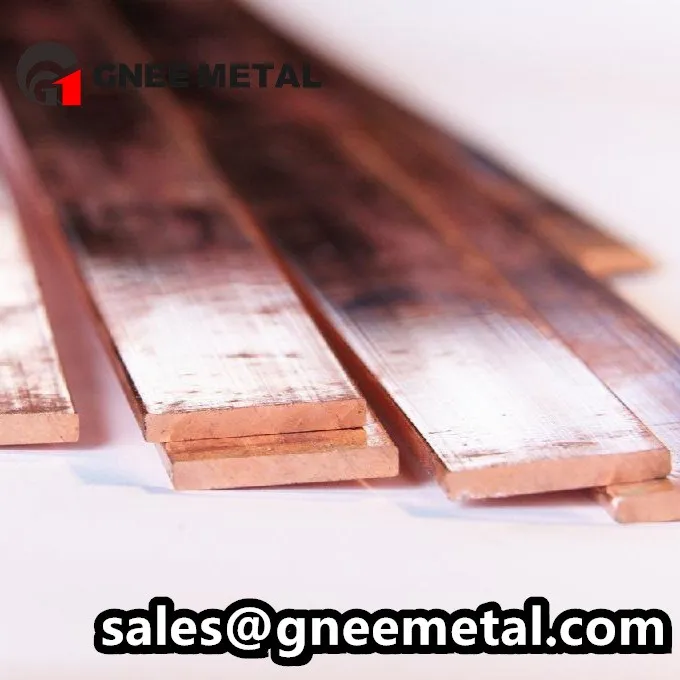
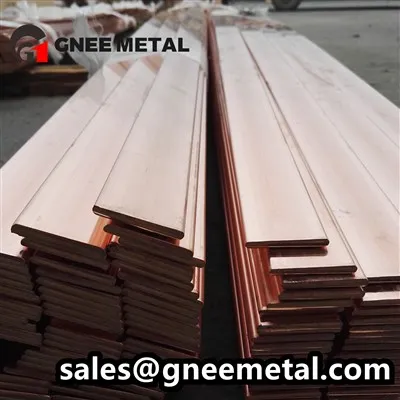
C12200 Copper Busbar
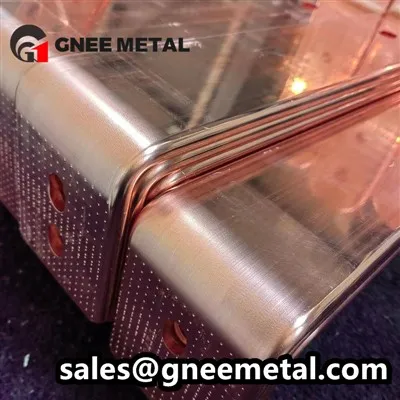
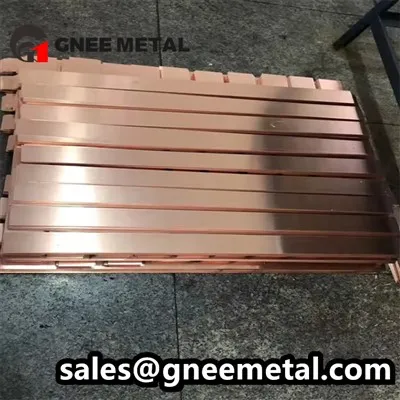
Gnee Steel (Tianjin) Co., Ltd. is one of the most professional manufacturers and suppliers of c12200 copper busbar in China, specialized in providing high quality copper products with competitive price. Welcome to buy discount c12200 copper busbar for sale here from our factory. Customized orders are welcome.
What Makes C12200 Different from Other Copper Busbars?
C12200 (DHP – Deoxidized High Phosphorus) is a phosphorous-deoxidized copper grade with 0.015-0.040% phosphorus added during melting. This small amount of phosphorus fundamentally changes how the copper behaves during welding, brazing, and soldering.
What makes C12200 different:
| Property | C12200 | C11000 (ETP) |
|---|---|---|
| Phosphorus content | 0.015-0.040% | 0% |
| Oxygen content | ≤0.01% | 0.02-0.04% |
| Behavior when heated | Stable | Forms steam internally |
| Weldability | Excellent | Poor (may crack) |
| Brazing | Excellent | Fair |
| Resistance to hydrogen embrittlement | High | Low |
C11000 contains oxygen. When heated above 400°C in a reducing atmosphere (like hydrogen or carbon monoxide), the oxygen reacts to form steam inside the copper – causing cracks. C12200 has no oxygen. It stays solid and crack-free.


Why Does C12200 Contain Phosphorus?
The phosphorus in C12200 serves one main purpose:removing oxygen. During copper refining, phosphorus is added as a deoxidizing agent. It binds with oxygen to form phosphorus oxides that float out of the melt.
| Function | Effect |
|---|---|
| Deoxidizes the melt | Removes oxygen from 0.04% down to 0.01% or less |
| Prevents hydrogen embrittlement | No oxygen = no steam formation when heated in hydrogen |
| Improves weldability | Clean grain boundaries allow proper filler metal flow |
| Slightly reduces conductivity | Each 0.01% phosphorus reduces conductivity by about 1-2% |
Can C12200 Copper Busbar Be Welded or Brazed?
Yes. This is the main reason to choose C12200. It can be welded, brazed, and soldered using standard methods – unlike C11000 which often cracks.
| Method | Suitability | Notes |
|---|---|---|
| TIG welding (GTAW) | Excellent | Use ERCu or ERCu-A filler rod. Preheat not required for thickness under 10mm |
| MIG welding (GMAW) | Good | Use deoxidized copper wire. Higher heat input than TIG |
| Brazing (silver braze) | Excellent | BAg or BCuP filler metals work well. Clean joint surfaces before brazing |
| Soldering | Excellent | Tin-lead or lead-free solders flow easily |
| Resistance welding | Fair | Possible but requires high current and precise control |
Why C11000 fails at welding:
When you weld C11000, heat causes oxygen impurities to react with hydrogen (from moisture or shielding gas). This creates steam pockets inside the copper near the weld zone. The steam expands, causing cracks and porosity. The weld joint may look good but will fail under vibration or thermal cycling.
Is C12200 Conductive Enough for Busbar Applications?
This is the most common question. Yes, for most applications. C12200 has 85-95% IACS conductivity depending on phosphorus content and temper.
| Material | % IACS | Conductivity (MS/m) | Relative to C11000 |
|---|---|---|---|
| C11000 (ETP) | 100% | 58 | Baseline |
| C12200 (DHP) | 85-95% | 49-55 | Slightly lower |
| C10100 (OFE) | 100% | 58 | Same as C11000 |
| Aluminum 6061 | 61% | 35 | Much lower |
A C11000 busbar sized 50mm x 6mm carries 620 Amps
A C12200 busbar of the same size carries approximately 530-560 Amps (about 10-15% less)
To match C11000 ampacity, increase cross-section by 5-10% or go up one size
Applications where C12200 conductivity is sufficient:
Most industrial switchgear and panel boards
Welding machine internal connections
Transformer and reactor busbars
Grounding systems
Any application where the busbar is sized primarily for mechanical reasons
Why C12200 Does Not Crack in Hydrogen Atmosphere
What happens to C11000 in hydrogen:
| Step | Process |
|---|---|
| 1 | C11000 contains 0.02-0.04% oxygen as copper oxide (Cu₂O) |
| 2 | Heated to 400-900°C in hydrogen atmosphere |
| 3 | Hydrogen diffuses into copper and reacts with Cu₂O:Cu₂O + H₂ → 2Cu + H₂O (steam) |
| 4 | Steam pressure creates internal cracks and blisters |
| 5 | Copper becomes brittle and may fail under load |
What happens to C12200 in hydrogen:
| Step | Process |
|---|---|
| 1 | C12200 contains no oxygen (phosphorus removed it) |
| 2 | Heated to 400-900°C in hydrogen atmosphere |
| 3 | No Cu₂O = no reaction = no steam |
| 4 | Copper remains ductile and crack-free |
Applications where this matters:
Hydrogen brazing furnaces (common for electrical contacts)
Copper busbars in hydrogen-cooled generators
Chemical plants with hydrogen atmosphere
Nuclear reactor components
Any process where copper is heated in reducing gas
Where Should You Use C12200 Instead of C11000?
Use C12200 when:
| Scenario | Reason |
|---|---|
| You need to weld or braze the busbar | C11000 cracks at weld zone. C12200 welds cleanly |
| Your assembly uses brazed joints | C12200 wets better with silver braze filler |
| The busbar will be heated in hydrogen | C11000 suffers hydrogen embrittlement. C12200 does not |
| Multiple thermal cycles are expected | C12200 maintains grain structure better |
| Your customer specification calls for DHP copper | Many welding codes require deoxidized copper |
Use C11000 when:
| Scenario | Reason |
|---|---|
| The busbar is bolted only (no welding) | C11000 is cheaper and higher conductivity |
| Cost is the primary driver | C12200 is 5-10% more expensive |
| Maximum ampacity in minimal space is critical | C11000's 100% IACS gives highest current per size |
| You are buying standard stock sizes in volume | C11000 is more widely available |
What Sizes of C12200 Copper Busbar Are Available?
| Width (mm) | Thickness (mm) | Standard Length (mm) |
|---|---|---|
| 20 | 3, 5, 6 | 2000 / 4000 |
| 25 | 3, 5, 6 | 2000 / 4000 |
| 30 | 5, 6, 10 | 2000 / 4000 |
| 40 | 5, 6, 10 | 2000 / 4000 |
| 50 | 5, 6, 10 | 2000 / 4000 |
| 60 | 6, 10, 15 | 2000 / 4000 |
| 80 | 6, 10, 15 | 2000 / 4000 |
| 100 | 10, 15, 20 | 2000 / 4000 |
Custom sizes available (MOQ 50 pieces):
Width:10mm to 250mm
Thickness:3mm to 25mm
Length:Up to 6000mm
C12200 Copper Busbar Surface Finishing
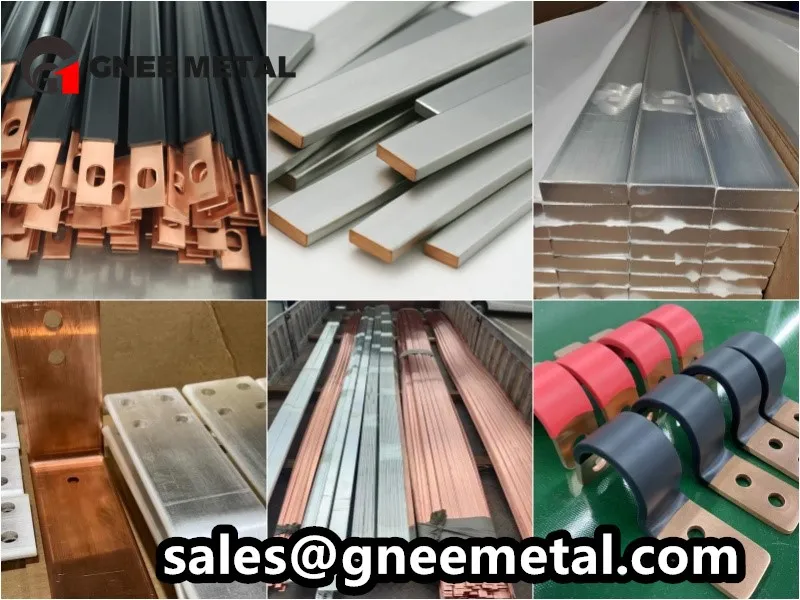
| Finish | Thickness | Best For | Note for C12200 |
|---|---|---|---|
| Bare (no plating) | N/A | Welding, brazing | Recommended – plating must be removed before welding |
| Tin plating | 3-8 microns | Corrosion protection | Apply after welding, not before |
| Silver plating | 5-15 microns | Low contact resistance | Apply after final fabrication |
| Heat shrink tubing | 1.5-3x ratio | Insulation | Can be applied over bare or plated busbar |
C12200 or C11000 – Which One to Order?
| Factor | C12200 (DHP) | C11000 (ETP) |
|---|---|---|
| Conductivity (% IACS) | 85-95% | 100% |
| Weldability | Excellent – welds clean | Poor – cracks easily |
| Brazing / soldering | Excellent | Fair |
| Hydrogen embrittlement resistance | High (no oxygen) | Low (contains oxygen) |
| Price | +5-15% higher | Baseline |
| Stock availability | Limited stock | Widely available |
| Best for | Welded busbars, hydrogen atmosphere | Bolted connections, general electrical |
C12200 vs C11000 – which one to order depends entirely on your connection method. If you are welding or brazing the busbar, choose C12200. If all connections are bolted, choose C11000 and save cost.
| Question | Answer | Recommended Grade |
|---|---|---|
| Will the busbar be welded or brazed? | Yes | C12200 |
| Will the busbar be heated in hydrogen atmosphere? | Yes | C12200 |
| Does your customer spec require "deoxidized copper" or "DHP"? | Yes | C12200 |
| Are all connections bolted (no welding)? | Yes | C11000 |
| Do you need maximum ampacity in minimum space? | Yes | C11000 |
| Is cost the primary factor? | Yes | C11000 |
| You are not sure? | – | C11000 (95% of users) |
| Application | Grade to Use | Why |
|---|---|---|
| Busbar bolted to circuit breaker terminals | C11000 | No welding involved |
| Busbar welded to copper studs for battery connection | C12200 | Welding required |
| Ground busbar in standard panel board | C11000 | Bolted only |
| Busbar brazed into a larger copper assembly | C12200 | Brazing required |
| Busbar in hydrogen-cooled generator | C12200 | Hydrogen atmosphere |
| Replacement busbar for existing welded design | C12200 | Match existing material |
FAQ
Q1:Is C12200 copper busbar more expensive than C11000?
Yes, slightly. C12200 typically costs 5-15% more than C11000 depending on quantity and size. The premium comes from the additional phosphorus deoxidation step in refining. For most projects, this small premium is worth it if you need reliable welded connections.
Q2:Can I use C12200 for standard switchgear applications?
Yes. C12200 works perfectly in switchgear, panel boards, and grounding applications. The only downside is slightly lower conductivity (85-95% vs 100%) – you may need to go up one size to match C11000 ampacity. If your current load is well below the busbar rating, no change is needed.
Q3:What is the best way to weld C12200 busbar?
TIG welding (GTAW) with ERCu filler rod is the recommended method. Use DC straight polarity, 150-250 amps depending on thickness. No preheat needed for thickness under 10mm. Clean weld area with stainless steel brush before welding. For best results, we can provide welding procedure specifications (WPS) – ask us.
Q4:Does C12200 need special filler material for brazing?
Standard silver braze filler metals work well. Recommended:BAg-5 (45% silver) or BAg-7 (56% silver) for highest strength. BCuP-5 (15% silver) is acceptable for lower strength applications. Clean joint surfaces and use flux. No special preheat required.
Q5:Is C12200 available in the same sizes as C11000?
Yes. All standard C11000 sizes are also available in C12200 – 20mm to 120mm width, 3mm to 20mm thickness, 2000mm or 4000mm length. Custom sizes also available. However, C12200 is less widely stocked – lead times may be 5-10 days longer than C11000.
Q6:Can you supply C12200 with tin plating?
Yes. We can apply tin plating (3-8 microns) to C12200 busbars. However, if you plan to weld or braze the busbar, order bare – plating will contaminate the weld. We recommend:order bare, perform welding, then send back for plating. We can handle both steps.
Q7:What is the lead time for C12200 orders?
Stock sizes (bare): 5-10 business days (samples), 10-15 days (production).
Stock sizes with plating: Add 3-5 days.
Custom sizes (non-standard width/thickness/length): 15-20 business days with MOQ 50 pieces.
Welded assemblies (we weld per your drawing): Quote required – lead time 15-25 days.
Q8:Do you have C12200 in stock or is it made to order?
We maintain stock of common C12200 sizes (20mm, 25mm, 30mm, 40mm, 50mm width with 5mm and 6mm thickness). Non-stock sizes and large quantities are made to order. Contact us to check current stock for your dimensions.
Q9:Can C12200 be used for grounding?
Yes. C12200 is suitable for grounding and bonding. Its corrosion resistance is similar to C11000. For outdoor or coastal grounding, we recommend tin plating for additional corrosion protection. The slightly lower conductivity (85-95% IACS) is not a concern for grounding applications.
Q10:Sea freight or air freight for C12200 busbar?
| Shipping Method | Delivery Time | Cost | Best For |
|---|---|---|---|
| Sea freight (LCL) | 30-40 days | Low | Orders > 500 kg |
| Sea freight (20FT FCL) | 25-35 days | Lowest per kg | Orders > 18 tons |
| Air freight | 5-7 days | 3-5x sea freight | Urgent orders, 100-500 kg |
| Express courier | 3-5 days | 5-8x sea freight | Samples only, under 100 kg |
Click here to get a shipping quote for your order
Hot Tags: c12200 copper busbar, China c12200 copper busbar manufacturers, suppliers, factory, copper
Previous
No InformationNext
No InformationYou Might Also Like
Send Inquiry