

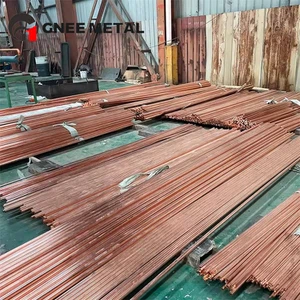
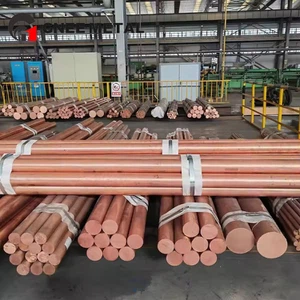
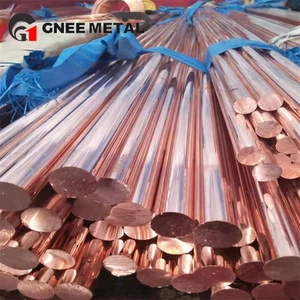
Pure copper is a purplish-red metal, commonly known as "purple copper", "red copper" or "red copper". Pure copper is ductile. A drop of copper the size of a drop of water can be stretched into filaments up to two kilometers long or calendered into an almost transparent foil larger than a bed. The most valuable property of pure copper is that it conducts electricity very well, second only to silver among all metals, and therefore has become the "protagonist" of the electrical industry.
Pure copper is much more widely used than pure iron, 50% of the copper is electrolytically purified into pure copper for the electrical industry every year. Here the pure copper, indeed to be very blunt, containing copper 99.95% or more. A very small amount of impurities, especially phosphorus, arsenic, aluminum, etc., will greatly reduce the copper conductivity. Oxygen in copper (copper refining is easy to mix a small amount of oxygen) has a great impact on the conductivity, copper used in the electrical industry generally must be oxygen-free copper. In addition, lead, antimony, bismuth and other impurities will make the copper crystallization can not be combined together, resulting in thermal embrittlement, will also affect the processing of pure copper. This very high purity of pure copper, generally refined by electrolysis: the impure copper (i.e., crude copper) as the anode, pure copper as the cathode, with copper sulfate solution as the electrolyte. When the current passes, the impure copper on the anode gradually melted, pure copper will gradually precipitate on the cathode. The copper refined in this way; the purity can reach 99.99%.
Copper is a relatively pure copper, generally can be approximated as pure copper, electrical conductivity, plasticity are better, but the strength, hardness is worse.
Properties and Uses of Brass.
Brass is a kind of copper containing other alloy components, the price is cheaper than purple copper, electrical conductivity and plasticity is a little worse than purple copper, but the strength and hardness to be higher.
Brass is an alloy of copper and zinc. The simplest brass is copper - zinc binary alloy, known as simple brass or ordinary brass, change the content of zinc in the brass can get different mechanical properties of brass. The higher the zinc content in brass, the higher its strength and slightly lower plasticity. The brass used in the industry does not contain more than 45% zinc, the zinc content is higher will produce brittleness, so that the alloy performance is bad. Add 1% of tin in brass can significantly improve the resistance of brass to seawater and marine atmospheric corrosion, so it is called "naval brass". Tin can improve the cutting performance of brass. Leaded brass is what we usually call easy to cut national standard brass. The main purpose of adding lead is to improve the machinability and wear resistance, lead has little effect on the strength of brass. Engraving copper is also a kind of lead brass. Most brass has good color, workability, ductility, easy plating or painting.
In industry and civil use, according to different characteristics of use to choose different materials. Such as making wires, the requirements of the softer, purple copper is better. Such as making joints, screws on the place to choose brass.
Properties and uses of bronze:
The original refers to copper-tin alloy, after the copper alloys other than brass and white copper are called bronze, and often in the name of bronze before the name of the first major additive elements of the name. Tin bronze has good casting properties, good friction-reducing properties and good mechanical properties, and is suitable for the manufacture of bearings, worm wheels and gears. Lead bronze is the modern engine and grinding machine widely used bearing material. Aluminum bronze has high strength, good wear and corrosion resistance, and is used for casting high load gears, bushings, marine propellers and so on. Beryllium bronze and phosphor bronze have high elastic limit and good electrical conductivity, suitable for manufacturing precision springs and electrical contact components, beryllium bronze is also used to manufacture coal mines, oil depots and other non-sparking tools.
Properties and uses of white copper:
Copper alloy with nickel as the main added element. Copper-nickel binary alloy called ordinary copper; plus manganese, iron, zinc, aluminum and other elements of copper alloy called complex copper. Industrial copper is divided into two categories: structural copper and electrical copper. Structural copper is characterized by good mechanical properties and corrosion resistance, and beautiful color. This kind of copper is widely used in the manufacture of precision machinery, chemical machinery and ship components. Electrotechnical copper generally has good thermoelectric properties. Manganese copper, Kang copper, Cao copper is manganese white copper with different manganese content, which is the material for manufacturing precision electrical instruments, varistors, precision resistors, strain gauges, thermocouples and so on.
How to distinguish between purple copper, brass, bronze and white copper:
White copper, brass, red copper (also known as "purple copper"), bronze (green-gray or gray-yellow) is distinguished from the color, of which white copper, brass is very easy to distinguish; red copper is pure copper (impurities <1%), bronze (other alloying components of 5% or so) is slightly difficult to distinguish. When not oxidized, red copper color is brighter than bronze, bronze slightly green or yellowish dark; after oxidation, red copper becomes black, bronze is bit greenish (watery harmful oxidation) or chocolate color.


