

In the realm of industrial materials, copper tubes stand out for their exceptional versatility, durability, and conductivity. Among the myriad of copper tube variants, TP2, T2, and TU1 have garnered significant attention for their unique properties and wide-ranging applications. Whether you're an engineer, a contractor, or a materials scientist, understanding the nuances of these copper tube types is crucial for optimizing performance and ensuring the longevity of your projects. This blog delves into the intricate world of TP2, T2, and TU1 copper tubes, offering a comprehensive guide to their chemical compositions, manufacturing processes, and practical applications. Join us as we explore the distinctive characteristics that make these copper tubes indispensable in various industries, from plumbing and HVAC to electrical and automotive sectors.
What is TP2, T2 and TU1 Copper?
TP2 (Phosphorus Deoxidized Copper)
TP2 is phosphorus deoxidized copper, with a copper content according to national standards of 99.90%. Approximately 0.015% of phosphorus is added during the smelting process to improve the welding performance of copper tubes. It is mainly used in products with frequent air conditioning welding to avoid "hydrogen embrittlement" and is easier to weld than T2.
Due to the addition of phosphorus elements in TP2 material, it exhibits relatively greater ductility. TP2 is widely used in the manufacturing of air conditioning refrigerant connection pipes, gas circuit connection pipes for stoves, electric heating pipes, etc.
T2 (Pure Copper)
T2 is pure copper with a copper content higher than 99.90%. When users require high conductivity from the material, T2 copper tubes are the preferred choice.
TU1 (Oxygen-Free Copper)
TU1 is oxygen-free copper, essentially higher purity copper with a copper content ≥99.97%. It has extremely low oxygen and impurity content, with phosphorus content lower than 0.002%. TU1 exhibits excellent electrical and thermal conductivity, good ductility, and superior processing, welding, corrosion resistance, and cold resistance. The uniformity of TU1's internal crystal grains and the significant reduction of secondary phase particles at grain boundaries result in enhanced ductility. This increased ductility leads to better processing consistency. TU1's strain distribution uniformity in the processing of trumpet mouths is significantly advantageous compared to TP2. This means that if TU1 is used for making connection pipes, the processing of the trumpet mouth will be more stable and reliable, ensuring a stable sealing characteristic of the connection pipe. Due to its high production requirements and costs, TU1 copper tubes are priced much higher than other categories of purple copper tubes.
Chemical Composition and Properties of TP2, T2 and TU1 Copper
TP2 Copper
TP2 copper, also known as phosphorus-deoxidized copper, contains a small amount of phosphorus, which enhances its weldability and corrosion resistance. This type of copper is commonly used in applications where these properties are critical, such as in plumbing and heat exchangers.
Chemical Composition:
Copper (Cu): 99.90% min
Phosphorus §: 0.015% - 0.040%
Properties:
Excellent weldability
Good corrosion resistance
High thermal and electrical conductivity
TP2 Copper
TP2 copper, also known as phosphorus-deoxidized copper, contains a small amount of phosphorus, which enhances its weldability and corrosion resistance. This type of copper is commonly used in applications where these properties are critical, such as in plumbing and heat exchangers.
Chemical Composition:
Copper (Cu): 99.90% min
Phosphorus §: 0.015% - 0.040%
Properties:
Excellent weldability
Good corrosion resistance
High thermal and electrical conductivity
T2 Copper
T2 copper is a high-purity copper with minimal impurities, making it ideal for applications requiring excellent electrical conductivity. It is widely used in electrical and electronic components, as well as in the manufacturing of cables and wires.
Chemical Composition:
Copper (Cu): 99.90% min
Impurities: 0.10% max
Properties:
Superior electrical conductivity
Good thermal conductivity
High ductility and malleability
TU1 Copper
TU1 copper is another high-purity copper, similar to T2, but with even fewer impurities. This makes it suitable for applications that demand the highest levels of electrical and thermal conductivity, such as in high-end electronic devices and specialized industrial equipment.
Chemical Composition:
Copper (Cu): 99.95% min
Impurities: 0.05% max
Properties:
Exceptional electrical and thermal conductivity
Excellent ductility and malleability
High corrosion resistance


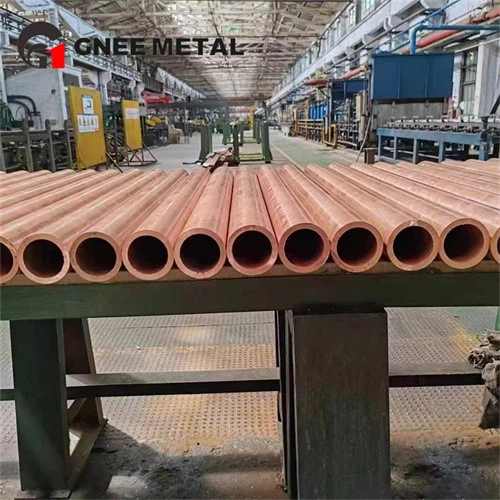
Common Industrial Applications for TP2, T2, and TU1 Copper Tubes
TP2 Copper Tubes Applications
Plumbing Systems: TP2 copper tubes are widely used in plumbing systems due to their excellent corrosion resistance and ease of welding. They are ideal for both hot and cold water supply lines.
Heat Exchangers: The good thermal conductivity and corrosion resistance of TP2 copper make it suitable for use in heat exchangers, where efficient heat transfer is crucial.
Gas Lines: TP2 copper tubes are also used in gas lines due to their ability to withstand high pressures and resist corrosion.
T2 Copper Tubes Applications
Electrical Wiring: T2 copper tubes are extensively used in electrical wiring due to their high electrical conductivity and purity.
Electronic Components: The excellent electrical properties of T2 copper make it suitable for use in electronic components and circuit boards.
Telecommunications: T2 copper tubes are used in telecommunications equipment for signal transmission.
TU1 Copper Tubes Applications
High-End Electronics: TU1 copper tubes are used in high-end electronic devices that require superior electrical and thermal conductivity.
Specialized Industrial Equipment: The high purity and excellent properties of TU1 copper make it suitable for specialized industrial equipment.
Medical Devices: TU1 copper tubes are used in medical devices where high purity and reliability are essential.
International Standards and Specifications for TP2, T2, and TU1 Copper Tubes
Chinese copper processing materials can be categorized into four main types: standard copper (T1, T2, T3, T4), oxygen-free copper (TU1, TU2, and high-purity vacuum oxygen-free copper), deoxidized copper (TUP, TUMn), and special copper with small amounts of alloying elements (such as arsenic copper, tellurium copper, and silver copper). Red copper, known for its electrical and thermal conductivity, is second only to silver and is extensively used in the manufacture of electrical and thermal equipment. Additionally, red copper exhibits excellent corrosion resistance in various environments, including the atmosphere, seawater, and certain non-oxidizing acids (like hydrochloric acid and dilute sulfuric acid), as well as alkalis, salt solutions, and various organic acids (such as acetic acid and citric acid).
| Name | Chinese Grade | Japanese Grade | German Grade | American Grade | British Grade |
| Oxygen-free Copper | TU0 | C1011 | V10100 | C110 | -- |
| No.1 Oxygen-free Copper | TU1 | C1020 | OF-Cu | C10200 | C103 |
| No.2 Oxygen-free Copper | TU2 | C1020 | OF-Cu | C10200 | C103 |
| Number One Copper | T1 | C1020 | OF-Cu | C10200 | C103 |
| Copper No.2 | T2 | C1100 | SE-Cu | C11000 | C101 |
| No.3 Copper | T3 | C1221 | -- | -- | -- |
| No.1 Phosphorus Deoxidized Copper | TP1 | C1201 | SW-Cu | C10200 | -- |
| Phosphorus Deoxidized Copper | TP2 | C1220 | SF-Cu | C10200 | -- |
Our product range
| Product Category | Key Product Forms | Common Standards (Examples) | Typical Applications / Features |
|---|---|---|---|
| Copper Rods & Bars | Round Rods, Square Bars, Hexagonal Bars | ASTM B187, C11000, C10200; EN 12163-66; JIS H3250 | Electrical conductors, machined parts, connectors, hardware. Available in various tempers (soft, hard). |
| Copper Tubes & Pipes | Seamless Tubes, Straight Lengths, Coils (for flexible tubes) | ASTM B75, B280, B88; EN 12735; JIS H3300 | Plumbing, HVAC/R, heat exchangers, medical gas lines, hydraulic systems. |
| Copper Plates & Sheets | Plates (>6mm thickness), Sheets (<6mm thickness) | ASTM B152, C11000; EN 1652; JIS H3100 | Architectural cladding, industrial fabrication, grounding plates, chemical processing. |
| Copper Strips & Foils | Strips, Rolls, Precision Foils | ASTM B272, C11000; EN 1652; JIS H3100 | Electrical contacts, transformers, shielding, gaskets, decorative inlays. |
| Copper Wires | Bare Copper Wire, Stranded Wire, Busbars | ASTM B1, B3, B187; EN 13601; JIS H3260 | Windings, cables, busbars, fasteners, welding electrodes. |
Our factory
We provide a full range of copper products-rods, tubes, plates, bars, wires, and strips-tailored to international specifications including ASTM, BS, and JIS. Our manufacturing capabilities feature horizontal continuous casting for large-diameter bars, rotary piercing mills for high-precision tubes, and multi-roll finishing mills for ultra-thin strips. To ensure superior quality, we implement comprehensive testing protocols: chemical analysis via XRF, mechanical property verification on universal testing machines, and non-destructive testing (ultrasonic and eddy current) for internal and surface integrity. With integrated production, rigorous inspection, and flexible customization, we deliver high-performance copper materials for electrical, HVAC, machinery, and construction industries worldwide.


