

Excellent Resistance to Corrosion and Biofouling in Marine Environments
Copper Nickel 70/30 (C71500) alloys offer high resistance to seawater environments. The material is well-established for piping systems, heat exchangers, and offshore platforms.
Chemical Composition (ASTM B466 / sb111 c71500)
The table below details the standard chemical composition for Copper Nickel Alloy UNS C71500.
| Element | Percentage (%) |
|---|---|
| Copper (Cu) | ~ 69.0 |
| Nickel (Ni) | 29.0 - 33.0 |
| Iron (Fe) | 0.4 - 1.0 |
| Lead (Pb) | < 0.05 |
Note: For comparison, ASTM b111 C70600 (90/10 Copper Nickel) contains ~89% Copper, 9.0-11.0% Nickel, and 1.0-1.8% Iron.
Key Properties
C71500 Mechanical Properties (Annealed):
0.5% Proof Stress: 105 MPa
Tensile Strength: 275 MPa
Elongation: 40%
C71500 Density: 8.94 g/cm³ @ 20°C
70/30 Copper Nickel Machinability: Rated at 20% of free-cutting brass.
Thermal Conductivity: 40 W/m·K @ 20°C
Melting Point (Liquidus): 1150°C
Corrosion Resistance & Mechanism
C71500 copper nickel provides reliable service due to a protective surface film that forms when in contact with water. Key benefits include:
Low General Corrosion Rates: Typically 0.0025-0.025 mm/year in seawater.
High Resistance to Crevice Corrosion & Chloride Stress Corrosion: Unlike stainless steels, this alloy is not susceptible to these failure modes.
Good Pitting Resistance: Any pits that form tend to be broad and shallow.
Inherent Biofouling Resistance: Copper ions at the surface deter marine organisms.
Design Conditions for Seawater Service
Flow Rate: Normal design flow rates up to 3.5 m/s provide a safety factor.
Stress Corrosion Cracking: 70/30 copper nickel has the highest resistance to ammonia-related stress corrosion cracking among copper alloys.
Fabrication Properties
| Technique | Suitability for C71500 Material |
|---|---|
| Cold Working | Excellent |
| Hot Working | Good (850 – 950°C) |
| Annealing | 700 – 825°C |
| Soldering | Excellent |
| Gas Shielded Arc Welding | Excellent |
| Resistance Welding | Good |
Available Product Forms & Specifications
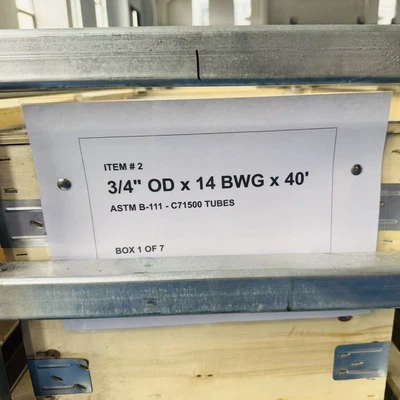
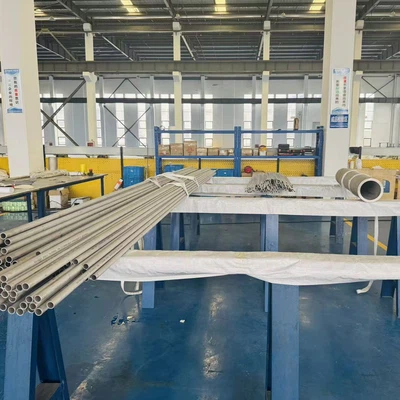
ASME sb111 c715 (Seamless Condenser Tubes)
ASME sb466 c715 (Seamless Copper-Nickel Pipe and Tube)
sb111 c71500 (General tube specification)
Seamless & Welded Pipe for Desalination (ASTM B552)
Plate, Sheet, and Rolled Bar (ASTM B122)
Detection
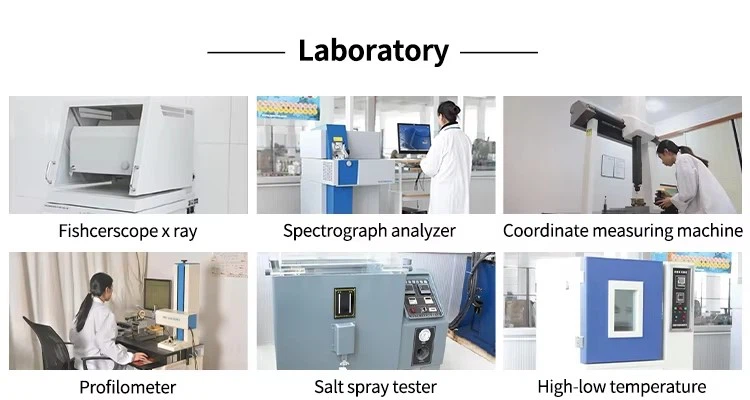
Standard quality control for C71500 copper pipe and tube includes:
Eddy Current Testing (ASTM E243)
Hydrostatic Pressure Test
Ultrasonic Testing
Chemical Composition Analysis (via spectrometer)
Mechanical Properties Verification (tensile, hardness, flattening test)
Packaging
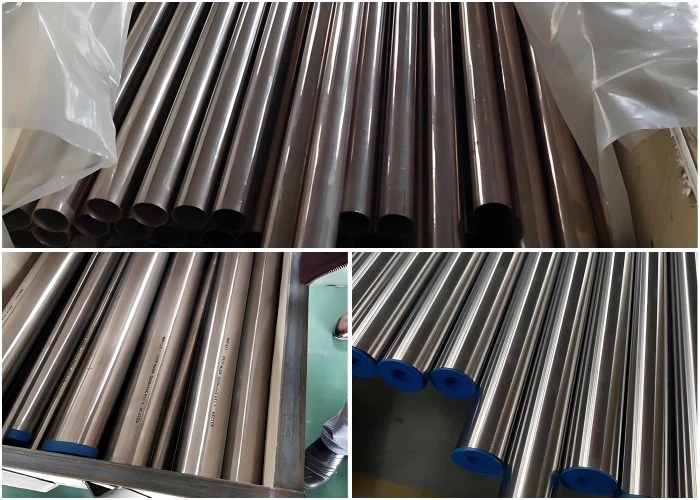
To ensure the c71500 copper nickel material arrives in perfect condition:
Waterproof Paper inner wrapping.
Plastic Bag sealed with moisture absorbent.
Wooden Case or Iron-Wooden Spool for coils.
Steel Strips for bundle packing (OD > 20mm).
End Caps for each pipe to prevent debris entry.
Labeling with alloy, specification (e.g., ASME sb111 c715), heat number, and dimensions.
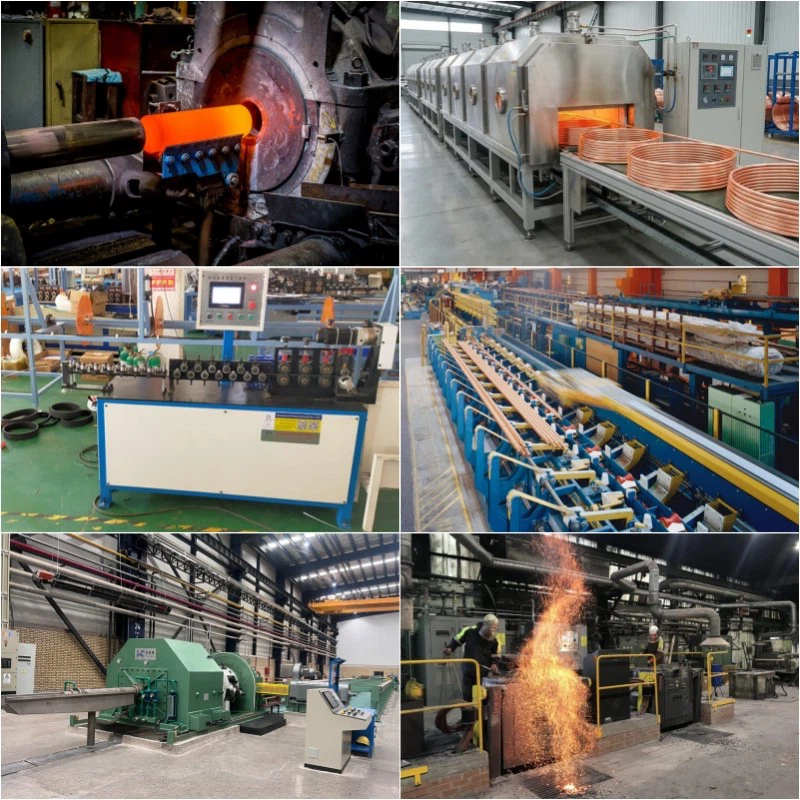
Factory Equipment
Production of Copper Nickel Alloy UNS C71500 involves:
Induction Melting Furnaces (for precise c71500 chemical composition control)
Horizontal or Vertical Continuous Casting Machines
Extrusion Press (for solid and hollow billets)
Cold Pilger Mills & Draw Benches
Annealing Furnaces (controlled atmosphere)
Straightening Machine & Cutting Equipment
Non-Destructive Testing (NDT) Lines (Eddy Current & Ultrasonic)
Certificates
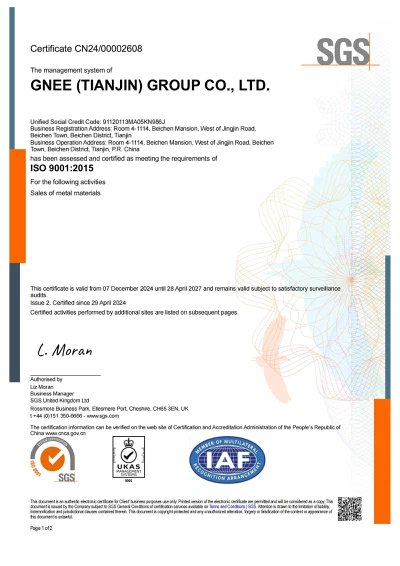
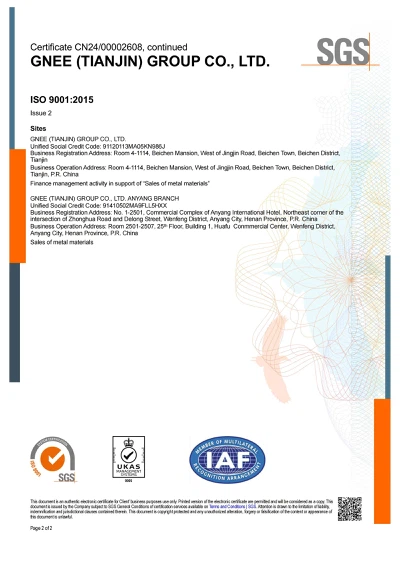
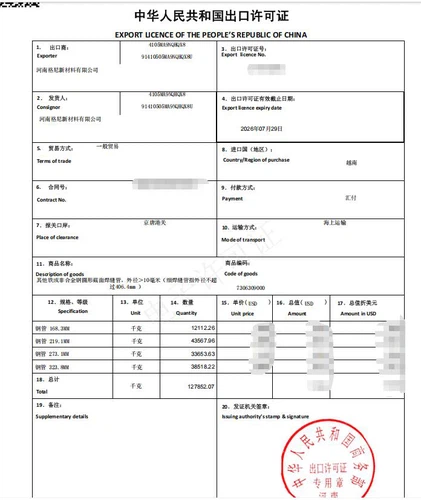
The supplier for C71500 copper pipe and Copper Nickel Alloy UNS C71500 holds the following valid certifications:
| Certificate | Standard | Scope |
|---|---|---|
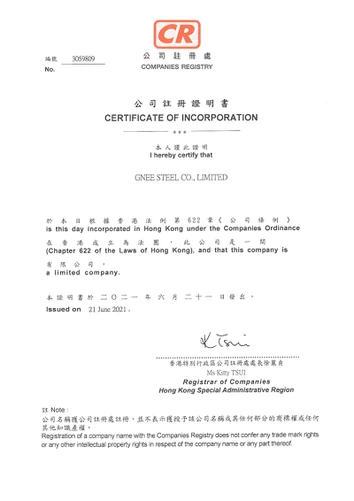
| Certificate of Incorporation | Hong Kong Companies Ordinance (Cap. 622) | Incorporation as a limited company |
| ISO 9001:2015 (SGS) | ISO 9001:2015 | Sales of metal materials |
| PRC Export Licence | General Trade | Export of welded steel tubes (HS Code 7306309000) |
FAQ
1. What is the direct European equivalent grade for UNS C71500 material?
The direct European (EN) equivalent for Copper Nickel Alloy UNS C71500 is CuNi30Mn1Fe (CW354H). It has the same nominal composition of 70% copper and 30% nickel.
2. How does the machinability of 70/30 copper nickel compare to C70600?
The 70/30 copper nickel machinability rating is 20% of free-cutting brass, which is similar to C70600 (90/10). However, due to its higher nickel content, C71500 requires slightly more powerful tooling and slower speeds than C70600.
3. What welding process is recommended for asme sb111 c715 condenser tubes?
For asme sb111 c715 tubes, the recommended welding process is Gas Tungsten Arc Welding (GTAW/TIG) using filler metal ERCuNi (AWS A5.7). Preheating is not required, and post-weld heat treatment is generally unnecessary.
4. Can sb111 c71500 tube be used in polluted seawater environment?
While sb111 c71500 (70/30) is preferred over 90/10 for polluted seawater, it is not immune. For severely polluted or sluggish seawater containing hydrogen sulfide, c71500 material may experience accelerated attack.
5. What is the maximum design temperature for asme sb466 c715 pipe in pressure vessel service?
According to AS4041, the maximum metal temperature for asme sb466 c715 pipe is 425°C. For AS1210 pressure vessels, the maximum temperature for Copper Nickel Alloy UNS C71500 is 375°C.
6. Which product standard covers seamless copper nickel 70/30 for desalination plants?
The standard for seamless copper nickel 70/30 tubes specifically for water desalting is ASTM B552 (Seamless & Welded Copper Nickel Tubes for Water Desalting).
7. How do the mechanical properties of C71500 compare to carbon steel for pipework?
The c71500 mechanical properties (Tensile Strength ~275 MPa annealed) are lower than typical carbon steel (~400-500 MPa). Therefore, c71500 copper pipe requires thicker walls for the same pressure rating but offers superior corrosion and biofouling resistance.
8. Why is the density of C71500 important for calculating shipping weight?
The c71500 density is 8.94 g/cm³. This allows accurate calculation of weight per meter for c71500 copper pipe using the formula: Weight (kg) = (OD - WT) x WT x 0.028, which is critical for freight and logistics planning.
9. What is the typical annealing temperature for cold-worked C70600 and C71500 material?
For both ASTM b111 C70600 and C71500 material, the typical annealing temperature range is 700 – 825°C. This process restores ductility after cold working.
10. Are there specific velocity restrictions for a C71500 heat exchanger tube in seawater service?
Yes. For a Copper Nickel Alloy UNS C71500 heat exchanger tube, the maximum design flow rate is 3.5 m/s. Exceeding this can cause vortices leading to impingement attack. The minimum flow to prevent biofouling settlement is 0.6 m/s.


