

Judging the quality of copper pipe can start from the following aspects:
1. Appearance:
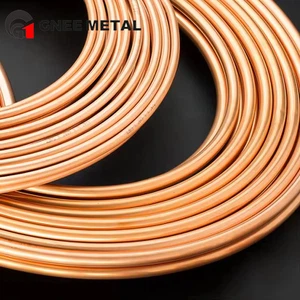
- Color and lustre: for purple copper pipe, high-quality purple copper pipe color is generally reddish red copper color, color uniformity and luster; if the color is dark, black or other miscellaneous colors, may contain more impurities, poor quality. For brass tube, the color of light, uniform and metallic luster of relatively good quality, the color is too deep or uneven may be a problem.
- Surface flatness: the surface of high-quality copper pipe should be smooth, flat, no obvious bumps, holes, pinholes, cracks, peeling, bubbles, inclusions, green rust and bruises, mold marks and other defects. You can touch the surface with your hand to feel whether it is flat and smooth; you can also use light to observe the reflection of the surface of the copper pipe from different angles to check whether there are uneven places.
- Cleanliness: The inner and outer walls of the copper pipe should be kept clean and free of oil, dust, rust and other pollutants. If there is more dirt or rust on the surface of copper pipe, it may affect its performance and service life.
2. Material purity:
- Ingredient testing: If conditions permit, the composition of copper pipe can be tested by professional chemical analysis methods to determine its copper content and whether it contains other impurity elements. For purple copper pipe, the higher the content of pure copper, the better the quality, such as oxygen-free copper copper content ≥ 99.97%, its electrical conductivity, thermal conductivity and other properties are superior.
- Extensibility judgment: pure copper has good extensibility, high-quality copper pipe when subjected to external forces, can occur a certain degree of deformation without fracture. You can use a sharp tool to gently scratch the surface of the copper pipe, a good copper pipe will appear a deep line, and scratch the part of the outer wall with the same material; if the internal color or material after scratching and the outer wall is different, the purity of the copper pipe may not be high enough, which added other metals.
3. Thickness and strength:
- Thickness Measurement: Use professional measuring tools, such as micrometers, to measure the wall thickness of copper pipe. The wall thickness of copper pipe should meet the relevant standards and requirements, if the wall thickness is uneven or too thin, it may affect the strength and pressure resistance of copper pipe. For example, in some application scenarios with high pressure requirements, such as copper tubes in air-conditioning and refrigeration systems, sufficient wall thickness is required to withstand the pressure of the refrigerant.
- Strength test: Tap the copper tube gently and listen to whether the sound is even and crisp. If the sound is dull or murmur, there may be defects or impurities within the copper tube, affecting its strength; or a certain degree of bending of the copper tube test (pay attention to the degree of bending does not exceed the limit of the copper tube), quality copper tube in the bending can be restored to its original state, and the surface will not appear cracks or fracture phenomenon, while poor quality copper tube may be ruptured in the bending.
4. anti-corrosion performance:
- Anti-corrosion treatment: find out whether the copper pipe is anti-corrosion treatment, and the anti-corrosion treatment used. For example, some copper pipes are treated with tin plating and other treatments to improve their corrosion resistance. If the copper pipe is not subjected to any anti-corrosion treatment, it will be easily corroded during use, affecting its service life.
- Corrosion resistance test: you can place the copper pipe in a certain corrosive environment, such as humid air, acidic or alkaline solutions, etc., and observe the corrosion of the copper pipe after a period of time. If the surface of the copper tube appears obvious traces of corrosion, indicating that its corrosion resistance is poor.
5. Specification standards: check the markings on the copper pipe, such as manufacturer, specifications, implementation standards and other information is clear and accurate. High-quality copper pipe should comply with the relevant national standards or industry standards, and the credibility and qualification of the manufacturer is also an important factor in determining the quality of copper pipe.


