

Copper in the form of a great variety of metals, alloys and compounds are utilized by people, but also has deeply penetrated into all aspects of production and life, and has become an indispensable and important metal for mankind to achieve rapid development across the 21st century.
Copper is a chemical element, its chemical symbol is Cu, its atomic number is 29, is a transition metal. The most common use of copper is in the manufacture of electrical wires, usually used nowadays are made of pure copper, because of its electrical and thermal conductivity are second only to silver, but much cheaper than silver.
Common Classifications
There are a lot of people who think that copper is just one of a kind. It is the only one. But there are actually other different types of copper. For example, alloy copper; brass is composed of copper and zinc alloy; white copper is an alloy of copper and nickel; bronze is copper and zinc and nickel in addition to the elements other than the formation of alloys, mainly tin bronze, aluminum bronze, etc.; copper is a very high copper content of copper, other impurities in the total content of 1% or less.
Copper processing material classification: copper sulfate, copper chloride, copper rods, copper rows, copper ingots, copper plate, copper wire, copper alloy, rough copper, copper strip, copper oxide, copper foil, copper pipe, copper foil, copper clay, copper castings, electrolytic copper, other copper alloys copper material.
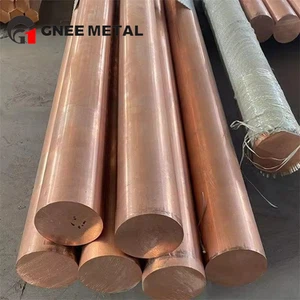
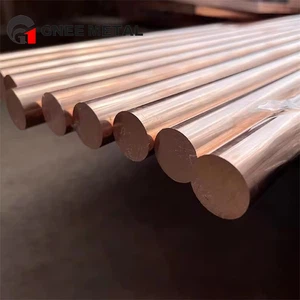
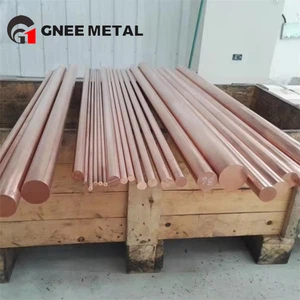
Pure copper or copper alloy made of various shapes including rods, wires, plates, strips, strips, tubes, foils, etc. collectively known as copper. Copper processing has rolling, extrusion and drawing methods, copper in the plate and strip have hot-rolled and cold-rolled; while the strip and foil are cold-rolled; tube and bar are divided into extruded products and drawn products; wire are drawn products.
Pure Copper
Pure copper is a rose-red metal, the surface of the formation of copper oxide film is purple, so the industrial pure copper is often called copper or electrolytic copper. Density of 8~9g/cm?, melting point 1083 ℃. Pure copper conductivity is very good, a large number of wires, cables, brushes, etc.; good thermal conductivity, often used to manufacture magnetic instruments, instruments, such as compasses, aviation instrumentation, etc.; plasticity is very good, easy to hot press and cold processing, can be made into tubes, rods, wires, strips, strips, strips, boards, foils, and other copper materials. Pure copper products are smelted and processed products.
China copper processing material according to the composition can be divided into: ordinary copper (T1, T2, T3, T4), oxygen-free copper (TU1, TU2 and high purity, vacuum oxygen-free copper), deoxidized copper (TUP, TUMn), add a small amount of alloying elements of the special copper (arsenic, tellurium, copper, silver copper) four categories.
The electrical and thermal conductivity of pure copper is second only to silver, and is widely used in the production of electrically and thermally conductive devices. Copper in the atmosphere, seawater and certain non-oxidizing acids (hydrochloric acid, dilute sulfuric acid), alkali, salt solutions and a variety of organic acids (acetic acid, citric acid), has good corrosion resistance, used in the chemical industry. In addition, copper has good weldability, can be cold, thermoplastic processing made of a variety of semi-finished and finished products. 1970s, the production of copper exceeded the total output of other types of copper alloys.
Trace impurities in pure copper have a serious impact on copper's electrical and thermal conductivity. Among them, titanium, phosphorus, iron, silicon, etc. significantly reduce the conductivity, while cadmium, zinc, etc. has little effect. Oxygen, sulfur, selenium, tellurium and other solid solubility in copper is very small, can be generated with the copper brittle compounds, the conductivity of the impact is not significant, but can reduce the processing plasticity. Ordinary copper in a reducing atmosphere containing hydrogen or carbon monoxide when heated, hydrogen or carbon monoxide and easy to grain boundaries of cuprous oxide (Cu2O), resulting in high-pressure water vapor or carbon dioxide gas, can make the copper rupture. This phenomenon is often called copper "hydrogen disease". Oxygen is harmful to the solderability of copper. Bismuth or lead and copper to generate a low melting point eutectic, so that the copper produces hot brittle; and brittle bismuth is a thin film distributed in the grain boundaries, but also make the copper produce cold brittle. Phosphorus can significantly reduce the electrical conductivity of copper, but can improve the liquidity of copper, improve solderability. Moderate amounts of lead, tellurium, sulfur, etc. can improve the machinability.
Brass
Brass is an alloy of copper and zinc. The simplest brass is a binary alloy of copper and zinc, called simple brass or common brass. Changing the content of zinc in brass can get different mechanical properties of brass. The higher the zinc content in brass, the higher its strength and lower plasticity. The zinc content of brass used in industry is not more than 45%, and a higher zinc content will produce brittleness and make the alloy performance worse. Brass can be divided into casting and pressure processing two types of products.
Brass is also divided into:
(1) ordinary brass
It is composed of copper and zinc alloy. When the zinc content is less than 39%, zinc can be dissolved in copper to form a single-phase a, called single-phase brass, good plasticity, suitable for hot and cold pressurized processing. When the zinc content is greater than 39%, there is a single-phase copper-zinc-based b solid solution, called dual-phase brass, b so that the plasticity of the small and tensile strength rise, only suitable for hot pressure processing.
Code with "H + number", H indicates brass, the number indicates the mass fraction of copper. Such as H68 that the copper content of 68%, the zinc content of 32% of the brass; casting brass in the code before the word "Z", such as ZH62.
H90, H80 single-phase, golden yellow, so there is a total of gold, known as plating, decorations, medals, etc. H68, H59 belongs to the two-phase brass, widely used in electrical appliances on the structure of parts, such as bolts, nuts, washers, springs and so on.
Generally, single-phase brass is used for cold deformation processing, and two-phase brass is used for hot deformation processing.
2)Special brass
In the ordinary brass by adding other alloying elements composed of multiple alloys known as brass. Frequently added elements are lead, tin, aluminum, etc., accordingly can be called lead brass, tin brass, aluminum brass. The purpose of adding alloying elements. Mainly to improve the tensile strength to improve processability.
Code: for "H + the main plus element symbol (except zinc) + copper mass fraction + the main plus element mass fraction + other elements mass fraction" said.
For example: HPb59-1 indicates that the mass fraction of copper is 59%, containing the main addition of the mass fraction of lead for 1%, the balance of zinc lead brass.
Bronze
Bronze is one of the earliest alloys used in history, originally referring to copper-tin alloys, because of its greenish-gray color, it is called bronze. In order to improve the process performance and mechanical properties of the alloy, most of the bronze within the addition of other alloying elements, such as lead, zinc, phosphorus, etc.. Because tin is a scarce element, so the industry still use many tin-free tin-free bronze, they are not only cheap, but also has the required special properties. Bronze is also categorized into two main groups: pressure-finished and cast products.
Designation: expressed as "Q + the main plus element symbols and mass fraction + the mass fraction of other elements" composed of. Casting products in the code before the word "Z", such as: Qal7 aluminum bronze containing 5%, the rest of the copper ZQsn10-1 indicates that the tin content of 10%, the other alloying elements content of 1%, the remainder of the copper casting tin bronze. Bronze can be divided into tin bronze and special bronze (i.e. Wuxi bronze) two categories.
(1) is by the tin as the main additive elements of copper-tin alloy, also known as tin bronze
When the tin content is less than 5 ~ 6%, tin dissolved in copper to form a solid solution, plasticity rise, when the tin content is greater than 5 ~ 6%, as a result of the emergence of Cu31Sb8-based solid solution, tensile strength decline, so most of the tin bronzes containing tin in the 3 ~ 14% between when the tin content is less than 5%, for cold deformation processing, when the tin content of 5 ~ 7% when the hot deformation process is applicable. When the tin content is greater than 10%, it is suitable for casting.
Due to a similar potential with the electrode, and the composition of tin nitride to generate dense tin dioxide film, resistant to the atmosphere, seawater and other corrosion resistance rise, just acid resistance is poor.
Because tin bronze crystallization temperature range is wider, poor mobility, not easy to form concentrated shrinkage, and easy to form dendritic segregation and dispersed shrinkage, casting shrinkage is small, is conducive to get the size of the casting is very close to the casting, so it is suitable for casting complex shapes, wall thickness is larger than the conditions, and is not suitable for casting requirements of high densities and sealing of the casting is good. Tin bronze has good friction reduction, anti-magnetic and low temperature toughness. Tin bronze according to the production method can be divided into pressure processing tin bronze and casting tin bronze two categories.
A, pressure processing tin bronze
Tin content is generally less than 8%, suitable for hot and cold pressure processing into plate |, belt, bar, tube and other profiles supply, after hardening, its tensile strength, hardness rose, and plasticity decreased. Then annealed to maintain a high tensile strength to improve plasticity, especially to obtain a high elastic limit. Suitable for the production of instrumentation on the requirements of corrosion-resistant and wear-resistant parts, elastic parts, anti-magnetic parts and machines in the sliding bearings, bushings, etc. Commonly used Qsn4-3Qsn6.5 ~ 0.1.
B, cast tin bronze
Ingot supply, cast by the foundry castings used, suitable for casting complex shape but density requirements are not high castings, such as plain bearings, gears and so on. Commonly used ZQsn10-1ZQsn6-6-3.
2)Special bronze
Add other elements to replace tin, or tin-free bronze, most of the special bronze than tin bronze has a higher mechanical, wear and corrosion resistance, commonly used aluminum bronze (QAL7QAL5) lead bronze (ZQPB30) and so on.
Copper-based alloys with nickel as the main added element are silver-white in color and are called white copper. Nickel content is usually 10%, 15%, 20%, the higher the content, the whiter the color. Copper-nickel binary alloy called ordinary white copper, plus manganese, iron, zinc and aluminum and other elements of the copper-nickel alloy called complex white copper, pure copper with nickel can significantly improve the strength, corrosion resistance, resistance and thermoelectricity. Industrial copper white according to the performance characteristics and different uses are divided into structural copper white and electrical copper white, respectively, to meet a variety of corrosion resistance and special electrical and thermal properties.
White Copper
Copper-based alloys with nickel as the main added element are silver-white in color and are called white copper. Copper-nickel binary alloy called ordinary copper, plus manganese, iron, zinc and aluminum and other elements of copper-nickel alloy called complex copper, pure copper with nickel can significantly improve the strength, corrosion resistance, resistance and thermoelectricity. Industrial copper alloy is divided into structural copper alloy and electrotechnical copper alloy according to its performance characteristics and different uses, which can meet various corrosion resistance and special electric and thermal properties respectively.


