

Basic Overview
C72700 copper-nickel-tin alloy is a high-performance, precipitation-hardening copper-based alloy with a copper (Cu) matrix and strengthening elements such as nickel (Ni) and tin (Sn). This alloy significantly improves its strength, hardness, and corrosion resistance through the synergistic effects of cold working and heat treatment, making it widely used in high-precision machinery, electronic devices, and marine engineering.
Chemical Composition
The typical composition (by mass percentage) of C72700 is:
Copper (Cu): Balance (approximately 83%-86%), providing basic electrical conductivity and processing properties;
Nickel (Ni): 9.0%-11.0%, enhancing corrosion resistance and participating in the formation of strengthening phases;
Tin (Sn): 4.5%-5.5%, improving strength and wear resistance;
Trace Elements: May contain small amounts of phosphorus (P) and iron (Fe), which serve to refine grain size or improve processability.
Physical Properties
Density: Approximately 8.85-8.95 g/cm³, intermediate between pure copper and other copper alloys;
Melting Point: 1020-1060°C, with excellent high-temperature stability;
Electrical/Thermal Conductivity: 15%-20% IACS (International Annealed Copper Standard), lower than pure copper but better than most engineering alloys;
Coefficient of Thermal Expansion: 17.5×10⁻⁶/°C (20-300°C), suitable for environments subject to temperature fluctuations.
Mechanical Properties
The mechanical properties of C72700 can be manipulated through processing and heat treatment:
Annealed: Tensile strength approximately 450 MPa, elongation ≥15%;
Cold-Worked + Aged: Tensile strength reaches 800-1000 MPa, hardness 85-95 HRB, while maintaining an elongation of 5%-8%;
Fatigue Strength: High-cycle fatigue limit reaches 300 MPa (10⁷ cycles), suitable for dynamically loaded components.


Core Properties
High Strength and Hardness: High strength achieved through precipitation hardening (e.g., Ni₃Sn phase precipitation), comparable to some steels;
Corrosion Resistance: Resists uniform corrosion and stress corrosion cracking (SCC) in seawater, acidic, and alkaline environments;
Stress Relaxation Resistance: Maintains elasticity at high temperatures, making it suitable for springs and fasteners in long-term service;
Wear Resistance: Forms a dense oxide film on the surface, reducing friction loss.
Typical Applications
Electronic and Electronics: High-strength conductive terminals, relay springs, and chip package lead frames;
Marine Engineering: Seawater pump shafts, valve components, and ship connectors;
Automotive and Aviation: Precision fuel injection system components and aviation bearing bushings;
Industrial Equipment: Mold inserts, high-load gears, and bearings.
Key Processing Techniques
Melting and Casting: Vacuum induction melting reduces impurities, while continuous casting or semi-continuous casting produces uniform billets.
Hot Working: Hot rolling/forging temperatures are 800-900°C to avoid excessive oxidation.
Cold Working: Cold rolling or drawing increases strength, with a processing rate controlled at 30%-50%.
Heat Treatment: Solution treatment (water quenching at 750-800°C) is followed by aging (holding at 400-450°C for 2-4 hours) to achieve peak hardening.
Machining: Use carbide tools and low speeds and high feeds to minimize work hardening.
C72700 copper-nickel-tin alloy, with its balanced combination of strength, corrosion resistance, and functionality, has become a key material in modern industry. Its multi-stage hardening design and wide applicability provide reliable solutions for precision engineering, continuously promoting collaborative innovation in materials science and manufacturing technology.
why choose us

Professional copper pipe supplier
The company has a cluster of leading copper processing production lines in China, including:
German imported precision copper tube production line (annual output of 30,000 tons)
Japanese technology copper foil rolling line (thinnest up to 6μm)
Fully automatic copper bar continuous extrusion line
Intelligent copper sheet and strip finishing mill unit
Digitalized control and management of the whole production process is realized through MES system, and the dimensional accuracy of the products can reach ±0.01mm.
Contact us today for a quotation:sales@gneesteel.com
Packaging and shipping
GNEE offers professional packaging for exported copper pipes. First, we apply anti-rust oil and plastic film to prevent oxidation. Then, we securely strap with steel straps and add corner protectors. Finally, we place the pipes on wooden pallets and reinforce them with iron or wooden boxes, ensuring they are moisture-proof and impact-resistant during ocean transport, while facilitating easy loading and unloading. All packaging meets export standards.


Customer visits


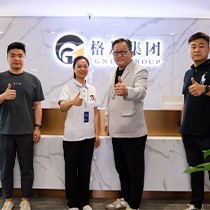


GNEE participated in the exhibition


