

What is UNS C70600 Copper Nickel Tube?

UNS C70600 is the unified numbering system designation for the 90/10 copper nickel alloy, often written Cu/Ni 90/10. The composition is roughly 90% copper, 9–11% nickel, 1.0–1.8% iron and up to 1.0% manganese. The iron and manganese additions refine the grain structure and build a stable oxide film, which is what gives the material its resistance to chloride-bearing cooling water.
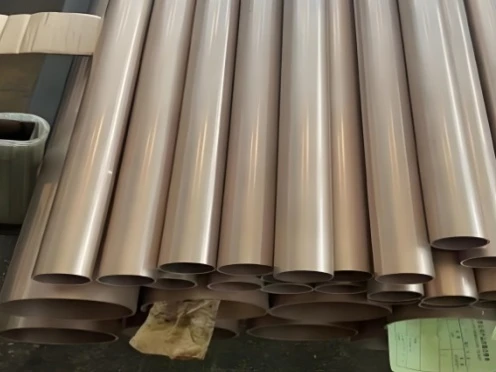
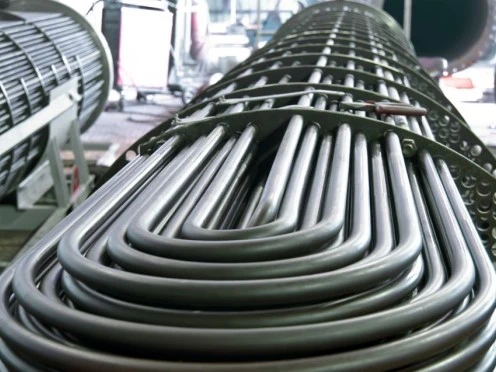
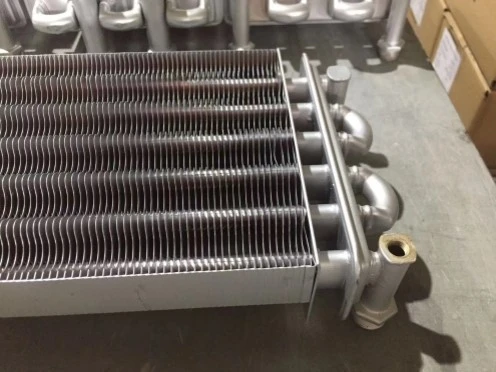
In tube form the alloy is supplied as Copper Nickel Tube in two main variants: seamless cold-drawn tube and welded tube. Both are produced in straight lengths, coils, U-bend tube and finned tube, and both are widely used in shell-and-tube oil coolers, condensers, heat exchangers and seawater piping. The grade is released against the standards most oil cooler projects ask for: ASTM B111 / ASME SB-111 for heat exchanger tube, ASTM B466 for pipe, EN 12451 for European heat exchanger work, JIS H3300 and GB/T 1527.
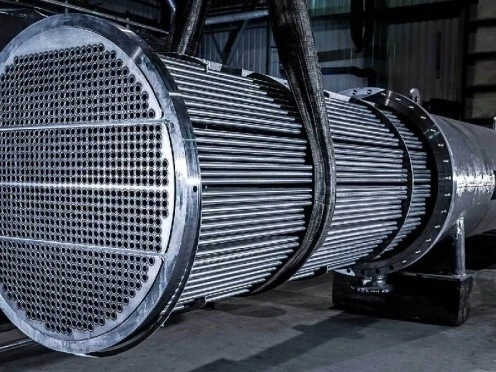
Because oil cooler bundles combine hot oil on the shell side with cooling water inside the tube, the material has to do two things at once: resist chloride attack on the water side and stay clean, smooth and formable on the oil side. UNS C70600 does both, which is why it has become the workhorse alloy for lube oil, hydraulic oil, marine and engine oil coolers.
Oil Cooler Tube Specifications for C70600
The table below summarises the standard scope for oil cooler applications. Common sizes, tempers and lengths are kept in stock; non-standard sizes are produced to order against the parameters agreed in the quotation.
| Parameter | Specification |
|---|---|
| Standard Grade | UNS C70600 / Cu/Ni 90/10 (CuNi10Fe1Mn) |
| Available Forms | Straight tube, U-bend tube, finned tube (low-fin / high-fin), coil; seamless and welded |
| Applicable Standards | ASTM B111 / ASME SB-111; ASTM B466 / ASME SB-466; EN 12451; EN 12449; JIS H3300; GB/T 1527 |
| Common Oil Cooler Sizes (OD × WT) | 12.70 × 0.89 mm, 15.88 × 1.00 mm, 19.05 × 1.20 mm, 19.05 × 1.40 mm, 25.40 × 1.65 mm; other OD 6–114 mm on request |
| Length | 3 m, 4 m, 6 m straight pieces; U-bend leg length to drawing; coils on request |
| Chemical Composition | Cu balance (≥88.7%); Ni 9.0–11.0%; Fe 1.0–1.8%; Mn ≤1.0%; Zn ≤1.0%; Pb ≤0.05% |
| Mechanical Properties - Annealed (Soft) | Tensile strength ≥275 MPa; Yield strength ≥105 MPa; Elongation ≥30% |
| Mechanical Properties - Light Drawn | Tensile strength ≥310 MPa; Yield strength ≥170 MPa; Elongation ≥25% |
| Hardness | Typically 65–85 HRB annealed; 85–100 HRB light drawn |
| Preferred Temper for Tube-Sheet Rolling | Annealed (soft / O61) for easy expansion; light drawn (H55) for higher stiffness bundles |
| Inner Surface / Bore | Clean, oil-free, capped ends; optional ID cleaning and drying for instrument-grade bundles |
| Mandatory & Optional Testing | Hydrostatic test, eddy current test, flattening test, flaring / expansion test, tensile and hardness test, chemical analysis, dimensional and visual inspection |
| Related Products | Tube sheet plate, elbow / bend, tee, coupling, reducer and matching flange in the same C70600 grade; same-family C71500 (70/30) and C68700 aluminium brass tube |
Alongside the tube, the same grade can be supplied as U-bend tube for two-pass coolers, finned tube for enhanced gas-side heat transfer, and matching tube sheet plate so a complete bundle or cooler is sourced from a single mill and traced to one set of certificates.
Get a quote for C70600 oil cooler tube within 24 hours
Why C70600 Is the Standard Choice for Oil Cooler Tubes
Water-side corrosion and biofouling resistance. Oil coolers in marine, offshore and many industrial plants use brackish or seawater as the cooling medium. The iron and manganese in C70600 form a stable oxide film that resists pitting and erosion-corrosion at typical flow velocities, and the same film discourages marine growth and biofilms. Many engineers specify C70600 over aluminium brass when the cooling water is biologically active.
Formability for tube-sheet expansion. Most oil cooler bundles are built by rolling or expanding the tube into the tube sheet. Annealed C70600 expands cleanly, grips the tube sheet reliably and gives a leak-tight joint, while remaining ductile enough for U-bending without cracking.
Stable thermal performance. The thermal conductivity of C70600 is high enough for efficient heat transfer between oil and water, and the alloy does not suffer the fouling-driven derating seen with some other copper alloys in dirty oil service.
Compatibility and repairability. Lube oils, hydraulic oils and the cleaning compounds used in oil cooler maintenance do not aggressively attack the alloy, so internal surfaces stay smooth. When a tube fails in service, C70600 is straightforward to braze or weld with standard copper-nickel filler, which shortens repair time and limits the cost of a tube leak in an installed cooler.
C70600 vs C71500 vs C68700 vs C12200 for Oil Cooler Service
Copper nickel tube is rarely the only candidate. The comparison below covers the four alloys most often quoted against C70600 in oil cooler duty, so specifiers can see where the 90/10 alloy sits.
| Grade | Composition | Strengths in Oil Cooler Duty | Limits to Be Aware Of |
|---|---|---|---|
| UNS C70600 (Cu/Ni 90/10) | 90% Cu, 10% Ni, Fe, Mn | Balanced seawater and brackish water resistance, biofouling resistance, easy tube-sheet expansion, moderate cost | Flow velocity above ~3.5 m/s in dirty water can shorten tube life; not the best choice for high-ammonia or strongly polluted water |
| UNS C71500 (Cu/Ni 70/30) | 70% Cu, 30% Ni, Fe, Mn | Higher strength, tolerates higher flow velocity, excellent resistance to erosion and ammonia-bearing water | Significantly higher cost; harder to expand and bend; usually over-specified for standard lube oil coolers |
| UNS C68700 (Aluminium brass) | Cu-Zn with Al and As | Lower cost, good resistance to clean seawater at moderate velocity | Sensitive to deposit attack and impingement; biofouling tends to be heavier; not preferred for very dirty or polluted cooling water |
| UNS C12200 (DHP copper) | 99.9% Cu, 0.02% P | Highest thermal and electrical conductivity, excellent formability, low cost | Very poor resistance to chloride and to high water velocity; only suitable for clean fresh water service |
Some engineers specify UNS C70600 or C68700 when cooling water is clean seawater at moderate velocity, because both alloys resist chloride attack and aluminium brass costs less. Where velocity is high or the water is polluted or ammonia-bearing, many purchasers move to UNS C71500 (70/30 CuNi) and accept the higher price. For oil cooler bundles in fresh water only, UNS C12200 is often sufficient and offers the best heat transfer per dollar.
For most lube oil, hydraulic oil and marine oil cooler duties, C70600 remains the most widely accepted compromise between corrosion life, expansion behaviour and cost, which is why it is the grade most engineers ask for by default.

Send the duty conditions and we will recommend the right grade for the cooler
How to Select the Right Grade and Size
Choosing C70600 - or moving to a related alloy - comes down to a few well-defined parameters. Fixing the items below before placing the order usually leads to a faster, more accurate quotation and a more reliable first delivery.
Cooling water chemistry - fresh, brackish, seawater, or treated closed-loop; chloride content and tendency to fouling.
Flow velocity and temperature - on the water side and on the oil side; high velocity or high oil temperature pushes selection toward C71500 or thicker wall.
Tube dimensions - OD, WT, length per piece, and whether the bundle is straight or U-bend.
Temper - annealed for tube-sheet rolling, light drawn where bundle stiffness matters.
Standards and certificates required - ASTM B111, EN 12451, JIS H3300, GB/T 1527; MTC EN 10204 3.1; certificate of origin; third-party inspection.
Bundle design and test scope - hydrostatic, eddy current, PMI, witness testing, and whether sample tubes are needed for forming trials.
Equivalent Grades for UNS C70600
The same 90/10 copper nickel alloy is written differently in each national standard. The table below maps UNS C70600 to the designations used in the UNS, ASTM/ASME, European, German, British, Japanese and Chinese systems.
| Standard System | Standard No. | Equivalent Designation |
|---|---|---|
| UNS | UNS C70600 | C70600 (Cu/Ni 90/10) |
| ASTM | ASTM B111 / B466 / B151 / B171 | C70600 |
| ASME | ASME SB-111 / SB-466 | C70600 |
| EN | EN 12451 / EN 12449 | CW352H (CuNi10Fe1Mn) |
| DIN | DIN 17664 / Werkstoff-Nr. 2.0872 | CuNi10Fe1Mn |
| BS | BS 2871 Part 3 | CN102 |
| JIS | JIS H3300 | C7060T |
| GB (China) | GB/T 5231 / GB/T 1527 | BFe10-1-1 (T) |
For oil cooler projects the equivalent grade table is more than a translation aid. A project team working to EN, JIS or GB can compare a quotation written as UNS C70600 against its own national callout without re-engineering the alloy or restarting an approval process. Every order is confirmed against the exact standard to be applied - for instance ASTM B111 for heat exchanger tube, EN 12451 for European work, or GB/T 1527 for domestic Chinese supply.
Dimensional Tolerances and Inspection
Tolerances follow the standard the tube is released against, with the most common values listed below.
Outside diameter: ±0.05 mm for OD up to 16 mm; ±0.08 mm for OD 16–25 mm; ±0.10–0.13 mm for larger OD, depending on the standard.
Wall thickness: ±10% of nominal wall across the whole size range.
Length per piece: +5 / −0 mm for cut lengths; U-bend leg length to drawing.
Straightness: ≤1.0 mm per metre of length for straight tube.
Inner surface: clean, oil-free, free of scale and drawing residue; ends capped.
Every production lot is 100% dimensionally checked before release, with these tests performed on the same lot:
Hydrostatic test at the pressure defined by ASTM B111 / EN 12451.
Eddy current test to detect longitudinal and transverse defects.
Flattening and flaring / expansion tests on sample tubes to demonstrate forming behaviour during tube-sheet rolling.
Tensile, hardness and chemical analysis on samples from each heat.
Test records and the mill test certificate are released together with the goods, so a quality team can trace every tube back to its heat number before loading into a tube sheet.

Wall Thickness Inspection of Copper Tube

Handheld XRF Spectroscopic Composition Analysis

Universal Material Tensile Mechanical Test

Eddy Current Non-Destructive Testing (NDT)
Packaging for Export
Straight tube is packed in seaworthy wooden cases or on wooden pallets, bound with steel strapping and lined with moisture barrier film. Every tube end is protected with a plastic cap so that the inner surface stays clean until installation.
U-bend and finned tubes are interleaved with protective material so bends and fins are not deformed in transit. Each case is labelled with size, temper, heat number, bundle weight and handling marks, and the packing list inside the case matches the marking on the outside.
Container loading is planned so that case weights stay within the unloading limits at destination. Photographs of the packed goods are supplied before departure, so the receiving team can match the consignment to the order on arrival.

Lead Time and Shipping
Standard sizes are held in stock and can ship in 7–14 days; made-to-size tube is typically produced in 15–30 days, depending on diameter, wall thickness, temper and quantity. U-bend and finned tube follow the longer end of that range because of the additional forming steps.
Minimum order quantity is normally 500 kg or one full bundle for stock sizes, and several sizes can be combined in a single order so the MOQ is reached efficiently. Full bundles move by sea; urgent or small lots go by air or international courier.
Documents are issued in English as standard: commercial invoice, packing list, mill test certificate (EN 10204 3.1), certificate of origin and bill of lading. Form E, Form A and consular legalisation are added where the destination requires them, and document dispatch is timed to reach the customer with the goods.
Our Manufacturing Capabilities
Copper nickel tube for oil cooler duty is produced in a mill set up for copper alloy tube and heat exchanger tube, with ISO 9001 quality management and regular third-party audits by SGS and BV. The mill has been producing copper alloy tube since 2008 and operates with more than 200 employees, including a dedicated heat exchanger tube line and a finished bundle workshop.
Capacities that matter for oil cooler projects:
Seamless cold drawing for OD 6–114 mm, with controlled light-drawn and annealed tempers.
U-bending on CNC benders with leg-length control and post-bend stress relief when required.
Finned tube production for low-fin and high-fin geometries, with fin geometry checked during production.
In-line testing for eddy current, hydrostatic and pneumatic testing, plus offline tensile, hardness, flattening, flaring and chemical analysis laboratories.
Engineering support for grade selection, equivalent grade cross-reference and bundle design questions, especially when an oil cooler is being re-engineered from a different alloy.
For purchasers comparing mills, the most useful evidence is a recent third-party audit, sample MTCs from a similar order, and a clear answer on the release standard - all available on request.
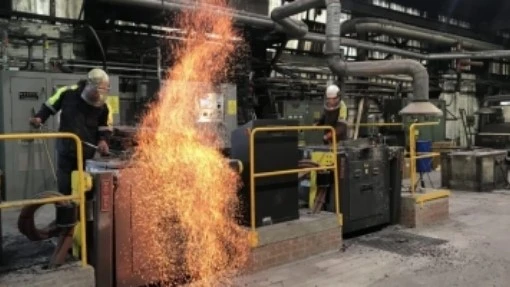
Melting & Casting
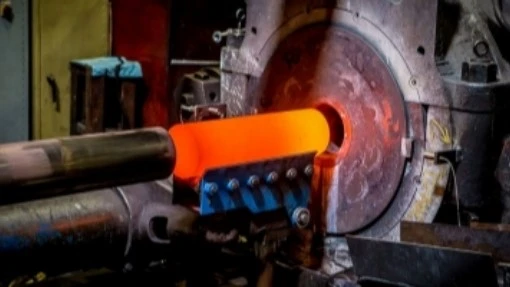
Extrusion Press
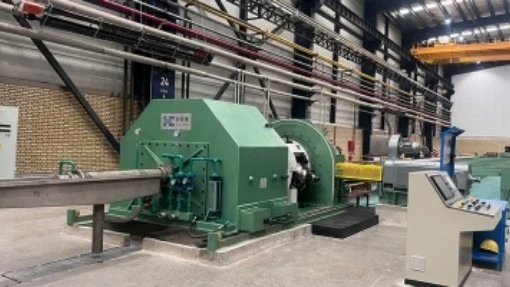
Three-Roll Planetary Rolling Mill
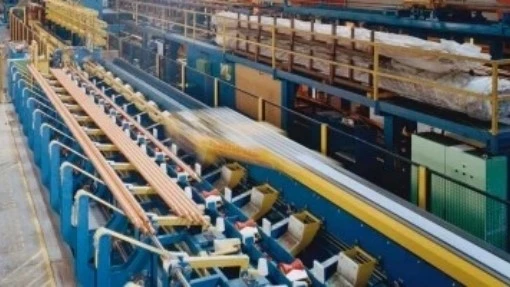
Drawing Line
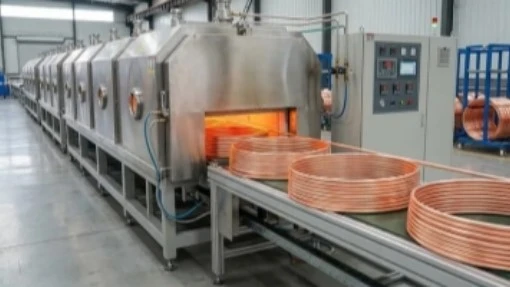
Annealing Furnaces
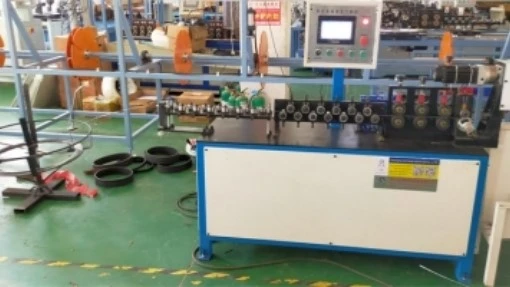
Cutting & Straightening
FAQ
Q: Is C70600 the same as 90/10 cupronickel?
A: Yes. C70600 is the UNS designation for the 90/10 copper nickel alloy (Cu/Ni 90/10), with about 90% copper, 10% nickel and small additions of iron and manganese. In Europe the same alloy is called CW352H or CuNi10Fe1Mn, in Japan C7060T, in China BFe10-1-1.
Q: What tube sizes are most common for oil cooler duty?
A: Standard callouts are OD 12.70, 15.88, 19.05 and 25.40 mm with wall thickness from about 0.8 mm to 2.0 mm, supplied in 3 m, 4 m or 6 m straight pieces or as U-bend tube. Other sizes from OD 6 mm to OD 114 mm are produced to order.
Q: Can C70600 be supplied as U-bend or finned tube?
A: Yes. Straight tube, U-bend tube, finned tube (low-fin and high-fin) and coil are all available in C70600, so a complete two-pass oil cooler bundle or enhanced gas-side cooler can be sourced from a single grade and a single set of certificates.
Q: How is the tube tested before shipment?
A: Every tube is hydrostatically tested and eddy-current tested before release. Sample tubes from each lot are flattened, flared and tensile-tested, and the chemical composition of the heat is verified. Test records are released with the mill test certificate.
Q: What certificates come with each shipment?
A: Standard issue: EN 10204 Type 3.1 mill test certificate, packing list, commercial invoice and bill of lading. Certificate of origin by the Chamber of Commerce, Form E, Form A, third-party inspection reports and material identification records are added when the order calls for them.
Q: What is the typical lead time for a 19 mm OD C70600 oil cooler tube order?
A: Stock sizes such as 19.05 × 1.20 mm and 19.05 × 1.40 mm in 4 m or 6 m straight length are usually available for dispatch in 7–14 days. Custom diameters, wall thicknesses, U-bend or finned tube typically take 15–30 days, depending on quantity and the test scope.


