

C12200 copper, also known as Alloy 122 Deoxidized High-Phosphorus (DHP) copper, is one of the many nonferrous metal options we offer here at GNEE.
As the name suggests, this commercially pure copper has undergone phosphorus deoxidation to enhance its material properties. Specifically, the residual phosphorus left behind makes C12200 ideal for heavy-forming applications, lending it increased corrosion resistance and compatibility with welding and brazing processes. Also, the material is not very electrically conductive (compared to pure copper) and is not prone to hydrogen embrittlement.
These advantages aren't found in alternatives like 110 copper, despite the similarities between their mechanical properties. C12200 copper is a popular choice for many applications throughout residential and industrial projects, as well as plumbing and underground systems.
Chemical Composition
| Element | Percentage |
|---|---|
| Copper (Cu, including Ag) | ≥ 99.9% |
| Phosphorus (P) | 0.015% – 0.040% |
Mechanical Properties
| Property | Imperial | Metric |
|---|---|---|
| Ultimate Tensile Strength | 49,300 psi | 340 MPa |
| Yield Tensile Strength | 45,000 psi | 310 MPa |
| Density | 0.323 lb/in³ | 8.94 g/cc |
| Shear Modulus | 6,380 ksi | 44 GPa |
| Modulus of Elasticity | 17,400 ksi | 120 GPa |
| Melting Point | 1,880 – 1,980 °F | 1,030 – 1,080 °C |
Applications
Residential Applications
| Application |
|---|
| Air conditioning systems |
| Refrigerators |
| Plumbing tubes |
| Oil burner tubing |
| Gas lines |
| Heat liners |
Industrial Applications
| Application |
|---|
| Gasoline supply systems |
| Hydraulic system lines |
| Oil lines |
| Steam lines |
| Water supply lines |
| Evaporator tubing |
| Heat exchanger tubing |
| Dairy, brewery, and distiller tubing |
| Condensers |
Product Availability
| Parameter | Details |
|---|---|
| Product Form | Tube |
| Outer Diameter | 2.75″ or 3″ |
| Length | 72″ |
| Wall Thickness | 0.0625″ |
| Finish | Mill standard |
| Standard | ASTM B75 |
FAQ
Q1: What is the difference between C12200 DHP copper and C11000 copper?
A: C12200 contains 0.015-0.040% phosphorus for deoxidation, making it ideal for heavy-forming applications with superior weldability and brazing capability. C11000 contains oxygen and cannot be brazed in reducing atmospheres. Despite similar mechanical properties, C12200 offers better corrosion resistance and is not prone to hydrogen embrittlement. C11000 has higher electrical conductivity.
Q2: What does DHP stand for in C12200 copper?
A: DHP stands for "Deoxidized High Phosphorus." It refers to the 0.015-0.040% phosphorus added to remove oxygen from the copper melt. This process gives C12200 its characteristic properties: excellent weldability, brazing capability, corrosion resistance, and immunity to hydrogen embrittlement. DHP is the common name for C12200 in many markets.
Q3: Why is C12200 ideal for heavy-forming applications?
A: The phosphorus deoxidation process gives C12200 excellent ductility and workability. It can be easily hot and cold formed without cracking. Unlike 110 copper, C12200 work-hardens more slowly, allowing more deformation before annealing is required. This makes it suitable for progressive drawing, deep drawing, bending, and other heavy-forming operations.
Q4: Is C12200 resistant to hydrogen embrittlement?
A: Yes, C12200 is not prone to hydrogen embrittlement. The phosphorus added during deoxidation removes oxygen from the copper matrix. Without oxygen, there is no reaction with hydrogen during brazing or welding to form steam (which causes embrittlement). This is why C12200 is the standard material for applications requiring brazing or welding.
Q5: What is the electrical conductivity of C12200?
A: C12200 is not very electrically conductive compared to pure copper. It has approximately 85% IACS conductivity (vs 100% for C11000). The phosphorus added for deoxidation scatters conduction electrons, reducing conductivity. For plumbing, HVAC, and heat exchanger applications, this is acceptable. For high-conductivity electrical applications, use C11000 or C10200.
Q6: What are the mechanical properties of C12200?
A: C12200 has ultimate tensile strength of 49,300 psi (340 MPa), yield tensile strength of 45,000 psi (310 MPa), density of 0.323 lb/in³ (8.94 g/cc), shear modulus of 6,380 ksi (44 GPa), modulus of elasticity of 17,400 ksi (120 GPa), and melting point of 1,880-1,980°F (1,030-1,080°C).
Q7: What are the typical residential applications for C12200?
A: Residential applications include: air conditioning systems, refrigerators, plumbing tubes, oil burner tubing, gas lines, and heat liners. C12200 is also used for drinking water supply systems because of its high corrosion resistance to water and soil, heat transfer capabilities, and smooth interior surface that won't restrict water flow.
Q8: What are the typical industrial applications for C12200?
A: Industrial applications include: gasoline supply systems, hydraulic system lines, oil lines, steam lines, water supply lines, evaporator tubing, heat exchanger tubing, dairy/brewery/distiller tubing, and condensers. C12200's corrosion resistance and weldability make it suitable for these demanding environments.
Q9: What standard does GNEE's C12200 tube comply with?
A: GNEE's C12200 DHP copper tube complies with ASTM B75, the standard specification for seamless copper tube for general engineering applications. Available sizes include outer diameters of 2.75″ or 3″, length of 72″, and wall thickness of 0.0625″. Other sizes and standards are available upon request.
Q10: Can C12200 be used for underground systems?
A: Yes, C12200 is a popular choice for underground plumbing and water systems. It has high resistance to corrosion from soil and water. Unlike steel, it does not rust. For aggressive soils (acidic or high chloride), additional protection (wrapping or sleeving) is recommended. C12200's durability makes it suitable for buried applications.
Q11: Why choose C12200 over other copper alloys for heat exchangers?
A: C12200 offers high thermal conductivity (340 W/m·K), excellent corrosion resistance to water, and superior weldability/brazability for tube-to-tubesheet joints. It is the standard material for evaporator tubing, heat exchanger tubing, and condensers. Its combination of heat transfer efficiency and fabricability makes it ideal for thermal equipment.
Q12: What is the difference between C12200 and C10200?
A: C10200 is oxygen-free copper (99.95% Cu, 0.001% O max) with 100% IACS conductivity. C12200 contains phosphorus and has approximately 85% IACS conductivity. C10200 is used for high-vacuum and critical electronic applications. C12200 is the standard for plumbing, HVAC, heat exchangers, and general engineering. C12200 is more cost-effective for most applications.
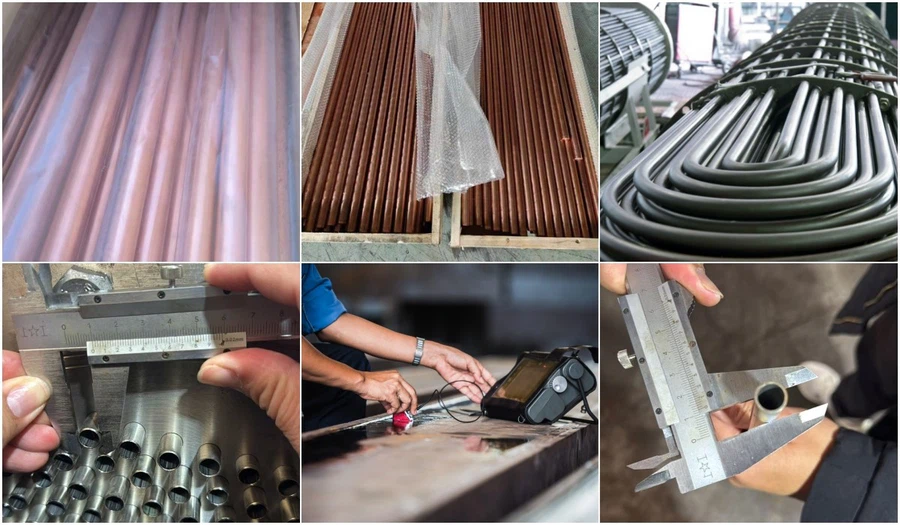
How Do We Package Copper Heat Exchanger Tubes for Global Delivery?
Poor packaging destroys even the best copper heat exchanger tube. As a professional copper heat exchanger tube factory serving copper heat exchanger tube USA, Europe, UAE, Saudi Arabia, and India, we follow military-grade export packaging standards to ensure zero damage during sea or air freight.
Our Standard Packaging Process:
| Packaging Stage | Material / Method | Purpose |
|---|---|---|
| Individual Tube Protection | Anti-rust VCI paper + plastic end caps | Prevents moisture, dust, and scratches on copper tube heat exchanger inner surfaces. |
| Bundling | Nylon straps + wooden spacers | Keeps copper heat exchanger tube OD 19mm, 1 inch, or 5/8 inch sizes organized and vibration-free. |
| Moisture Barrier | Thick PE film wrap (heat-shrunk) | Blocks humidity during long sea voyages to copper heat exchanger tube Germany or Saudi Arabia. |
| Outer Packing | Export-grade plywood cases or steel-banded wooden crates | Withstands stacking and rough handling. Each crate labeled with PO number, alloy (e.g., SB111 C70600), and quantity. |
| Documentation | Packing list + Mill Test Certificate (MTC) attached outside | Customs clearance support for copper heat exchanger tube stockist and distributor partners. |
For U-Bundle Orders: U tube heat exchanger and U tube bundle heat exchanger are placed in dedicated steel jigs inside the crate to prevent bending radius distortion.
Our Factory & Equipment
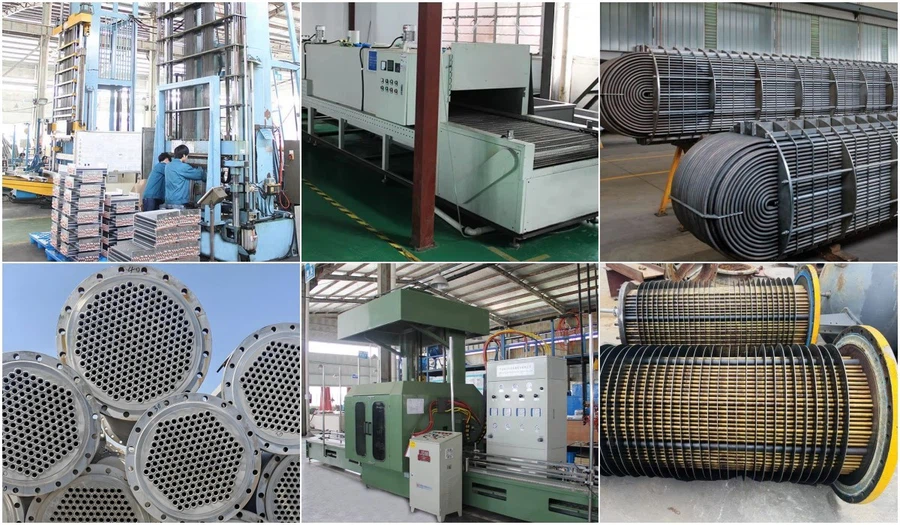
| Equipment Type | Specification / Capability | Quality Impact |
|---|---|---|
| Horizontal Continuous Casting Line | 10-ton capacity | Produces homogeneous copper alloy tube for heat exchanger billets with zero porosity. |
| Three-Roll Piercing Mill | Up to 60mm OD | Precision wall thickness control for heat exchanger tube wall thickness as low as 0.5mm. |
| Cold Drawing Bench | 5 draws in sequence | Achieves tight tolerances on copper heat exchanger tube length and heat exchanger pipe diameter. |
| Straightening & Cutting Line | CNC servo-controlled | Burr-free cutting for copper heat exchanger tube 3/4 inch and 1 inch to exact project lengths. |
| U-Bending Machine | CNC mandrel type | Produces u tube condenser and U tube bundle heat exchanger without kinking or ovality. |
| Eddy Current Tester | NDT (Non-Destructive Testing) | 100% inspection of C70600 tube and C71500 tube for pinholes or cracks per ASTM B111 pdf standards. |
| Hydrostatic Tester | Up to 200 bar | Validates heat exchanger tube expansion and tube rolling integrity. |
| Spectrometer | Optical emission (OES) | Confirms chemical composition of ASME SB111, EN 12451, and JIS H3300 grades on every batch. |
Our Certifications & Compliance:
ASTM B111 pdf and ASME SB111 pdf full traceability.
ISO 9001:2015 quality management system.
Third-party inspection accepted: SGS, BV, Lloyds, or TUV.
Copper heat exchanger tube life expectancy testing reports available upon request.
Get Fast Quote & Logistics Plan


